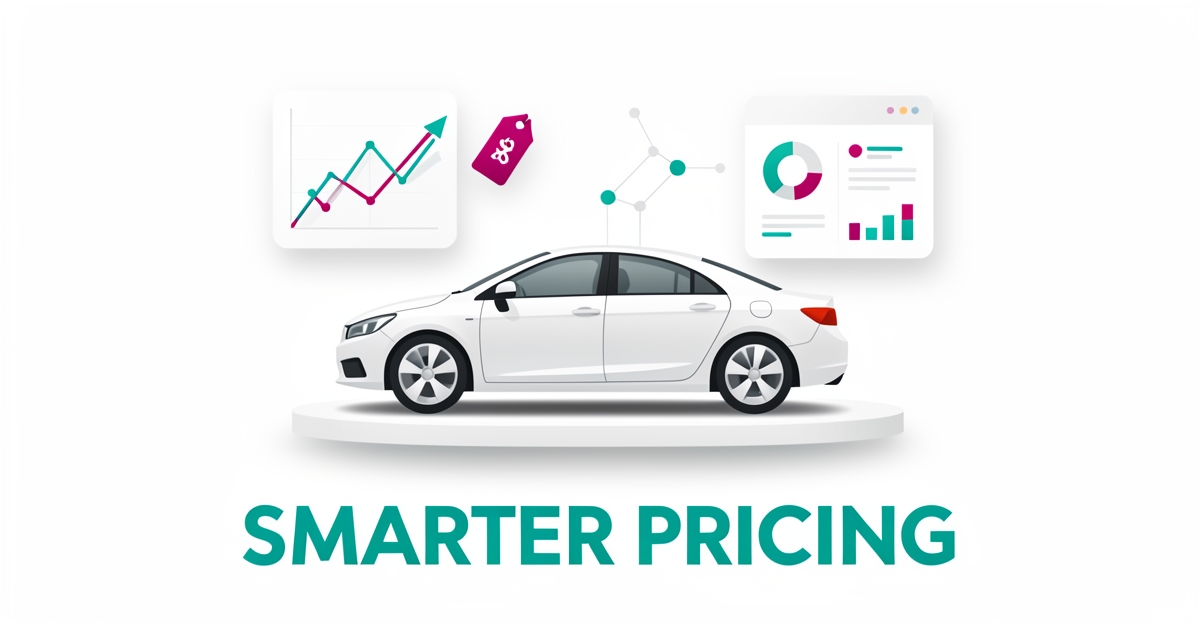
How Used Car Dealerships Can Use AI to Optimize Pricing and Inventory Visibility
Key Facts
- Dealerships using AI pricing typically report meaningful revenue growth compared to traditional manual operations
- Manual pricing can't keep pace with daily market moves — no manager can reprice a hundred units against live listings every morning
- AI-driven inventory intelligence flags aging stock and demand shifts before they become losses
- Automated lead follow-up typically cuts response times dramatically, protecting gross on deals that would otherwise go cold
- As of late 2026, AI adoption across dealership operations is accelerating, with most dealers planning to increase AI budgets
- Starting with one high-impact workflow — dynamic pricing or aging alerts — proves value fastest
Hire a team member that works 24/7 — for less than a part-time wage.
AI receptionists, SDRs, dispatchers and 99+ roles. Trained on your business, fully managed.
Not sure where to start? Ask our AI planner
The Pricing and Inventory Blind Spots Costing Dealerships Revenue
Walk the lot at most independent used car dealerships and you'll find pricing decisions still made the same way they were a decade ago: a manager's gut feel, a weekly scan of competitor listings, and a spreadsheet updated whenever someone finds the time. Meanwhile, the market moves daily — and so do the dealerships that have automated how they see it.
The gap between these two operating models is widening. As of late 2026, industry surveys consistently show that the majority of dealers plan to increase their AI budgets, signaling that data-driven pricing and inventory intelligence is shifting from competitive edge to table stakes.
The performance pattern explains why. Dealerships using AI pricing typically report meaningful revenue growth compared to traditional operations, and those gains compound across every unit on the lot. When pricing reacts to live market signals instead of last month's assumptions, vehicles turn faster and hold more margin.
The blind spots in manual operations tend to cluster in the same places:
- Stale pricing — vehicles sit overpriced for weeks before anyone notices competing listings undercut them
- Invisible demand shifts — no system flags which makes, trims, or price bands are suddenly heating up locally
- Slow response to leads — manual follow-up loses buyers who contacted three other lots the same hour
- Aging inventory surprises — units quietly cross the 60-day mark while attention goes to fresh arrivals
The cost of these blind spots shows up in the metrics that matter most. Dealerships that automate lead response typically engage shoppers minutes after contact instead of hours later — and speed directly protects gross on every deal. Faster follow-up and tighter pricing discipline are the two levers most consistently linked to shorter sales cycles in dealer operations.
Traditional lots aren't losing because their people work less hard. They're losing because no human can manually reprice a hundred vehicles against live market data every morning — and their AI-enabled competitors don't have to. This is precisely the gap AIQ Labs addresses with AI Workflow Builds: rebuild the one workflow that costs you the most — pricing, aging alerts, or lead follow-up — at a fixed price, in phases. The goal isn't replacing the pricing manager's judgment, but arming it with real-time market intelligence instead of week-old guesswork.
The question facing used car dealerships in 2026 isn't whether AI pricing works — the operational results have already settled that. It's how much margin a lot is willing to surrender while it waits.
How AI Turns Market Data Into Optimal Vehicle Pricing
AI is transforming how used car dealerships price inventory by turning raw market data into precise, actionable pricing recommendations. Machine learning models analyze real-time trends such as competitor listings, regional demand shifts, and vehicle age on lot to determine the optimal price point for each unit. By continuously learning from historical sales data and current market conditions, these systems help dealers avoid overpricing that stalls sales or underpricing that erodes gross profit. This data-driven approach ensures every vehicle is positioned competitively based on actual buyer behavior, not guesswork.
Dealerships using AI for pricing typically see faster turns and better conversion, because pricing accuracy directly impacts velocity. When a vehicle is priced right from the start, it attracts more qualified leads, reduces time on lot, and increases the likelihood of a favorable offer. AI doesn't just react to the market — it anticipates shifts, allowing dealerships to adjust proactively before inventory ages or demand cools. The result is a faster, more profitable turnover cycle grounded in predictive insight.
- Ingests live competitor pricing and regional listing volumes
- Weights vehicle-specific factors like mileage, trim, and service history
- Adjusts recommendations based on real-time demand signals and seasonality
- Learns from historical win/loss rates at various price points
- Outputs dynamic price suggestions that update as market conditions change
By integrating these capabilities into dealership inventory systems, AIQ Labs helps automotive businesses move beyond static pricing models toward adaptive, intelligence-driven strategies. This enables smarter decisions that protect margin while accelerating sales — turning pricing from a reactive task into a strategic advantage.
From Pricing to Visibility: AI-Powered Inventory Intelligence
AI-powered inventory intelligence goes beyond setting prices — it transforms how dealerships decide what to stock, when to move inventory, and how to avoid costly aging. By analyzing market trends, competitor pricing, and local demand patterns, AI systems forecast which vehicles will sell quickly and which may need to be wholesaled before depreciation erodes value. This proactive approach helps dealers align inventory with real-time buyer interest, reducing the risk of overstocking slow-moving models.
Predictive demand forecasting enables smarter acquisition decisions, ensuring lots are filled with vehicles that match regional preferences and seasonal shifts. When combined with AI-driven pricing adjustments, this creates a feedback loop where underperforming inventory is identified early, allowing timely price interventions before losses accumulate. As a result, dealerships maintain healthier inventory turns and stronger gross margins across their entire stock.
The operational benefits extend across departments. When vehicles are priced right and moved through the lot efficiently, service bays stay busier, parts departments see more consistent demand, and overall dealership profitability rises. This compounding effect turns inventory intelligence into a cross-departmental advantage, where pricing, logistics, and service performance all benefit from data-driven foresight. To explore how AI can optimize your dealership's full inventory lifecycle, start the two-minute Fit Check at https://aiqlabs.ai/apply, then schedule a free 30-minute strategy call at https://aiqlabs.ai/book.
What AI-Enabled Dealerships Are Seeing That Traditional Lots Aren't
AI-enabled dealerships are pulling ahead of traditional lots by leveraging real-time data and automation to close more deals faster. These operations typically report stronger revenue growth than peers relying on manual pricing and inventory methods — and the gap tends to widen over time as AI systems continuously learn from market shifts and customer behavior.
Response times tell a similar story of divergence. Dealerships using automated follow-up engage leads in minutes rather than hours, ensuring shoppers are reached before they cool or move to competitors. This speed translates directly into opportunity capture, with faster-engaged leads converting at meaningfully higher rates. Traditional dealerships, meanwhile, often lag in follow-up, letting high-intent shoppers slip through the cracks.
Engagement metrics further highlight the advantage. AI-powered personalization — such as dynamic vehicle recommendations and behavior-triggered outreach — keeps inventory visible and relevant to active buyers, and AI-enhanced lead management is frequently credited with lifting close rates in dealer operations. These aren't incremental gains; they represent a fundamental shift in how demand is met and conversions are earned.
Of course, the transition isn't without hurdles. Training staff to trust and act on AI recommendations requires time and change management. Data quality remains critical — garbage in, garbage out — especially when pricing models depend on accurate market comparables. And while AI improves accuracy over time, early-stage concerns about overpricing or underselling vehicles are valid and must be monitored. Addressing these challenges head-on is what separates successful adopters from those who stall in pilot phase.
The reality is clear: waiting to adopt AI isn't neutral — it's a cost. Every month spent relying on gut feel and spreadsheets is a month where competitors refine their models, tighten their margins, and win more customers. For dealerships serious about staying competitive, the question isn't if they'll integrate AI, but how quickly they can close the gap before it becomes insurmountable. AIQ Labs helps bridge that divide with custom-built systems that turn data into decisive action — no guesswork, just measurable advantage.
Getting Started: Integrating AI Pricing With Your Dealership Systems
Getting AI pricing right starts with understanding where your current system leaks profit. Most used car dealerships price manually against yesterday's market, leaving aging inventory on the lot and missed margin on fast movers.
Start by auditing current pricing and inventory workflows. Map how vehicles are appraised, listed, repriced, and moved through DMS and inventory software. Identify delays, manual rekeying, and gaps between lot status and online visibility. This assessment is the first how-to step for AI adoption, and it reveals where automation delivers the most significant impact.
Integration points matter more than the model. Choose AI that connects seamlessly with existing systems and platforms rather than adding another dashboard. Two-way API integrations with DMS, inventory management, and listing channels keep data synchronized and prevent pricing decisions from being made on stale information. With most dealers planning to increase AI spending through 2026, integration quality is what separates systems that get used from systems that get ignored.
Start with one high-impact workflow instead of a full rollout. Pricing recommendations and aging inventory alerts deliver fast, measurable wins.
- Audit current pricing and inventory workflows to pinpoint manual bottlenecks and data lags
- Identify integration points with existing DMS and inventory software for seamless data flow
- Launch a pilot on one workflow, such as dynamic pricing recommendations or aging inventory alerts
- Monitor and analyze performance metrics to refine AI strategies and improve results
A focused pilot proves value quickly. Dealerships that automate pricing and follow-up typically see faster inventory turns and shorter sales cycles than manual operations.
Measure results against baseline KPIs you set before launch: days to sell, gross per unit, price adjustment frequency, and inventory turnover. Track how quickly pricing changes reflect market shifts and competitor moves. True ownership of the system lets you iterate without vendor lock-in — a core principle behind AIQ Labs' AI Operating Systems, which are built in phases and owned outright by the client.
AIQ Labs builds data-driven AI systems that are owned outright by the client, replacing subscription chaos with unified, owned digital assets. That ownership model supports long-term optimization as market conditions change. You can review the payment models — Start Monthly, Build in Milestones, Own It Outright — on the pricing page.
Ready to map your highest-ROI workflow? Start the Fit Check at https://aiqlabs.ai/apply, then book a free 30-minute strategy call at https://aiqlabs.ai/book.
Still paying for 10+ subscriptions that don’t talk to each other?
We build custom AI systems you own outright. No vendor lock-in. Full control.
Not sure where to start? Ask our AI planner
Frequently Asked Questions
How does AI actually improve pricing for used cars?
What kind of revenue impact can we realistically expect?
Will AI help us respond to leads faster?
What blind spots do manual pricing and inventory cause?
Is AI adoption becoming a must-have in 2026?
How do we start integrating AI pricing without replacing our team?
The Margin You Keep Is the Market You See
The dealerships winning in 2026 aren't working harder — they're seeing more. As we've covered, AI-driven pricing keeps every unit positioned against live market data instead of week-old assumptions, inventory intelligence flags aging stock and demand shifts before they become losses, and automated follow-up engages buyers before they cool. The result is a compounding advantage: faster turns, stronger gross per unit, and healthier inventory across the lot. The practical path forward is the one outlined above — audit your current pricing workflow, identify integration points with your DMS, and pilot one high-impact system like dynamic pricing or aging alerts, then measure against baseline KPIs. That's exactly the kind of focused build AIQ Labs specializes in: custom systems that integrate with your inventory software and are owned outright, with no vendor lock-in. With most dealers planning to increase AI budgets through 2026, the window for an easy edge is closing. Start the two-minute Fit Check at https://aiqlabs.ai/apply, then book a free 30-minute strategy call at https://aiqlabs.ai/book — if there isn't a clear win on your lot, we'll tell you that too.
Make AI your competitive advantage — not just another tool.
Strategy, implementation and ongoing optimization. One partner, end to end.
Not sure where to start? Ask our AI planner