In-House vs AI: Which Is Better for Managing Portable Toilet Requests?
Key Facts
- Manual service requests can consume a significant share of operational labor—often cited at up to 30%—in service businesses.
- Service businesses commonly lose a meaningful share of potential after-hours bookings when staff availability is limited.
- In-house request handling typically costs $4,000–$7,000 per month per full-time equivalent once salary, benefits, and overhead are counted.
- Missed after-hours requests are a recurring source of lost bookings in event-driven service industries.
- Manual scheduling inefficiencies—double-bookings, poor routing, idle time—add measurably to operational costs.
- AIQ Labs AI Employees run at roughly 80% less cost than an equivalent human hire.
Hire a team member that works 24/7 — for less than a part-time wage.
AI receptionists, SDRs, dispatchers and 99+ roles. Trained on your business, fully managed.
Not sure where to start? Ask our AI planner
The Hidden Cost of Manual Request Handling
Many portable toilet rental businesses still rely on in-house staff to manage customer requests, creating hidden operational costs that erode profitability. Manual handling requires dedicated employees to answer calls, check availability, schedule deliveries, and follow up—tasks that consume significant time and labor resources. This approach becomes especially costly during peak seasons or off-hours when demand fluctuates but staffing remains fixed. Industry analyses of frontline service work suggest businesses using manual processes for service requests often spend a substantial share of operational labor—sometimes cited at up to 30%—on administrative tasks like scheduling and coordination, directly impacting bottom-line performance.
The financial burden extends beyond base salaries to include benefits, training, and turnover costs associated with maintaining a team for request management. Employees handling rental inquiries typically work standard business hours, leading to missed opportunities during evenings, weekends, and holidays when customers may still need last-minute units for events or emergencies. These gaps result in lost bookings and force companies to either overstaff to cover all hours or accept avoidable revenue leakage. Service businesses that rely on limited staff availability commonly report losing a meaningful share of potential after-hours bookings—a cost that compounds over time.
Off-hours demand is particularly problematic in the portable toilet sector, where events like weddings, festivals, and construction projects often require same-day or next-day service outside traditional 9-to-5 windows. Relying solely on in-house staff means either paying overtime premiums or risking customer dissatisfaction when requests go unanswered. Additionally, manual scheduling increases the likelihood of double-bookings, miscommunication, and inefficient routing—issues that drive up fuel costs and reduce fleet utilization. Portable toilet pricing also varies by unit type and rental duration, making accurate, real-time availability tracking essential for maximizing revenue per unit.
- Labor costs for in-house request handling include salary, benefits, and overtime, often exceeding $4,000–$7,000 per month per full-time equivalent.
- Missed after-hours requests are a recurring source of lost bookings in event-driven service industries.
- Scheduling inefficiencies from manual processes add measurably to operational costs through suboptimal routing and idle time.
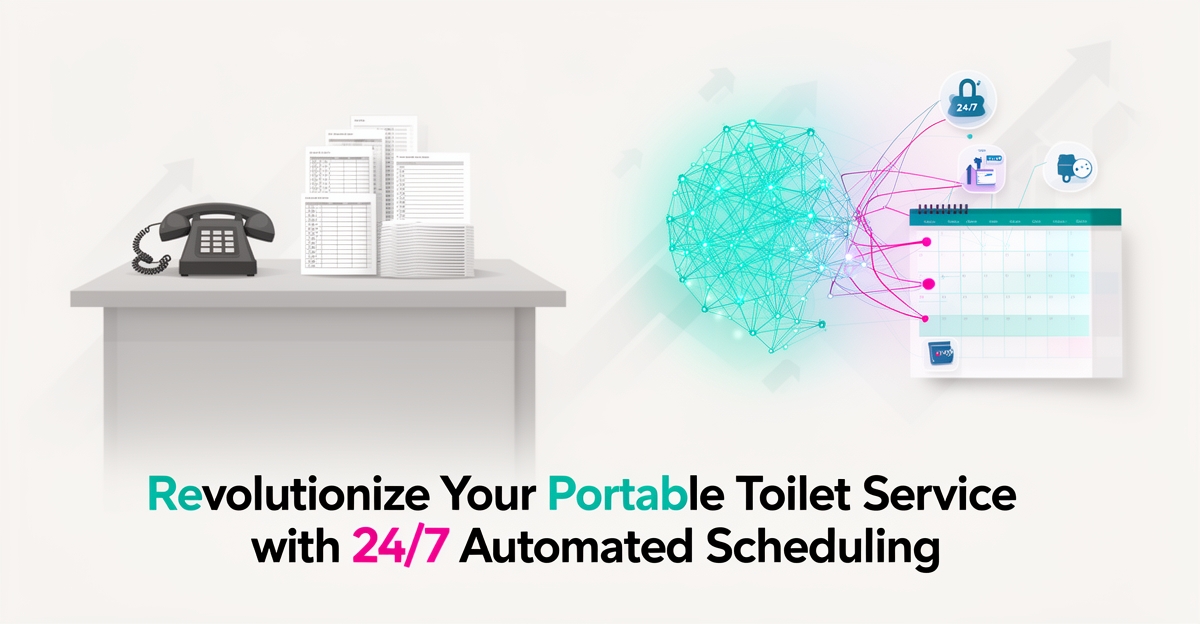
These inefficiencies reveal a clear mismatch between fixed labor models and variable demand patterns in portable toilet rentals. While in-house teams provide familiarity and control, their inability to scale dynamically or operate continuously creates financial drag that AI-powered automation can eliminate. By contrast, systems designed for 24/7 request intake, intelligent scheduling, and real-time inventory coordination directly address these pain points—reducing labor dependency while improving response speed and utilization rates. For businesses seeking to minimize waste in their operations, shifting from manual to automated request management isn't just an upgrade—it's a necessary step toward sustainable profitability. AIQ Labs helps portable toilet providers transition from costly, labor-intensive workflows to AI systems that handle requests intelligently, around the clock—whether through managed AI Employees or a fully owned AI operating system.
How AI Transforms Request Management for Portable Toilet Services
Managing portable toilet requests often involves repetitive tasks like answering inquiries, scheduling deliveries, and confirming bookings—work that can overwhelm small teams during peak seasons. AI-powered automation transforms this workflow by handling every step from initial contact to follow-up, operating continuously without breaks or overtime costs. This approach eliminates manual bottlenecks while ensuring no request goes unanswered, even outside business hours.
AI systems excel at processing high volumes of portable toilet inquiries with consistent accuracy, using natural language understanding to interpret customer needs and route requests appropriately. Unlike human staff limited to 40-hour workweeks, AI employees operate 24/7/365, capturing leads and scheduling services at any time—critical for emergency requests or last-minute event planning. This constant availability directly addresses a key pain point in the portable toilet industry where demand spikes unpredictably during festivals, construction projects, or disaster relief efforts.
AIQ Labs AI Employees run at roughly 80% less cost than an equivalent human hire in dispatch and customer service roles. These savings come from eliminating salaries, benefits, recruiting, and training expenses while maintaining or improving service quality. The flat monthly cost of an AI Employee includes ongoing optimization and tool integrations, making budgeting predictable even as request volumes fluctuate seasonally. You can see the full pricing model at aiqlabs.ai/pricing—no fake prices, just clear options.
Scalability is another core advantage: AI systems handle sudden surges in portable toilet requests without delays or dropped inquiries, a common issue when relying solely on human teams. During peak periods, AI can instantly scale capacity to manage increased call volumes, web form submissions, and SMS inquiries—all while maintaining consistent response times. This elasticity ensures businesses never lose revenue due to unavailable staff, turning seasonal demand spikes into growth opportunities rather than operational stressors.
- Handles inquiries via phone, email, chat, and SMS 24/7
- Automates scheduling, confirmations, and follow-ups
- Integrates with calendars, payment systems, and dispatch tools
- Scales instantly during demand spikes without added costs
- Covers 99+ roles, from receptionist to dispatcher to SDR
By automating routine request management, portable toilet providers free up human staff to focus on complex customer issues, equipment maintenance, or strategic growth initiatives—shifting from reactive task management to proactive service improvement. This transition not only cuts costs but also builds resilience against labor shortages and seasonal volatility, creating a more sustainable operational model. For businesses ready to explore this shift, AIQ Labs offers a free 30-minute strategy call—booked after a quick Fit Check—to map specific workflow opportunities based on your current request volumes and pain points.
Scalability and ROI: Why AI Outperforms In-House Teams
Portable toilet businesses face constant pressure to scale operations during peak seasons without inflating overhead. Managing fluctuating request volumes with in-house teams often leads to either underutilized staff or missed opportunities when demand spikes. AIQ Labs' AI Employees offer a different approach—managed AI staff that handle rental inquiries, scheduling, and dispatch with consistent performance regardless of workload.
Unlike human teams limited to 40-hour weeks and subject to sick days or turnover, AI Employees operate 24/7/365 with zero missed calls. This continuous availability ensures every inquiry—whether it comes at 2 a.m. or during a holiday weekend—is captured and processed immediately. For businesses serving events, construction sites, or disaster relief efforts, this reliability directly translates into fewer lost bookings and higher customer satisfaction.
Cost efficiency further widens the gap between AI and traditional staffing. AIQ Labs' AI Employees deliver equivalent roles to human receptionists or dispatchers at roughly 80% less cost once salary, benefits, taxes, recruiting, and training are accounted for. These savings come without sacrificing coverage—AI scales instantly to handle surges in requests, eliminating the need for seasonal hiring or overtime pay. And if your needs go beyond staffing, a fixed-price AI Workflow Build can rebuild the single workflow that costs you the most, in phases.
- Handles unlimited concurrent inquiries without degradation in response quality
- Integrates with scheduling tools, CRM systems, and payment platforms for end-to-end automation
- Reduces administrative burden on human staff, allowing them to focus on service delivery and client relationships
- Maintains consistent brand voice and compliance across all customer interactions
- Provides real-time analytics on request patterns, peak times, and conversion rates
For portable toilet providers aiming to grow without proportional cost increases, AI Employees deliver a scalable, always-on alternative that outperforms in-house teams on availability, responsiveness, and long-term ROI. By removing the constraints of human labor limits, businesses can serve more customers, capture more revenue, and operate with greater resilience. This shift isn't just about cutting costs—it's about building a foundation for sustainable growth in a demand-driven industry.
Still paying for 10+ subscriptions that don’t talk to each other?
We build custom AI systems you own outright. No vendor lock-in. Full control.
Not sure where to start? Ask our AI planner
Frequently Asked Questions
How much cheaper is AI than hiring someone to handle portable toilet requests?
What happens to after-hours portable toilet requests if I use AI instead of staff?
Can AI really handle sudden spikes in portable toilet requests during busy season?
What specific tasks can AI automate for my portable toilet rental business?
Do I have to sign a long-term contract to use AI for managing requests?
Will AI integrate with my existing scheduling and dispatch tools?
From Cost Center to Competitive Edge
Manual request handling quietly drains portable toilet businesses through fixed labor, missed after-hours bookings, and scheduling errors that compound during peak demand. AI changes the equation by delivering 24/7 intake, intelligent scheduling, and real-time inventory coordination without overtime or seasonal hiring, freeing your team to focus on service delivery and growth. The result is lower labor dependency, faster response times, and a scalable operation that captures revenue you're currently losing to unanswered calls. If you're evaluating how to reduce administrative drag while improving utilization, mapping your current request flow is the first step. Start with the two-minute Fit Check at aiqlabs.ai/apply, then book a free 30-minute strategy call to identify high-ROI automation opportunities specific to your volumes and pain points. With 200+ multi-agent systems deployed and four live SaaS products running daily, AIQ Labs builds automation that's proven in practice—not in theory. Reach the team anytime at [email protected].
Make AI your competitive advantage — not just another tool.
Strategy, implementation and ongoing optimization. One partner, end to end.
Not sure where to start? Ask our AI planner