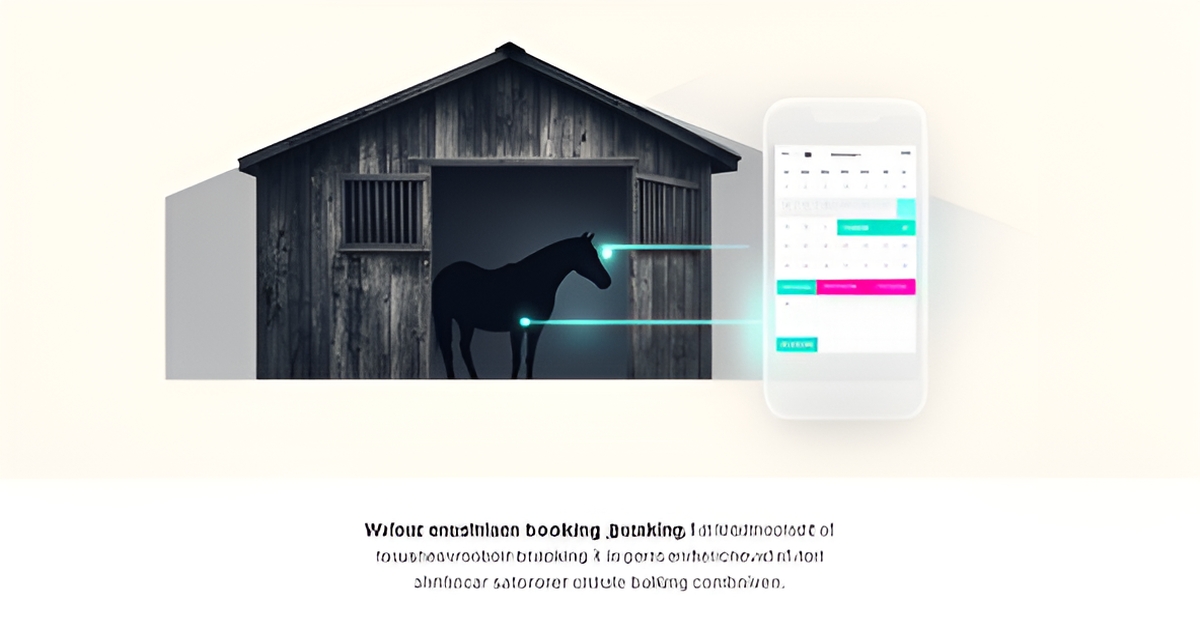
In-House vs. AI: Which Is Better for Managing Rider Bookings at a Stable?
Key Facts
- A meaningful share of booking inquiries—often close to half, by industry estimates—arrive outside regular business hours, when most stable staff are unavailable
- Automating routine booking tasks typically frees up the equivalent of several full workdays per employee each month
- Automated reminders and easy rescheduling are among the most reliable ways to reduce no-shows at lesson-based businesses
- A growing majority of consumers now prefer self-service or AI-assisted booking over phone calls for convenience and speed
- Agentic AI booking agents resolve most inquiries in a single interaction, cutting back-and-forth and scheduling errors
- AIQ Labs has deployed 200+ multi-agent systems and runs 4 live SaaS products daily—this is proven infrastructure, not experimental tech
Hire a team member that works 24/7 — for less than a part-time wage.
AI receptionists, SDRs, dispatchers and 99+ roles. Trained on your business, fully managed.
Not sure where to start? Ask our AI planner
The Manual Booking Bottleneck at Stables
Stables often find themselves overwhelmed by the demands of managing rider bookings manually, especially when staff are limited and hours are long. The reality is that a significant portion of booking activity happens outside traditional business hours, creating a gap that manual systems simply cannot fill. This after-hours demand leads to missed opportunities, frustrated clients, and increased pressure on staff to catch up during the day.
Industry estimates suggest that a large share of booking inquiries—often close to half—arrive after hours, meaning stables relying solely on in-house staff are likely turning away a meaningful slice of their potential clients. When calls go unanswered or voicemails pile up, the result isn't just lost revenue—it's erosion of trust and a perception of unprofessionalism that's hard to overcome.
Administrative overload compounds the problem, as staff juggle booking confirmations, reminders, rescheduling, and no-show follow-ups alongside core stable duties. This constant context-switching drains focus and increases the likelihood of errors, from double-booked lessons to missed payments. The cumulative effect is burnout, inefficiency, and a system that scales poorly as demand grows.
- Missed calls during peak riding times
- Delayed responses to after-hours inquiries
- Manual entry errors in scheduling systems
- Time spent chasing down no-shows
- Staff diverted from horse care and instruction
The financial and operational toll becomes clear when comparing manual processes to AI-assisted alternatives. Businesses that automate routine booking tasks typically reclaim the equivalent of several full workdays per employee each month—time redirected toward horse training, client engagement, or facility maintenance instead of data entry and phone tag.
Moreover, AI-powered booking agents don't just save time—they actively improve outcomes. Automated reminders and easy, conversational rescheduling are among the most reliable ways to cut no-shows, and a growing majority of consumers now prefer self-service or AI-assisted booking over phone calls. The shift isn't just about efficiency—it's about meeting modern expectations for convenience and responsiveness.
For stables considering their next step, the bottleneck isn't just about missed calls—it's about the hidden cost of relying on manual processes in an on-demand world. AIQ Labs helps businesses like yours identify these friction points and build tailored automation strategies that align with your operational rhythm, ensuring technology serves the stable—not the other way around.
Agentic AI vs Traditional Booking Systems
When evaluating booking systems for stables, the difference between basic automation and true intelligence becomes clear quickly. Traditional chatbots follow scripts and struggle when riders ask about trail availability, horse temperament, or last-minute schedule changes—leading to frustration and abandoned bookings. Agentic AI, by contrast, reasons through complex requests, checks real-time availability across multiple calendars, and even suggests alternative time slots or lessons based on rider skill level. This autonomy transforms booking from a transactional task into a consultative experience.
Agentic AI consistently outperforms manual and basic chatbot systems on conversion and booking completion. These gains stem from the system's ability to handle nuanced inquiries—like whether a beginner can join a sunset trail ride or if a horse is suitable for nervous riders—without transferring to a human agent. For stables, this means capturing more bookings during peak inquiry times, especially evenings and weekends when staff are off-duty.
Beyond conversion, agentic AI significantly improves operational reliability. Most booking inquiries are resolved in a single interaction, which reduces the back-and-forth that consumes staff time and increases the likelihood of errors. Automated reminders and conversational rescheduling also cut down on no-shows, directly improving revenue and horse utilization—two critical metrics for any stable.
- Handles complex requests like multi-rider bookings with varying skill levels
- Adapts responses based on real-time horse and instructor availability
- Provides proactive suggestions, such as recommending a private lesson before a group trail ride
- Manages follow-ups, reminders, and rescheduling without staff intervention
- Scales effortlessly during peak seasons or promotional campaigns
With more consumers now preferring AI-assisted booking over phone calls, stables that rely solely on human staff or basic chatbots risk falling short of customer expectations. Agentic AI doesn't just answer questions—it takes action, learns from interactions, and continuously improves the booking experience. For stables aiming to scale without sacrificing personal touch, this level of autonomy isn't just beneficial—it's becoming essential. To explore how agentic AI can be tailored to your stable's specific workflows, AIQ Labs offers a free 2-minute Fit Check, followed by a free 30-minute strategy call to map your biggest bottlenecks and identify high-ROI automation opportunities.
Cost, Time and Scalability Comparison
When evaluating how rider bookings are managed at a stable, the comparison between in-house teams and AI-powered solutions hinges on three critical dimensions: cost, time-to-response, and scalability. Manual booking systems rely on staff availability, which introduces variability in response times and limits operational hours. In contrast, AI employees operate 24/7/365, ensuring immediate responses to booking inquiries regardless of time zone or staff shift patterns. This constant availability directly addresses the after-hours booking gap that human-only teams consistently miss—without incurring overtime costs.
From a cost perspective, maintaining an in-house booking coordinator involves recurring expenses such as salary, benefits, taxes, and training. AIQ Labs' AI Employees deliver a fully managed AI staff member for roughly 80% less than a human hire, covering build, training, tool integrations, monitoring, and continuous improvements. The Start Monthly model means no recruiting overhead, no long-term lock-in, and predictable costs from day one. For stables that want to fix one specific workflow first, the Workflow Builds option rebuilds the booking process that costs you the most—at a fixed price, delivered in phases.
Scalability further favors AI integration. As booking volumes grow—whether due to seasonal demand, marketing campaigns, or expanded services—AI systems handle increased load without proportional cost increases. Human teams, by contrast, require additional hires, scheduling adjustments, and overtime pay to maintain service levels. Stables can begin with a single workflow—like booking automation—and scale incrementally toward a full AI Operating System, preserving flexibility while building long-term operational resilience. And because you own what's built outright under the Own It Outright model, the investment compounds rather than renting out to a subscription forever.
Implementation Roadmap for Stables
For stables transitioning from manual booking systems to AI-powered solutions, a structured implementation roadmap ensures smooth adoption while maintaining service quality. The process begins with defining clear boundaries for the AI booking agent—specifying which tasks it handles autonomously, such as checking availability, confirming lessons, and processing payments, and when human staff must intervene, like managing special requests or resolving scheduling conflicts. This aligns with agentic AI best practices that emphasize scoped autonomy to prevent overreach while enabling efficiency gains.
Next, integrate the AI agent with essential tools: connect it to the stable's calendar (e.g., Google Calendar) for real-time slot management, link to payment processors (Stripe or Square) for secure transactions, and synchronize with customer communication channels. AIQ Labs' AI Employee model supports this through pre-built integrations, ensuring the agent works within existing workflows without requiring disruptive system overhauls. Throughout deployment, maintain human-in-the-loop oversight—staff review AI actions daily initially, then shift to exception-based monitoring as confidence builds. This phased approach reduces risk, supports staff adaptation, and lets teams redirect the hours saved through automation toward horse care and client relationships rather than administrative tasks. Stables can start with a single booking workflow before scaling to broader operations. Schedule a free strategy call to map your stable's specific transition path.
Still paying for 10+ subscriptions that don’t talk to each other?
We build custom AI systems you own outright. No vendor lock-in. Full control.
Not sure where to start? Ask our AI planner
Frequently Asked Questions
How many bookings actually happen outside regular business hours at stables?
What time savings can stables expect from using an AI booking agent instead of manual processes?
Does using AI for bookings really reduce no-shows?
Are customers actually open to booking through AI instead of calling a person?
How does an AI booking agent compare in cost to hiring a part-time staff member for booking management?
What's the best way for a stable to get started with AI booking?
Saddle Up for Smarter Bookings
Choosing between in-house staff and AI for managing rider bookings isn't just about cost—it's about meeting modern rider expectations while protecting your team's time. Manual systems miss after-hours inquiries, drain staff hours on routine admin, and struggle to scale during peak seasons. Agentic AI, by contrast, handles complex requests, reduces no-shows through automated reminders, and operates 24/7 without overtime. For stables, this means fewer missed opportunities, less burnout, and more time focused on horses, not admin. AIQ Labs helps stables transition smoothly with managed AI employees that integrate with your calendar, payments, and communication tools—starting with a single workflow like bookings. Ready to see how it fits your stable? Start the Fit Check, then book your free 30-minute strategy call—no obligation, just clarity on your next best step.
Make AI your competitive advantage — not just another tool.
Strategy, implementation and ongoing optimization. One partner, end to end.
Not sure where to start? Ask our AI planner