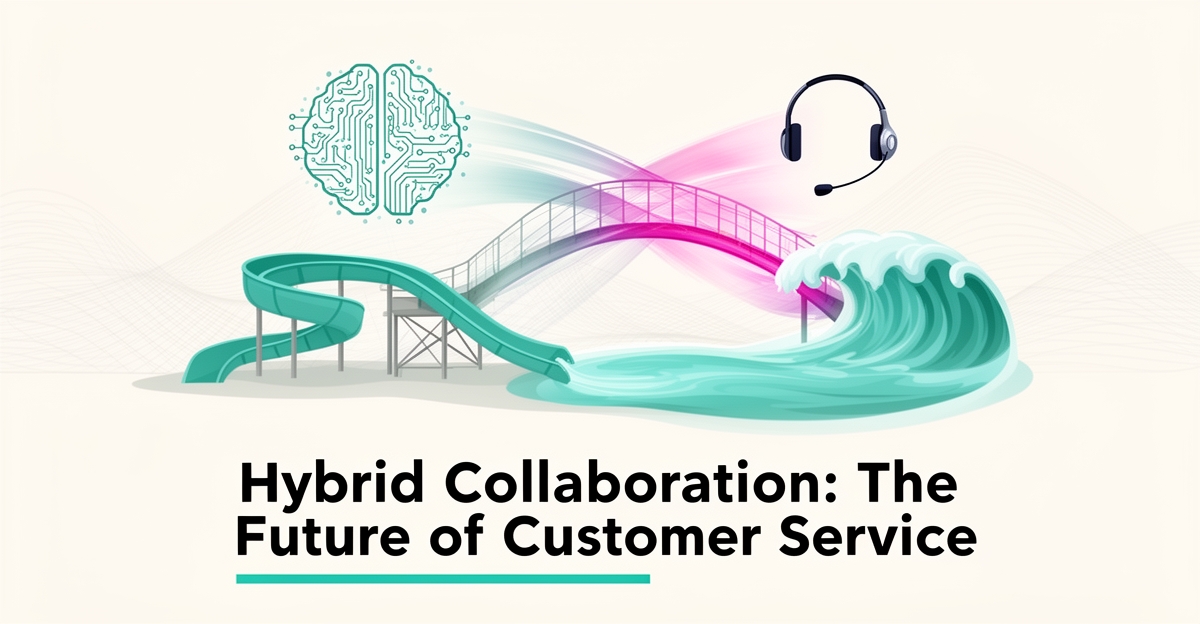
In-House vs AI: Which Is Better for Water Park Guest Service?
Key Facts
- AI adoption typically stalls when organizations treat it as a technology rollout instead of a human transformation—people and facilitation matter as much as tools.
- AI can handle thousands of routine guest inquiries simultaneously—ride height rules, locker policies, dining hours—without adding headcount.
- AIQ Labs has deployed 200+ multi-agent systems and runs 4 live SaaS products daily, so the hybrid model is proven in production, not theory.
- Managed AI employees from AIQ Labs typically cost around 80% less than a comparable human hire, making 24/7 guest coverage realistic for seasonal operators.
Hire a team member that works 24/7 — for less than a part-time wage.
AI receptionists, SDRs, dispatchers and 99+ roles. Trained on your business, fully managed.
Not sure where to start? Ask our AI planner
The Guest Service Challenge: Seasonal Peaks and Experience Expectations
Water parks face a unique operational rhythm: explosive guest volumes during summer months followed by extended off-seasons where maintaining full in-house staff becomes financially unsustainable. This seasonal volatility creates constant pressure to balance service quality with labor costs, especially as guest expectations for personalized, seamless experiences continue to rise. Visitors now expect real-time assistance with ride wait times, dining reservations, and accessibility needs—demands that fluctuate wildly with weather, holidays, and daily attendance spikes.
Traditional staffing models struggle to keep pace. Hiring, training, and managing seasonal teams consumes significant managerial bandwidth, while fixed labor costs during low-attendance periods erode profitability. Meanwhile, AI has become genuinely practical for high-volume, repetitive guest interactions: modern AI agents can answer routine questions around the clock, in multiple languages, without overtime or seasonal rehiring. Managed AI employees make this accessible even for operators without technical staff.
Yet technology alone doesn't solve the challenge. Successful implementation hinges on addressing the human side of change—training staff to work alongside AI, designing systems that feel welcoming rather than robotic, and ensuring multilingual support for diverse guest populations. AI adoption is less a technology adoption curve and more a human transformation curve, meaning facilitators who create learning spaces and build trust are as critical as the technology itself. For water parks, this means framing AI not as a replacement for hospitality, but as a tool to free up human staff for high-value moments—like resolving complex guest issues or creating personalized experiences—that directly impact satisfaction and loyalty. AIQ Labs helps owners navigate this shift by designing hybrid models where AI manages routine tasks and humans focus on the interactions that truly define the guest experience.
Why Pure AI or Pure In-House Falls Short: Lessons from Real-World Adoption
Many water parks face a critical dilemma when considering AI for guest service: either invest heavily in automation only to see low adoption, or rely solely on human staff who cannot scale during peak seasons. In practice, both extremes consistently fall short.
Organizations that buy AI tools without internal champions routinely see adoption stall—technology alone does not drive change. By contrast, teams that invest in facilitation, training, and experimentation achieve organization-wide transformation on modest budgets. Successful AI integration depends on people, not just tools.
Meanwhile, relying exclusively on in-house staff introduces scalability limits that directly impact guest experience during high-demand periods. Human teams are constrained by hiring cycles, shift schedules, and fatigue, making it difficult to maintain consistent service levels when attendance spikes. AI, by contrast, can handle thousands of routine inquiries simultaneously—such as ride height requirements, locker policies, or dining hours—freeing staff for complex, empathetic interactions.
Mission-first approaches outperform task-first automation. When water parks begin with the goal of enhancing guest safety and enjoyment—not just reducing labor costs—they identify which tasks AI should handle (like repetitive FAQs) and where humans add irreplaceable value (such as calming distressed children or resolving conflicts). This balance ensures technology serves the park's core purpose rather than undermining it.
Ultimately, neither pure AI nor pure in-house staffing delivers optimal results. The most effective model uses AI for scalable, routine tasks while empowering human teams to focus on high-touch moments that build loyalty and trust—exactly the hybrid approach AIQ Labs designs for hospitality environments.
Building the Hybrid Model: Practical Steps for Water Park Leaders
Building a hybrid guest service model starts with the right questions, not the right tools. Water park leaders who begin with mission-first thinking avoid the adoption stall that traps many organizations.
Start with mission-first questions. Instead of asking what can be automated, ask how service can better serve the guest experience. Pair every task question with a purpose question, shifting focus from efficiency alone to guest trust and values. This approach prevents the common pitfall of deploying tools nobody uses.
Create internal learning spaces for staff to engage with AI tools. Because adoption is a human transformation curve, the people who catalyze it often aren't the technical experts. Leaders who convene regular practice sessions let frontline teams experiment, share discoveries, and build confidence—so the AI becomes part of how the team works, not a threat to it.
Deploy AI for routine operations while preserving human touch for high-value moments. Use AI for document processing, multilingual support, and predictive insights, and keep staff on safety-critical and emotional interactions.
Practical hybrid applications include:
- Automated document processing for waivers, season passes, and memberships—work that typically takes staff days can be handled in minutes.
- Multilingual guest support and FAQs, available 24/7 so guests get answers in their own language, before and after park hours.
- Predictive insights for crowd flow, energy use, and maintenance, acting as a decision layer rather than just a feature.
This division of labor mirrors how leading hospitality operators design service. AI handles the repetitive, humans own the relational. Staff are freed from routine queries to focus on guest experience, relationship building, and the moments where human warmth matters most.
There are three practical ways to get there. If one workflow—say, waiver intake or front-desk calls—costs you the most, a fixed-price workflow build rebuilds just that process in phases. If you want managed AI staff for guest service without hiring, AI employees cover receptionist and support roles around the clock. And if you want your whole operation connected—bookings, staffing, maintenance, guest messaging—an AI operating system gives you one connected layer you own outright. AIQ Labs works with water park and hospitality leaders through change management and training to build the right fit, ensuring AI handles routine tasks while humans manage high-value interactions. The result is a service system that scales with demand, protects guest experience, and builds staff capability over time.
Still paying for 10+ subscriptions that don’t talk to each other?
We build custom AI systems you own outright. No vendor lock-in. Full control.
Not sure where to start? Ask our AI planner
Frequently Asked Questions
Can AI completely replace in-house staff at a water park?
Is AI really affordable for seasonal water park operations?
Won't staff just resist using AI for guest service?
What guest service tasks should AI handle vs humans?
How fast can AI actually improve water park back-office work?
How do we start AI without breaking the guest experience?
Finding the Sweet Spot: How Water Parks Can Blend AI and Human Touch for Lasting Guest Loyalty
The most successful water parks won't choose between AI and in-house staff—they'll strategically combine both. By using AI to handle routine inquiries like ride wait times, waiver processing, and multilingual FAQs, parks can free their human teams to focus on high-value moments that build trust and create memorable experiences—calming a nervous first-time rider, resolving a complex accessibility need, or simply sharing a genuine smile during a busy afternoon. This hybrid approach doesn't just improve scalability during peak season; it enhances guest satisfaction, reduces operational strain, and positions your team to deliver the kind of service that turns visitors into loyal advocates. AIQ Labs has deployed 200+ multi-agent systems and runs four live SaaS products daily, so we build these balanced models from production experience, not theory—ensuring technology serves your mission of exceptional hospitality, not the other way around. To explore how this could work for your park, start with our free two-minute Fit Check and see where AI can make the biggest impact: Start the Fit Check.
Make AI your competitive advantage — not just another tool.
Strategy, implementation and ongoing optimization. One partner, end to end.
Not sure where to start? Ask our AI planner