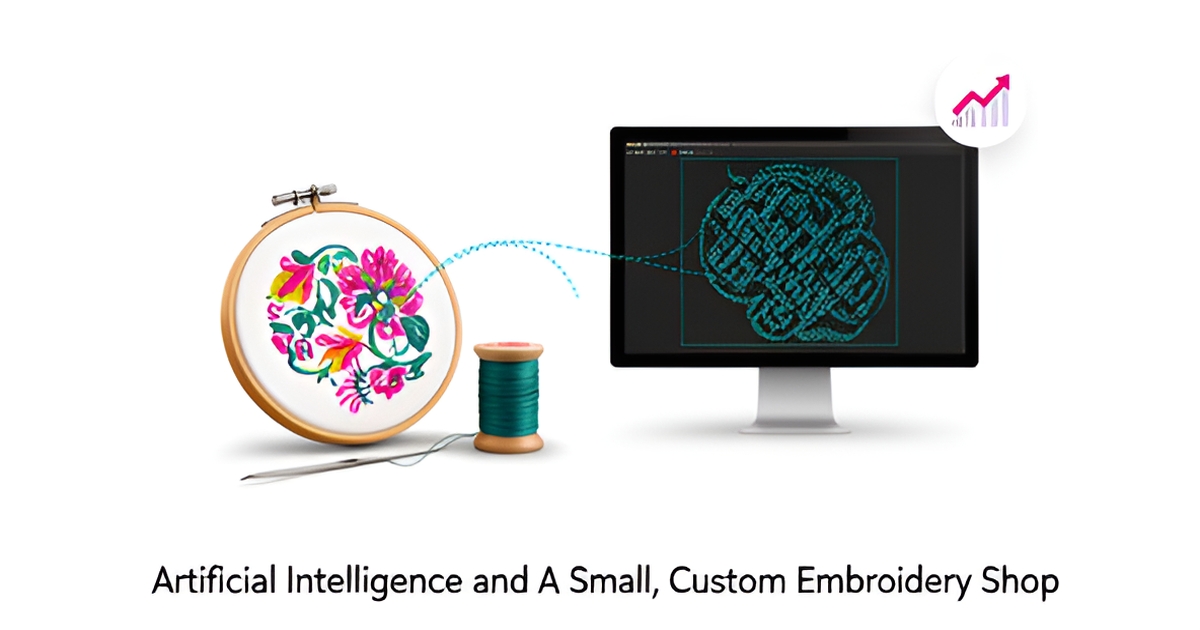
Is AI Worth It for a Small Custom Embroidery Shop? A Cost-Benefit Analysis
Key Facts
- AI digitizing tools turn images into stitch-ready embroidery files in minutes instead of hours, according to industry research.
- Small shops can start with some AI embroidery software for a one-time $35 activation, product specifications show.
- As an illustrative example, cutting 5 hours of weekly manual digitizing at $20/hour saves about $5,200 annually in labor costs.
- Traditional embroidery workflows remain time-consuming, expensive, and often a barrier to entry for smaller businesses, industry analysis confirms.
- AI-powered embroidery solutions can meaningfully reduce errors, cutting material waste and rework costs.
- Batch processing and 3D preview features let one operator handle higher order volumes without adding staff.
- Shops often substantially underestimate manual bottleneck costs because they track labor hours but not opportunity costs.
Hire a team member that works 24/7 — for less than a part-time wage.
AI receptionists, SDRs, dispatchers and 99+ roles. Trained on your business, fully managed.
Not sure where to start? Ask our AI planner
The Real Cost of Manual Embroidery Operations
Most embroidery shop owners know the frustration: a single complex design can consume hours of manual digitizing, and one miscalculated stitch path means wasted materials and missed deadlines. Research confirms that traditional embroidery workflows remain "time-consuming, expensive, and often a barrier to entry for smaller businesses," creating a ceiling on growth that no amount of overtime can break.
The hidden costs compound quietly. Skilled digitizers command premium wages, yet even experienced operators introduce variability — stitch density inconsistencies, registration errors, and path inefficiencies that show up only after the machine runs. A study of small garment factories notes that AI-powered solutions now "streamline the entire process, from design creation to quality control," addressing the exact failure points where manual work breaks down. For shops juggling custom orders, corporate logos, and personalized merchandise, that variability translates directly into rework hours and thin margins.
- Manual digitizing ties up senior staff on repetitive pathing instead of high-value design work
- Error rates climb with order complexity, driving material waste and schedule slippage
- Single-head machine limitations cap daily output regardless of demand spikes
- Training new digitizers takes months before they reach production speed
Specialized embroidery software with advanced auto-digitizing and batch processing capabilities demonstrates how automation compresses these timelines — transforming artwork into stitch-ready files "in minutes" rather than hours. One platform advertises 3D preview functionality and auto-correction tools that catch flaws before the first needle drops. In our experience working with small operations, embroidery shops often substantially underestimate the cumulative cost of these manual bottlenecks because they track labor hours but not opportunity cost. If you want an outside read on where your shop's money is leaking, AIQ Labs' workflow build engagements start by identifying the single workflow that costs you the most.
The scalability wall is real: a shop running two single-head machines hits a hard ceiling on daily units, and adding headcount doesn't linearly increase throughput when every new order still requires manual digitizing attention. That structural constraint is why more owners are evaluating whether AI-driven digitizing and production intelligence can shift their cost curve before they invest in additional heads or larger facilities.
AI Tools That Actually Reduce Embroidery Labor Costs
Manual digitizing is the bottleneck that keeps small embroidery shops from scaling, and AI-powered tools are changing that math. For owners weighing the investment, the first place labor savings show up is in digitizing software that replaces hours of handwork with automated workflows.
AI tools are simplifying and accelerating the embroidery digitizing process, enabling users to convert images into stitch-ready files quickly and with minimal manual effort. According to embroidery digitizing research, AI tools allow users to transform images into embroidery-ready files "in minutes" rather than hours. That speed shift directly impacts labor cost, order turnaround, and the ability to accept more custom work without adding staff.
Wilcom is a powerful embroidery digitizing software known for its smart AI features. It helps simplify the embroidery digitizing process by automating tasks and ensuring high-quality designs with minimal manual effort. Industry coverage of top AI tools notes professionals love Wilcom because it can handle even the most complex designs smoothly. Hatch Embroidery, built on Wilcom's technology, is designed for users of all skill levels, offering a balance of simplicity and powerful features. It's a good fit for beginners who want to start digitizing without feeling overwhelmed, with automatic stitch generation that makes creating automated embroidery designs quick and easy.
For shops watching cash flow, entry-level options can deliver immediate relief. Richpeace Embroidery Software V6.0 is positioned as an accessible option in digital embroidery, designed for both seasoned professionals and beginners. The software is offered with a one-time activation fee of $35.00 with no subscription required, which may appeal to small businesses concerned about ongoing expenses. With a click of a button, users can transform their artwork into professionally designed embroidery files, making it suitable for businesses looking to optimize production time.
Production efficiency features matter more than novelty. Product specifications highlight advanced auto-digitizing for image-to-stitch conversion, 3D preview functionality, and batch processing for multiple files. Batch processing allows users to automate the conversion of multiple design files into the desired embroidery format, saving valuable time and effort. Those capabilities map to the labor savings, order accuracy, and customer retention gains that determine whether an AI investment pays off for a small shop.
AI enhances machine embroidery by automating key tasks, optimizing stitch patterns, and providing useful insights, making this popular embellishment technique more accessible and efficient than ever for small businesses. Analysis of AI-powered embroidery solutions finds AI streamlines the entire process, from design creation to quality control. The practical impact shows up in daily operations:
- Automatic image to embroidery conversion that removes manual tracing
- Optimized stitch path generation that reduces thread waste and machine errors
- Batch processing for multiple files to handle rush orders without overtime
- High-quality design previews that improve order accuracy before production
These are not enterprise-only benefits. Minutes-not-hours design turnaround is achievable with current tools, and the cost structure ranges from a one-time $35 activation to professional suites. For a small custom shop, that combination of speed, accuracy, and controlled pricing is where the cost-benefit case for AI starts to become clear.
Measuring ROI: Labor Savings vs. Software Investment
For small custom embroidery shops, the math of AI investment often comes down to labor savings versus upfront and ongoing costs. A typical shop owner might spend 20+ hours weekly on manual digitizing — a time-intensive process that creates bottlenecks when order volume increases. AI-powered embroidery software can dramatically reduce this burden by automating image-to-stitch conversion and optimizing stitch paths, turning hours of work into minutes. According to industry insights, AI tools allow users to transform images into embroidery-ready files "in minutes" with minimal manual effort, directly addressing the core labor challenge in design preparation.
The financial upside becomes clearer when comparing software investment to labor value. Entry-level AI embroidery tools like Richpeace Embroidery Software V6.0 require a one-time activation fee of just $35.00 with no ongoing subscriptions, making advanced digitizing accessible even for shops with tight budgets. As an illustrative example: avoiding just 5 hours of manual digitizing per week — valued at $20/hour — represents roughly $5,200 in annual labor savings. When you factor in the error-reduction potential of AI-powered embroidery solutions, shops also save on material waste and rework costs, which can quickly erode profits in a low-margin, high-detail craft like custom embroidery.
Beyond direct labor savings, AI enables scalable growth without proportional hiring. Features like batch processing and auto-correction tools allow one operator to handle significantly higher order volumes, eliminating the need to hire additional digitizers during peak seasons. As noted in software specifications, capabilities such as 3D preview functionality and support for multiple file formats (DST, PES, JEF, EXP) reduce guesswork and setup time, further boosting throughput. For shops evaluating the investment, this shift from manual bottlenecks to automated efficiency often represents the clearest path to improved margins and sustainable growth — especially when the technology investment costs less than a single day of manual labor. AIQ Labs helps small businesses work through these trade-offs with a free 30-minute strategy call that clarifies whether AI aligns with your operational goals and financial constraints. You can start with the 2-minute Fit Check and go from there.
Implementation Roadmap: From Manual to AI-Assisted Production
Moving from manual digitizing to AI-assisted production doesn't require a full shop overhaul. Small custom embroidery shops can phase in automation where it delivers immediate labor savings and accuracy gains, then expand as confidence and capacity grow.
Phase one focuses on simple logos and repeat work. Auto-digitizing tools convert artwork into stitch-ready files in minutes with minimal manual effort, which AI digitizing reviews highlight as a core benefit for shops handling high volumes of basic designs. A one-time activation option like Richpeace Embroidery Software V6.0 at $35.00 shows how entry costs can remain low for small businesses testing automation. This phase builds early wins through faster turnaround and fewer reworks.
Phase two adds stitch optimization for complex designs. AI enhances machine embroidery by automating key tasks, optimizing stitch patterns, and providing useful insights, making this popular embellishment technique more accessible and efficient than ever for small businesses. Industry analysis of AI-powered embroidery solutions notes that traditional methods are time-consuming, expensive, and often a barrier to entry for smaller businesses. Optimized stitch path generation reduces material waste and improves order accuracy on multi-color or dense designs.
Phase three integrates cloud-based design libraries and workflow automation. Features to prioritize include automatic image to embroidery conversion, optimized stitch path generation, high quality design previews, cloud based storage and accessibility, and marketplace integration for designs. Top AI tools for embroidery digitizing lists these as essential for scaling without adding headcount. Batch processing allows users to automate the conversion of multiple design files into the desired embroidery format, saving valuable time and effort.
A practical roadmap for a small shop looks like this:
- Pilot auto-digitizing on simple logos for 2-4 weeks to measure time per design and error rate
- Introduce AI stitch optimization on complex apparel and personalization orders
- Centralize approved designs in a cloud library with version control and client previews
- Connect digitizing output to production queue to reduce handoffs and rework
This phased approach minimizes disruption while maximizing early wins. For owners evaluating the investment, the focus stays on labor savings, order accuracy, and customer retention gains rather than technology for its own sake. AIQ Labs works with small businesses through phased workflow builds — fixed price, delivered in milestones — to map high-ROI automation targets and design a roadmap that matches shop size and workflow.
Demand signals reinforce the opportunity: freelance platforms continue to list thousands of AI-related jobs across industries, indicating sustained market appetite for AI-assisted services. Start small, measure impact, then scale is the safest path to a sustainable competitive advantage.
When AI Doesn't Make Sense (And What to Do Instead)
AI isn't a magic wand for every embroidery shop. When designs demand true artistic interpretation — hand-drawn illustrations translated to thread, one-of-a-kind heirloom pieces, or highly textured 3D puff work — current generative tools still struggle to match a skilled digitizer's judgment on stitch direction, density, and underlay strategy. A case study on generative AI for embroidery confirms these systems excel at novelty generation but lack the production-grade precision that complex custom work requires.
- Extremely low monthly volume where setup time exceeds production time
- Legacy machines without USB/network connectivity or modern file format support
- Shops where the owner's digitizing skill is the core product differentiator
- Niche markets requiring frequent mid-run design adjustments on the machine
For these scenarios, template libraries often deliver better ROI than AI. Building a curated collection of pre-digitized elements — borders, monogram frameworks, common logo structures, stock motifs — lets you assemble custom-looking designs in minutes without automated conversion risks. Pair this with batch processing capabilities in software like Richpeace V6.0 to handle repetitive file conversions across orders.
Outsourcing partnerships provide another path. Many shops maintain relationships with specialized digitizing services for overflow or highly complex jobs, paying per design rather than investing in tools they'll rarely use. This variable-cost model preserves cash flow while maintaining quality standards. The industry analysis notes that traditional digitizing remains "time-consuming, expensive, and often a barrier to entry" — exactly why selective outsourcing beats forced automation.
AIQ Labs helps shops run this exact cost-benefit analysis through a structured Fit Check and a free 30-minute strategy call that map your specific workflow, volume patterns, and equipment constraints before any investment decision. The right answer might be a $35 software upgrade, a template library project, or a managed AI employee handling order intake — never a one-size-fits-all prescription.
Still paying for 10+ subscriptions that don’t talk to each other?
We build custom AI systems you own outright. No vendor lock-in. Full control.
Not sure where to start? Ask our AI planner
Frequently Asked Questions
How much money can a small embroidery shop actually save by switching to AI digitizing?
What's the real cost difference between hiring a digitizer and buying AI software?
Will AI digitizing handle my complex custom designs or just simple logos?
How long does it take to see ROI from embroidery AI software?
What if my embroidery machines are older — will AI software still work?
When does AI not make sense for a small embroidery shop?
Your Next Stitch Toward Smarter Embroidery
For small custom embroidery shops, the decision to adopt AI isn't about chasing trends — it's about removing the manual bottlenecks that limit growth and erode margins. As we've seen, tools like auto-digitizing software can transform hours of design work into minutes, reduce material waste through optimized stitch paths, and enable batch processing that handles rush orders without overtime. Entry-level options start at a one-time $35 activation, making it possible to test AI's impact without ongoing costs or major disruption. Whether your shop struggles with complex designs, seasonal volume spikes, or the hidden cost of rework, the case for measurable gains in labor savings, order accuracy, and scalability is strongest when AI is phased in strategically, starting with simple logos and repeat work. If you're evaluating whether AI aligns with your workflow and goals, AIQ Labs offers a free 30-minute strategy call to assess your readiness and map high-ROI opportunities. Start the 2-minute Fit Check to see where automation could unlock your next level of efficiency — no obligation, just clarity on what's possible for your shop. Prefer email? Reach the team at [email protected].
Make AI your competitive advantage — not just another tool.
Strategy, implementation and ongoing optimization. One partner, end to end.
Not sure where to start? Ask our AI planner