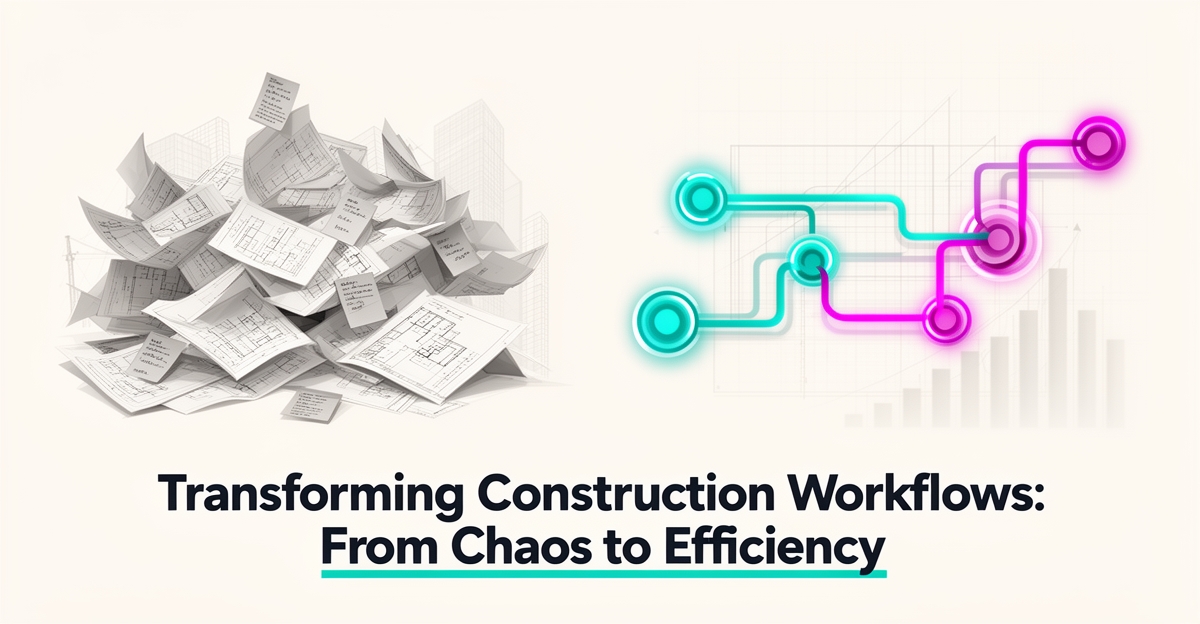
Is AI Worth It for Design-Build Firms? A ROI Breakdown of Automation vs. Manual Operations
Key Facts
- Industry analyses consistently find that a large majority of construction projects run over budget, with overruns often attributed to inefficient workflows and reactive decision-making.
- AI-powered progress monitoring and predictive risk identification are widely associated with significant reductions in rework—one of the largest hidden costs in design-build work.
- Large contractors adopting AI at scale have reported multi-million-dollar savings per project from fewer delays, better risk mitigation, and automated compliance workflows.
- Studies of AI in construction project management typically point to productivity gains in the low-to-mid double digits when scheduling, risk, and resource management are automated.
- Firms using disconnected tools commonly report many hours of manual data entry each week that pulls skilled personnel away from value-added work.
- AI operating systems in architecture and engineering firms improve consistency and quality while enabling firms to take on more projects without adding headcount.
Hire a team member that works 24/7 — for less than a part-time wage.
AI receptionists, SDRs, dispatchers and 99+ roles. Trained on your business, fully managed.
Not sure where to start? Ask our AI planner
The Cost of Manual Operations in Design-Build Firms
Design-build firms relying on manual project management face escalating financial and operational strain. Industry benchmarks have long shown that most construction projects exceed their budgets, and the causes are consistent: fragmented communication, delayed issue identification, and manual tracking errors that compound across project lifecycles. For firms managing multiple concurrent projects, the cumulative impact erodes profitability and strains client relationships, turning what should be predictable margins into volatile financial outcomes.
The hidden costs of manual operations extend beyond budget variances to include significant rework and scheduling inefficiencies. AI-powered systems are frequently associated with major reductions in rework because they enable real-time progress monitoring and predictive risk identification—capabilities absent in traditional paper-based or spreadsheet-driven approaches. When teams spend excessive time reconciling discrepancies, chasing updates, or correcting preventable mistakes, productivity declines and timelines slip. This operational drag not only increases labor costs but also delays invoicing and payment cycles, further impacting cash flow.
Manual processes also create systemic blind spots that hinder proactive management. Without automated data synchronization across design, estimating, and field teams, critical information silos form, leading to misaligned resources and missed optimization opportunities. Firms using disconnected tools commonly lose many hours each week to manual data entry—a burden that scales with project complexity and diverts skilled personnel from value-added tasks. These inefficiencies accumulate quietly, manifesting as avoidable expenses that undermine competitiveness in an increasingly technology-driven market. For design-build firms evaluating transformation, understanding these pain points is essential to modeling the true ROI of AI-driven automation versus the status quo. To explore how AIQ Labs helps firms quantify these savings, start with the two-minute Fit Check and a free 30-minute strategy call.
How AI Delivers Measurable ROI in Construction Project Management
The economics of AI adoption in construction aren't theoretical anymore—they're showing up in project ledgers. Firms that automate scheduling, risk management, and resource optimization are attacking the exact problems that erode margins most: overruns, rework, and slow decisions.
The productivity gains are measurable. Research on AI-powered project management typically points to double-digit productivity improvements and substantial reductions in rework. For design-build firms, the rework figure matters most—every hour not spent redoing work is an hour billed forward instead of absorbed.
The savings scale with project size. Large contractors using AI have reported multi-million-dollar savings per project, driven by fewer delays, better risk mitigation, and automated compliance workflows. Even at a fraction of that scale, the math justifies serious evaluation.
Real-world tools illustrate where the value concentrates:
- Scheduling and risk automation: Platforms like ALICE Technologies and nPlan automate scheduling and risk management, enabling project managers to make informed decisions and mitigate risks before they become change orders.
- Progress monitoring: Tools such as OpenSpace and Buildots automate progress tracking, surfacing potential issues early enough for corrective action.
- Document and compliance automation: Autodesk Construction IQ automates document analysis and compliance, reducing administrative burdens that typically consume project management hours.
These gains compound across the business. Beyond the jobsite, AI operating systems in architecture and engineering firms automate proposal generation, resource allocation, and project tracking—improving consistency and quality while enabling firms to handle more projects and increase revenue. That consistency translates directly into client satisfaction and repeat work.
The honest caveat: these results require investment. Adoption demands spending on technology and training, plus careful attention to data quality and integration with existing systems and workflows. And many AI initiatives stall before delivering returns when firms treat them as point solutions rather than operational changes.
This is where modeling matters. Before committing budget, firms benefit from mapping specific workflows—scheduling, intake, dispatch, reporting—against their actual costs to project returns with defensible numbers rather than vendor promises. AIQ Labs takes this approach: whether it's rebuilding the one workflow that costs you the most at a fixed price, deploying AI Employees like dispatchers and project coordinators at a fraction of the cost of a human hire, or building a full AI Operating System in phases you own outright, the business case is built around your real costs and bottlenecks before any system gets built—not hype.
The takeaway for design-build firms: the ROI is real, but it belongs to firms that measure it before they buy.
From Manual to AI-Powered: A Practical Implementation Roadmap for Design-Build Firms
Transitioning from manual to AI-powered operations doesn't require a complete overhaul—it begins with a clear, phased approach grounded in your firm's specific workflows. Start by identifying the most time-consuming, error-prone bottlenecks, such as manual scheduling, invoice processing, or progress tracking. Once pain points are mapped, evaluate fit-for-purpose AI tools that align with your existing systems—whether for automating document analysis, optimizing resource allocation, or enhancing site monitoring—ensuring they integrate with platforms like your project management or accounting software. Change management is critical: train teams early, communicate the value of AI as a force multiplier, not a replacement, and establish feedback loops to refine adoption. Finally, measure outcomes against baseline metrics—tracking reductions in rework, improvements in productivity, and avoidance of costly delays. AIQ Labs supports this journey through milestone-based implementation: you can start monthly with AI Employees, rebuild a single costly workflow at a fixed price, or build toward a full operating system you own outright—each phase gated so you only continue when the numbers hold up. By following this roadmap, firms can move beyond pilot uncertainty into scalable, sustainable AI adoption that drives measurable efficiency and competitive advantage. Most AI initiatives fail without a clear implementation strategy—making a disciplined, phase-gated approach essential for success.
- Assess current workflows to pinpoint high-impact automation targets
- Select AI tools that integrate with existing CRM, accounting, and project management systems
- Run a controlled pilot in one department before scaling enterprise-wide
- Train staff and establish human-in-the-loop oversight for critical decisions
- Track KPIs like time saved, error reduction, and on-time delivery post-implementation
To begin, book your free 30-minute strategy call today—no obligation, just clarity on where AI can deliver the fastest, most measurable impact for your operations.
Still paying for 10+ subscriptions that don’t talk to each other?
We build custom AI systems you own outright. No vendor lock-in. Full control.
Not sure where to start? Ask our AI planner
Frequently Asked Questions
Do most construction projects experience cost overruns?
How much can AI reduce rework in construction projects, and why does this matter for design-build firms?
What productivity improvements can design-build firms expect from adopting AI in project management?
Is AI adoption in construction just theoretical, or are there real-world savings being reported?
What are the main risks of AI projects failing to deliver ROI in construction firms?
How should design-build firms start evaluating AI for their operations without overhauling everything at once?
Measure First, Automate Smart
Manual design-build operations quietly erode margins through cost overruns, rework, and hours of weekly manual data entry. AI changes that equation by delivering measurable gains in productivity and rework reduction while automating scheduling, risk management, progress monitoring, and compliance. The ROI is real, but it belongs to firms that model it against their own workflows before buying point solutions. A disciplined roadmap starts with mapping high-impact bottlenecks, selecting tools that integrate with existing project management and accounting systems, piloting in one department, and tracking KPIs like time saved, error reduction, and on-time delivery. AIQ Labs supports design-build firms with three entry points—AI Employees, Workflow Builds, and AI Operating Systems—each with payment models that let you start monthly, build in milestones, or own it outright. Start the Fit Check at aiqlabs.ai/apply, then book a free 30-minute strategy call to map your biggest bottlenecks and identify high-ROI automation opportunities tailored to your operations.
Make AI your competitive advantage — not just another tool.
Strategy, implementation and ongoing optimization. One partner, end to end.
Not sure where to start? Ask our AI planner