Is AI Worth It for Geothermal Installation Companies? A Cost-Benefit Breakdown for SMBs
Key Facts
- AI-driven subsurface modeling can typically eliminate 15–30% of unnecessary bore depth, often saving several thousand dollars per residential geothermal installation, according to industry analyses.
- Labor typically accounts for 50–70% of total geothermal installation costs, making drilling optimization a critical leverage point for SMBs.
- At roughly $5,500 in avoidable drilling costs per project, 10 installations monthly can mean over $660,000 in annual losses for a mid-sized installer.
- Design tools like GHEtool simultaneously optimize bore depth and borehole count, sometimes finding that eight shallow holes beat six deep ones.
- Vertical borehole drilling typically runs $15–$25 per linear foot, with labor consuming 50–70% of total installation cost.
- Roughly 60,000 geothermal heat pump systems are installed annually in the U.S., per commonly cited market estimates.
Hire a team member that works 24/7 — for less than a part-time wage.
AI receptionists, SDRs, dispatchers and 99+ roles. Trained on your business, fully managed.
Not sure where to start? Ask our AI planner
The Hidden Cost of Drilling Inefficiency in Geothermal Installation
Imprecise subsurface data forces geothermal installers to add safety margins that drive unnecessary over-drilling, industry estimates put the cost at $3,000 to $8,000 per residential project. This inefficiency stems from relying on regional averages instead of site-specific soil conductivity data, often leading to 15 to 30 percent more bore depth than actually needed. For SMBs operating on thin margins, these avoidable expenses directly erode profitability on every job.
Labor typically represents 50 to 70 percent of total geothermal installation costs, making drilling optimization a critical leverage point for SMBs seeking to improve financial performance. When labor constitutes such a dominant share of project expenses, reducing non-productive drilling time delivers outsized returns by freeing skilled crews for higher-value tasks. Every foot of unnecessary borehole depth not only wastes materials but also ties up crews that could be completing additional installations.
The financial impact compounds quickly: at an average of $5,500 in avoidable drilling costs per residential project, just 10 installations per month translates to over $660,000 in annual losses for a mid-sized installer. AI-driven subsurface modeling tools like GHE Analysis and GHEtool address this by extracting usable data from interrupted thermal response tests and simultaneously optimizing bore depth and quantity, eliminating guesswork and safety buffers. For geothermal SMBs evaluating AI adoption through an ROI lens, targeting drilling inefficiency offers one of the clearest paths to immediate cost savings and improved project throughput. To explore how AI can address these specific operational challenges, start with the 2-minute Fit Check and then book a free 30-minute strategy call to map your biggest bottlenecks.
How AI Reduces Drilling Waste and Improves Project Accuracy
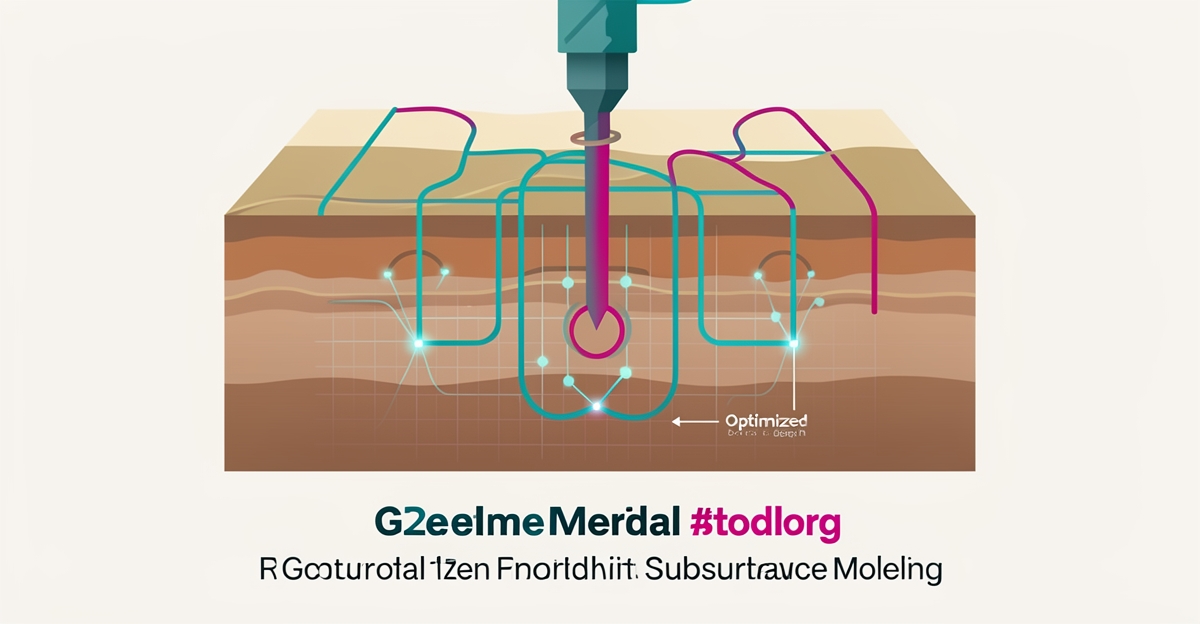
Every unnecessary foot of borehole drilled is money pulled straight out of an installer's margin. Because subsurface conditions are uncertain, installers routinely add a 15 to 30 percent safety margin to bore depth, over-drilling that industry analyses estimate costs $3,000 to $8,000 per residential installation. AI-driven design tools are now attacking that waste at its source.
The core problem is data quality. Traditional design relies on spreadsheets and regional averages, so an installer might drill 300 feet based on soil data from two miles away, resulting in 40 feet of unnecessary drilling and $3,000 to $5,000 in raw drilling costs alone. AI replaces those regional averages with site-specific modeling, sizing the bore field to actual ground conditions rather than guesswork and buffers.
Two tools illustrate how this works in practice:
- GHE Analysis uses neural networks to interpret interrupted thermal response tests (TRTs). Traditional TRTs require 48 to 72 hours of continuous data, but field conditions, equipment failure, power fluctuations, often break that run. The software extracts usable conductivity values from measurements that would otherwise be discarded, enabling accurate bore sizing on the first pass.
- GHEtool, an open-source Python library developed by researchers at KU Leuven with support from Boydens Engineering, Sweco, and FH Aachen, simultaneously optimizes bore depth and borehole count, the two most labor-intensive parts of design. It can test configurations a human designer wouldn't explore due to calculation time, sometimes finding that eight shallow holes beat six deep ones.
The financial math is straightforward when you remember that vertical borehole drilling typically runs $15 to $25 per linear foot and labor accounts for 50 to 70 percent of total installation cost. Cutting drilling requirements by even the low end of the 15 to 30 percent range compounds quickly across a year of projects. It also matters competitively: air source heat pumps deliver much of geothermal's efficiency gain at a fraction of the installed price, so every avoidable foot of bore widens the gap geothermal must close to stay viable.
For SMB installers, the practical challenge is less about the tools themselves and more about implementation, interpreting neural network outputs, integrating site data collection into existing workflows, and trusting algorithmic recommendations for critical drilling decisions. This is where a structured evaluation pays off. AIQ Labs helps businesses model the ROI of AI adoption before committing, weighing the per-project savings against the real costs of software, training, and workflow change. If drilling design isn't your biggest bottleneck, an AI Workflow Build targets whichever workflow costs you the most, at a fixed price and in phases.
The takeaway: AI doesn't just make geothermal design more precise, it converts uncertainty, the industry's most expensive hidden cost, into measurable savings.
AI Investment vs. Savings: A Practical ROI Framework for SMB Geothermal Contractors
For SMB geothermal contractors, the math on AI comes down to drilling waste versus software cost. Labor already consumes 50 to 70 percent of total installation cost, and drilling is the single largest line item in that mix. When subsurface data is imprecise, that cost inflates further.
Over-drilling is the hidden margin killer. Installers routinely add 15 to 30 percent safety margin to bore depth because site-specific thermal data is missing. Industry research estimates that over-drilling costs $3,000 to $8,000 per residential installation due to those safety buffers. With residential systems typically ranging from $15,000 to $40,000 installed, that waste alone can erase profitability on a single job.
AI shifts the cost structure from guesswork to precision. Neural network tools can interpret interrupted thermal response tests that traditionally require 48 to 72 hours of continuous data, extracting usable conductivity values from messy field measurements. Open-source libraries automate bore depth and borehole count simultaneously, finding configurations like eight shallow holes versus six deep ones that manual iteration misses.
The payback framework for SMBs focuses on three measurable levers:
- Reduced drilling cost: Fewer unnecessary feet at $15 to $25 per linear foot for vertical boreholes directly lowers project cost.
- Faster project timelines: Faster TRT analysis and first-pass bore sizing cuts delays from repeat tests and crew idle time.
- Lower labor hours: Automated design and dispatch reduce manual spreadsheet work that consumes 50 to 70 percent of project cost.
A practical SMB approach is to start with one workflow and measure it. AIQ Labs works with SMBs through three payment models: Start Monthly, where a flat monthly plan covers build, training, integrations, monitoring and improvements and can be paused anytime; Build in Milestones for a fixed-price rebuild of your costliest workflow in phases; and Own It Outright if you want to own the system with no recurring fees. That flexibility lets a contractor test AI dispatch or customer onboarding against real job savings before scaling. See aiqlabs.ai/pricing for how the models compare.
Payback estimates depend on volume, but the unit economics are clear. If AI avoids $3,000 to $8,000 of over-drilling on a typical residential job and shortens the sales-to-install cycle, the savings compound across the roughly 60,000 geothermal heat pump systems installed annually in the U.S. market.
For owners evaluating ROI, the decision is not about replacing crews. It is about protecting margin on every bore and converting labor time into billable work. When the software cost is framed against drilling waste and labor efficiency, AI moves from experimental to essential for SMB contractors competing against cheaper air source alternatives.
Still paying for 10+ subscriptions that don’t talk to each other?
We build custom AI systems you own outright. No vendor lock-in. Full control.
Not sure where to start? Ask our AI planner
Frequently Asked Questions
How much money can AI save geothermal installation companies by reducing over-drilling on a typical residential project?
What percentage of total geothermal installation costs is attributed to labor, and why does reducing drilling time improve profitability for SMBs?
How do AI tools like GHE Analysis and GHEtool improve drilling accuracy compared to traditional methods that rely on regional averages?
What is the estimated annual financial impact of over-drilling for a mid-sized geothermal installer completing 10 residential projects per month?
Is AI adoption in geothermal installation about replacing workers, or is it focused on improving efficiency and protecting margins?
What are the three measurable levers SMB geothermal contractors should focus on when evaluating AI ROI for drilling optimization?
Turning Drilling Waste into Profit: The AI Advantage for Geothermal SMBs
For geothermal installation SMBs, the path to stronger margins isn't about working harder, it's about drilling smarter. Imprecise subsurface data leads to unnecessary over-drilling that erodes an estimated $3,000 to $8,000 per job, directly impacting profitability in an industry where labor already consumes 50 to 70 percent of costs. AI-driven tools like GHE Analysis and GHEtool eliminate this waste by replacing regional averages with site-specific modeling, optimizing bore depth and count, and extracting value from interrupted thermal tests that would otherwise be discarded. The result is fewer wasted labor hours, faster project timelines, and measurable savings that compound across every installation. For SMBs evaluating where to focus AI investment, targeting drilling inefficiency offers one of the clearest, most immediate returns, protecting margin on every bore while freeing skilled crews for higher-value work. To explore how AI can address your specific bottlenecks and model the ROI before committing, run the 2-minute Fit Check, then book a free 30-minute strategy call to map your biggest opportunities with the AIQ Labs team.
Make AI your competitive advantage — not just another tool.
Strategy, implementation and ongoing optimization. One partner, end to end.
Not sure where to start? Ask our AI planner