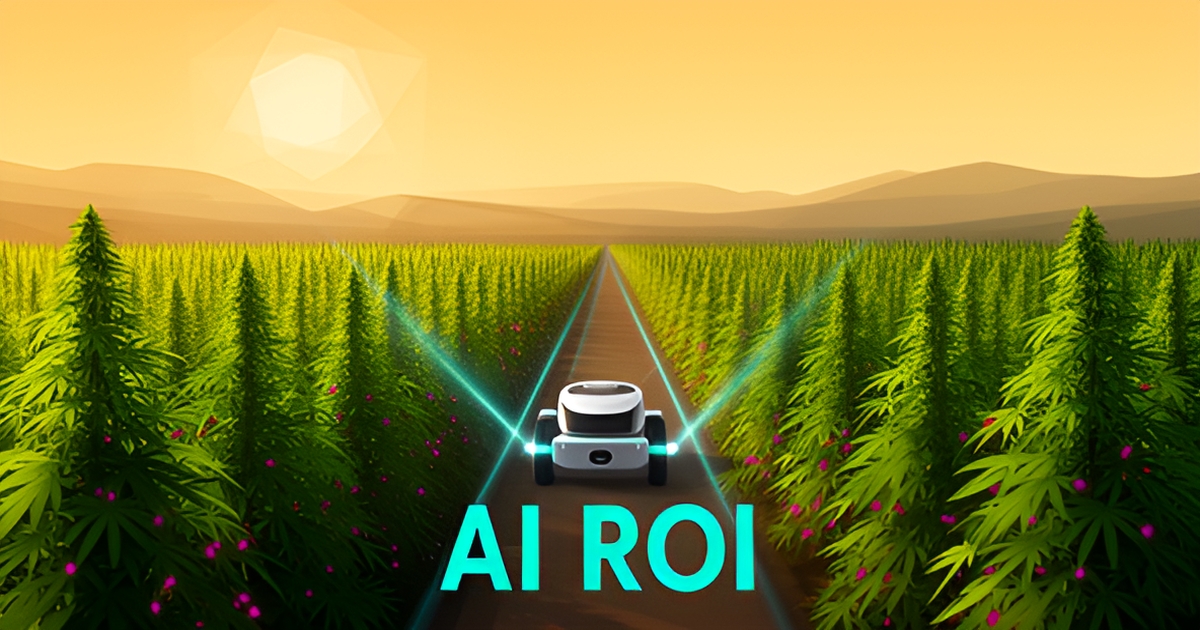
Is AI Worth It for Hemp Farms? A Cost-Benefit Analysis of Automation
Key Facts
- Autonomous farm robots reduce herbicide use by 80-90% and labor hours by 60% in vegetable operations based on Naïo Technologies 2025 findings
- The global AI in agriculture market was valued at $1.7 billion in 2023 and is projected to reach $4.7 billion by 2028 in market estimates
- Autonomous robots operate 20-24 hours/day vs. 10-14 hours/day for traditional mechanization per Sustainable Atlas
- AI-powered precision agriculture improves yields 5-15% through reduced soil compaction in vegetable operations
- Only 31% of companies track AI software spend accurately per Flexera data
- Only 13% of organizations have proper AI agent governance per Redwood Software insights
- Farm labor costs rose 12% between 2022-2025 per USDA in major agricultural economies
Hire a team member that works 24/7 — for less than a part-time wage.
AI receptionists, SDRs, dispatchers and 99+ roles. Trained on your business, fully managed.
Not sure where to start? Ask our AI planner
The Hemp Farm Profit Squeeze: Labor, Yield, and Market Volatility
Hemp operators face rising costs and tightening margins. Labor is becoming more expensive while workers are harder to find, and buyers demand higher yields with fewer chemical inputs. Automation is being framed as the way to stay profitable.
Global agriculture faces a convergence of pressures, with food production needing to increase 60% by 2050 to feed 9.7 billion people according to FAO projections. For hemp farms, that macro pressure translates into immediate field-level tradeoffs between hand labor, mechanization, and new AI-enabled systems.
Labor costs are climbing fast. Farm labor shortages are intensifying across every major agricultural economy, with the USDA reporting a 12% rise in hired farm labor costs between 2022 and 2025 in recent data. Hemp cultivation is especially labor-intensive during planting, weeding, monitoring, and harvest, so those increases hit profit directly.
Yield expectations are rising at the same time inputs are under scrutiny. Precision agriculture powered by AI leads to cost savings by minimizing resource use and maximizing yields according to agriculture technology analysis. AI-powered tools are addressing the challenges of hemp farming by providing real-time monitoring, predictive analytics, automated systems, disease detection, and strain optimization as described in hemp industry coverage.
Market volatility adds another squeeze. Predictive analytics is transforming hemp farming by forecasting future outcomes with high accuracy, including weather predictions, yield forecasting, pest and disease risk assessment, and market demand insights per Time 4 Hemp reporting. Without those signals, operators risk overplanting into a soft market or missing a window for harvest quality.
The cost backdrop is also shifting. The global agriculture market’s artificial intelligence value was approximately $1.7 billion in 2023, with projections indicating growth to around $4.7 billion by 2028 in market estimates. That growth reflects demand for systems that can automate repetitive field work while improving decision quality.
Operators evaluating automation typically weigh:
- Rising hired labor costs versus 24/7 operation potential of autonomous systems
- Yield gains from precision inputs and reduced soil compaction
- Chemical input reduction targets and sustainability expectations from buyers
- Total cost of ownership including software, connectivity, and maintenance
Autonomous farm robots can reduce herbicide use by 80-90% and labor hours by 60% in vegetable operations based on Naïo Technologies 2025 findings, a profile that maps closely to hemp’s weeding and scouting needs.
This is the context in which AI readiness assessments matter. AIQ Labs works with SMBs to map operational bottlenecks to high-ROI automation opportunities rather than applying a blanket tech stack. For hemp farms, the decision hinges on scale, crop mix, and whether automation aligns with growth goals, not hype.
Where AI Delivers Measurable Value in Hemp Operations
The global AI in agriculture market, valued at approximately $1.7 billion in 2023 and projected to reach $4.7 billion by 2028, reflects a shift from experimental gadgets to essential infrastructure. For hemp operations, this growth translates into specific applications that deliver measurable operational value today.
Real-Time Monitoring and Predictive Analytics
AI-powered tools now provide hemp farmers with continuous field visibility through real-time monitoring systems that track soil moisture, nutrient levels, and plant health indicators. These systems feed into predictive analytics engines that forecast weather patterns, estimate yields with high accuracy, and assess pest and disease risks before they become visible to the naked eye. According to industry analysis, this predictive capability allows growers to make data-driven decisions about irrigation timing, harvest windows, and intervention strategies, effectively replacing guesswork with precision.
Precision Application and Resource Optimization
Perhaps the most compelling financial case appears in precision agriculture applications. Autonomous farm systems now utilize per-plant targeting to reduce herbicide use by 80-90% while cutting labor hours by 60% in comparable vegetable operations. These precision systems improve yields by 5-15% through reduced soil compaction and optimized input placement, while simultaneously supporting the sustainability credentials that many hemp buyers now demand.
Strain Optimization and Quality Control
Beyond field operations, AI analyzes genetic data and growing conditions to optimize hemp strains for specific end-uses, whether CBD extraction, fiber production, or grain. This capability extends to automated quality control systems that monitor cannabinoid profiles and detect contaminants, ensuring compliance and consistency across batches.
Key applications delivering measurable returns include:
- Predictive analytics for weather forecasting, yield estimation, and pest risk assessment
- Precision application systems reducing chemical inputs by 80-90% through targeted delivery
- Automated disease detection and real-time crop health monitoring
- Strain optimization for specific cannabinoid profiles and fiber characteristics
- Market demand forecasting to align production with pricing trends
For hemp operations evaluating these technologies, the challenge lies in matching specific applications to operational scale and existing infrastructure. AIQ Labs works with agricultural businesses to assess readiness and identify which of these capabilities—whether predictive analytics, precision application, or automated monitoring—align with current workflows and growth objectives, ensuring investments target actual bottlenecks rather than unnecessary complexity.
Cost-Benefit Reality Check: TCO, Payback, and Scale Thresholds
The math on hemp automation looks compelling on paper until total cost of ownership enters the field.
Autonomous robots can run 20-24 hours a day, weather permitting, compared to 10-14 hours a day for traditional mechanization, which stretches productive windows across short hemp harvest cycles. That uptime is paired with precision gains: autonomous systems can improve yields by 5-15% through reduced compaction and precision inputs, while cutting herbicide use by 80-90% and labor hours by 60% in vegetable operations. For specialty hemp growers facing tight labor markets, the convergence of longer operating hours and reduced input waste drives strong ROI and payback periods of two to three seasons in high-value crops.
Total cost of ownership for autonomous robots includes acquisition price, financing, fuel or electricity, maintenance, insurance, operator labor, and downtime, as well as software subscription fees and connectivity costs. Traditional mechanization remains deeply embedded and holds a technology readiness level of 9 versus 7-8 for weeding/scouting and harvesting robots, which means lower upfront risk for very large broadacre operations above 5,000 hectares where speed of coverage is paramount. The scale threshold matters: autonomous robots excel in high-value specialty crops, organic production systems, and labor-constrained markets where precision justifies the capital.
Execution risk is the hidden line item. Enterprises are deploying agentic AI faster than they can implement governance and control mechanisms, and only 13% of organizations believe they have the right governance in place to manage their AI agents. The execution gap between what agentic AI promises and what it actually delivers remains largely unaddressed, with agents often automating isolated tasks rather than full business processes. Autonomy amplifies risk; agentic AI acting on its own does not mean it requires zero human oversight.
Spend visibility compounds the problem. Just 31% of companies report having accurate visibility into their AI software spend, and 59% say wasted AI spend has increased over the past year. AI is complex to track because it is a layer that sits across existing categories, not a standalone line item.
A realistic TCO review for hemp farms should cover:
- Acquisition and financing versus used tractor fleets and existing depreciation schedules
- Energy, connectivity, and software subscription fees that recur annually
- Labor reallocation, not just reduction, as 60% labor hour reductions shift work to robot oversight and data review
- Yield uplift of 5-15% and input savings validated on your soil and strain
AIQ Labs approaches these tradeoffs through an AI Readiness Assessment that maps operational scale, growth goals, and governance capacity before capital is committed. A no-blanket, customized assessment helps owners determine if automation aligns with their scale and whether the organization can close the execution gap and track ROI with clear spend visibility.
A Practical Implementation Path for Hemp Farms
The decision to automate shouldn't be dictated by hype, but by your specific operational math. With less than a third of organizations accurately tracking their AI software spend, the risk of investing in disconnected tools that drain capital rather than build value is real.
For small to mid-sized hemp operations, the entry point is rarely full autonomy. Instead, research indicates that autonomous solutions excel in high-value specialty crops where precision matters most. Rather than replacing your entire workforce, look first at high-friction bottlenecks: inventory forecasting, compliance documentation, or customer intake. These targeted interventions typically offer the fastest payback periods without the overhead of enterprise-scale robotics.
Larger commercial farms face a different calculus. With the AI in agriculture market projected to grow from $1.7 billion in 2023 to $4.7 billion by 2028, scalability becomes the priority. However, autonomy without oversight creates liability. As industry analysts warn, autonomy does not equal autopilot—governance must scale alongside capability.
A practical implementation path might include:
- Workflow fixes for immediate pain points like invoice processing or inventory tracking
- Department automation for sales, marketing, or operations as you scale
- Managed AI employees for 24/7 reception, dispatch, or customer support roles (learn more)
- Full operational integration only when data infrastructure supports it
This is where a customized assessment matters. AIQ Labs approaches hemp operations through a readiness framework that evaluates your current data infrastructure, team capabilities, and growth goals before recommending specific interventions. Whether you need a single workflow rebuilt or a phased department overhaul, the goal is matching the automation tier to your actual operational maturity—not forcing a blanket solution.
Start with the two-minute Fit Check at https://aiqlabs.ai/apply, then book a free 30-minute strategy call at https://aiqlabs.ai/book to map your specific bottlenecks against realistic ROI projections. If the numbers don't support automation yet, you'll get that answer straight.
Still paying for 10+ subscriptions that don’t talk to each other?
We build custom AI systems you own outright. No vendor lock-in. Full control.
Not sure where to start? Ask our AI planner
Frequently Asked Questions
Is AI worth it for small hemp farms, or is it only for large operations?
What specific labor and cost savings can I expect from AI automation on my hemp farm?
How long does it take to see a return on investment from AI farm automation?
What are the hidden costs or risks of adopting AI on a hemp farm that I should be aware of?
Can AI help with more than just field work, like predicting market demand or optimizing strains?
How do I know if my hemp farm is ready for AI automation without wasting money on disconnected tools?
Turning Hemp Farm Data into Decisive Action
The analysis confirms that AI-driven automation delivers tangible value for hemp farms—reducing labor hours by up to 60%, cutting herbicide use by 80-90%, and boosting yields by 5-15% through precision application and real-time monitoring. However, realizing these gains requires more than adopting technology; it demands a clear assessment of operational bottlenecks, scale readiness, and governance capacity to avoid the execution gap seen in broader AI deployments. For hemp operators weighing the investment, the path forward starts with understanding where automation aligns with actual workflow challenges—not hype. AIQ Labs helps hemp farms navigate this decision through a customized AI Readiness Assessment that maps your specific bottlenecks to high-ROI opportunities, ensuring investments target real pain points with measurable returns. To begin, take the two-minute Fit Check at https://aiqlabs.ai/apply, then schedule a free 30-minute strategy call to explore whether automation makes sense for your operation’s scale and goals.
Make AI your competitive advantage — not just another tool.
Strategy, implementation and ongoing optimization. One partner, end to end.
Not sure where to start? Ask our AI planner