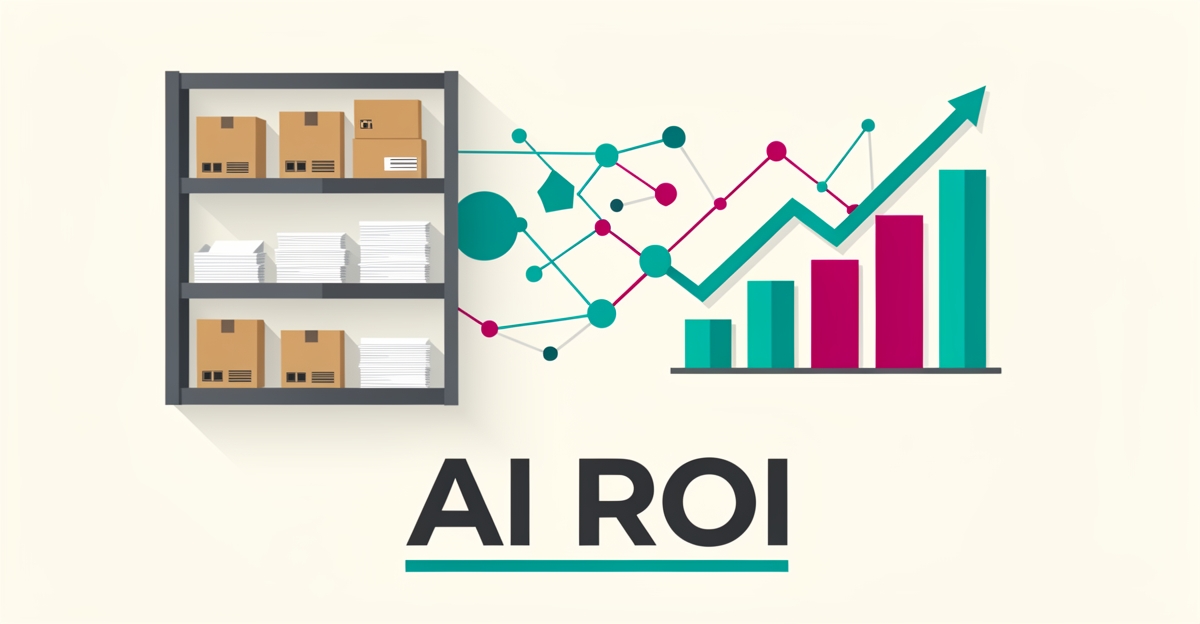
Is AI Worth It for Office Supply Distributors? A ROI Analysis for SMBs
Key Facts
- Manual order processing typically runs several minutes per order according to OrderFlow research
- Even experienced teams carry a meaningful error rate—OrderFlow cites around 3% per its benchmark data
- Fully loaded error costs can reach into five figures per incident per industry benchmarks, once resolution time and churn risk are counted
- A 50,000-order-per-year distributor can spend thousands of staff-hours on entry alone in labor cost
- AI-based interpretation can cut error rates to a fraction of manual levels for mid-volume distributors
- Payback periods for order automation are typically measured in months, not years per OrderFlow analysis
- OrderFlow reports that most B2B buyers reduce spend or switch suppliers after repeated errors according to its buyer data
Hire a team member that works 24/7 — for less than a part-time wage.
AI receptionists, SDRs, dispatchers and 99+ roles. Trained on your business, fully managed.
Not sure where to start? Ask our AI planner
The Hidden Costs of Manual Order Processing
Manual order processing creates a hidden tax on SMB office supply distributors that drains resources silently. Using OrderFlow's benchmark of roughly 8 minutes per order, a distributor handling 200 orders daily consumes over 26 hours of staff time just on entry. At 50,000 orders per year, that's thousands of staff-hours annually—at a fully loaded $25 per hour, the labor line alone approaches $167,000. And that baseline doesn't account for the compounding impact of errors, which OrderFlow pegs at around a 3% rate even for experienced teams, with fully loaded costs per incident that can reach five figures once you factor in resolution time, customer dissatisfaction, and potential churn. Run those error costs across a full year of orders and they can rival or exceed labor spend—which is why manual processes become financially unsustainable at scale.
Beyond immediate expenses, errors trigger a revenue leak that threatens long-term viability. OrderFlow's buyer data suggests the large majority of B2B buyers reduce spend or switch suppliers after three or more order errors, meaning a single frustrated customer can erase months of acquisition effort. For distributors relying on repeat business, this churn risk transforms isolated mistakes into systemic revenue erosion—especially when manual systems lack the consistency to prevent recurring mistakes. SMBs often underestimate how these hidden costs accumulate: labor burns cash steadily, while errors ignite sudden, severe financial fires that manual oversight struggles to contain. The true burden isn't just in what's spent processing orders—it's in what's lost when trust breaks down.
The ROI Framework: Calculating Your Payback Period
Vendor ROI calculators hide the math. A transparent model lets office supply distributors see exactly where automation pays back and where it doesn't.
The OrderFlow framework builds payback from four cost categories instead of a black-box output. It starts with a baseline of the current state, models an automation state with conservative assumptions, then calculates net savings and payback period. This diagnostic approach is the same structure AIQ Labs uses when scoping an AI Workflow Build: rebuild the one workflow that costs you the most, at a fixed price, in phases.
Labor is the first category. With industry research showing average processing time per order at roughly 8 minutes, a mid-volume distributor handling 50,000 orders annually spends about 6,667 staff-hours on entry. At a fully loaded cost of $25 per hour, that's roughly $167,000 in annual labor cost before overtime.
Error resolution is the second category. Experienced teams still carry an error rate of around 3%, and operations research cited across distribution software puts the fully loaded cost of an error at as much as $18,000 per incident. Even using a conservative direct cost of $200 per error, the financial impact compounds quickly at scale.
Peak-period overtime and churn risk complete the model. Automation handles peak volume with the same throughput as normal days, removing the need for seasonal overtime. Churn risk is also quantifiable, with B2B buyer data indicating most buyers reduce spend or switch suppliers after three or more order errors.
The shift from human to AI-based interpretation changes the accuracy equation. OrderFlow reports automation accuracy around 98% versus a ~3% human error rate, with AI error rates falling to 0.1-0.5%. Applied to a 50,000-order baseline, models of this kind can produce six figures in annual gross savings and payback periods measured in a few months for mid-volume distributors. Treat these as directional benchmarks, not guarantees—your own inputs matter more than anyone's averages.
Run the numbers with your own data using these inputs:
- Labor: orders per year × minutes per order ÷ 60 × fully loaded hourly rate
- Error resolution: annual orders × error rate × cost per error
- Peak overtime: seasonal hours avoided × overtime premium
- Churn risk: at-risk accounts × average annual value × churn probability from errors
Transparency beats vendor promises. When the working is visible, distributors can test assumptions, calibrate for their mix of EDI, PDF, and unstructured orders, and decide on payback with confidence rather than hope.
Choosing the Right Automation Approach for Your Volume
Choosing the right automation approach for your office supply distribution business is crucial to maximizing ROI and efficiency. The wrong choice can lead to brittle systems, high error rates, and wasted resources. Here, we compare five common approaches to help you determine the best fit for your volume and business needs.
Manual processing with digital tools is suitable for low-volume, highly customized orders. However, it scales linearly with headcount and has a high error rate. For businesses processing 50,000 orders annually, this approach leads to significant labor costs and errors. According to OrderFlow, the average processing time per order is roughly 8 minutes, resulting in thousands of staff-hours annually.
EDI (Electronic Data Interchange) is ideal for large enterprise customers with high-volume, low-variability order streams. It excels in structured, predictable environments but is limited to customers who send structured orders. For businesses with a diverse customer base, EDI may not be flexible enough to handle variable order formats.
Template-based OCR (Optical Character Recognition) is effective for customers who send structured PDF purchase orders. However, it requires significant maintenance overhead, and format changes can break the system. This approach is brittle and may not be suitable for businesses with evolving order formats.
RPA (Robotic Process Automation) is designed for highly repetitive, predictable processes. While it can automate routine tasks, it is brittle and requires reprogramming for deviations. This lack of flexibility can be a significant drawback for businesses with variable order formats.
AI-based interpretation offers the most flexibility, handling any format, any language, and any level of structure. According to OrderFlow, AI-based systems can achieve error rates as low as 0.1-0.5%, well below the ~3% error rate for experienced teams. This approach is not infallible and requires human review for low-confidence items, but it provides the adaptability needed for diverse order formats.
When choosing an automation approach, consider the following factors:
- Volume and Variability: High-volume, low-variability orders may benefit from EDI, while variable formats require AI-based interpretation.
- Error Tolerance: Businesses with low error tolerance should opt for AI-based systems with error rates in the sub-1% range.
- Maintenance Overhead: Template-based OCR and RPA require significant maintenance, while AI-based systems offer more flexibility.
- Scalability: Manual processing scales linearly with headcount, while AI-based systems can handle peak volumes with the same throughput as normal days.
AIQ Labs helps businesses navigate these choices across three entry points: AI Employees for managed AI staff at roughly 80% less cost than a human hire, AI Workflow Builds to rebuild the single workflow that costs you the most, and AI Operating Systems for a connected operating layer you own outright. With 200+ multi-agent systems deployed, we've seen which approach fits which volume—and we'll tell you straight when automation isn't the right call yet.
Implementation Roadmap: From Pilot to Full Deployment
Implementing AI successfully requires more than just technology—it demands a structured approach grounded in data quality, seamless integration, and organizational readiness. For office supply distributors, the fastest path to ROI often begins with a targeted pilot in one high-impact area such as order processing, customer inquiries, or inventory management, where automation accuracy around 98% can meaningfully reduce error-related costs. Industry research suggests distributors processing 50,000 orders annually can save six figures in combined labor and error resolution by addressing inefficiencies at the source, with payback periods potentially as short as a few months when the right workflow is prioritized.
Critical success factors start with clean, accessible data—AI systems rely on accurate historical inputs to classify inquiries or extract order details from unstructured formats. Without standardized data collection across CRM, ERP, and communication channels, even the most advanced AI will underperform. Equally important is system integration; AI must connect to existing tools like QuickBooks, Shopify, or warehouse management platforms via APIs to enable real-time actions such as triggering reorders or updating customer records. Finally, change management protocols ensure teams understand how AI augments their work—through role-specific training, feedback loops, and clear KPIs tied to outcomes like reduced processing time or fewer escalations.
AIQ Labs supports this journey through payment models designed for SMBs: Start Monthly for low-risk experimentation, Build in Milestones for phased adoption, or Own It Outright for full system ownership. Each path begins with a two-minute Fit Check to identify whether automating order entry, handling customer inquiries, or optimizing inventory checks will deliver the earliest and most measurable return. Operational benchmarks confirm that AI-based interpretation excels where formats vary—unlike brittle RPA or template-dependent OCR—making it ideal for distributors managing diverse purchase orders from small businesses and enterprises alike. By aligning technology with readiness, businesses avoid stalled pilots and build momentum toward sustainable, AI-driven operations.
Still paying for 10+ subscriptions that don’t talk to each other?
We build custom AI systems you own outright. No vendor lock-in. Full control.
Not sure where to start? Ask our AI planner
Frequently Asked Questions
How much time does manual order processing actually take per order, and how does that add up annually for a mid-sized distributor?
What is the true financial impact of order processing errors, and why is it often underestimated by businesses?
Can AI-based order processing really reduce errors, and by how much compared to manual methods?
What kind of annual savings can a distributor expect from automating order processing with AI, and how quickly is the investment typically recovered?
How do order errors affect customer retention, and what percentage of B2B buyers are likely to leave after repeated mistakes?
Why is AI-based interpretation better than alternatives like EDI or RPA for office supply distributors with diverse order formats?
Turning Order Chaos into Competitive Advantage
For office supply distributors drowning in manual order processing, the math is clear: labor costs alone can approach $167,000 a year at mid-volume, and error-related losses can rival that once churn risk is counted. AI-based interpretation delivers accuracy around 98%, cuts error rates to a fraction of manual levels, and—on benchmark-based models—pays for itself within months. The real value lies not just in cutting costs, but in preserving customer trust, where a chain of errors can push buyers to reduce spend or switch suppliers. By starting with a targeted pilot in a high-impact area like order entry, distributors can validate ROI quickly while building toward sustainable transformation. To see exactly where your biggest bottlenecks lie and what automation could save you, take the two-minute Fit Check at https://aiqlabs.ai/apply—then book your free 30-minute strategy call to map a clear, no-obligation path forward.
Make AI your competitive advantage — not just another tool.
Strategy, implementation and ongoing optimization. One partner, end to end.
Not sure where to start? Ask our AI planner
Related Resources
read about professional ai-powered invoice & ap automation
Discover AIQ Labs' cutting-edge AI solutions in South Fulton. Boost efficiency, reduce costs, and innovate faster. Contact us today for a free consultation!
halifax's aiq labs bets that small businesses would rather
Halifax-based AIQ Labs offers SMBs custom AI development, 99 managed AI Employee roles, and transformation consulting—with full IP ownership and no vendor lock-
read about smes lead ai automation boom: why small
Small and medium businesses are driving the fastest growth in AI automation adoption, outpacing enterprises. AIQ Labs helps SMEs build owned, scalable AI system
three ways to pay
AI receptionist service
The AIQ Letter
What we learn building AI systems that do real work.
Twice a month. Case notes, build lessons, and the numbers behind them.
The work you’re missing isn’t coming back.The next job still can be.
Thirty minutes. No pressure, no hard sell, no obligation. Just a clear look at what AI could quietly take off your plate — and what it would cost to find out.