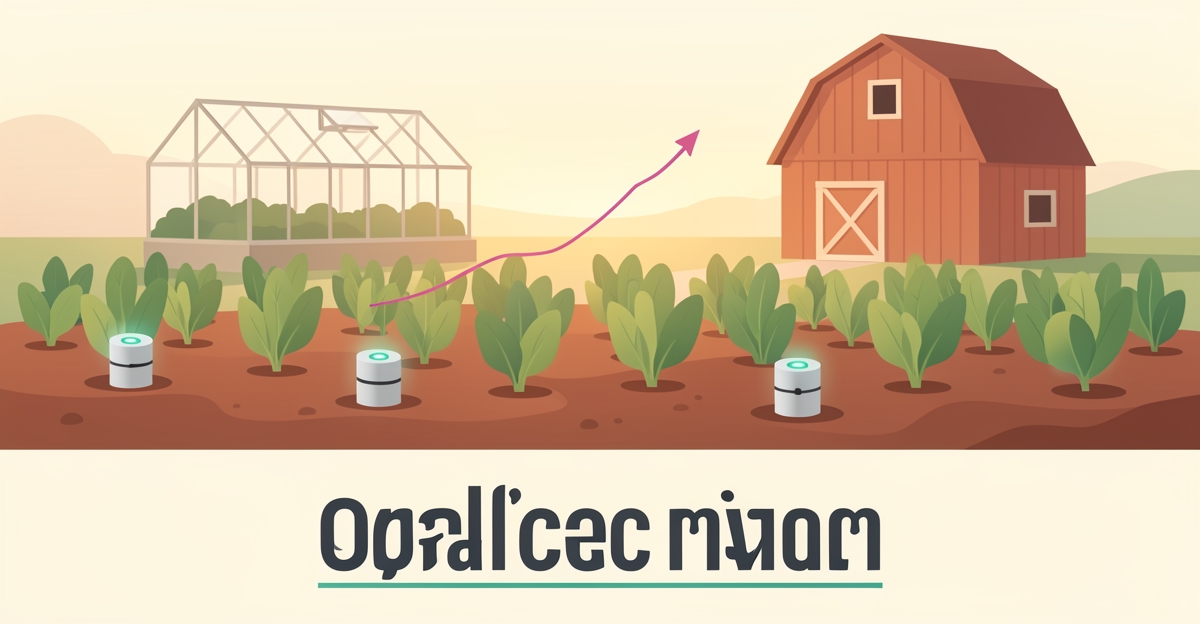
Is AI Worth It for Small Organic Farms? A Cost-Effective Case Study
Key Facts
- Industry analyses report that small farms implementing AI in a targeted way can see returns well above their initial investment in the first year, though exact figures vary by operation according to sector research
- Adoption is significantly lower among small farms than large operations—commonly cited at roughly 20-25% versus 60%+ for large farms as of late 2026 based on 2026 analysis
- A 2026 survey found most farmers have tried general-purpose AI tools like ChatGPT or Gemini, with many using them weekly or more according to grower-industry reporting
- Early adopters commonly report higher yields, fewer pest losses, and better water efficiency, though reported percentages vary by crop and region per SmartFarmPilot's 2026 review
- Basic AI soil sensors typically cost $50-$500 and provide real-time moisture, pH, and temperature data according to organic farming guides
- Free smartphone apps like Plantix are widely used for photo-based plant disease diagnosis, with reported accuracy often above 90% when images are clear sector reviews suggest
- A meaningful share of small farms—around a third, per industry surveys—report plans to adopt AI technologies in 2026, signaling a shift in agriculture industry data indicates
Hire a team member that works 24/7 — for less than a part-time wage.
AI receptionists, SDRs, dispatchers and 99+ roles. Trained on your business, fully managed.
Not sure where to start? Ask our AI planner
The Adoption Gap: Why Small Organic Farms Are Hesitating on AI
The numbers look compelling on paper, yet the uptake tells a different story. Small organic farms face a classic adoption gap: reported returns exist, but hesitation remains high.
Small farms that implement AI in a targeted way are reporting strong first-year returns—industry research suggests a well-scoped investment in AI monitoring can pay for itself within the first year. Despite that, adoption sits at roughly 20-25% for small and medium farms versus 60%+ for large operations as of late 2026. The reason for the gap isn't sophistication. It's access.
Capital constraints and technical expertise gaps create the first barrier. Subscription models and mobile apps have made AI more accessible, but small organic operations still struggle with upfront costs and the lack of in-house IT support. The mismatch is compounded by tools built for monoculture scale, not diversified organic workflows.
A 2026 grower-industry survey highlights the experimental mindset. Most farmers have used general-purpose AI tools like ChatGPT or Gemini to support operations, with many using them weekly or more. General-purpose AI outpaces ag-platform AI, suggesting barriers in awareness, availability, and workflow fit.
Organic systems add complexity. Record-keeping, inventory tracking, and multi-crop decision support are valuable, but generic ag-tech platforms rarely map to diversified rotations, soil health monitoring, and certification requirements. Farmers want support that fits naturally into the day, not technology they must reshape their farm around.
Practical friction points holding farms back include:
- Access to capital for even low-cost entry points like sensors and subscriptions
- Technical expertise gaps for setup, integration, and ongoing maintenance
- Platform mismatch between generic ag-tech and diversified organic workflows
- Distrust and skepticism until proof, transparency, and human validation are provided
The hesitation is rational. AI can be genuinely useful without expensive machinery, but it pays off fastest when it addresses too many crops, scattered data, and inconsistent observations. That's where an honest readiness look becomes practical. AIQ Labs helps small operators identify the one workflow that costs the most—whether that's certification logs, CSA coordination, or harvest record-keeping—and design low-cost entry points that match existing operations, through targeted AI Workflow Builds.
With roughly a third of small farms reportedly planning to adopt AI in 2026, the window for early learning is open. The gap will close when tools are sized for small organic realities and adoption is guided by clear business cases rather than hype.
Low-Cost Entry Points That Deliver Measurable Returns
Small organic farms don’t need a full automation overhaul to see measurable gains. The fastest wins come from targeted, sub-$500 tools that slot into existing routines and generate data farm owners can act on immediately.
Low-cost entry points are shifting adoption. Industry research shows AI is becoming viable for smaller operations through subscription models, mobile apps, and cloud platforms. That accessibility is a big part of why more small farms are planning adoption in 2026.
Soil sensing is the most accessible first step. Basic AI soil sensors in the $50–$500 range provide real-time moisture, pH, and temperature data. Practical guides for organic growers recommend starting here because the data informs irrigation and fertility without major capital investment.
Smartphone diagnostics remove guesswork from scouting. Plantix offers free, image-based disease and pest identification, with reported accuracy often above 90% when images are clear. Small farm analysis notes this class of tools reduces scouting labor while improving early detection.
Satellite monitoring adds field-level visibility for a subscription fee. Services like Farmonaut report strong yield-prediction performance in many cases, enabling better harvest planning and market timing. Combined with soil sensors, it supports precision resource use without on-site hardware teams.
Record-keeping and inventory tracking are the quiet ROI drivers. AI-driven logging automates observations, task reminders, and input use, reducing inconsistent records and scattered data. Farm-focused guidance emphasizes that AI shines in operations involving pattern recognition, repetition, and decision support.
Reported outcomes for early adopters are encouraging. SmartFarmPilot’s 2026 review cites meaningful gains in yields, pest-loss reduction, and water efficiency for small farms using these entry tools, with the strongest returns when implementation is targeted. Treat these as directional signals, not guarantees—your results depend on crops, region, and how well the tool fits your workflow.
A practical starter stack for organic farms under $500 typically includes:
- AI soil sensor for moisture/pH/temperature monitoring
- Smartphone diagnostic app like Plantix for photo-based scouting
- Subscription satellite monitoring such as Farmonaut for field visibility
- Automated record-keeping and inventory tracking for consistent data
These tools deliver value by saving time, reducing avoidable losses, and supporting decisions with less guesswork. For farm owners evaluating next steps, a readiness conversation helps map which low-cost workflows fit current operations—and where managed AI staff (receptionists, dispatchers, record-keepers, and 99+ other roles, at a fraction of the cost of a human hire) can extend the gains without adding payroll.
AIQ Labs helps small operators identify high-ROI automation targets and design incremental adoption paths that protect cash flow while building long-term capability.
From Experimentation to Embedded Operations: A Maturity Roadmap
Most organic farms start with a free chatbot experiment and wonder why it never scales into real operational value. The gap between prompting ChatGPT for a crop plan and deploying an AI employee that handles intake, scheduling, and compliance tracking is structural — not technical. Most farmers surveyed have already used general-purpose AI tools, yet adoption remains stuck at the pilot stage because workflows, governance, and integration are missing.
- Assessment: Map current workflows — certification logs, harvest records, crew schedules — to identify the highest-friction manual processes
- Agent Development: Build specialized AI employees for organic intake, compliance tracking, and inventory reconciliation using your actual SOPs
- Integration: Connect agents to the tools you already run — QuickBooks, Google Calendar, Airtable, or farm-specific platforms — so data flows without double-entry
- Governance: Establish audit trails, human-in-the-loop checkpoints for certification decisions, and data privacy controls aligned with organic standards
- Adoption & Scaling: Train the team on new handoffs, measure time saved per workflow, then expand from one bed to the whole operation
This progression moves a farm from exploration to embedded AI operations without the false starts that stall the many small farms planning adoption in 2026. The maturity curve (Exploration → Pilots → Scaling → Optimization → Transformation) only advances when each step locks into the next. An AI receptionist that books CSA pickups is a pilot; a connected operating layer that syncs harvest forecasts, labor schedules, and compliance deadlines across your stack is transformation—the kind of outcome AIQ Labs delivers through AI Operating Systems, built in phases and owned outright by you. The difference isn't model capability — it's architecture, governance, and a partner who stays past deployment.
Real-World Implementation: What a Phased Rollout Looks Like
Many small organic farms hesitate to adopt AI, fearing complexity or high upfront costs—but a phased rollout aligned with seasonal cycles makes implementation manageable and measurable. Starting with a single, high-impact workflow allows farmers to validate value quickly while building internal confidence. This approach mirrors AIQ Labs’ milestone-based payment model, where investment is tied to tangible deliverables rather than long-term commitments.
The first phase—Discovery—focuses on mapping pain points against farm rhythms, such as identifying bottlenecks in harvest inventory tracking or CSA order fulfillment during peak summer months. Sector research suggests small farms see the best returns when AI is implemented in a targeted way, with tools like AI-driven record-keeping cutting manual entry time substantially and improving data consistency across teams. By anchoring the initial scope to a concrete workflow—like automating harvest logs that currently eat up hours every week—farms can begin seeing time savings within weeks, not months.
In Development, AIQ Labs rebuilds that one workflow at a fixed price, integrating with existing tools like spreadsheets or basic farm management software without requiring a full system overhaul. This phase emphasizes ownership and transparency: clients approve each milestone before payment, retaining full control of what’s built. For example, a workflow rebuild for harvest tracking might include voice-to-log entry via mobile, automatic CSA share allocation, and real-time inventory alerts—all designed to reduce errors and save labor during chaotic harvest periods.
Deployment follows in the off-season or early spring, minimizing disruption to active growing cycles. Training is role-specific and hands-on, ensuring farm staff adopt the tool quickly. Once live, the Optimization phase begins—tracking metrics like time saved, reduction in spoilage, or improved CSA retention against the benchmarks set during Discovery. Farms often expand next to broader automation, such as integrating certification compliance tracking or predictive irrigation planning, using insights from the initial win to fund further phases. This incremental, evidence-based path turns AI from a risky experiment into a scalable, farm-owned advantage.
Still paying for 10+ subscriptions that don’t talk to each other?
We build custom AI systems you own outright. No vendor lock-in. Full control.
Not sure where to start? Ask our AI planner
Frequently Asked Questions
Is AI actually worth the investment for a small organic farm?
What are the cheapest ways to start using AI on my farm?
Why are small farms hesitant to adopt AI if the returns are reported as strong?
Can AI handle the complexity of organic certification and diverse crop rotations?
What specific improvements can I expect in the first year?
Do I need technical expertise or expensive consultants to implement this?
Grow Smarter, Not Bigger: Your AI Advantage Starts Small
The case for AI on small organic farms isn’t about chasing hype — it’s about closing the adoption gap with tools sized for real operations. Farms that implement AI in a targeted way are reporting strong first-year returns, with sub-$500 entry points like soil sensors, smartphone diagnostics, and automated record-keeping delivering measurable gains in yield, water efficiency, and labor savings. The hesitation is rational, but the path is clear: start with one high-friction workflow, prove value through data, then build toward embedded operations with governance and integration. AIQ Labs helps small operators do exactly that—whether through managed AI employees, fixed-price workflow rebuilds, or a phased AI operating system you own outright. If you’re weighing whether AI is worth it for your farm, take the two-minute Fit Check at https://aiqlabs.ai/apply, then book a free 30-minute strategy call to map your biggest bottleneck and identify a clear, low-risk AI opportunity — no obligation, just clarity.
Make AI your competitive advantage — not just another tool.
Strategy, implementation and ongoing optimization. One partner, end to end.
Not sure where to start? Ask our AI planner