Is AI Worth It for Space Planning Consultants? A Breakdown of ROI and Costs
Key Facts
- Feasibility studies that take 20-30 hours by hand can drop to under an hour with AI tools like TestFit, according to industry analysis
- Roughly 46% of architecture professionals report using AI in projects per recent industry research
- AI-native startups have reported revenue per employee several times higher than non-AI peers, according to HubSpot
- Tools like MeltFlex can turn a photo into a photorealistic client-ready image in about 30 seconds per AI space planning research
- The research-to-practice gap in architecture has collapsed from decades to a couple of years according to industry analysis
- AI-using startups report higher profitability rates than non-AI startups HubSpot startup data shows
Hire a team member that works 24/7 — for less than a part-time wage.
AI receptionists, SDRs, dispatchers and 99+ roles. Trained on your business, fully managed.
Not sure where to start? Ask our AI planner
The Time Drain: Why Manual Space Planning Is Costing You Pitches
The gap between winning a pitch and losing it often comes down to who responds first with a credible, well-considered plan. For many space planning consultants, that window is lost to the sheer manual labor of early-stage feasibility studies and layout iterations—work that eats days before a client ever sees a single concept.
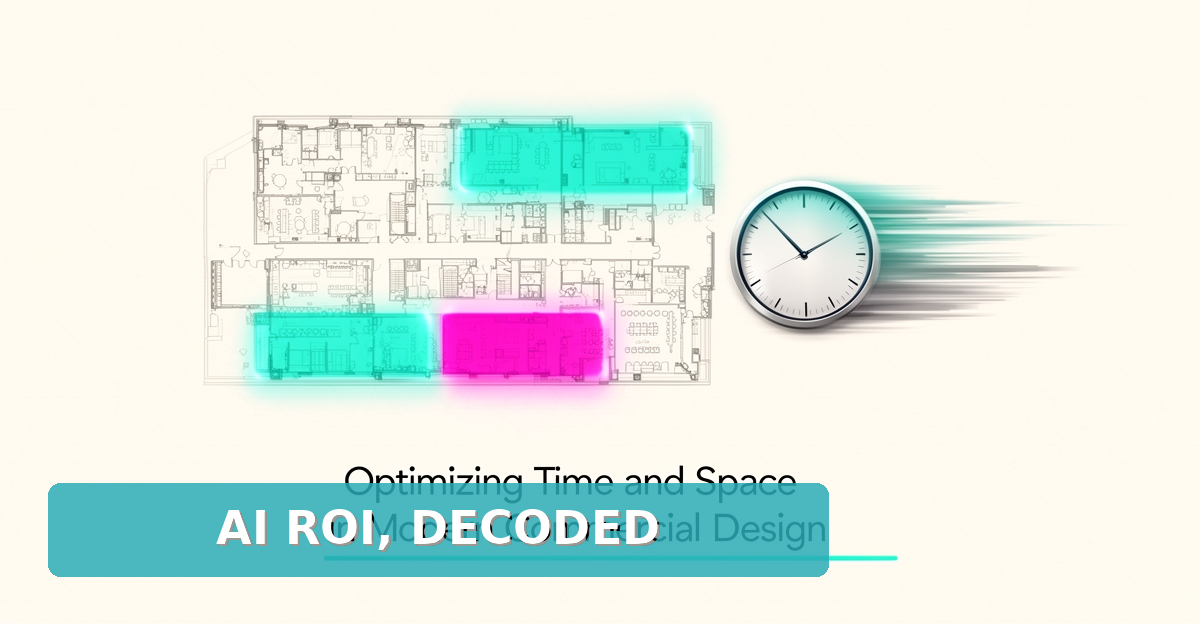
The numbers behind this bottleneck are striking. According to industry analysis of AI space planning tools, a feasibility study that takes 20 to 30 hours by hand can be compressed to under an hour with AI tools like TestFit. That's not a marginal efficiency gain—it's a fundamental restructuring of how early-stage work gets done.
This time drain ripples through the entire business development cycle. When a consultant spends three days on a feasibility study before responding to a brief, a competitor using AI has already delivered multiple scenarios and moved on to the next opportunity. Research on automated test fits versus manual workflows suggests that firms responding faster and demonstrating multiple scenarios are winning more projects.
The manual workflow creates several compounding disadvantages:
- Feasibility studies consume 20-30 hours each, limiting how many prospects a firm can realistically pursue
- Each design iteration requires hours of manual drafting, restricting the number of options presented to clients
- Client-ready visualizations demand full 3D models and rendering setups, adding days to pitch preparation
- Senior designers spend their time on repetitive spatial math instead of high-value creative and client work
The competitive pressure is intensifying. With roughly 46% of architecture professionals reported as using AI in their projects as of late 2026, clients are beginning to arrive with AI-generated concept sketches of their own. They expect consultants to match that speed. A firm still running manual workflows isn't just slower—it risks looking out of step.
The role of the designer is also shifting. AI handles the generation of layout options from constraints, moving the consultant's job from iteration to curation. Instead of manually producing every floor plan variation, the designer applies expertise to select, refine, and present the strongest solutions. Human judgment remains central to creative decisions and client relationships, but the mechanical work disappears.
For firms evaluating this shift, the question isn't whether AI saves time—the industry data makes that clear. The question is how to quantify that time savings against implementation costs in a way that justifies the investment. At AIQ Labs, this is exactly the kind of ROI modeling we help professional services firms build through AI Workflow Builds: mapping current manual workflows, identifying where hours are lost, and projecting the return from targeted AI integration before a single dollar is spent.
The AI Advantage: How Time Savings Translate to Winning More Work
Imagine cutting your feasibility study from 30 hours to just one. That's the reality of AI adoption in space planning today. The real power isn't just speed—it's what you can do with that reclaimed time to win more work.
The numbers tell a compelling story. According to industry research, AI tools like TestFit can compress feasibility studies that traditionally took 20-30 hours down to under one hour. This means you can answer "does this site pencil" in real-time during a client meeting, rather than days later. When you can demonstrate viability instantly, you're not just saving time—you're winning pitches.
This speed advantage extends across your entire workflow. AI tools handle the heavy lifting of generating multiple design options, allowing your team to shift from iteration to curation. Instead of spending hours creating each layout, you're selecting the best from AI-generated alternatives and applying your expertise where it matters most—refining and presenting the optimal solution.
The competitive implications are significant. Research suggests that firms using AI explore more design alternatives in compressed timeframes, gaining an edge in competitive proposals. When you can present multiple, data-backed scenarios during a pitch, you demonstrate capability and thoroughness that manual workflows simply can't match.
The operational efficiency gains are equally notable. Data from AI-native companies indicates they achieve revenue per employee several times higher than traditional firms while operating with leaner teams. For space planning consultants, this means handling more projects without proportionally increasing headcount.
Here's how time savings translate to winning more work:
- Respond to client briefs in hours instead of days, capturing time-sensitive opportunities
- Present multiple design scenarios in pitches, demonstrating thoroughness and creativity
- Take on more projects simultaneously without sacrificing quality or increasing overhead
- Reduce early-stage work substantially, freeing senior designers for high-value client interactions
- Deliver photorealistic visualizations in about 30 seconds, making proposals more compelling
The shift from creator to curator also elevates your value proposition. As one industry source notes, human judgment remains central to creative decisions and client relationships. AI handles the spatial mathematics and option generation, while you focus on understanding client needs, applying contextual knowledge, and delivering strategic insights.
At AIQ Labs, we've seen this transformation firsthand through our work with professional services firms. The key is building a strategic approach that integrates the right tools into your existing workflow—not just adopting technology for its own sake. When implemented thoughtfully, AI becomes a competitive differentiator that directly impacts your win rate and bottom line.
Smart Adoption: Building a Cost-Effective AI Stack for Space Planning
Starting with AI doesn’t require a massive overhaul or a single expensive platform. Instead, the most effective approach is building a focused "small stack" of specialized tools that address specific pain points without adding complexity. For space planning consultants, this means selecting tools that excel at feasibility, layout generation, and visualization—each chosen for how well it integrates into existing workflows rather than promising an all-in-one solution.
A practical stack might combine TestFit for rapid feasibility and yield analysis, Maket for generating multiple compliant layout options from site constraints, and MeltFlex for turning those layouts into photorealistic client visuals in seconds. This modular approach allows firms to pilot each tool individually, assess its impact on time spent per task, and scale only what delivers measurable value. As noted in industry research, firms using TestFit have reported cutting feasibility studies from 20–30 hours down to under an hour, a shift that enables real-time site evaluation during client meetings instead of days of back-and-forth.
Pricing models vary across the stack, but many tools offer accessible entry points. Maket and MeltFlex provide free tiers ideal for solo practitioners or small teams testing the waters, while professional tools like TestFit typically operate on subscription models—often comparable in cost to general AI platforms such as ChatGPT Plus or Gemini Advanced. The key is avoiding over-investment upfront; instead, align tool selection with specific workflow bottlenecks identified during a readiness assessment. AIQ Labs helps firms map these opportunities through AI Workflow Builds—fixed-price, phased engagements that rebuild the one workflow that costs you the most—without locking you into rigid, expensive suites.
The learning curve differs by tool: Maket and MeltFlex are designed for intuitive, immediate use, while TestFit may require slightly more time to master its constraint-based inputs. However, the payoff comes quickly—firms report not just time savings but a strategic shift from manual iteration to AI-assisted curation, where designers spend less time drawing options and more time evaluating and refining the best outcomes. This augmentation preserves the irreplaceable role of human judgment in creative decisions and client relationships, ensuring AI enhances rather than replaces expertise.
Ultimately, a cost-effective AI stack isn’t about chasing the newest tool but about building a cohesive, fit-for-purpose system that saves hours on repetitive tasks, improves pitch responsiveness, and positions the firm to win more work—all while keeping the designer firmly in control.
Still paying for 10+ subscriptions that don’t talk to each other?
We build custom AI systems you own outright. No vendor lock-in. Full control.
Not sure where to start? Ask our AI planner
Frequently Asked Questions
How much time can AI actually save on a feasibility study?
Is AI already being used by other architecture and space planning firms?
Will AI replace designers or just change their role?
What does AI cost to get started for a small space planning consultancy?
Can AI help win more pitches, not just save time?
Is there a proven ROI beyond time savings?
From Hours Lost to Hours Won
The math for space planning consultants is now hard to ignore: manual feasibility studies that once consumed 20-30 hours can be compressed to under an hour with AI, freeing senior designers from repetitive spatial math to focus on curation, client strategy, and winning pitches. That speed translates directly into more prospects pursued, multiple data-backed scenarios in every proposal, and the ability to respond in hours instead of days. With a large share of architecture professionals already using AI in their projects, clients expect that responsiveness and firms that don’t match it risk looking out of step. Smart adoption means building a focused small stack for feasibility, layout generation and visualization and measuring the impact on hours per task. AIQ Labs helps professional services firms map current manual workflows and model the ROI before investing—whether that's a single AI Workflow Build or a fuller AI Operating System built in phases. Start the two-minute Fit Check at aiqlabs.ai/apply for a free 30-minute strategy call to identify your highest-ROI automation opportunities.
Make AI your competitive advantage — not just another tool.
Strategy, implementation and ongoing optimization. One partner, end to end.
Not sure where to start? Ask our AI planner