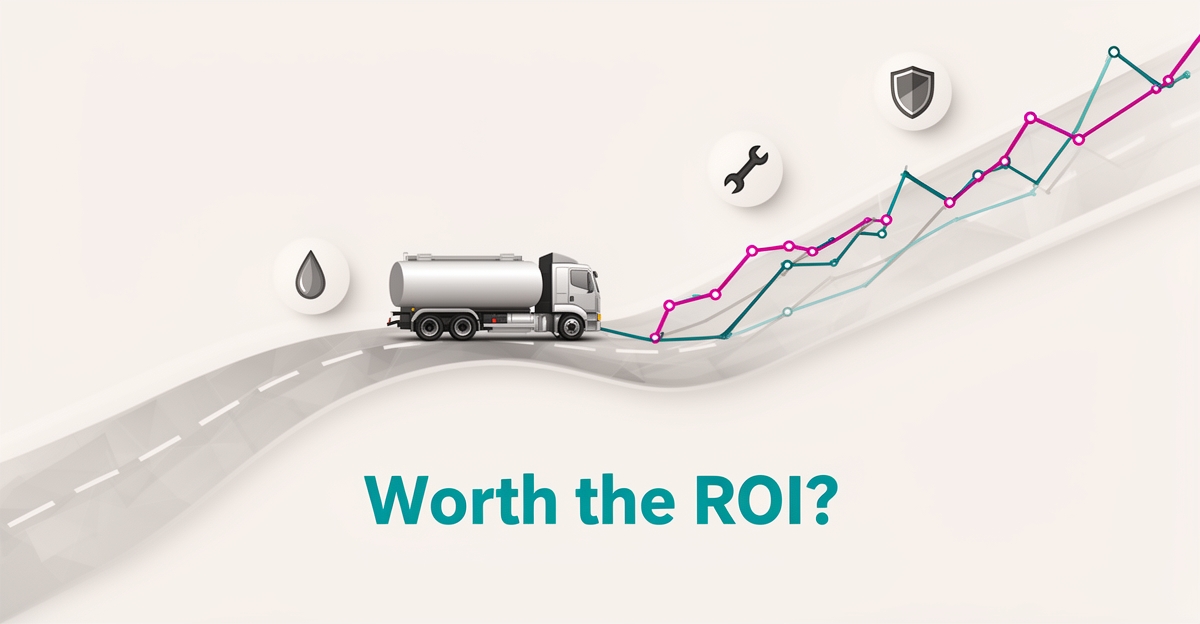
Is AI Worth It for Tanker Trucking Companies? A Cost-Effectiveness Analysis
Key Facts
- The global AI in transportation market has been growing at a rapid clip, with industry analysts consistently projecting strong double-digit growth through the decade
- As of late 2026, most organizations remain in the experimentation phase with AI — meaning early movers can still capture an advantage
- AI Employees typically cost roughly 80% less than an equivalent human hire and work around the clock, per AIQ Labs cost comparisons
- AIQ Labs has deployed 200+ multi-agent systems and runs four live SaaS products daily — the same infrastructure it builds for clients
- The highest-ROI tanker use cases map directly to four P&L lines: fuel, maintenance, labor and compliance
Hire a team member that works 24/7 — for less than a part-time wage.
AI receptionists, SDRs, dispatchers and 99+ roles. Trained on your business, fully managed.
Not sure where to start? Ask our AI planner
The Real Cost of Staying Manual: Why Tanker Fleets Are Under Pressure
Tanker fleet owners are feeling the squeeze from every direction, and manual operations are amplifying the pain. Volatile fuel costs, unplanned breakdowns, missed deliveries, and growing compliance risk are eroding margins for mid-sized fleets that still rely on spreadsheets, phone calls, and reactive dispatch.
Fuel price swings and inefficient routing drive up cost per mile while idle time and manual scheduling drain driver productivity. Unplanned breakdowns create cascading delays, missed delivery windows, and expensive emergency repairs. Compliance exposure adds another layer of risk as record-keeping and reporting requirements tighten across the industry.
Market momentum is shifting fast. Industry analysts continue to project strong double-digit annual growth for AI in transportation through the decade, signaling rapid commercialization of route optimization, predictive maintenance, and fleet visibility tools. Yet as of late 2026, most organizations are still in the experimentation phase with AI — meaning early movers can capture advantage before adoption becomes table stakes.
The pressure points are visible in daily operations:
- Volatile fuel costs and suboptimal routing that inflate per-load expense
- Unplanned breakdowns from reactive maintenance instead of predictive failure detection
- Missed deliveries and customer penalties from manual dispatch and limited visibility
- Compliance risk from fragmented records and manual reporting processes
These are not isolated inefficiencies. They compound into higher labor costs, lower asset utilization, and lost contracts. For a mid-sized tanker fleet, the question is no longer whether AI works in transportation. The question is whether the ROI math works for their specific mix of routes, assets, and cost structure.
A data-driven evaluation of upfront and long-term returns is critical before committing capital. ROI modeling and business cases need to account for savings on fuel, labor, and missed deliveries alongside implementation costs and change management. AIQ Labs works with SMB fleets to calculate real returns with tailored implementation strategies rather than generic benchmarks.
Staying manual is a deliberate cost decision. With adoption accelerating and most competitors still experimenting, fleets that quantify the cost of inaction can move from reactive firefighting to controlled, measurable automation.
Where AI Actually Pays: The Four Highest-ROI Use Cases
Tanker fleets don't need more dashboards — they need cost lines that move. AI is already shifting from pilot programs to live operations in tanker trucking, and the highest-return applications map directly to fuel, maintenance, labor and compliance.
Predictive maintenance turns sensor data into avoided downtime. AI algorithms analyze engine, pump and component data to predict failures before they sideline a truck, enabling proactive maintenance and minimizing downtime. The result is lower repair costs and increased operational efficiency that hits the maintenance budget first.
Route optimization attacks fuel and transit time simultaneously. AI-powered planning considers real-time traffic, weather patterns and fuel prices to identify the most efficient routes, reducing fuel consumption and transit times. Improved fuel efficiency also comes from reduced idling through AI-driven scheduling, which compounds savings across a fleet.
Driver safety and fatigue monitoring lower accident risk and insurance exposure. AI-driven systems monitor driver behavior, detect fatigue and provide alerts to prevent accidents. AI-powered sensors can also detect potential hazards and provide warnings to drivers, supporting safer operations. Live safety use cases are where early adopters separate from the pack while the rest of the industry is still piloting.
Automated compliance reporting cuts fines and administrative hours. AI can automate the collection and analysis of data required for regulatory compliance, reducing the risk of fines and penalties. For tanker operators, this means fewer manual logs, faster reporting cycles and less labor tied to paperwork.
These four use cases line up to the P&L:
- Fuel spend: optimized routing and reduced idling
- Maintenance: predictive failure avoidance and lower repair costs
- Labor and insurance: fewer accidents, less fatigue-related incidents
- Compliance: avoided fines and reduced administrative hours
A data-driven evaluation of upfront and long-term ROI is critical because savings accrue across multiple cost lines at once. AIQ Labs works with SMB fleets to model those returns with tailored implementation strategies — whether that's an AI Employee handling dispatch coordination or a full workflow rebuild targeting your most expensive process.
The Hidden Costs That Sink AI Projects (and How to Avoid Them)
The difference between an AI investment that pays for itself and one that quietly drains your budget usually isn't the technology — it's what surrounds it. Most organizations remain stuck in the experimentation phase with AI, and many never escape it because they underestimate the hidden costs of readiness.
Data quality is the first silent killer. AI systems for route optimization and predictive maintenance are only as good as the data feeding them. If your dispatch records live in spreadsheets, your fuel logs are incomplete, or your maintenance history sits in a filing cabinet, the AI has nothing reliable to learn from. Cleaning, structuring, and centralizing that data is real work — and it carries real costs that rarely appear in vendor proposals.
Integration complexity is the second. Tanker operations run on a patchwork of dispatch software, accounting platforms, telematics hardware, and compliance systems. Getting an AI layer to communicate with all of them — reliably, in real time — is where many projects stall. The critical question is not whether the AI is working, but whether it surfaces issues early enough for teams to intervene effectively. That requires integration deep enough to matter, not a surface-level connection.
Then there's the workforce gap. Business leaders widely expect AI to reshape roles and responsibilities — yet only a minority of organizations have redesigned their programs to validate AI-generated work. That gap means dispatchers don't trust the recommendations, drivers ignore the alerts, and the AI becomes expensive shelfware.
The most common hidden costs include:
- Data cleanup and infrastructure upgrades before any AI can function
- Custom integration work connecting AI to dispatch, accounting, and telematics systems
- Training programs that prepare dispatchers, drivers, and managers for AI-assisted workflows
- Governance frameworks with clear accountability for AI-driven decisions
- Ongoing monitoring and validation to catch errors before they compound
Scope determines survival. A pilot-first approach — targeting one workflow like route optimization or predictive maintenance — keeps upfront costs low, delivers measurable results quickly, and gives your team time to adapt. The tradeoff is limited impact and the risk of scope creep. Enterprise-wide implementation promises transformative ROI across fuel, labor, and compliance, but demands significantly higher investment, stronger leadership commitment, and organizational change management that many SMBs aren't prepared for.
For most tanker operations, the smarter path runs through a structured assessment: audit your data readiness, identify the single highest-ROI use case, and build governance before you build algorithms. This is exactly the kind of evaluation AIQ Labs performs through its Fit Check and ROI modeling process — mapping your existing systems, quantifying realistic returns, and designing an implementation plan that matches your budget and maturity level.
The companies that succeed with AI aren't the ones that spend the most. They're the ones that prepare the most honestly.
Building Your Business Case: A Practical ROI Framework for Tanker Fleets
Building a strong business case for AI in tanker trucking starts with a clear, practical path forward — one that minimizes risk while maximizing learning and early wins. A six-step framework consistently guides successful adoption: assess current capabilities, prioritize high-impact use cases, establish governance, invest in data infrastructure, upskill the workforce, and start small before scaling. This structured approach ensures AI initiatives are grounded in operational reality, not hype, and align with your fleet's specific pain points and goals.
For tanker fleets, high-ROI starting points often include dispatch automation or predictive maintenance — workflows where AI can directly reduce idle time, prevent costly breakdowns, and improve load utilization. Rather than committing to a large-scale overhaul, AIQ Labs' engagement models offer low-risk entry points tailored to SMB constraints. You can Start Monthly with a single AI Employee focused on dispatch coordination, use Build in Milestones to phase in a predictive maintenance system at a fixed price, or Own It Outright with a full AI Operating System built in phases. These models let you validate outcomes in real time, keep what's built, and scale only when ROI is proven — without locking into long-term commitments or inflated upfront costs.
Critically, generic industry averages won't capture your true potential return. Factors like fleet size, route patterns, maintenance history, and data maturity significantly influence outcomes. Real ROI requires a tailored assessment that maps AI interventions to your specific cost drivers — whether that's fuel waste from suboptimal routing, labor overtime from manual scheduling, or missed deliveries due to unexpected downtime. By grounding the business case in your actual operations, you avoid overestimating benefits or underestimating integration effort.
This disciplined, step-by-step method turns AI from a speculative investment into a measurable operational advantage. It builds internal confidence, creates reusable assets, and positions your fleet to scale AI strategically — only after proving value in a controlled, high-leverage workflow. For tanker companies navigating tight margins and rising complexity, this approach isn't just prudent — it's essential for sustainable transformation.
Still paying for 10+ subscriptions that don’t talk to each other?
We build custom AI systems you own outright. No vendor lock-in. Full control.
Not sure where to start? Ask our AI planner
Frequently Asked Questions
Is AI actually worth the investment for a small or mid-sized tanker fleet?
Which AI use cases deliver the fastest payback for tanker trucking companies?
Why do so many AI projects in trucking fail or stall?
How mature is AI adoption in transportation right now?
Should we start with a small pilot or roll out AI across the whole operation?
How does AI affect drivers and dispatchers — will it replace their jobs?
The Real ROI Question: What Does Staying Manual Cost You?
AI in tanker trucking isn't a speculative bet anymore — it's a cost equation. Predictive maintenance cuts repair bills, route optimization attacks fuel spend, safety monitoring lowers insurance exposure, and automated compliance reduces fines and admin hours. But the analysis also showed why most organizations are still stuck in the experimentation phase: poor data, integration complexity, and workforce gaps sink projects that skip the groundwork. The fleets that win aren't the ones that spend the most — they're the ones that prepare the most honestly, starting with one high-ROI workflow and scaling only after value is proven. That's exactly how AIQ Labs approaches ROI modeling for SMB tanker operations: audit your data readiness, quantify realistic returns across fuel, labor, and missed deliveries, and build an implementation plan matched to your budget — through Start Monthly pilots, milestone-based builds, or full ownership of your system. With AI adoption in transportation accelerating, the window for early-mover advantage is open now. Take the two-minute Fit Check at aiqlabs.ai/apply and book your free strategy call — if there isn't a clear win for your fleet, we'll tell you that too.
Make AI your competitive advantage — not just another tool.
Strategy, implementation and ongoing optimization. One partner, end to end.
Not sure where to start? Ask our AI planner