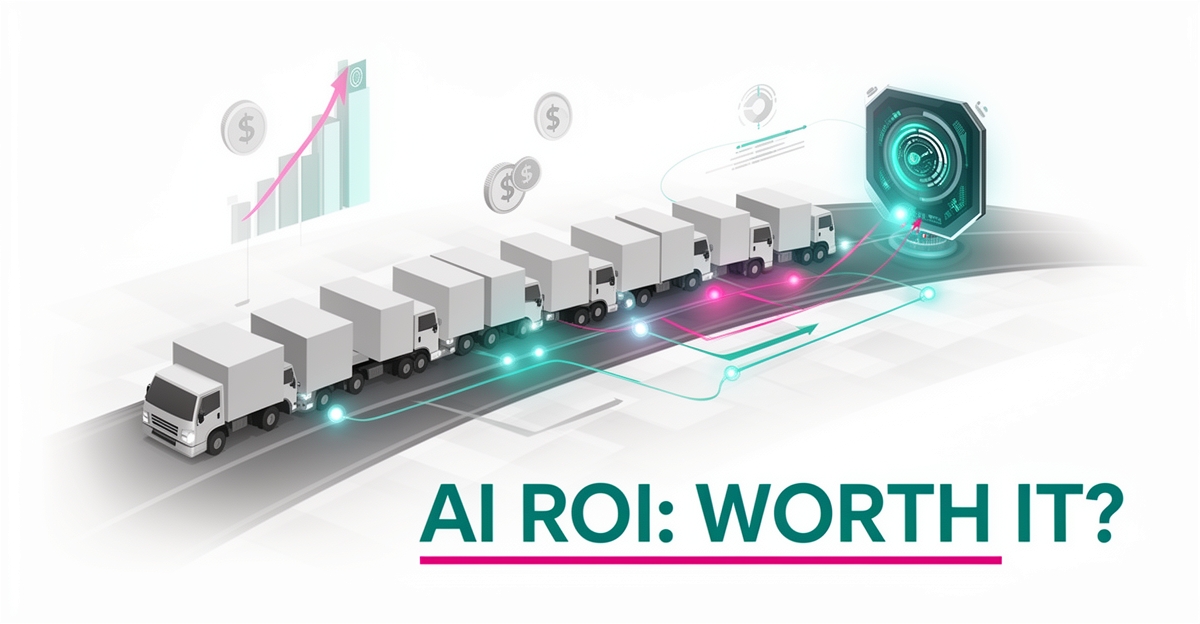
Is AI Worth It for Truck Rental Companies? A Cost-Effectiveness Breakdown
Key Facts
- Industry analyses of AI fleet management report annual savings in the tens of thousands of dollars for a 25-vehicle fleet, driven by fuel, maintenance, and admin efficiency according to industry analysis
- Manual dispatch is associated with roughly 25% higher total operating expenses due to fuel inefficiency and admin overhead, industry comparisons suggest
- Predictive maintenance systems can flag component failures weeks in advance, shifting repairs from roadside emergencies to scheduled service field reports indicate
- One dispatcher can typically manage 35–50 vehicles with AI support versus 10–12 manually, studies show
- Dynamic pricing powered by AI has been reported to lift rental revenue by 15–25% in some implementations implementations show
- Computer vision damage assessment can cut inspection time substantially while reducing subjective disputes technology enables
- Fleets of 20+ vehicles are often positioned to recover their annual AI software cost quickly after implementation a full comparison confirms
Hire a team member that works 24/7 — for less than a part-time wage.
AI receptionists, SDRs, dispatchers and 99+ roles. Trained on your business, fully managed.
Not sure where to start? Ask our AI planner
The Hidden Drain: Why Manual Fleet Management Costs Truck Rental Companies More
The true cost of manual fleet management isn't just in what you spend—it's in what you lose. For truck rental companies, every inefficient dispatch decision, every mile wasted on suboptimal routing, and every emergency repair erodes margins that are already thin. These aren't minor inefficiencies; they're systemic drains that compound daily.
A 25-vehicle fleet relying on manual dispatch can lose tens of thousands of dollars annually to preventable fuel waste, overtime, and administrative overhead, industry analysis suggests. That comparison shows roughly 25% higher total operating expenses than fleets using AI-driven systems, where route planning takes minutes daily versus an hour or more manuallyresearch indicates. The dispatcher-to-vehicle ratio alone highlights the disparity: one dispatcher managing 10–12 vehicles manually versus 35–50 with AI support, turning labor into a scaling bottleneckstudies show.
- Fuel consumption can rise 15–30% with manual routing due to poor stop sequencing and suboptimal pathsdata indicates
- Administrative tasks consume 40–60% of customer service reps' time on routine status updates in manual setupsanalysis finds
- Emergency breakdowns typically cost several times more than scheduled repairs predicted by AIfield reports verify
These aren't hypothetical risks—they're measurable profit leaks. The first step is quantifying them against your own numbers rather than guessing. The choice isn't whether to act—it's how much longer you're willing to pay for inaction.
The Financial Case for AI: ROI Signals from Fleet Deployments
Truck rental companies implementing AI solutions are reporting financial returns that turn operational efficiency into bottom-line gains. Industry analyses of comparable fleets report annual savings ranging from the tens of thousands to over $100,000 for a 25-vehicle fleet switching from manual dispatch to AI-powered management, with many fleets recovering their initial investment within the first few months. Treat these as directional benchmarks, not guarantees—your actual numbers depend on fuel prices, utilization, and labor costs in your market. The savings come from three places: optimized routing, reduced fuel waste, and fewer emergency breakdowns through predictive maintenance.
The financial impact becomes clearer at the per-vehicle level. Reported savings of roughly $3,500–$6,200 per vehicle annually come from combined fuel optimization, maintenance avoidance, and administrative efficiency. AI-driven route planning cuts fuel consumption by an estimated 10–15% versus manual methods, while predictive maintenance shifts repairs from roadside emergencies to scheduled service. Dispatchers also gain capacity—managing 35–50 vehicles with AI versus 10–12 manually—directly reducing labor overhead. These efficiencies compound: fleets using manual dispatch carry roughly 25% higher total operating expenses from avoidable costs like overtime, fuel inefficiency, and administrative delays.
The right way to make this decision for your fleet is to map your specific workflows to projected savings before spending anything. That means looking at where dispatch inefficiencies, maintenance tracking gaps, and booking bottlenecks actually sit in your operation, and targeting the highest-impact area first—whether that's pricing, dispatch, or compliance—rather than buying everything at once. AIQ Labs does this through a two-minute Fit Check followed by a free 30-minute strategy call, so the investment targets your fastest payback instead of a vendor's preferred product. For fleets handling 25+ daily moves, the financial case for AI is no longer theoretical.
Three High-Impact AI Applications That Transform Truck Rental Operations
The gap between a profitable fleet and a struggling one often comes down to three operational decisions that AI handles better than any spreadsheet or whiteboard. For truck rental operators watching margins compress, these aren't theoretical improvements—they're the difference between absorbing an emergency tow bill and scheduling a planned repair. Here's where the leverage lives.
- Predictive maintenance shifts the cost curve from reactive chaos to planned spend. AI analyzes telematics data, usage patterns, and maintenance history to flag component failures weeks in advance, allowing repairs during scheduled downtime instead of roadside emergencies. A scheduled repair typically costs a fraction of an emergency breakdown—a difference that compounds across every asset in your fleet (FleetRabbit).
- Dynamic pricing replaces static rate cards with real-time optimization. AI monitors local events, competitor pricing, seasonal demand, and fleet availability to adjust rates automatically, capturing revenue that static pricing leaves on the table. Implementations across the rental sector have reported revenue increases of 15–25%, turning pricing from a guessing game into a profit lever (HumanAI).
- Computer vision damage assessment cuts inspection time substantially while removing the subjectivity that fuels customer disputes. When a vehicle returns, AI analyzes photos to identify damage, generate repair estimates, and flag discrepancies against the pre-rental condition report—in seconds rather than minutes. This enables 24/7 drop-off capability and consistent, auditable documentation that protects both the operator and the customer (FleetPoint).
These three applications share a common thread: they convert variable, unpredictable costs into controlled, measurable operations. In AIQ Labs' experience across 200+ deployed multi-agent systems, the highest ROI almost always sits at the intersection of asset utilization, pricing intelligence, and inspection automation. The technology isn't experimental anymore; the math works when it's applied to the right problem.
When AI Makes Sense (And When It Doesn't): Fleet Size and Readiness Factors
The honest answer to "is AI worth it?" is: it depends on your fleet size, your move volume, and the state of your data. For a handful of owner-operated trucks, the math rarely works. For a 25-vehicle fleet drowning in manual dispatch, it's a different story entirely.
The threshold matters because manual coordination breaks down at predictable points. According to a full comparison of AI operating systems versus manual processes, manual methods become a bottleneck beyond roughly 25–30 daily moves, while fleets of 20+ vehicles are often positioned to recover their annual software cost quickly. Below that line, a whiteboard and a spreadsheet are often the smarter investment.
The financial case scales with fleet size. Industry benchmarks suggest a 25-vehicle fleet switching from manual dispatch to AI fleet management can save tens of thousands of dollars annually, with break-even often inside 1–3 months. By contrast, the same fleet running manual dispatch keeps absorbing avoidable losses through fuel inefficiency, overtime, and administrative overhead, according to AI fleet management benchmarks.
But before writing a check, be realistic about the investment and the infrastructure. A full AI operating system is a serious commitment—covering software, integration, and training—and it's money wasted if the foundation isn't ready. Poor data quality is one of the most common reasons AI projects fail; if your CRM or telematics data is messy, the AI simply won't function correctly. In one documented case, the CRM was the bottleneck, not the technology itself, as noted in a van and truck rental implementation roadmap.
A readiness check should cover a few fundamentals:
- Fleet size of roughly 20+ vehicles or more than 25 daily moves, where manual coordination starts costing real money
- Clean, accessible data in your CRM, booking, and telematics systems
- Budget capacity for a real investment—or a phased approach that spreads cost across milestones
- Staff willingness to adopt new workflows, with a typical 1–2 week adaptation period
If you're not there yet, don't force it. Off-the-shelf tools can solve single problems without a custom build, and a targeted fix—say, automating one broken workflow—often delivers faster wins than a full transformation. That's exactly what AIQ Labs' Workflow Builds are for: rebuild the one workflow that costs you the most, at a fixed price, in phases. If you only need extra hands for phones, bookings, or dispatch, AI Employees offer managed AI staff at roughly 80% less than a human hire. And if you're ready to connect everything, an AI Operating System is built in phases you approve and own outright.
The expensive mistake isn't the wrong tool—it's deciding alone in a category where wrong calls compound for months before you discover them. Whether AI makes sense for your operation today is a question worth answering with data, not hype. If you want a clear-eyed read on where your business stands, take the two-minute Fit Check and book a free 30-minute strategy call—and if there's no clear win, we'll tell you that too.
Your 90-Day AI Implementation Roadmap: From Assessment to ROI
The fastest way to lose money on AI is to buy tools before you know whether your operation can support them. A structured 90-day roadmap flips that risk, sequencing deployment so each phase funds confidence in the next.
Days 1–30: Audit and quick wins first. Before any AI purchase, run a pre-flight audit across data hygiene, workflow maturity, and integration readiness. Poor data quality is the leading cause of failed AI projects—one case study found a company's CRM, not the AI, was the bottleneck. Start with a single high-impact workflow—compliance tracking, booking automation, or after-hours call handling—because a targeted fix delivers hard-dollar results fast and proves the approach before you scale.
Days 31–60: Routing and maintenance. With clean data flowing, layer in route optimization and predictive maintenance. These modules produce the most visible early wins—daily route planning drops from an hour or more to minutes, and AI-flagged failures arrive weeks in advance, shifting repairs from roadside emergencies to scheduled service.
Days 61–90: Pricing and scale. Once routing and maintenance are stable, expand to dynamic pricing and fleet redistribution, where implementations have reported revenue increases of 15–25%. By day 90, you should have enough performance data to validate ROI against baseline metrics.
- Fuel savings per vehicle (set your baseline before you start)
- Unexpected breakdown reduction (target: 30–40%)
- Dispatcher-to-vehicle ratio (goal: 1:35–50 vs. 1:10–12 manually)
- Inspection time reduction with digital DVIR and vision-based checks
Most fleets that start with the right workflow see payback within 3–6 months, and larger fleets often recover their annual software cost much faster. The sequencing matters because each phase depends on the previous one—pricing optimization on clean booking data, predictive maintenance on reliable telematics.
The expensive mistake isn't choosing the wrong tool; it's deciding alone in a category where wrong calls compound for months before you discover them. This is why AIQ Labs starts every engagement with a Fit Check and a strategy call before recommending a single system—mapping your data infrastructure, prioritizing workflows by ease and impact, and structuring deployment in phases you approve as each ships, with payment models that let you start monthly, build in milestones, or own the system outright. If the foundation isn't ready, a good assessment will tell you that too, before you spend a dollar on software.
Still paying for 10+ subscriptions that don’t talk to each other?
We build custom AI systems you own outright. No vendor lock-in. Full control.
Not sure where to start? Ask our AI planner
Frequently Asked Questions
How much can a truck rental company actually save by switching to AI fleet management?
Is my fleet too small to benefit from AI, or is this only for large operators?
What does AI implementation actually cost for a mid-sized truck rental company?
How does AI prevent expensive emergency breakdowns compared to regular maintenance schedules?
What's the biggest risk that causes AI projects to fail in truck rental businesses?
How long does it take to implement AI fleet management and see actual returns?
The Cost of Waiting Is Higher Than the Cost of AI
The math for truck rental companies is becoming hard to ignore. Manual dispatch carries roughly 25% higher operating expenses through fuel waste, overtime, and admin overhead, while industry benchmarks point to tens of thousands in annual savings for a 25-vehicle fleet using AI-driven management industry analysis shows. The gains compound across predictive maintenance that turns emergency breakdowns into scheduled repairs, dynamic pricing that can lift revenue 15–25%, and computer vision that speeds up inspections. AI makes the most sense once you're past ~20 vehicles or 25 daily moves, with clean data and a willingness to phase implementation. Start with a readiness check, audit data hygiene, and pilot one high-impact workflow like routing or maintenance before scaling. If you want a clear-eyed read on where your operation stands, take the two-minute Fit Check at aiqlabs.ai/apply, then book a free 30-minute strategy call to map your highest-ROI opportunities—and we'll tell you if the timing isn't right.
Make AI your competitive advantage — not just another tool.
Strategy, implementation and ongoing optimization. One partner, end to end.
Not sure where to start? Ask our AI planner