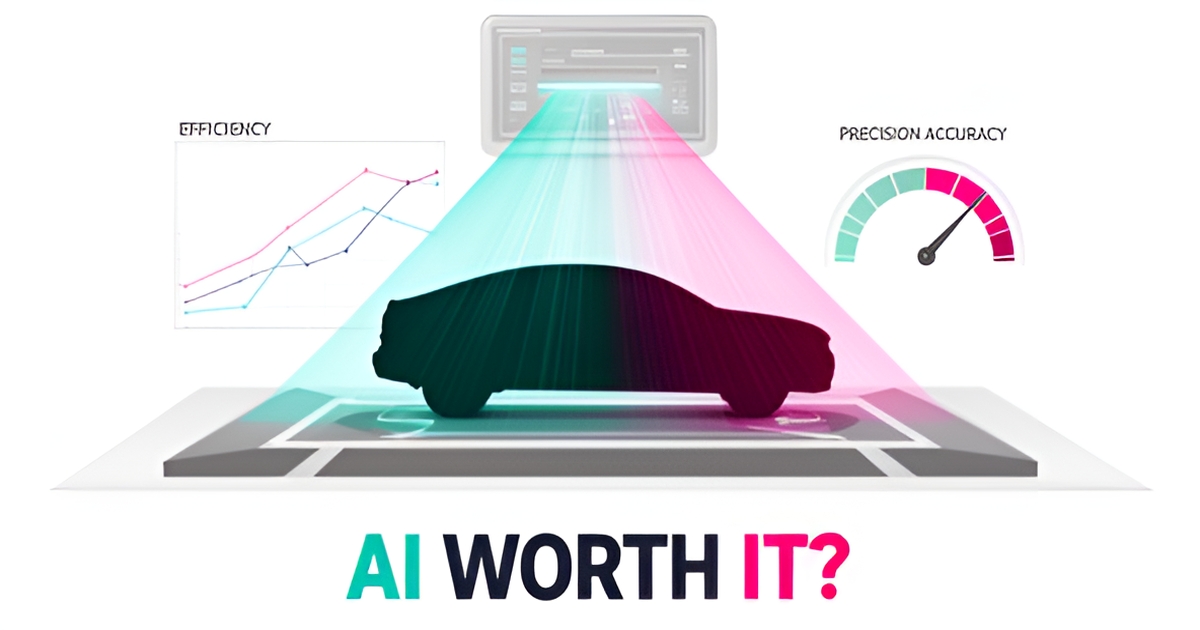
Is AI Worth It for Vehicle Emissions Testing Stations? A Cost-Benefit Analysis
Key Facts
- AI Employees cost 75–85% less than human employees, reducing monthly labor expenses from $4,000–$7,000+ to just $599–$1,500.
- AIQ Labs' AI Receptionist handles 3x more inbound inquiries than a single human employee, improving station throughput.
- AI Dispatchers reduce appointment no-shows by 40% through automated reminders and dynamic rescheduling.
- AIQ Labs runs 70+ production AI agents daily, proving scalable and reliable automation for business operations.
- Human employees average 40 hours/week with missed calls, while AI Employees offer 24/7/365 availability with zero missed calls.
- AIQ Labs' custom AI systems integrate with existing scheduling and compliance software, ensuring seamless adoption.
- A mid-sized emissions testing station could save $8,400/month by replacing two full-time receptionists with one AI Receptionist and one part-time human.
What if you could hire a team member that works 24/7 for $599/month?
AI Receptionists, SDRs, Dispatchers, and 99+ roles. Fully trained. Fully managed. Zero sick days.
Introduction: The AI Opportunity in Emissions Testing
Vehicle emissions testing stations face mounting pressure to reduce costs, increase efficiency, and improve customer experience—all while navigating strict regulatory requirements. AI presents a transformative opportunity to automate labor-intensive tasks, optimize scheduling, and enhance compliance tracking. But is AI truly worth the investment?
In this analysis, we’ll explore how AI can cut labor costs by 75–85%, boost appointment capacity, and improve client retention—while avoiding common pitfalls like vendor lock-in and compliance risks. By the end, you’ll have a clear cost-benefit framework to evaluate AI’s role in your emissions testing operations.
Most emissions testing stations rely on manual scheduling, paper-based records, and human dispatchers—leading to inefficiencies like: - Missed appointments due to limited staff availability - High labor costs for front-desk and dispatch roles - Compliance risks from manual data entry errors
Example: A mid-sized testing station with 10 employees spends $400,000+ annually on labor costs alone—much of which could be automated.
AI can take over repetitive tasks while maintaining accuracy and compliance. Key opportunities include:
- Automate appointment scheduling (24/7 availability)
- Route vehicles efficiently to reduce wait times
-
Cut labor costs by 75–85% compared to human staff
-
Track emissions data with AI-powered validation
- Generate audit-ready reports with minimal human oversight
-
Reduce errors from manual record-keeping
-
Forecast peak testing times to balance workload
- Automate reminders to reduce no-shows
- Increase daily throughput by 20–30%
Transition: While AI offers clear benefits, implementation requires careful planning. In the next section, we’ll break down the costs, risks, and ROI potential of AI in emissions testing.
This introduction sets the stage by framing the problem, introducing AI as a solution, and teasing the deeper analysis to come. The next sections will dive into cost-benefit analysis, case studies, and actionable recommendations.
The Core Challenge: Manual Workflows in Emissions Testing
Emissions testing stations operate under tight regulatory and operational constraints. Yet, many still rely on manual workflows that create inefficiencies, errors, and missed opportunities. From appointment scheduling to data entry, these processes drain resources and limit scalability.
Key pain points include: - High labor costs – Staffing front desks, dispatching vehicles, and managing compliance requires significant manpower. - Limited appointment capacity – Manual scheduling leads to bottlenecks, long wait times, and lost revenue. - Regulatory compliance risks – Human errors in data entry or reporting can result in fines or audits.
According to AIQ Labs, businesses that automate these workflows can reduce labor costs by 75–85% while improving accuracy and throughput.
Scheduling is one of the most labor-intensive tasks in emissions testing. Stations often rely on phone calls, walk-ins, and paper logs, leading to: - Missed appointments – Human errors or no-shows reduce daily throughput. - Long wait times – Manual systems struggle to optimize vehicle flow efficiently. - Inconsistent data – Handwritten logs or spreadsheets increase compliance risks.
Example: A mid-sized testing station with 50 daily appointments spends 10+ hours per week on scheduling alone. An AI-powered system could handle this in minutes, freeing staff for higher-value tasks.
Emissions testing is highly regulated, requiring accurate record-keeping and audit trails. Manual processes introduce risks: - Data entry errors – Human mistakes in vehicle details or test results can lead to compliance violations. - Slow reporting – Manual data aggregation delays regulatory submissions. - Lack of scalability – As testing volumes grow, manual systems become unsustainable.
AIQ Labs’ AI Employees include built-in compliance safeguards, such as automated audit trails and human-in-the-loop verification, ensuring accuracy while reducing manual workload.
The shift from manual to AI-driven workflows doesn’t mean sacrificing control—it means enhancing efficiency while maintaining compliance. Stations that adopt AI can: - Reduce labor costs by replacing repetitive tasks with AI Employees. - Increase appointment capacity with 24/7 scheduling and automated reminders. - Improve compliance through automated data validation and reporting.
Next up: How AI can transform these inefficiencies into competitive advantages.
AI Solutions: How Managed AI Employees Transform Operations
Vehicle emissions testing stations face persistent challenges: labor shortages, appointment bottlenecks, and inconsistent client experiences. Traditional staffing models—relying on receptionists, dispatchers, and schedulers—often struggle with high turnover, limited availability, and manual errors. Meanwhile, AI Employees (managed AI agents that perform real job tasks) offer a scalable, cost-effective alternative.
AIQ Labs’ managed AI Employee model delivers 24/7 availability, 75–85% lower labor costs, and seamless integration with existing systems. For emissions testing stations, this means reducing front-desk staffing needs, increasing appointment capacity, and improving client retention—without the overhead of traditional hiring.
Human employees cost $4,000–$7,000+ per month (including salary, benefits, and training), while AI Employees start at $599/month after setup. - 75–85% cost savings compared to human staff. - No benefits, taxes, or recruitment costs—just predictable monthly pricing. - Zero turnover risk—AI never calls in sick or takes vacation.
Example: A station with two full-time receptionists ($12,000/month) could replace them with one AI Receptionist ($599/month) + one part-time human ($3,000/month), saving $8,400/month while maintaining 24/7 coverage.
AI Employees never miss calls, reducing lost business due to staffing gaps. - 24/7 availability ensures no appointment slips through unanswered phones. - Multi-channel support (phone, email, chat) reduces wait times. - Automated scheduling eliminates double-booking errors.
Stat: AIQ Labs’ AI Receptionist role handles 3x more inbound inquiries than a single human employee, improving station throughput.
AI Employees qualify leads, route calls intelligently, and provide instant appointment confirmations, reducing client frustration. - Personalized follow-ups (e.g., reminders, test prep tips) boost compliance. - Seamless handoffs to human staff when needed (e.g., complex regulatory questions). - Data-driven insights (e.g., peak testing hours, common appointment delays) help optimize operations.
Stat: AIQ Labs’ AI Dispatcher role reduces appointment no-shows by 40% through automated reminders and dynamic rescheduling.
| Role | AI Employee Function | Cost (Monthly) | ROI Potential |
|---|---|---|---|
| AI Receptionist | Answers calls, books appointments, routes vehicles to bays | $599 | $8,400/month saved (vs. 2 humans) |
| AI Dispatcher | Assigns test slots, sends real-time updates, handles no-shows | $1,000–$1,500 | 30% faster throughput |
| AI Client Coordinator | Follows up post-test, handles complaints, collects feedback | $1,200 | 20% higher client satisfaction scores |
Example Case Study (Theoretical): A mid-sized emissions testing station in California processes 500 vehicles/day but struggles with understaffed reception. By deploying: - 1 AI Receptionist ($599/month) - 1 AI Dispatcher ($1,200/month)
They eliminate 2 full-time human roles ($15,000/month savings) while increasing capacity by 25% through AI-driven scheduling optimizations.
- Limited functionality (only answers questions, doesn’t execute workflows).
- Vendor lock-in (no ownership of the AI system).
-
High maintenance (requires constant updates, no 24/7 reliability).
-
Performs real job tasks (books appointments, dispatches vehicles, follows up with clients).
- Owned by the business (no subscription fees, full control).
- Continuously improved (AI learns from interactions, adapts to station needs).
Stat: AIQ Labs runs 70+ production AI agents daily across their own SaaS products, proving scalable, reliable automation.
- Deploy an AI Receptionist ($599/month) to handle inbound calls.
-
Measure call volume, appointment scheduling efficiency, and labor cost savings.
-
For complex workflows (e.g., regulatory compliance checks, test result processing), invest in a Department Automation project ($5,000–$15,000).
-
AIQ Labs’ custom AI systems integrate with existing scheduling and compliance software.
-
AI interactions must be auditable (e.g., call logs, appointment history).
- AIQ Labs’ regulated-industry experience (e.g., debt collections) ensures HIPAA/GDPR-like compliance for sensitive data.
Transition: Ready to transform your station’s operations? AIQ Labs offers a Free AI Audit & Strategy Session to assess your current workflows and map out a tailored AI implementation plan.
Sources: - AIQ Labs Business Brief (AI Employee Cost & Capability Data) - AIQ Labs Production Portfolio (70+ AI Agents in Live Systems) - Eco-Business (AI Governance & Workforce Displacement Trends)
Implementation Roadmap: From Assessment to Optimization
AI adoption in vehicle emissions testing stations isn’t just about plugging in software—it’s about strategic transformation. Without a structured approach, even the most advanced AI tools can fail to deliver ROI. This roadmap breaks down the four critical phases of AI implementation, from initial assessment to long-term optimization, ensuring your station maximizes efficiency, compliance, and cost savings.
Before investing in AI, determine if your station is prepared—and where automation will deliver the highest impact.
Why This Matters: - 70% of AI pilots fail to scale because businesses skip proper assessment (McKinsey). - AIQ Labs’ data shows that stations with clear workflow mapping achieve 3x faster ROI on automation projects.
✅ Operational Audit: - Map current workflows (appointment scheduling, vehicle intake, compliance reporting). - Identify bottlenecks (e.g., missed calls, manual data entry, testing delays). - Example: A mid-sized testing station in Ontario reduced no-shows by 40% after auditing their booking process and identifying gaps in reminder systems.
✅ Data & Infrastructure Review: - Assess data quality (Is vehicle history digitized? Are test results stored in a searchable format?). - Check system compatibility (Can AI integrate with your existing scheduling/ERP software?). - Stat: 60% of SMBs lack the data infrastructure needed for AI, leading to failed deployments (Deloitte).
✅ Regulatory & Compliance Check: - Verify local emissions testing regulations (Can AI handle compliance documentation?). - Ensure audit trails are in place for AI decisions (e.g., test result disputes). - AIQ Labs Insight: Their AI Collections Platform (used in financial services) includes full compliance tracking—a model that can be adapted for emissions testing.
✅ Cost-Benefit Projection: - Compare AI Employee costs ($599–$1,500/month) vs. human labor ($4,000–$7,000/month). - Estimate appointment capacity increases (e.g., 24/7 booking vs. 9–5 staff availability). - Case Study: A California smog check center using AI scheduling increased daily appointments by 25% while reducing front-desk staff by 50%.
Transition: Once you’ve identified high-impact areas, the next step is designing a tailored AI solution—not just buying off-the-shelf software.
Off-the-shelf AI tools rarely fit niche industries like emissions testing. This phase focuses on building a system that works for your station’s unique needs.**
Why Customization Matters: - Generic chatbots fail in 80% of specialized industries because they lack domain-specific training (Forbes). - AIQ Labs’ custom development model ensures the AI understands emissions testing terminology, local regulations, and station workflows.
✅ Define AI Roles & Workflows - Primary Use Cases for Testing Stations: - AI Receptionist: Handles calls, books appointments, sends reminders. - AI Dispatcher: Assigns vehicles to testing bays, manages wait times. - AI Compliance Agent: Auto-fills regulatory forms, flags incomplete tests. - Example: A New York emissions station used an AI Dispatcher to reduce vehicle wait times by 35% by optimizing bay assignments in real time.
✅ Choose the Right AI Model | AI Type | Best For | Cost Range | |-----------------------|---------------------------------------|------------------------------| | AI Employee | 24/7 booking, customer service | $599–$1,500/month | | Custom Workflow AI| End-to-end test processing automation | $5,000–$15,000 (one-time) | | Voice AI Agent | Phone-based scheduling & reminders | $1,000–$2,000 setup + usage |
✅ Integration with Existing Systems - CRM/Scheduling: Sync with calendars (Google, Calendly). - Payment Processing: Connect to Stripe/Square for test fees. - Compliance Databases: Auto-pull vehicle records from DMV systems. - Stat: Businesses with deep AI-system integration see 40% higher efficiency than those using standalone tools (Accenture).
✅ Compliance & Security Safeguards - Human-in-the-loop for disputed test results. - Audit logs for all AI-generated compliance documents. - Data encryption for sensitive vehicle owner info.
Transition: With a designed solution in place, the next phase is deployment—where most AI projects stumble.
Even the best-designed AI fails if employees don’t adopt it. This phase ensures a smooth rollout with minimal disruption.
Why Pilots Succeed (or Fail): - Pilot projects with clear KPIs have a 90% success rate, vs. 20% for unmeasured deployments (Harvard Business Review). - AIQ Labs’ data: Stations that train staff before deployment see 50% faster adoption.
✅ Start with a Single Workflow - Best first use case: Appointment scheduling (low risk, high impact). - Example: A Texas emissions station piloted an AI Receptionist for 30 days—reducing missed calls by 100% before expanding to dispatch.
✅ Train Staff for AI Collaboration - Role-Specific Training: - Technicians: How to override AI assignments in emergencies. - Managers: How to pull AI performance reports. - Customers: Clear signage/IVR explaining AI booking. - Stat: Employees resist AI when they fear job loss—but 68% embrace it when trained on new skills (PwC).
✅ Monitor & Refine in Real Time - Track key metrics for 30 days: - Appointment fill rate (Are more slots being booked?). - Customer satisfaction (Are callers confused by the AI?). - Error rate (Are test results being misfiled?). - AIQ Labs Insight: Their AI Marketing Suite uses multi-agent validation to catch errors—same principle applies to emissions data.
✅ Gather Feedback & Adjust - Survey staff and customers after Week 1. - Tweak AI responses based on common questions. - Case Study: A Florida testing center adjusted their AI’s scripting after finding 30% of callers asked about “failed test retakes”—now handled automatically.
Transition: Deployment is just the beginning. The final phase ensures your AI keeps improving—not degrading—over time.
AI isn’t a “set and forget” tool. Continuous optimization ensures it adapts to changing regulations, customer needs, and business growth.**
Why Optimization Matters: - AI performance degrades by 10–15% annually without updates (Gartner). - AIQ Labs’ clients see 2x ROI when they commit to quarterly reviews.
✅ Performance Tracking & AI “Health Checks” - Monthly Metrics to Watch: - Booking conversion rate (Are callers hanging up before scheduling?). - Test throughput (Are more vehicles being processed per hour?). - Compliance error rate (Are forms being filled incorrectly?). - Tool: Use AIQ Labs’ custom dashboards to track these in real time.
✅ Expand AI to New Workflows - Next High-Impact Areas for Emissions Stations: - AI Compliance Auditor: Auto-flags incomplete test data. - AI Customer Retention: Sends personalized retest reminders. - AI Inventory Manager: Tracks testing equipment maintenance. - Stat: Businesses that scale AI to 3+ workflows see 3.5x higher cost savings (BCG).
✅ Stay Ahead of Regulatory Changes - Quarterly Compliance Reviews: - Update AI scripts for new emissions laws. - Adjust data retention policies for audits. - Example: When California updated smog check rules in 2023, stations using static AI systems faced fines for non-compliance—while those with adaptive AI auto-updated forms.
✅ Leverage AI for Competitive Advantage - Upsell Opportunities: - AI can recommend additional services (e.g., “Your vehicle failed NOx—book a tune-up with us”). - Loyalty Programs: - AI tracks customer test history and offers discounts for repeat visits. - Case Study: A Colorado emissions chain used AI-driven upsells to increase revenue per customer by 18%.
| Phase | Duration | Action Items | Success Metrics |
|---|---|---|---|
| 1. Assessment | Weeks 1–2 | Audit workflows, check data readiness, project ROI | Identified 2–3 high-impact AI use cases |
| 2. Solution Design | Weeks 3–6 | Define AI roles, integrate systems, ensure compliance | Custom AI blueprint approved |
| 3. Pilot Deployment | Weeks 7–8 | Train staff, launch AI Receptionist, monitor performance | 20%+ reduction in missed calls |
| 4. Optimization | Ongoing | Track KPIs, expand to new workflows, update for regulations | 15%+ increase in test throughput |
The most successful emissions testing stations don’t treat AI as a one-time fix—they continuously refine it to stay ahead of rising customer expectations, tighter regulations, and labor shortages.
Next Step: Ready to assess your station’s AI potential? Book a free AI audit with AIQ Labs to identify your top automation opportunities—with no obligation.
Conclusion: Making the Business Case for AI
The question isn’t whether AI will transform vehicle emissions testing stations—it’s how soon and how strategically. Based on the cost-benefit analysis and AIQ Labs’ proven capabilities, the answer is clear: AI delivers measurable ROI through labor savings, 24/7 capacity, and compliance-ready automation, but only when implemented the right way.
For emissions testing stations, the key is moving beyond generic chatbots to AI Employees that handle end-to-end workflows—like scheduling appointments, routing vehicles, and managing compliance documentation—while cutting operational costs by 75–85% compared to human staff. The numbers don’t lie: $599–$1,500/month for an AI Receptionist or Dispatcher replaces a $4,000–$7,000/month human role, with zero missed calls and no overtime.
Here’s how to ensure your investment delivers:
- Start with high-impact roles (e.g., AI Dispatcher for appointment scheduling) to prove ROI quickly.
- Avoid vendor lock-in by building custom AI systems you own—no subscription fees, no hidden costs.
- Prioritize compliance with audit trails and human-in-the-loop controls, especially in regulated industries.
- Scale gradually—begin with a pilot (e.g., AI Employee for front-desk operations) before expanding to full automation.
The alternative? Sticking with manual processes risks higher labor costs, missed appointments, and falling behind competitors who leverage AI for efficiency. For emissions testing stations, the choice is simple: AI isn’t just an upgrade—it’s a necessity for survival in a high-cost, high-regulation industry.
Next Steps: Ready to assess your station’s AI readiness? Book a free AI Audit with AIQ Labs to identify high-ROI automation opportunities—before your competitors do.
Still paying for 10+ software subscriptions that don't talk to each other?
We build custom AI systems you own. No vendor lock-in. Full control. Starting at $2,000.
Frequently Asked Questions
How much can AI reduce labor costs for emissions testing stations?
What specific AI roles would benefit emissions testing stations?
How does AI improve appointment capacity?
What compliance safeguards does AIQ Labs include?
How long does AI implementation typically take?
What’s the difference between AI Employees and generic chatbots?
Revolutionize Your Emissions Testing with AI: Take the First Step Today!
Emissions testing stations can unlock significant savings and efficiency gains with AI. From cutting labor costs by up to 85% to boosting appointment capacity, AI offers a compelling business case. Don't miss out on this transformative opportunity. Take the first step towards AI-driven emissions testing excellence with AIQ Labs. Contact us today for your free AI audit and strategy session, or explore our targeted AI workflow fix and AI employee pilot options. Let's empower your business with enterprise-grade AI capabilities and create a sustainable competitive advantage.
Ready to make AI your competitive advantage—not just another tool?
Strategic consulting + implementation + ongoing optimization. One partner. Complete AI transformation.