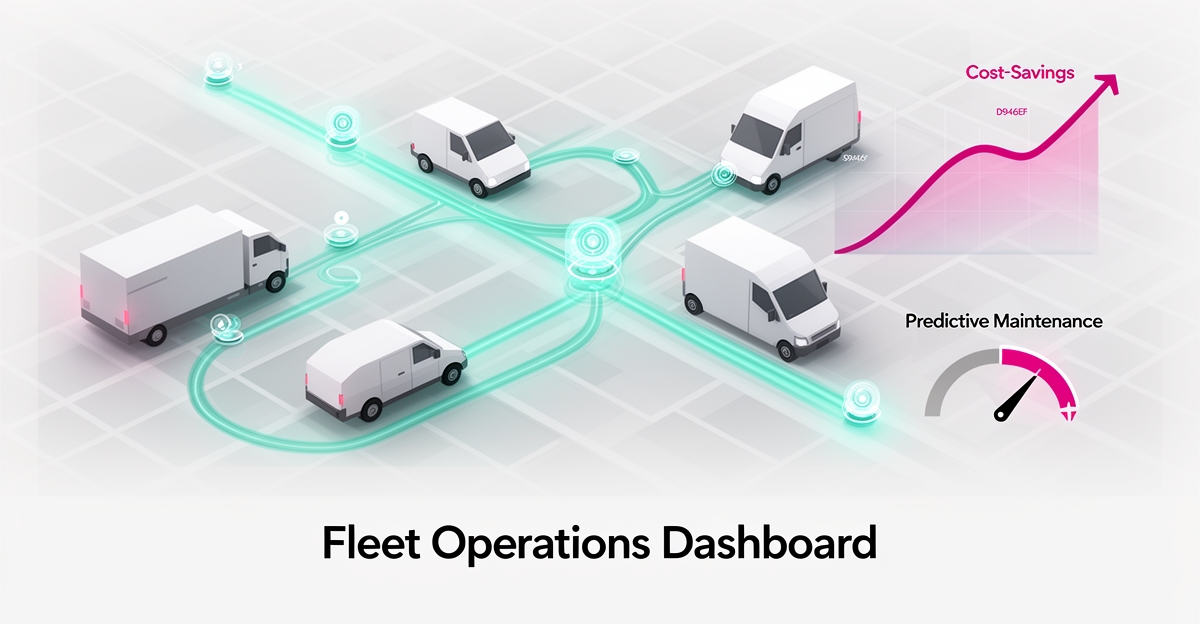
Is AI Worth It for Your Fleet Operations? A Cost-Benefit Analysis for SMBs
Key Facts
- AI-assisted predictive maintenance typically flags a meaningful share of failures weeks in advance, shifting fleets from reactive to scheduled repairs
- AI-assisted dispatch typically lets one dispatcher cover significantly more vehicles than manual dispatch alone
- Fleets of 20+ vehicles commonly report break-even within the first few months of deployment
- AI route optimization typically reduces fuel consumption by double-digit percentages for mid-sized fleets
- Manual dispatching generally carries higher total operating expenses than AI-optimized alternatives, and the gap compounds monthly
- Fleets exceeding roughly 25–30 vehicles tend to hit the scaling limits of manual processes
Hire a team member that works 24/7 — for less than a part-time wage.
AI receptionists, SDRs, dispatchers and 99+ roles. Trained on your business, fully managed.
Not sure where to start? Ask our AI planner
The Hidden Costs of Running a Fleet Manually
Most fleet managers don't realize how much manual operations cost until they run the numbers — and the numbers are rarely flattering. Across fuel, labor, and maintenance, fleets running fully manual dispatch and routing typically carry meaningfully higher total operating expenses than AI-optimized operations, and that gap compounds every single month.
For a 25-vehicle fleet, that inefficiency commonly adds up to tens of thousands of dollars per year in fuel waste, unnecessary overtime, and administrative overhead. These aren't abstract projections — they're the recurring cost of running dispatch, routing, and maintenance the old way.
The dispatcher time drain alone is substantial. Manual route planning typically consumes 2–4 hours daily, while mid-day adjustments take another 15–45 minutes per disruption. That's a skilled employee spending most of their day on work software completes in minutes.
Reactive maintenance — the "fix it when it breaks" approach — carries its own hidden tax. An unplanned breakdown typically costs more than a scheduled repair once you factor in towing, expedited parts, and missed jobs. Reactive fleets also face materially higher downtime than operations using predictive scheduling.
The compounding costs show up across every line item:
- Fuel waste from intuition-based routing: often 15–30% higher consumption than optimized routes
- Overtime and idle time: typically 20–35% higher without automated scheduling
- Compliance exposure: manual hours-of-service tracking risks fines per violation that can reach five figures
- Separate ELD and tracking systems: recurring monthly fees for functionality AI platforms can include natively
Manual processes also cap your growth. A human dispatcher working manually maxes out somewhere around 10–15 drivers, forcing you to hire additional coordinators as you scale. With AI handling optimization, the same dispatcher can typically cover 35–50 vehicles, fundamentally changing your labor economics.
The maintenance picture worsens at scale. Once fleets exceed roughly 25–30 vehicles, paper logs and spreadsheets create gaps where services get missed or duplicated — exactly when breakdown costs hurt most.
This is where AIQ Labs typically begins fleet assessments: quantifying these hidden costs before recommending any solution. Understanding your true baseline — fuel waste, dispatcher hours, breakdown frequency — determines whether AI delivers ROI in months or years. Many fleets start with a single [AI Workflow Build](/workflow-builds) targeting the one process that costs the most.
The question isn't whether manual processes work — they clearly do for thousands of fleets. The question is whether the annual premium and structural scaling limits make sense for your operation's trajectory.
Where AI Pays: Fuel, Maintenance, and Dispatch ROI
AI-powered fleet optimization delivers measurable returns where they matter most: fuel, maintenance, and dispatch efficiency. For SMBs managing 10 or more vehicles, these areas consistently show the strongest ROI from AI implementation, turning operational pain points into predictable savings.
AI route optimization typically reduces fuel consumption by 10–15% through smarter routing and driver behavior coaching — often $1,500–$3,000 in monthly savings for a 25-vehicle fleet, depending on fuel prices and route density. The gain comes from eliminating unnecessary mileage and idle time, with AI cutting daily route planning from an hour or more to under five minutes. Fleets using AI-assisted dispatch also commonly see 20–35% fewer miles driven, directly lowering fuel costs and wear on vehicles.
Predictive maintenance stands out as a high-impact application. By flagging likely failures weeks in advance, fleets shift from reactive fixes to scheduled interventions, typically reducing downtime by 25–30% and cutting maintenance costs by 20–25%. The result is fewer costly breakdowns and longer component life.
AI-assisted dispatch amplifies savings by letting one dispatcher manage 35–50 vehicles — up from the manual limit of roughly 10–15 — which is where annual labor savings of $54,000–$120,000 become realistic for mid-sized fleets. With break-even commonly achieved within 1–3 months for fleets of 20+ vehicles, the financial case is clear. AIQ Labs helps SMBs capture these gains through tailored implementation roadmaps that align AI capabilities with specific fleet challenges, ensuring measurable outcomes from day one.
The Fleet Size Threshold: When AI Makes Sense (and When It Doesn't)
For fleet operators weighing AI adoption, fleet size is the decisive factor. Manual processes remain viable for owner-operators managing 1–5 vehicles, where software costs often exceed potential savings. Once fleets reach 10+ vehicles, fuel savings from AI-optimized routing alone typically surpass software expenses, delivering immediate financial relief. The real turning point arrives at 25–30 vehicles, where manual dispatch systems hit their operational breaking point. Paper logs and spreadsheets create maintenance gaps and route planning inefficiencies that AI eliminates. At this scale, AI-assisted dispatchers manage 35–50 vehicles each, compared to the manual ratio of roughly 10–12 vehicles per dispatcher. This shift in labor efficiency transforms fleet economics, making AI not just beneficial but essential for sustainable growth beyond the owner-operator stage. For fleets of this size, the question shifts from whether to implement AI to how quickly they can deploy it to capture compounding savings in fuel, labor, and downtime. AIQ Labs helps SMBs navigate this threshold with implementation roadmaps that align technology investment with fleet maturity, ensuring AI delivers measurable ROI without unnecessary complexity. The transition point isn't arbitrary — it's where the hidden costs of manual operations finally outweigh the investment in intelligent automation.
The Hybrid Model: AI Handles Optimization, Humans Handle Exceptions
Full replacement rarely works in fleet operations. The most resilient fleets keep experienced dispatchers in the loop while letting AI handle the repetitive optimization work.
AI excels at routing, compliance automation, and predictive alerts at scale. With AI assistance, one dispatcher can typically manage 35–50 vehicles versus roughly 1:10–12 manually, and route planning drops from 60–120 minutes a day to under 5 minutes. That scale without adding headcount is why fleets of 20+ vehicles commonly see break-even within the first quarter.
Humans remain essential for the messy, judgment-heavy moments AI can't reliably own. Successful operations run a hybrid where AI handles optimization and driver assignment while human dispatchers manage exceptions, customer escalations, and real-time problem solving. Dispatchers coach drivers on behavior, negotiate with customers during disruptions, and make calls when traffic, weather, or vehicle failures create scenarios outside training data.
This division of labor also protects adoption. Driver resistance is common when technology feels imposed. Framing AI as a tool that makes the job easier, not a replacement, and keeping a trusted dispatcher for escalations builds trust and speeds uptake.
Implementation succeeds when three foundations are in place:
- Data quality and integration: AI needs clean telematics, ECM, maintenance history, and route data connected to existing systems like Geotab, Fleet Complete, or GPS Insight to deliver reliable recommendations.
- Clear exception protocols: Define what the AI auto-resolves versus what routes to a human, with escalation SLAs and human-in-the-loop controls for critical decisions.
- Change management for drivers and dispatch: 1–2 weeks of hands-on training, transparent rationale for AI suggestions, and feedback loops to refine routing and alerts.
A hybrid model also balances risk. AI predictive maintenance can flag most failures weeks in advance, but a dispatcher's judgment is still needed to prioritize repairs around customer commitments. Similarly, AI can reroute in under two minutes versus 15–45 minutes manually, yet a human decides when to notify a customer proactively.
For SMBs evaluating ROI, this approach delivers the cost advantage without the disruption of full automation. AI handles the routine work that drives fuel savings of 10–15% and 55–115 minutes saved daily on planning, while experienced staff focus on coaching, exceptions, and relationships that protect revenue and safety.
AIQ Labs designs this hybrid operating model as part of its [AI Workflow Builds](/workflow-builds) and broader [AI Operating Systems](/ai-operating-systems), aligning AI for optimization with human oversight for exceptions so the system scales with the business rather than against it.
Your Implementation Roadmap: From Assessment to Break-Even
Starting your AI fleet transformation begins with a focused assessment of your highest-impact workflow. Most SMB fleets see the fastest returns by targeting either predictive maintenance or route optimization first, as these areas consistently deliver measurable savings. AI-assisted predictive maintenance typically reduces downtime by 25–30% and cuts maintenance costs by 20–25%, while route optimization saves 10–15% on fuel costs alone.
Deployment is designed to be swift and minimally disruptive. Modern AI fleet systems typically go live within 1–2 weeks, with hardware installation — such as GPS trackers or dashcams — requiring only 30–60 minutes per vehicle. This rapid rollout means you can begin capturing savings almost immediately, with break-even commonly occurring within 1–3 months for fleets of 20+ vehicles.
AIQ Labs supports this journey through flexible engagement models that prioritize your ownership and control. You can [Start Monthly](/pricing) with a single AI Employee — for example, a dispatch or scheduling assistant — focused on your chosen workflow, Build in Milestones to validate each phase before proceeding, or Own It Outright for a complete, vendor-independent system. This approach ensures you invest only in proven value, scaling AI capabilities at your pace while maintaining full rights to your custom-built solution. Begin with the [2-minute Fit Check](/apply), then a free 30-minute strategy call to map your specific opportunity and implementation path.
Still paying for 10+ subscriptions that don’t talk to each other?
We build custom AI systems you own outright. No vendor lock-in. Full control.
Not sure where to start? Ask our AI planner
Frequently Asked Questions
Is AI actually worth it for a small fleet or is it only for big companies?
At what fleet size does AI start paying for itself?
How much money can AI save me on fuel and dispatch?
What's the ROI of predictive maintenance with AI?
Will AI replace my dispatcher or can we work together?
How quickly can we get AI fleet systems up and running?
The Real Cost of Staying Manual: What Your Fleet Is Leaving on the Table
The numbers don't lie: manual fleet operations bleed SMBs through fuel waste, dispatcher overtime, reactive maintenance, and compliance risks — commonly adding tens of thousands of dollars per year for a 25-vehicle fleet. AI doesn't just cut costs; it changes your scaling math, letting one dispatcher cover 35–50 vehicles, cutting planning time from hours to minutes, and catching most breakdowns weeks in advance. For fleets of 10+ vehicles, break-even within the first quarter is realistic — but success starts with knowing where to focus. Take the first step with AIQ Labs' [2-minute Fit Check](/apply) and a free 30-minute strategy call to map your highest-impact opportunity and see exactly how fast AI can pay for itself in your operation.
Make AI your competitive advantage — not just another tool.
Strategy, implementation and ongoing optimization. One partner, end to end.
Not sure where to start? Ask our AI planner