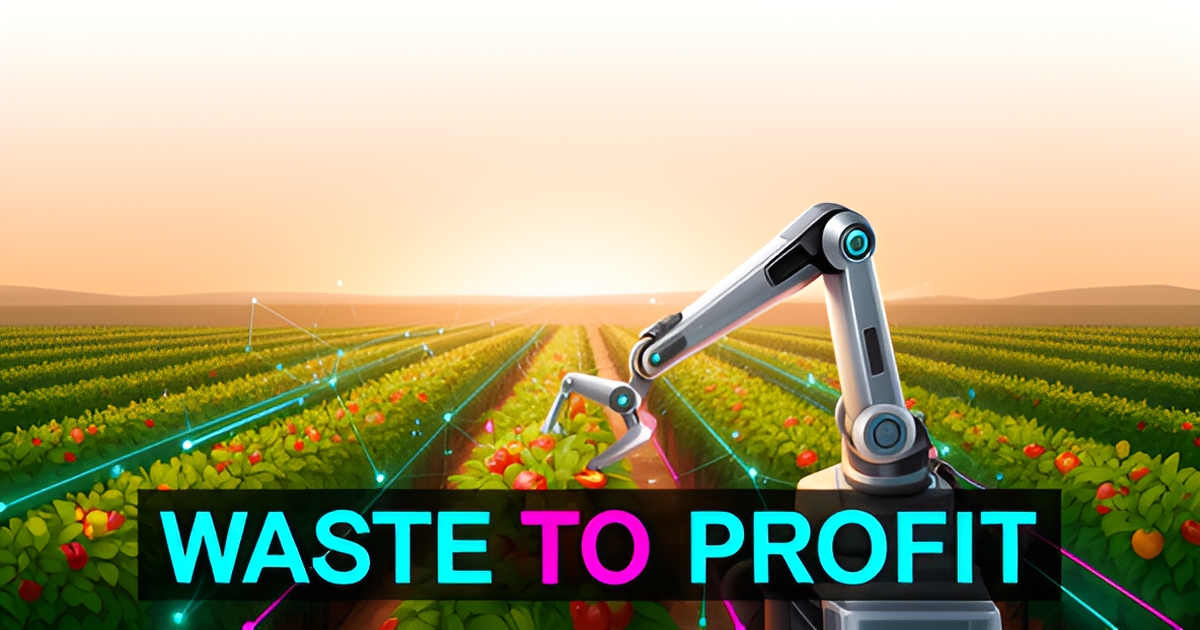
Is AI Worth It for Your Harvesting Business? A Real-World Breakdown
Key Facts
- Industry reports suggest automated harvesting systems can reduce labor costs by up to 40%, largely by reducing dependence on seasonal crews and running around the clock.
- AI harvesting robots use computer vision and sensors to assess ripeness and health at the individual plant level, which reduces crop damage and waste.
- Adoption among small and medium farms remains low—commonly cited in the range of 20–25% for AI-powered precision agriculture—despite documented gains among early adopters.
- AI-assisted monitoring and pest/disease detection can meaningfully reduce yield loss; small-scale operations often report reductions of up to 30%.
- Many effective AI entry points are subscription-based tools in the tens-to-hundreds of dollars per month, not five-figure capital projects.
- AIQ Labs has deployed 200+ multi-agent systems and runs four live SaaS products daily—proof of production-grade AI, not slideware.
Hire a team member that works 24/7 — for less than a part-time wage.
AI receptionists, SDRs, dispatchers and 99+ roles. Trained on your business, fully managed.
Not sure where to start? Ask our AI planner
The Hidden Cost of Manual Harvesting: Why Labor and Waste Are Eroding Profits
For many harvesting businesses, the most expensive line item isn’t equipment or fuel—it’s the hidden cost of doing things the same way they’ve always been done. Labor, waste, and scalability limits quietly erode margins, even in “good” seasons.
Manual harvesting is becoming structurally more expensive as labor gets scarcer and less predictable. Industry reporting on automated harvesting systems suggests labor cost reductions of up to 40% are achievable, precisely because these systems reduce dependence on seasonal crews and can operate 24/7. If your current model relies on large teams working long hours at peak times, you’re exposed every time wages rise, workers don’t show, or the season compresses.
At the same time, conventional harvesting often sacrifices quality and yield in the name of speed. Mechanical systems that treat every plant the same tend to pick immature or overripe produce, increasing waste and downgrade risk. By contrast, AI harvesting robots use computer vision and sensors to identify ripeness and health at the individual plant level, reducing crop damage and minimizing waste while maximizing marketable yield.
Despite this, adoption among smaller operations remains strikingly low. Commonly cited figures put AI-powered precision agriculture adoption at roughly 20–25% of small and medium farms, even though early adopters report strong returns on well-chosen tools. That gap suggests many harvesting businesses are leaving quantifiable gains on the table because the path to ROI feels unclear or risky.
The pressure points tend to cluster in a few predictable places:
- Rising labor costs and chronic worker shortages during critical harvest windows
- Crop waste from non-selective picking, overharvesting, and damage in the field
- Inability to scale operations quickly when demand spikes or weather shifts
- Limited visibility into which fields, crops, or crews are actually profitable
Globally, small-scale producers already carry much of the world’s food production, often with thin margins and limited expert support. AI-assisted pest and disease detection has been shown to reduce yield loss meaningfully—small-scale operations often report reductions of up to 30%—gains that directly translate into more saleable product from the same acreage. When your current model leaks value through waste and inefficiency, the question stops being “Is AI interesting?” and becomes “What is the cost of staying manual?”
For harvesting businesses evaluating their next move, the real risk is standing still while competitors adopt targeted, data-driven systems. AIQ Labs focuses on [AI Employees](/ai-employees) and [AI Workflow Builds](/workflow-builds) that map directly to these pain points—labor-heavy processes, scattered data, and inconsistent decision-making—so owners can quantify the ROI of change instead of guessing.
How AI Harvesting Delivers Measurable ROI: Accuracy, Speed, and Sustainability Gains
AI harvesting is moving from pilot plots to profit centers as field data proves the return is measurable, not theoretical.
Automated harvesting systems can reduce labor costs substantially—industry reporting points to reductions of up to 40%—driven by robotics, AI, and advanced sensors that streamline harvesting processes. These systems can operate 24/7, significantly increasing efficiency and productivity without reliance on seasonal labor.
Picking speed and selectivity rise together. AI harvesting robots use computer vision and sensors to identify ripeness, quality, and health of individual plants, ensuring only optimal produce is collected. Large-scale operations adopting these machines typically report meaningful gains in picking rates as the technology matures.
Yield and crop protection gains compound the labor savings. Small farms implementing AI correctly report strong returns, with operational improvements that commonly include higher average yields and sharply reduced pest losses when AI tools are matched to crop-specific workflows.
Sustainability improvements also translate to cost control. AI machines promote sustainable practices by minimizing overharvesting, optimizing energy and fuel use, and reducing soil compaction. Selective harvesting significantly reduces crop damage and waste, which protects revenue at harvest.
The measurable ROI pillars that harvesting businesses track are:
- Labor cost reduction through autonomous or semi-autonomous operations
- Faster, more selective picking with AI precision
- Higher marketable yield and fewer pest losses with AI-guided decisions
- Sustainability gains from lower energy use, less soil compaction, and reduced waste
These gains are not generic automation. Crop-specific workflows determine which sensors, models, and integration points deliver value, and why a data-driven case for AI matters before capital is committed. AIQ Labs works with harvesting businesses to map bottlenecks to owned AI systems—starting with a single [Workflow Build](/workflow-builds) and, where it makes sense, growing into a full [AI Operating System](/ai-operating-systems) that aligns with real field conditions.
When accuracy, speed, and sustainability are measured together, AI becomes a profit multiplier rather than a cost line.
From Pilot to Profit: A Low-Risk Path to AI Adoption for Harvesting Operations
The gap between AI curiosity and AI payoff isn't technology—it's deployment strategy. Most harvesting operations stall at the pilot stage because they try to automate everything at once instead of fixing one expensive workflow first.
Start with a single, measurable pain point. Yield forecasting errors that lead to overstaffing or under-harvesting. Sorting lines where premium fruit gets downgraded. Documented examples of small farms using targeted AI monitoring—rather than a full robotic overhaul—report higher yields and pest losses cut roughly in half. The pattern is consistent: pick the workflow that costs you the most, fix it, measure it, then expand.
- Pick one workflow: yield forecasting, quality sorting, or harvest scheduling
- Set a 90-day milestone with a hard ROI target (labor hours saved, waste reduced, grade-out improved)
- Deploy an [AI Employee](/ai-employees) for that role—24/7 monitoring without shift costs, at roughly 80% less than a human hire
- Validate, then expand to the next workflow using the same milestone model
Full robotic harvesting systems can cut labor costs sharply, but the capital outlay puts them out of reach for most SMBs. AI Employees bridge that gap. They handle the cognitive layer—grading decisions, dispatch coordination, inventory reconciliation—while your existing equipment and crew handle the physical work. One AI dispatcher covers what shift coordinators used to. One AI quality agent catches defects your tired 3 AM sorters miss.
Many effective entry points are subscription-based monitoring and diagnosis tools in the tens-to-hundreds of dollars per month, not infrastructure overhauls. No IT department required. Just a tool that pays for itself before harvest ends.
AIQ Labs builds these workflow fixes as owned assets, not rented tools. You pay in milestones, approve each one before the next begins, and can stop anytime while keeping everything built. The first win funds the second. The second funds the transformation. See the full [pricing model](/pricing) or start with the two-minute [Fit Check](/apply).
Still paying for 10+ subscriptions that don’t talk to each other?
We build custom AI systems you own outright. No vendor lock-in. Full control.
Not sure where to start? Ask our AI planner
Frequently Asked Questions
Is AI harvesting actually worth the investment for a small operation?
How much can AI actually reduce my harvesting labor costs?
What's the real ROI timeline for AI harvesting technology?
Do I need expensive robots to benefit from AI in my harvesting business?
How does AI improve crop quality and reduce waste compared to manual harvesting?
Why are so few small farms using AI if the ROI is proven?
The Real Question Isn’t If, It’s When You’ll Start Capturing the Margin
Manual harvesting is quietly eroding profit through labor scarcity, waste from non-selective picking, and an inability to scale when demand or weather shifts. AI harvesting changes that equation by pairing computer vision with field data to pick only optimal produce, cut labor dependence, and lift yield and quality at the same time. The gap isn’t technology, it’s deployment strategy: start with one measurable workflow, set a 90-day ROI milestone, and expand from a proven win. AIQ Labs helps harvesting operations map bottlenecks to owned AI workflows and AI Employees—built in milestones you approve, with no fake prices and no invented case-study numbers. If you want clarity on your highest-ROI first step, start the two-minute Fit Check at aiqlabs.ai/apply, then book a free 30-minute strategy call at aiqlabs.ai/book, or email [email protected].
Make AI your competitive advantage — not just another tool.
Strategy, implementation and ongoing optimization. One partner, end to end.
Not sure where to start? Ask our AI planner