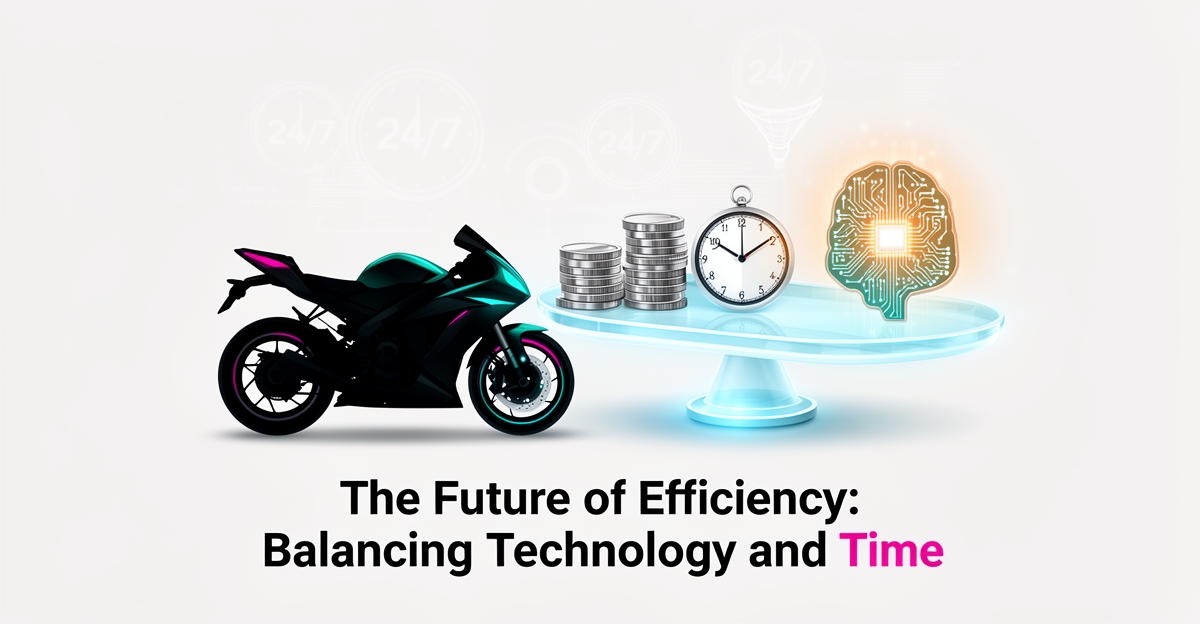
Is AI Worth It for Your Motorcycle Dealership? A Cost-Benefit Analysis
Key Facts
- A full-time front-desk hire typically costs several thousand dollars per month once salary, benefits, and taxes are included—and still leaves after-hours coverage gaps.
- A meaningful share of high-consideration purchase inquiries, including motorcycles, arrive outside standard business hours.
- AI agents differ from chatbots: they can check inventory, book test rides, and log leads end-to-end rather than just answer questions.
- Most AI initiatives that underperform fail for predictable reasons: unclear objectives, weak CRM integration, and missing guardrails.
- AIQ Labs has deployed 200+ multi-agent systems and runs 4 live SaaS products daily.
Hire a team member that works 24/7 — for less than a part-time wage.
AI receptionists, SDRs, dispatchers and 99+ roles. Trained on your business, fully managed.
Not sure where to start? Ask our AI planner
The Margin Squeeze and Missed Lead Problem
Motorcycle dealerships are caught in a squeeze between pricing pressure and rising operational costs. Manufacturers compete aggressively on price, and dealerships absorb the impact while trying to maintain profitability. At the same time, staffing costs for reception, lead response, and customer service keep climbing, with traditional employees requiring salaries, benefits, and ongoing training that erode already-thin margins.
This financial strain is compounded by a critical operational blind spot: missed leads after hours. A significant portion of inbound inquiries—especially for high-consideration purchases like motorcycles—typically occur outside standard business hours, yet most dealerships lack 24/7 coverage to capture them. When calls go to voicemail or emails sit unanswered overnight, hot leads cool off, and prospects move to competitors who respond faster. The result isn't just lost sales—it's a silent revenue leak that accumulates daily.
Without a solution that bridges the gap between affordability and availability, dealerships face a stark trade-off: either overextend on staffing costs to cover evenings and weekends, or accept that a portion of their marketing-driven leads will never be engaged. This tension sets the stage for evaluating AI-driven alternatives—not as a replacement for human expertise, but as a force multiplier that ensures no opportunity is lost due to timing or resource constraints. AIQ Labs helps dealerships model this trade-off precisely, comparing the true cost of missed opportunities against the investment in always-on AI coverage.
Agentic AI vs Chatbots: What Actually Moves the Needle
The difference between a chatbot and an AI agent isn't just technical—it's financial. Traditional chatbots answer questions but rarely take action, while agentic AI can reason, choose tools, and execute multi-step workflows like checking inventory or booking a test ride end-to-end. This capability gap is also why many AI deployments underdeliver: they stop at basic automation instead of transforming an actual process.
For motorcycle dealerships, this distinction directly impacts lead capture and service efficiency. An AI agent can qualify an inbound lead, verify bike availability in real time, schedule a test ride, and send a confirmation—all without human intervention. A chatbot might answer spec questions but stop there, requiring staff to manually follow up. End-to-end execution is what turns an AI deployment from a novelty into a revenue driver, and it's why adoption of task-specific AI agents has grown rapidly across industries as of late 2026.
However, deploying agentic AI without proper governance creates hidden risks and costs. Most organizations still lack the governance frameworks needed to manage autonomous systems, leaving them vulnerable to data exposure, compliance issues, or uncontrolled spending from inefficient infrastructure. Agentic AI's always-on nature demands scalable compute resources; without optimization, costs can spiral, eroding the very savings AI promises. Successful implementation requires clear guardrails, real-time monitoring, and integration with CRM and inventory systems—steps that separate costly experiments from sustainable advantage.
AIQ Labs helps dealerships bridge this gap by building AI employees designed for governed action from day one. Rather than deploying isolated chatbots, we architect systems that check inventory, book test rides, and qualify leads within defined boundaries—ensuring every automated step delivers measurable value while maintaining compliance and control. This approach turns AI from a cost center into a scalable revenue driver, grounded in the workflows that actually move the needle for motorcycle dealerships. Start the Fit Check at https://aiqlabs.ai/apply to explore how agentic AI can be tailored to your dealership's specific opportunities.
Cost-Benefit Breakdown: Staffing vs AI Employees
Motorcycle dealerships face mounting pressure to control labor costs while maintaining 24/7 customer availability. Traditional staffing models involve significant recurring expenses—salaries, benefits, and training that can exceed several thousand dollars monthly per full-time employee—yet still leave gaps in after-hours coverage. In contrast, an AI employee such as an AI receptionist operates on fixed monthly pricing, offering round-the-clock call handling, appointment scheduling, and lead qualification without overtime or missed shifts—and typically at roughly 80% less than the cost of a comparable human hire.
Beyond base compensation, hidden costs amplify the total investment in human teams. Recruiting, onboarding, and ongoing training can add thousands per hire, while benefits and taxes typically increase base salary by 25–35%. AI employees eliminate these variables through a single flat fee that includes build, training, tool integration, monitoring, and continuous improvements—allowing dealerships to pause or adjust services as needed. This model supports scalability during seasonal demand spikes without the latency and expense of hiring and training new staff—a critical advantage when manufacturer price competition is compressing margins and efficient resource allocation becomes essential for profitability.
However, the financial upside of AI adoption is not automatic. Many AI initiatives fail to deliver expected ROI, often due to inadequate governance or infrastructure planning. Without clear guardrails, monitoring, and human oversight, autonomous agents can generate unexpected compute costs, compliance issues, or shadow deployments that undermine value. Successful implementation requires balancing automation speed with strategic oversight—ensuring AI agents integrate seamlessly with CRM and inventory systems while maintaining audit trails and decision boundaries. For dealerships, this disciplined approach transforms AI from a cost center into a measurable driver of efficiency and lead conversion. Infrastructure efficiency and governance are as vital as the technology itself in realizing sustainable returns.
Implementation Roadmap for Dealerships
A safe rollout starts with clarity, not speed. Dealerships that map objectives first avoid the most common failure modes: unclear goals, isolated tools, and automations nobody acts on.
Define business objectives before tools. Scope the broader outcome the agentic system must serve, not isolated tasks, and decide which structured outputs return to the workflow. This discipline prevents automating work that never gets acted on and aligns AI to lead conversion, service throughput, and inventory visibility.
Integrate with CRM and inventory from day one. An agent is only useful if it can check stock, book test rides, and log leads in the systems sales already uses. Connecting the agent to dealership tools through APIs ensures actions like checking availability or scheduling appointments happen without manual re-entry.
Establish guardrails and human oversight early. Dealerships need clear boundaries on what decisions an agent can make independently versus those requiring approval, plus real-time monitoring to flag anomalies.
Start with low-risk, high-visibility wins. Test ride scheduling, service reminders, and after-hours FAQ handling prove value quickly without exposing finance or compliance workflows. These single-task wins build staff trust and create data for refinement.
Train staff for oversight, not replacement. Employees shift from repetitive intake to judgment, governance, and strategic selling. Teams need to know how to intervene in agent workflows and interpret performance analytics to improve customer experience.
Monitor, measure, and scale deliberately. Use analytics to track conversion, response time, and missed calls, then expand capabilities once the initial agent proves reliable.
A practical rollout path for dealerships looks like this:
- Define objectives and success metrics for leads, service bookings, and 24/7 coverage
- Integrate agent with CRM, inventory, and scheduling systems via API
- Set guardrails, audit trails, and human-in-the-loop escalation rules
- Launch a low-risk pilot such as test ride scheduling, then train staff for oversight
- Monitor performance and scale to lead qualification and service follow-up
This phased approach mirrors how AIQ Labs structures implementation through Start Monthly, Build in Milestones, and Own It Outright payment models. Dealerships can begin with a single AI employee—such as an AI receptionist—then expand to department-wide automation, or rebuild the one workflow that costs the most with a fixed-price Workflow Build, with full ownership of code, agents, and data when ready.
Still paying for 10+ subscriptions that don’t talk to each other?
We build custom AI systems you own outright. No vendor lock-in. Full control.
Not sure where to start? Ask our AI planner
Frequently Asked Questions
How much does an AI receptionist cost compared to hiring a human for my dealership?
What's the real difference between a chatbot and an AI agent for handling leads?
Is it true most AI projects fail to deliver ROI? What are the odds for my dealership?
Can an AI agent actually integrate with my existing DMS and CRM, or is that just marketing talk?
What happens if the AI makes a mistake or a customer needs a human? Is there a safety net?
We're getting crushed on margins—how does AI actually stop the revenue leak from missed after-hours leads?
Turn Margin Pressure Into 24/7 Revenue Capture
Motorcycle dealerships are facing a squeeze from pricing pressure, rising staffing costs, and leads that go cold after hours. The analysis shows agentic AI can close that gap not by replacing human expertise, but by acting as a force multiplier that qualifies leads, checks inventory in real time, books test rides, and follows up 24/7 without overtime or missed shifts. The cost contrast is clear: traditional teams carry salaries, benefits, training and coverage gaps, while AI employees operate on a fixed monthly plan and scale instantly with demand. The caveat is governance—AI initiatives that skip clear objectives, CRM integration, and human oversight are the ones that underdeliver. Start with defined objectives, integrate from day one, and pilot low-risk wins like after-hours test ride scheduling. AIQ Labs has deployed 200+ multi-agent systems and helps dealerships model this trade-off precisely, building governed agentic systems tailored to your workflows. Start the Fit Check at https://aiqlabs.ai/apply for a free 30-minute strategy call to map your biggest bottleneck and identify high-ROI automation opportunities.
Make AI your competitive advantage — not just another tool.
Strategy, implementation and ongoing optimization. One partner, end to end.
Not sure where to start? Ask our AI planner