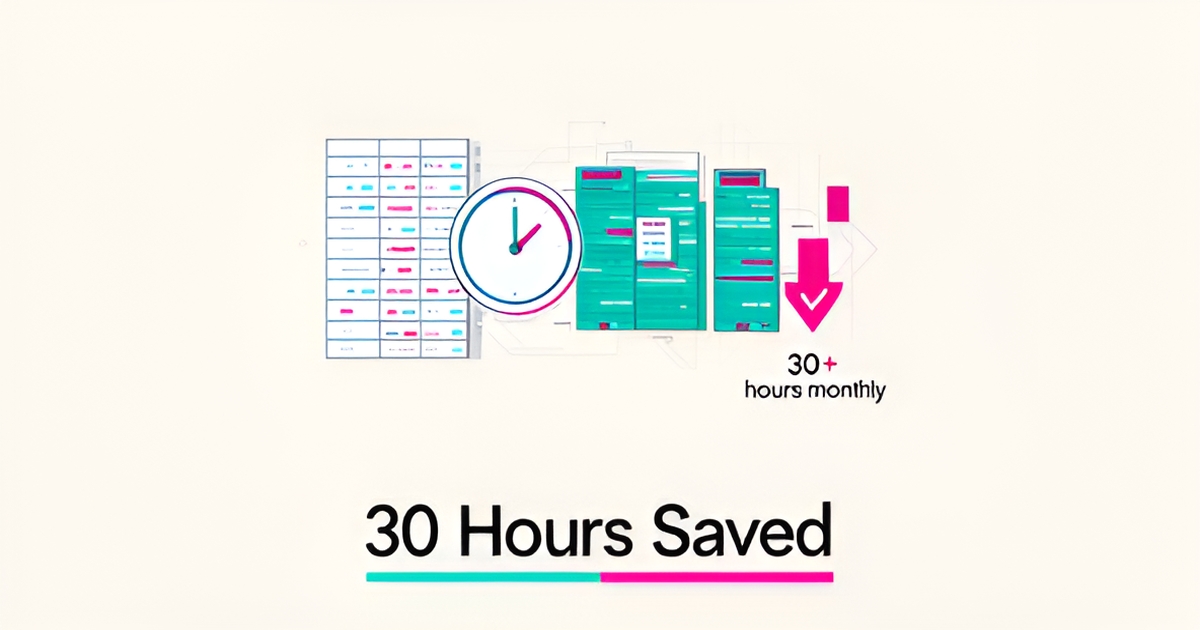
Is It Worth Using AI for League Admin Tasks? A Practical ROI Model
Key Facts
- League admin work—scheduling, registrations, eligibility checks, reporting—is highly repetitive and well suited to AI automation.
- The most common failure mode for leagues is manual scheduling: double-booked fields and conflicting game times that require last-minute corrections.
- Registration errors (incomplete forms, missed payments, compliance gaps around waivers and age verification) compound into rework, refunds, and trust problems.
- AI validation and real-time conflict detection typically eliminate most avoidable scheduling and registration errors.
- A credible ROI model combines labor cost avoidance, error cost avoidance, scalability value, and strategic reallocation—not hours saved alone.
- AIQ Labs builds these systems in phases with fixed-price milestones, so leagues can start with one workflow and expand only when the numbers justify it.
Hire a team member that works 24/7 — for less than a part-time wage.
AI receptionists, SDRs, dispatchers and 99+ roles. Trained on your business, fully managed.
Not sure where to start? Ask our AI planner
The Hidden Cost of Manual League Administration
Managing a sports league manually is a drain on time and resources. League administrators spend hours each week juggling schedules, processing registrations, and tracking compliance requirements—tasks that are tedious and highly susceptible to human error. Before any automation, most leagues face mounting inefficiencies that translate directly into operational fatigue and financial leakage.
Start by measuring your baseline. How many hours per month go to core administrative functions like scheduling games, managing team registrations, and verifying player eligibility? For many leagues, this adds up to a meaningful share of one person's working month—time that could be redirected toward league growth, player engagement, or strategic planning. Manual scheduling alone frequently leads to double-booked fields or conflicting game times, requiring last-minute corrections that frustrate both organizers and participants.
Error costs are just as real, even if they're harder to tally. Registration forms get filled in incompletely or entered incorrectly, leading to roster inaccuracies, missed payments, and compliance gaps—especially around age verification and liability waivers. Tracked manually, these errors often go unnoticed until they cause disruptions, such as ineligible players participating in games or delayed refunds. Many leagues find that a substantial share of administrative tasks require rework due to avoidable mistakes, creating a cycle of inefficiency that erodes trust and increases overhead.
These pain points are not isolated. Leagues that rely on manual processes consistently struggle to scale operations without proportional increases in staff or costs, particularly during peak seasons. Without intervention, the cumulative effect of these inefficiencies isn't just inconvenient—it actively undermines the league's ability to operate smoothly and sustainably.
How AI Automation Targets the Costliest League Workflows
The transformation begins with identifying your most time-consuming manual processes: player registration, schedule creation, team communication, and post-game reporting. A well-built AI system integrates directly with the tools you already use—Google Calendar for scheduling, Mailchimp for communications, a legacy database for player records—using API connections for real-time data synchronization. This eliminates duplicate entry and ensures all systems reflect the same information instantly.
The automation can then handle end-to-end workflows: validating registration forms, detecting scheduling conflicts before they occur, sending personalized game reminders via email and SMS, and generating standardized reports after each match. By replacing repetitive manual steps with intelligent agents, leagues typically free up a substantial block of admin time each month—capacity that can go toward strategic planning and participant engagement instead of data entry.
Error rates drop as well. Common mistakes—double-booked fields, incorrect eligibility checks, miscommunicated schedule changes—lead to frustrated players and last-minute cancellations. Validation layers and real-time conflict detection typically eliminate most of these, improving reliability and trust in league operations.
- Registration processing shifts from minutes of manual review per player to near-instant validation
- Schedule conflicts are caught before publication rather than after complaints arrive
- Report generation moves from a recurring manual task to an automated process
The right way to verify these gains is to measure them yourself: run a pilot phase with timestamped logs and error tracking, and compare against your baseline. Targeted AI automation, built on infrastructure you own and integrated with your existing tools, delivers measurable efficiency without requiring a complete system overhaul. This is the core idea behind AI Workflow Builds: rebuild the one workflow that costs you the most, at a fixed price, in phases.
Calculating the True ROI: Beyond Time Savings to Strategic Value
Time savings alone rarely justify AI investment for leagues. The real return shows up when labor cost avoidance, error reduction, and strategic reallocation are measured together.
A Total Economic Impact approach captures both direct financial gains and indirect operational value. Start with a straightforward cost-benefit analysis, then layer in payback period and the value of capacity reallocated to higher-return activities.
Labor cost avoidance is the most immediate lever. Automating repetitive admin tasks such as scheduling, roster updates, and communications frees staff hours for higher-value work. Multiply hours saved per month by your fully-loaded staff rate—that's your direct annual saving. That time can be reallocated to member experience, sponsorship sales, or program growth rather than manual data entry.
Error-related savings compound quickly. Fewer scheduling mistakes, missed payments, or compliance gaps reduce rework, refunds, and reputational risk. Leagues see similar patterns to other membership organizations when AI handles registrations, waivers, and inquiries consistently: fewer incidents, less firefighting, better retention.
Scalability gains matter as leagues grow. Manual processes break under volume; AI systems scale without proportional headcount. If you plan to add teams or expand programs, the ability to absorb growth without hiring another administrator is often the largest long-term return.
A replicable ROI model for leagues typically includes:
- Labor cost avoidance from hours saved per month multiplied by fully-loaded staff rate
- Error cost avoidance from reduced incidents, rework, and member churn
- Scalability value from handling increased teams/players without adding admin staff
- Strategic reallocation value from staff moving to revenue-driving activities
AIQ Labs builds custom ROI models using your league's actual workflows and cost structure, so the decision rests on your numbers, not generic benchmarks. Payment is structured to match the risk: start monthly, build in milestones, or own the system outright. If you want a second pair of hands on the admin side without a hire, AI Employees cover roles like registration coordinators and communications staff at a fraction of the cost of a human hire.
Still paying for 10+ subscriptions that don’t talk to each other?
We build custom AI systems you own outright. No vendor lock-in. Full control.
Not sure where to start? Ask our AI planner
Frequently Asked Questions
How much time can a sports league actually save by using AI for admin tasks?
Does AI really reduce errors in league operations, or is that just marketing hype?
What specific admin tasks can AI handle for a sports league?
How do you calculate ROI for AI in a league when the benefits aren't just time savings?
Will AI integration require replacing our current tools like Google Calendar or Mailchimp?
Is AI adoption realistic for smaller leagues without big tech budgets or IT teams?
Turning Administrative Overhead into Strategic Advantage
League admin work is exactly the kind of repetitive, error-prone, rules-based workload AI handles best. The honest answer to "is it worth it?" is: run the numbers on your own league. Tally the hours spent on scheduling, registration, and reporting; estimate the cost of the errors that slip through; and weigh that against a phased build that starts with your single costliest workflow. The real ROI emerges not just from hours saved, but from redirecting that capacity toward revenue-driving and experience-enhancing activities—engaging players, pursuing sponsorships, and scaling without adding headcount. If you're stuck in manual cycles, start with a 2-minute Fit Check or book a free 30-minute strategy call to map your biggest bottlenecks and see where AI can deliver measurable impact—no obligation, just clarity on your opportunity.
Make AI your competitive advantage — not just another tool.
Strategy, implementation and ongoing optimization. One partner, end to end.
Not sure where to start? Ask our AI planner