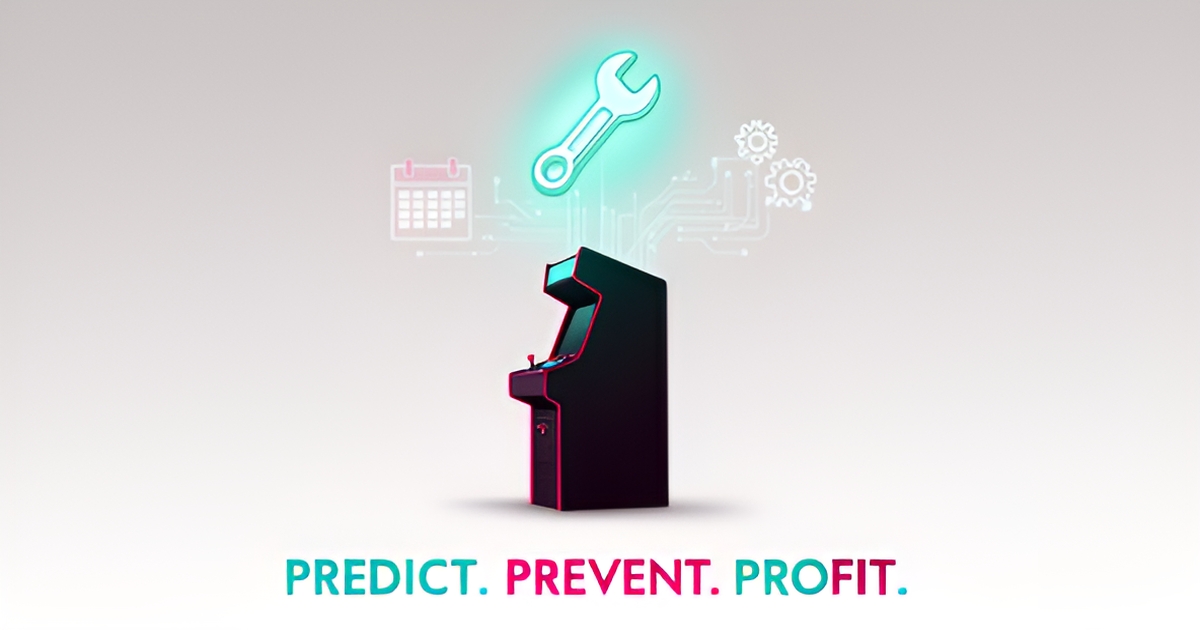
Should Arcades Invest in AI for Game Maintenance Scheduling?
Key Facts
- The U.S. arcade and amusement market is a multi-billion-dollar industry as of late 2026, making every minute of peak-hour downtime costly.
- Predictive maintenance shifts strategy from reactive fixes to preventing failures before they occur, using sensor data, play counts, and historical failure patterns.
- Preventing just two to three major failures per year is typically enough for an AI maintenance system to pay for itself.
- AI can automate game maintenance scheduling, parts inventory checks, and technician dispatch — the three tasks that consume the most technician time.
- Arcades with roughly 30 or more machines typically generate enough data volume to make predictive maintenance reliable.
- AIQ Labs has deployed 200+ multi-agent systems and runs four live SaaS products daily — this is operational software, not theory.
Hire a team member that works 24/7 — for less than a part-time wage.
AI receptionists, SDRs, dispatchers and 99+ roles. Trained on your business, fully managed.
Not sure where to start? Ask our AI planner
The Hidden Cost of Reactive Arcade Maintenance
Arcades rely on machines that generate revenue only when they're working, yet most still operate on a reactive maintenance model — fixing games only after they break down. This approach creates unpredictable downtime that hits hardest during peak hours, when foot traffic and earning potential are highest. The U.S. arcade and amusement market is a multi-billion-dollar industry as of late 2026, which makes even short periods of machine failure costly in lost income and customer dissatisfaction.
When a popular game goes offline unexpectedly, arcades lose more than just the revenue from that single machine — they risk losing the entire session spend of frustrated players who may leave or cut their visit short. Reactive maintenance also drives up long-term repair costs, as minor issues left unaddressed often escalate into major failures requiring expensive parts replacements or extended technician visits. Without predictive insight, operators stock parts inefficiently, either over-investing in inventory or facing delays when critical components aren't on hand.
This cycle of breakdown and repair disrupts operational planning, making it difficult to schedule staff or manage part inventories effectively. Technicians spend excessive time on emergency fixes rather than preventive care, reducing overall team efficiency. For an industry where uptime directly correlates with revenue, the hidden cost of reactive maintenance isn't just in repair bills — it's in the missed opportunities, eroded customer trust, and avoidable waste that accumulate over time. AIQ Labs helps arcade owners break this cycle by applying AI-driven workflow automation to anticipate maintenance needs before failures occur.
How AI Transforms Maintenance from Cost Center to Competitive Advantage
Downtime is the silent revenue killer in arcades, and the shift from fixing machines after they fail to preventing failure before it happens is where AI changes the economics of operations.
Reactive maintenance keeps technicians on call and floors underperforming. Predictive maintenance using AI turns maintenance into a scheduled, data-driven process that protects uptime and customer experience. AI can automate game maintenance scheduling, part inventory checks, and technician assignments — reducing downtime and preventing costly equipment failures.
Because the arcade and amusement market is a multi-billion-dollar industry as of late 2026, idle cabinets during peak hours carry real cost. Predictive scheduling replaces calendar-based rounds with condition-based triggers, using sensor data, play counts, and historical failure patterns to forecast when service is needed.
AI also transforms parts and inventory from a guessing game into a forecasting system. Inventory forecasting driven by usage patterns, seasonality, and machine type means common parts for redemption games, pinball, and VR stations are on hand before a failure occurs — freeing cash and eliminating emergency orders.
Technician dispatch becomes intelligent rather than manual. Instead of dispatching the nearest available tech, AI matches skill sets, parts availability, and floor priority to the right job at the right time. This reduces wasted trips, improves first-visit fix rates, and keeps high-traffic zones online.
The operational shift shows up across the floor:
- Maintenance strategy moves from reactive fix-when-broken to predictive fix-before-failure
- Parts inventory is forecasted from usage patterns, seasonality, and machine type
- Technician assignments are automated based on skills, location, and real-time priority
- Downtime events are logged and analyzed to continuously improve reliability
Modern arcade customers increasingly expect a seamless play experience, with mobile-enabled payment and engagement systems becoming the norm in entertainment centers. AI-driven maintenance supports that expectation by keeping the floor available when demand peaks.
AIQ Labs builds these workflows through AI Workflow Builds — rebuilding the one workflow that costs you the most, at a fixed price and in phases — aligning with the broader industry move toward digital management systems and advanced operational efficiency.
When maintenance is automated, scheduled, and predictive, it stops being a cost center and becomes a competitive advantage that protects revenue, improves customer satisfaction, and extends asset life.
What Implementation Looks Like for a Mid-Sized Arcade
Imagine your arcade running like a well-oiled machine, where AI anticipates maintenance needs before they become problems. This isn't a distant dream — it's a practical reality for mid-sized arcades today.
The first step involves connecting your existing machine sensors and POS data to an AI workflow. This integration allows the system to monitor equipment health in real-time, predicting failures before they occur. Industry use cases in amusement arcades show AI can optimize game performance and predict maintenance needs, leading to increased revenue and customer satisfaction.
Once connected, the AI begins to learn your arcade's unique patterns. It analyzes data from your machines, identifying trends and potential issues. This predictive capability is what shifts your maintenance strategy from reactive to proactive — machine learning has become the dominant approach in predictive analytics as of 2026.
With predictive insights in hand, the AI can auto-order parts and assign technicians. This automation reduces downtime and prevents costly equipment failures — covering game maintenance scheduling, part inventory checks, and technician assignments in one system. This not only saves time but ensures your arcade operates smoothly, enhancing the overall customer experience.
Implementing this AI workflow doesn't require a full-time IT staff. Instead, a managed AI Employee can handle the setup and ongoing management. AIQ Labs' AI Employees cost roughly 80% less than a human hire, making this a cost-effective solution for mid-sized arcades without extensive technical expertise.
Here are the key steps to implementing AI in your arcade:
- Connect existing machine sensors and POS data to an AI workflow.
- Allow the AI to learn and analyze your arcade's unique patterns.
- Utilize predictive insights to auto-order parts and assign technicians.
- Leverage a managed AI Employee for cost-effective implementation.
By following these steps, your arcade can use AI to streamline maintenance, reduce downtime, and enhance customer satisfaction. Practical AI for arcade management is more accessible than you might think.
ROI Reality Check: When Does AI Maintenance Pay Off?
The math behind AI-powered maintenance is simpler than most arcade owners expect. The U.S. arcade and amusement market is a multi-billion-dollar industry as of late 2026, and every hour a popular cabinet sits dark chips away at that revenue potential.
The payback threshold is surprisingly low. Consider the cost structure: an AI maintenance scheduling system handles game maintenance scheduling, part inventory checks, and technician assignments on a flat monthly plan — typically far less than a part-time hire. Compare that to the revenue lost when a high-earning cabinet goes down during a Friday rush, and the equation tilts quickly.
Here is how the breakeven math works in practice:
- One prevented failure per quarter: If a single avoided breakdown saves even a few hundred dollars in lost play revenue and emergency repair premiums, the system has already covered most of its monthly cost.
- Two to three major failures prevented per year: At this rate, the AI system typically pays for itself entirely — everything beyond that is pure margin protection.
- Compounding operational savings: Predictive scheduling also reduces overtime technician callouts, rush shipping on parts, and the customer frustration that drives players to competitors.
The shift from reactive to predictive maintenance is what makes this possible. Industry analysis of amusement arcades shows AI can optimize game performance, predict maintenance needs, and improve customer flow — leading to increased revenue and higher satisfaction. Rather than waiting for a joystick to snap or a bill acceptor to jam, the system flags wear patterns and schedules service during off-peak hours.
This mirrors a broader pattern across industries: businesses of all kinds are replacing reactive workflows with automated, data-driven ones, and AI adoption continues to accelerate through 2026. Arcades are no exception.
The real risk is not the monthly cost — it is the downtime you are not tracking. Most operators underestimate how much revenue a single malfunctioning cabinet loses per week, especially during peak hours when floor traffic is highest.
AIQ Labs builds these maintenance workflows through AI Workflow Builds at a fixed price, in phases, and through AI Operating Systems that arcades own outright — with scheduling, inventory checks, and technician coordination handled automatically. For operators running 15 or more machines, the numbers tend to justify themselves within the first prevented failure.
Decision Framework: Is Your Arcade Ready for AI Maintenance?
Downtime on a busy floor hits revenue immediately, and manual maintenance rarely keeps pace in a multi-billion-dollar arcade and amusement market. AI-driven scheduling can shift operations from reactive fixes to predictive prevention, but the right entry point depends on your current operations.
Use this five-question assessment to decide whether a targeted workflow build or a full AI Employee deployment makes sense now.
- Machine count and mix — Do you operate 30+ machines across multiple types? Larger fleets create data volume that makes predictive maintenance reliable.
- Downtime tracking maturity — Are you logging failures, repair times, and causes in a system, or relying on memory and paper notes? AI needs structured history to forecast needs.
- Parts management maturity — Do you have real-time inventory visibility for common parts, or do technicians hunt for components mid-repair? Automated part checks reduce idle time.
- Technician bandwidth — Is your team consistently backlogged during peak hours, or can they respond same-day? Constrained bandwidth favors automated assignments.
- Peak-season revenue dependency — Does a large share of annual revenue fall in summer/holidays? High seasonality increases the cost of downtime.
If you track downtime informally and parts are managed manually, a focused AI Workflow Build can automate game maintenance scheduling, part inventory checks, and technician assignments — reducing downtime and preventing costly equipment failures. This approach targets the one workflow that costs you the most, at a fixed price.
Arcade owners with digital management systems already in place often see faster gains. The integration of digital management systems, mobile connectivity, and advanced display technologies creates opportunities for enhanced operational efficiency, improved customer engagement, and new revenue streams. That foundation supports broader automation.
When machine count is high and downtime data exists, AI can optimize game performance, predict maintenance needs, and improve customer flow, leading to increased revenue and customer satisfaction — as industry use cases in amusement arcades show. In those cases, a managed AI Employee that works alongside technicians can handle scheduling, inventory alerts, and dispatch around the clock.
Customer expectations also matter. Younger arcade customers increasingly prefer mobile-enabled payment and engagement systems, which pairs well with automated operations that keep machines available.
Score yourself on the five questions. Three or more "yes" answers to data readiness and bandwidth constraints point to a full AI Employee deployment. Fewer yeses suggest starting with a targeted workflow build and building maturity before scaling.
Still paying for 10+ subscriptions that don’t talk to each other?
We build custom AI systems you own outright. No vendor lock-in. Full control.
Not sure where to start? Ask our AI planner
Frequently Asked Questions
Is AI maintenance scheduling really worth it for a small or mid-sized arcade?
How does AI maintenance differ from just fixing machines when they break?
Do I need IT staff or special sensors to get started?
Will AI help with parts inventory and technician dispatch?
How quickly can AI maintenance pay for itself?
Is my arcade ready for AI maintenance now?
Turn Uptime Into Revenue You Can Count On
Reactive maintenance is quietly draining arcade revenue through peak-hour downtime, emergency repairs, and frustrated players who leave with their wallets. Shifting to predictive, condition-based scheduling changes maintenance from a cost center into a revenue protector — using sensor data, play counts and failure patterns to service machines during off-peak hours, forecast parts before they're needed, and match the right technician to the right job. For mid-sized operators, the payback is fast: preventing just one or two major failures per year often covers the system, while compounding savings on overtime, rush shipping and lost play add up. Start by assessing your machine count, downtime tracking, parts visibility and technician bandwidth to decide whether a targeted AI Workflow Build or a managed AI Employee is the right entry point. If you want a clear, no-pressure map of where AI will pay off first in your arcade, take the two-minute Fit Check at aiqlabs.ai/apply and book a free 30-minute strategy call. In a multi-billion-dollar arcade market, keeping cabinets earning when demand peaks is the competitive edge that matters.
Make AI your competitive advantage — not just another tool.
Strategy, implementation and ongoing optimization. One partner, end to end.
Not sure where to start? Ask our AI planner