Should Freight Brokers Use AI for Real-Time Route Optimization?
Key Facts
- AI-powered quoting and tracking can typically reduce response times dramatically, transforming hours-long quoting into near-instant engagement according to Plavno case studies.
- AI-generated quotes can reach high accuracy rates when grounded in consistent lane data from Plavno's analysis of AI agents in freight.
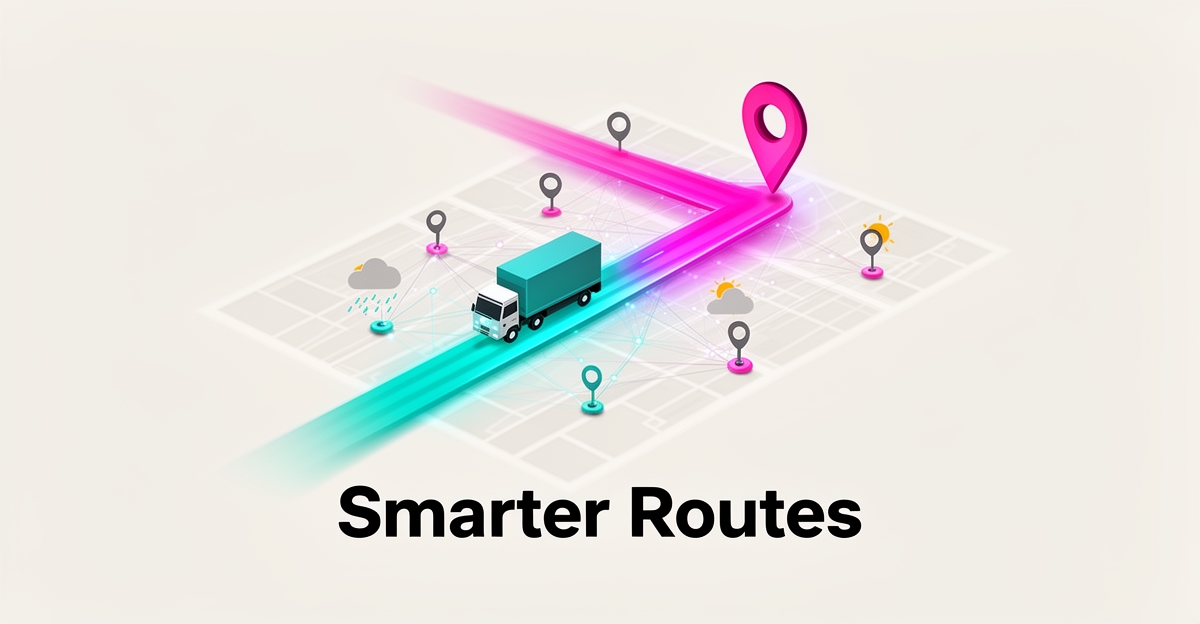
- AI-powered route optimization can deliver meaningful fuel savings by dynamically adjusting to traffic, weather, and carrier availability in real time.
- A majority of logistics companies already use AI technologies signaling mainstream adoption beyond pilot projects.
- A large share of AI projects fail to meet expectations or deliver real value, underscoring the risks of rushed implementation.
- The gap between ambition and preparedness is becoming harder to ignore in mission-critical environments notes Kyndryl's VP of Data and AI.
- AIQ Labs helps brokers move from pilot to production with owned AI systems starting with a 2-minute Fit Check.
Hire a team member that works 24/7 — for less than a part-time wage.
AI receptionists, SDRs, dispatchers and 99+ roles. Trained on your business, fully managed.
Not sure where to start? Ask our AI planner
The Freight Broker Bottleneck: Speed, Costs, and Margin Pressure
Freight brokers operate in a high-pressure environment where speed, cost control, and margin protection are constant challenges. Rising fuel prices, tightening delivery windows, and slow quoting cycles create bottlenecks that ripple through the entire supply chain. These operational pain points are not just inconveniences—they directly impact profitability and competitiveness in a market where every minute and every dollar counts.
According to industry research, AI-powered quoting and tracking systems can dramatically reduce response times, transforming what was once a manual, hours-long process into near-instantaneous customer engagement. This speed is critical when shippers expect rapid responses and carriers demand quick load confirmation. Delays in quoting not only frustrate customers but also increase the risk of losing loads to more agile competitors.
Fuel costs remain one of the largest variable expenses in freight operations, and inefficient routing exacerbates this burden. AI-driven route optimization can deliver meaningful fuel savings by dynamically adjusting for traffic, weather, and carrier availability in real time. When combined with faster response times, these efficiencies address two of the most pressing pain points: cost volatility and operational sluggishness.
- Manual quoting processes create delays that reduce win rates on time-sensitive loads
- Suboptimal routing increases fuel consumption and undermines on-time delivery performance
- Lack of real-time visibility limits proactive problem-solving during transit
- Margin pressure intensifies as brokers absorb cost increases without the ability to pass them along
- Slow response times damage customer trust and increase churn risk in a competitive market
These challenges are amplified by market dynamics—shippers expect Amazon-like responsiveness, carriers prioritize brokers who minimize deadhead miles, and fuel prices remain volatile. Brokers stuck in legacy workflows face a widening gap between operational reality and customer expectations. The result is a cycle where reactive firefighting replaces strategic planning, and margins erode not from lack of effort, but from systemic inefficiencies.
AIQ Labs' approach to [AI Workflow Builds](/workflow-builds) integrates these pain points into a cohesive solution—using AI not just to optimize routes, but to create a feedback loop where quoting speed, routing efficiency, and execution visibility reinforce one another. By grounding improvements in measurable outcomes like reduced response times and fuel savings, brokers can move from guessing where to improve to knowing exactly where AI delivers the highest return.
What Real-Time AI Route Optimization Actually Delivers
Real-time AI route optimization moves freight brokers from reactive dispatch to proactive control. The shift shows up in speed, accuracy, and asset utilization across the entire lane network.
AI-powered quoting and tracking can dramatically reduce response times according to freight operations case studies. Faster replies mean brokers win more loads before competitors respond, and customers receive shipment updates without manual follow-up.
Quote accuracy improves in parallel. AI-generated quotes can achieve high accuracy rates from Plavno's analysis of AI agents in freight. That consistency reduces re-quoting, protects margins, and builds carrier trust during tendering.
Route optimization delivers measurable cost impact. AI-powered route optimization can lead to meaningful fuel savings by continuously adjusting to traffic, weather, and carrier availability. Real-time rerouting also compresses delivery windows and improves on-time performance.
Adoption is accelerating. TIMOCOM research finds that a majority of logistics companies use AI technologies, signaling mainstream acceptance beyond pilot projects.
AIQ Labs approaches this as real-time business monitoring, where routing decisions update as conditions change rather than relying on static plans. The system is designed to adjust to live variables and carrier capacity in the moment.
Compared with human-based quoting and tracking, AI offers distinct operational differences:
- Response speed: AI systems reply in seconds versus minutes or hours for manual teams
- Quote consistency: Models apply the same data rules across lanes, reducing variance
- Continuous optimization: Routes recalculate automatically when traffic or weather shifts
- Visibility: Tracking updates flow without manual status checks
Human processes can be more cost-effective in the short term and allow for nuanced judgment on exceptions. They also tend to produce slower response times and lower quote accuracy rates under high volume. For brokers who want AI handling routine quoting and carrier follow-up while people handle exceptions, managed [AI Employees](/ai-employees) fill that gap.
The core value is real-time adaptability. Brokers gain a control tower view where pricing, routing, and tracking operate from the same live data set, reducing friction between sales and operations.
Adoption Risks and Why So Many AI Projects Underdeliver
Despite the promise of AI in freight operations, significant adoption risks persist. Many organizations underestimate the complexity of integrating AI into mission-critical workflows, where real-time decisions impact delivery timelines and customer satisfaction. As Oana Beattie, VP Data and AI at Kyndryl UK&I, notes, "The gap between ambition and preparedness is becoming harder to ignore. We need to design with the most complex operational workflows in mind, especially in mission-critical environments." This misalignment often leads to underperformance, even when technology is deployed.
A major barrier is the substantial investment required in both technology and workforce training. AI systems demand robust data infrastructure, seamless integration with legacy platforms, and ongoing model maintenance—costs that can strain SMB budgets. Additionally, concerns around data security and potential job displacement create resistance among teams, slowing adoption. Industry research consistently finds that a large share of AI projects fail to meet expectations or deliver real value, underscoring the risks of rushed implementation without proper planning.
These challenges highlight why preparedness is critical. Success depends not just on the AI tool itself, but on organizational readiness—clear use cases, clean data pipelines, change management strategies, and executive alignment. For freight brokers considering AI for route optimization, addressing these risks upfront can mean the difference between a costly experiment and a sustainable operational advantage. AIQ Labs helps bridge this gap by building systems brokers own outright—from readiness assessment to deployment and optimization—ensuring solutions are built to withstand real-world complexity. Without this foundation, even the most advanced AI tools may underdeliver in practice.
How Freight Brokers Can Implement AI Routing Without Getting Stuck in Pilots
Most freight brokers stall AI routing in pilot mode because they test a tool instead of changing a workflow. Real-time optimization only scales when assessment, technology, training, and measurement are sequenced together.
Start by assessing current operations with clear operational baselines. Map dispatch decisions, carrier availability checks, and exception handling to see where traffic, weather, and load changes create delays. This audit reveals the data gaps and manual steps that will block automation later.
Invest in AI-powered technology that adjusts dynamically to live conditions. Real-time route optimization can cut fuel use and delivery times meaningfully when it responds to traffic, weather, and carrier availability. AIQ Labs approaches real-time AI routing as an owned system that adapts to those variables rather than a static subscription—typically starting by rebuilding the one workflow that costs the most, at a fixed price.
A practical implementation roadmap looks like this:
- Assess current operations to identify route decision points and data quality issues
- Invest in AI-powered tech that adjusts to traffic, weather, and carrier availability in real time
- Train staff on exception handling so the team guides the AI rather than fights it
- Monitor and evaluate fuel use, on-time delivery, and response times against baseline
Training is where pilots die. Staff need hands-on practice with the routing interface, clear escalation rules, and ownership of the metrics. Brokers who skip this step see adoption drop and revert to manual overrides.
Monitoring must be continuous, not a post-pilot report. Track fuel savings, delivery time reduction, and quote response speed. Industry research shows AI-powered quoting and tracking can sharply reduce response times and lift quote accuracy. Those gains compound when routing decisions are also automated.
Adoption risk is real. Project data indicates a large share of AI projects fail to meet expectations, often because pilots remain isolated. Scaling requires integration with TMS, carrier portals, and telematics from day one.
Keep governance simple. Define data security standards, human-in-the-loop thresholds for reroutes, and audit trails for compliance. With a majority of logistics companies already using AI technologies, market momentum is clear, but competitive advantage goes to brokers who move from pilot to production with disciplined execution.
End with a review cadence. Weekly performance reviews, monthly workflow refinements, and quarterly roadmap updates prevent the pilot trap and build trust across dispatch and sales teams. For brokers who want one connected layer across quoting, dispatch, and tracking instead of point tools, an [AI Operating System](/ai-operating-systems) built in phases is the durable path.
Still paying for 10+ subscriptions that don’t talk to each other?
We build custom AI systems you own outright. No vendor lock-in. Full control.
Not sure where to start? Ask our AI planner
Frequently Asked Questions
How much can AI really reduce response times for freight brokers?
What fuel savings can I expect from AI route optimization?
How accurate are AI-generated quotes compared to manual ones?
Is AI adoption in logistics becoming mainstream, or is it still experimental?
Why do so many AI projects fail to deliver value in freight operations?
What's the biggest mistake freight brokers make when trying to implement AI routing?
Turning Real-Time AI Into Real Results for Freight Brokers
Freight brokers face relentless pressure to move faster, cut costs, and protect margins—all while navigating volatile fuel prices, tightening delivery windows, and rising customer expectations. As this article has shown, real-time AI route optimization isn't just about smarter routing; it's a catalyst for end-to-end operational gains. By cutting response times dramatically, lifting quote accuracy, and delivering real fuel savings, AI transforms reactive dispatch into proactive control. The direction is clear: brokers who integrate AI across quoting, tracking, and routing gain a measurable edge in speed, cost efficiency, and customer trust. But success hinges on more than technology—it requires assessing current workflows, investing in adaptive systems you own, training teams to guide the AI, and continuously measuring outcomes like fuel use and on-time delivery. For brokers ready to move beyond pilots and build sustainable advantage, the path forward starts with clarity. Take the first step with a free, no-obligation strategy call to map your biggest bottleneck and uncover where AI delivers the highest return. Start the 2-minute Fit Check to see how real-time AI can become your competitive advantage, or reach us directly at [email protected].
Make AI your competitive advantage — not just another tool.
Strategy, implementation and ongoing optimization. One partner, end to end.
Not sure where to start? Ask our AI planner