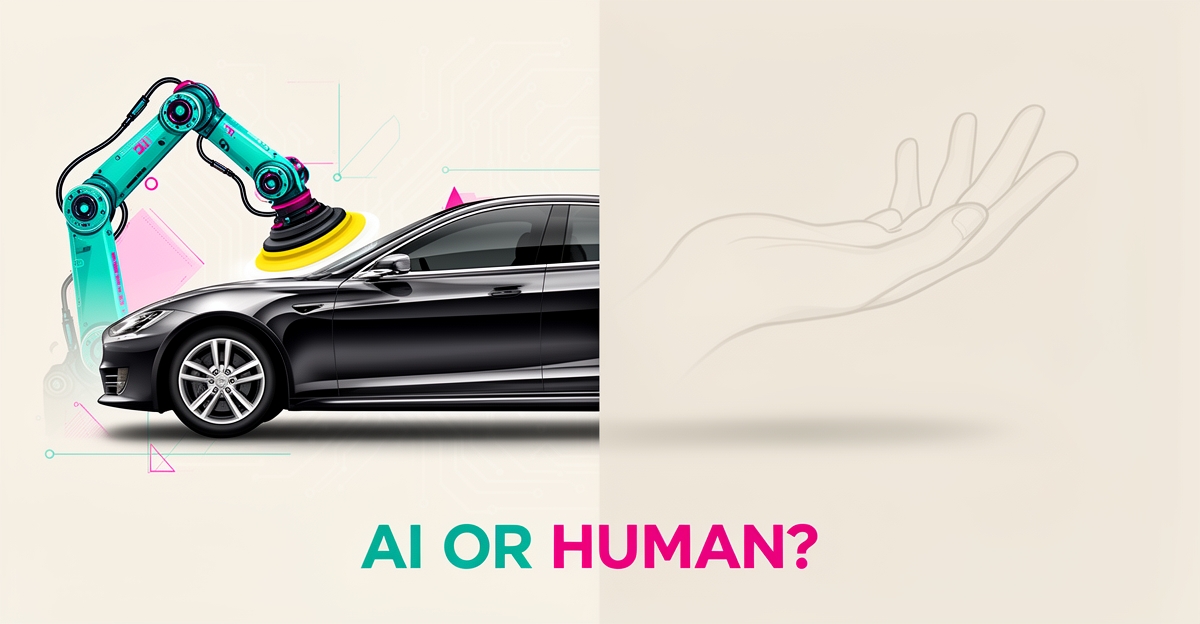
Should You Hire an AI Technician or a Human for Routine Detailing Tasks?
Key Facts
- The U.S. car wash and auto detailing market is a large, growing sector, and competition among operators continues to intensify as of late 2026.
- Industry reports consistently link automated follow-ups and booking tools to higher repeat booking rates than manual text follow-ups.
- A growing share of detailing providers have integrated mobile detailing and automation systems into their operations.
- AI employees from AIQ Labs typically cost around 80% less than a human hire in an equivalent role, and they work 24/7/365.
- AIQ Labs has deployed 200+ multi-agent systems and runs 4 live SaaS products daily.
Hire a team member that works 24/7 — for less than a part-time wage.
AI receptionists, SDRs, dispatchers and 99+ roles. Trained on your business, fully managed.
Not sure where to start? Ask our AI planner
The Bottleneck: Why Routine Detailing Tasks Drain Profit Margins
Mobile detailing is growing fast, but the profits aren't keeping pace for most operators. The tension is clear: demand is surging while the work that pays the bills is still being done by hand.
The U.S. car wash and auto detailing market remains a multi-billion-dollar sector as of late 2026, with thousands of competing businesses across the country. Competition is intensifying and margins are compressing for operators who can't respond to leads quickly.
Operators are stuck trading skilled labor hours for low-margin routine work. Glass cleaning, tire waxing, interior wipe-downs and other repetitive tasks consume technician time that could be applied to high-value detailing. That labor drain directly erodes profitability in a market where scale is everything.
The market is already shifting. A growing share of U.S. detailing providers have integrated mobile detailing and automation systems, signaling an industry-wide move toward automation. Industry reports consistently link automated follow-up and booking tools to higher repeat booking rates than manual text follow-ups. The bottleneck is no longer demand, it is how routine work is staffed.
Routine detailing tasks create three profit leaks that compound daily:
- Skilled technicians performing low-skill work instead of premium services
- Manual scheduling, estimating and follow-up that adds overhead without revenue
- Inconsistent quality and missed upsells on repeatable steps
AI is increasingly becoming an indispensable component of a successful modern mobile detailing business. The consensus among industry sources is that AI-powered tools offer substantial benefits in automating repetitive tasks, improving customer communication, and enhancing operational efficiency.
This is the strategic inflection point for owners. The decision is not simply hire vs automate, it is how to allocate human expertise where it creates value and remove it from work that can be standardized. Routine tasks are the ideal entry point for AI employees, while complex detailing and relationship building remain human-led.
AIQ Labs helps businesses determine the optimal mix — using AI employees for repetitive tasks and human experts for high-touch services — driving both savings and service excellence. The goal is not replacement, it is margin protection.
When routine work is automated, technicians focus on the services customers pay a premium for, and the business scales without proportional labor cost growth.
What the Data Reveals: AI Wins on Repetition, Humans Win on Judgment
The mobile detailing industry is splitting work between what machines repeat perfectly and what people judge best. The decision is no longer human versus AI, it is human plus AI in the right places.
Repetitive, communication-heavy routines are where AI consistently outperforms manual handling. Industry reporting on detailing tools consistently links automated follow-ups, review requests, and booking confirmations to meaningfully higher repeat booking rates compared to manual text follow-ups, by removing the delays that cause lost revenue.
Call handling shows the same pattern. AI-powered virtual call teams are widely reported to convert a substantially larger share of inbound calls than voicemail does. One booked job can pay for months of call minutes, and the system works 24/7 without missed calls or downtime.
AI also compresses the administrative loop that eats technician time. AI estimators generate market-aware quotes based on local pricing, and AI-powered scheduling automates appointment booking to reduce back-and-forth. That frees crews for service delivery instead of phone tag.
Where humans remain irreplaceable is judgment, nuance, and high-touch service. Complex correction, ceramic coating, and premium paint work require a skilled human touch and specialized knowledge that AI cannot replicate.
Customer relationship management still benefits from human empathy. Building trust, handling complex inquiries, and addressing unique needs require adaptability that automated systems cannot fully match. Problem solving during unexpected issues also demands human decision-making.
A practical decision framework for routine detailing looks like this:
- Automate repetitive communication: follow-ups, confirmations, review requests, and inbound call qualification
- Deploy AI for estimating, scheduling, and lead capture to reduce admin time and errors
- Keep human experts for complex correction, ceramic coating, and high-value consultations where nuance drives premium pricing
- Integrate tools in a single connected platform to avoid fragmented systems and ensure data consistency
AIQ Labs works with detailing businesses to determine the optimal mix, using AI employees for repetitive tasks and human experts for high-touch services. The goal is savings and service excellence without losing the personal touch that commands premium pricing.
The Hybrid Model: AI Employees for Routine, Human Experts for Revenue
The smartest detailing businesses aren't choosing between AI and humans—they're deploying both, each where they excel. The hybrid model assigns repetitive, high-volume tasks to AI employees while reserving skilled human labor for the craftsmanship that commands premium rates.
This division of labor addresses a critical inefficiency: most detailing operations bleed revenue through missed calls, manual follow-ups, and administrative bottlenecks. Industry research consistently links AI-powered communication tools to higher repeat booking rates than manual text follow-ups. The hybrid approach captures this upside without sacrificing service quality.
AIQ Labs operationalizes this model through a catalog of 99+ specialized AI Employee roles, delivered as managed AI staff at roughly 80% less cost than a human hire. For detailing businesses, four roles map directly to the highest-friction workflows:
- AI Dispatcher handles inbound calls, books appointments, and routes jobs—critical when AI-powered virtual call teams are reported to convert a far larger share of inbound calls than voicemail.
- AI Estimator Assistant generates market-aware quotes based on local pricing data, eliminating the back-and-forth that delays bookings.
- AI Review Manager automates post-service review requests and follow-ups, building the social proof that drives repeat business.
- AI Scheduler optimizes daily routes and manages calendar conflicts, ensuring maximum billable hours per technician.
The economic case is compelling. AI employees typically cost around 80% less than human employees in equivalent roles while working 24/7/365—never missing a call, taking vacation, or calling in sick. For a detailing business, this means capturing after-hours booking requests and weekend inquiries that would otherwise go to competitors.
This isn't about replacing your best detailer. It's about ensuring that when a customer calls at 8 PM for a ceramic coating quote, someone—or something—answers. The AI handles the routine; your human experts handle the revenue-generating work that requires nuanced judgment and specialized knowledge. The result is a leaner operation where every payroll dollar supports billable, high-skill output.
Implementation Roadmap: From Single Workflow to Department Automation
Most detailing shops don't need a full AI overhaul on day one—they need one broken workflow fixed properly, measured, then expanded. That's the logic behind AIQ Labs' phased approach, translated into a practical rollout for routine detailing work.
Start by mapping where leads and jobs stall: missed calls, slow estimates, inconsistent follow-ups, or manual scheduling. In most shops, the biggest early win is inbound lead capture and estimating, because speed directly affects booked work.
This is also where you decide what stays human. Keep skilled detailers on complex paint correction, customer-specific problem solving, and high-touch service. Put AI on repetitive steps like answering, qualifying, quoting, and booking—especially since automated communication is consistently linked to higher repeat booking rates than manual text follow-ups.
Begin with a single Workflow Build under the Start Monthly model: one AI employee-style setup that answers calls, captures details, sends estimates, and books into your calendar. This matters because phone conversion is a major leak—AI-powered call handling is widely reported to convert a far larger share of inbound calls than voicemail ever will.
For estimating, prioritize consistency over "perfect pricing." Modern tools can generate market-aware quotes quickly—a strong fit for routine packages like maintenance details, interior resets, or basic add-ons such as glass cleaning and tire shine.
Go live on the one workflow and measure a small set of operational metrics weekly. The goal is simple: show that automation increases booked work without degrading the customer experience.
- Calls answered (and missed-call rate) during business hours and after hours
- Estimates sent per day, plus time-to-first-quote
- Booked jobs from inbound calls and estimate follow-ups
- Repeat booking lift from automated confirmations, reminders, and review requests
Once your numbers stabilize, expand from one workflow toward a full AI Operating System across operations, sales, and customer experience: dispatch coordination, service reminders, review management, rebooking campaigns, and reporting—built in phases and owned outright. A growing, competitive market rewards operators who can respond faster and run leaner.
If you want help choosing the first workflow and setting the right metrics, start with the two-minute Fit Check and then book a free 30-minute strategy call. If there isn't a clear win, you'll hear that too.
Decision Checklist: 5 Questions to Determine Your Optimal Mix
When evaluating whether to bring in AI support or rely solely on human technicians for routine detailing tasks, start by asking the right questions. These five targeted inquiries help pinpoint where automation delivers the most value—based on real operational pain points observed across mobile detailing businesses. Each question connects directly to measurable operational signals, turning abstract concerns into actionable insights.
First, assess your volume of routine tasks. If glass cleaning, tire waxing, or interior vacuuming consumes a large share of your technicians' weekly hours, AI employees can handle the repeatable processes around that work—scheduling, dispatching, follow-ups—with consistent quality, freeing your human team for high-touch services like paint correction or ceramic coating. This shift not only boosts throughput but also reduces fatigue-related errors in detail-oriented work. Next, examine your missed-call rate. Voicemail typically converts only a small fraction of inbound calls, while AI-powered call handling captures far more. If you're missing a large share of calls, you're likely leaving significant revenue on the table—especially since one booked job can cover months of AI call-minutes.
Third, review your estimate turnaround time. Manual quoting often involves back-and-forth messaging or site visits, delaying bookings and increasing the chance customers go elsewhere. AI estimators generate market-aware quotes quickly using local pricing data, cutting response lag from hours to seconds. Fourth, measure your repeat booking gap. Detailers using automated follow-ups—review requests, appointment confirmations, rebooking prompts—consistently report stronger repeat rates than those relying on manual texts. If your return customer rate lags behind where you want it, communication automation may be the missing link. Finally, gauge your tech integration readiness. Can your current tools (calendar, CRM, payment system) connect via API? AI employees thrive when embedded in existing workflows—without integration, even the smartest agent hits a wall.
If you answered "yes" to three or more of these questions, it's time to take the next step. AIQ Labs offers a free two-minute Fit Check to map your specific bottlenecks and identify where AI employees or human expertise will deliver the strongest ROI. Start the Fit Check, then schedule your free 30-minute strategy call to see exactly how an optimal human-AI mix could transform your detailing operations—no obligation, just clarity.
Still paying for 10+ subscriptions that don’t talk to each other?
We build custom AI systems you own outright. No vendor lock-in. Full control.
Not sure where to start? Ask our AI planner
Frequently Asked Questions
Should I hire an AI or a human for routine detailing tasks like glass cleaning and tire waxing?
How much money can I actually save by using AI for routine detailing work?
What happens to my customer relationships if I automate routine tasks?
Can AI really convert phone calls better than my current system?
What routine detailing tasks should I automate first?
Is the mobile detailing market really competitive enough to justify AI investment?
Turn Routine Tasks into Your Competitive Edge
The mobile detailing industry is growing fast, but profits are being squeezed by the very work that keeps the lights on: routine detailing tasks. AI excels at handling repetitive communication, estimating, scheduling, and follow-ups—freeing your skilled technicians to focus on high-value services like ceramic coating and paint correction where human judgment drives premium pricing. The winning strategy isn't choosing between AI and humans—it's deploying each where they shine. Start by identifying your biggest workflow bottleneck, then take the next step with a free two-minute Fit Check to see where automation delivers the strongest ROI. If there's a clear win, we'll map it out in a no-obligation 30-minute strategy call—because your time is better spent detailing cars, not chasing leads.
Make AI your competitive advantage — not just another tool.
Strategy, implementation and ongoing optimization. One partner, end to end.
Not sure where to start? Ask our AI planner