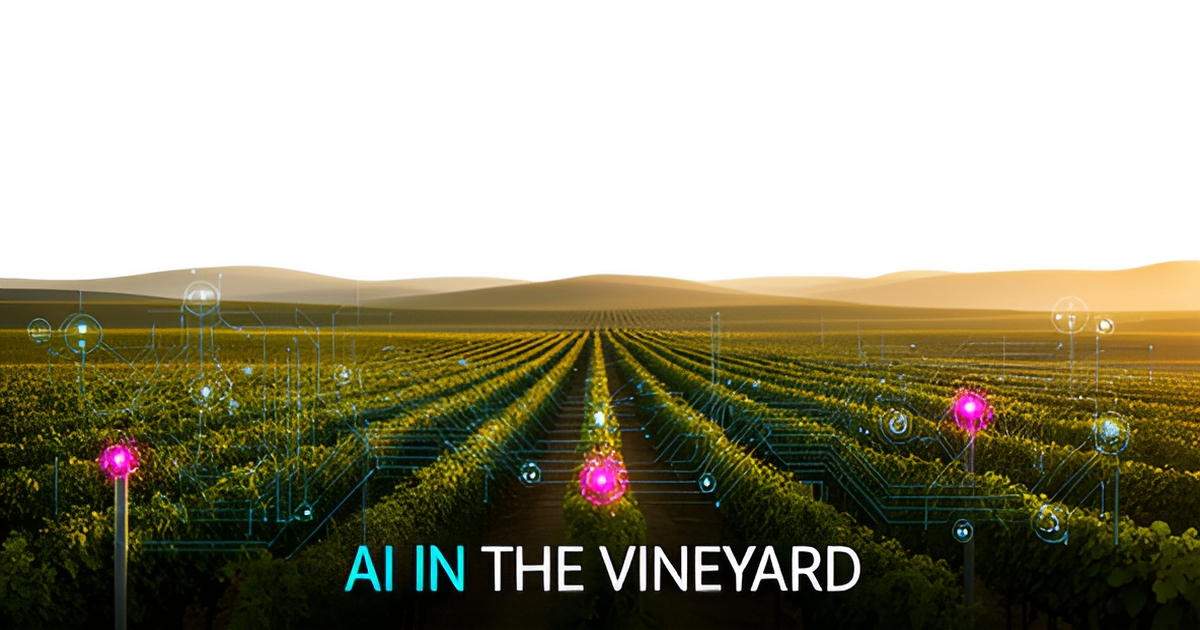
Should You Invest in an AI Employee for Vineyard Field Management?
Key Facts
- One market analysis projects the vineyard robots market growing from roughly $1.14 billion in 2024 toward $5.52 billion by 2033, driven by acute labor shortages and automation demand.
- AI employees typically cost around 80% less than an equivalent human hire while working 24/7/365 with zero missed calls or coverage gaps.
- Vineyard managers lose hours to decision fatigue from hundreds of variables, not data collection, according to industry analysis.
- Platforms like Vinealytics offer AI-powered crew scheduling and compliance tracking for large-scale vineyard operations.
- Traditional staffing carries hidden multipliers: benefits typically add 25–35% to base costs, plus thousands of dollars in recruiting and training per hire.
- AI systems can monitor every acre continuously and automate routine decisions, directly addressing labor shortages that limit manual operations.
- AI-guided drones can survey large vineyard acreage in a single flight, replacing manual scouting with instant data.
Hire a team member that works 24/7 — for less than a part-time wage.
AI receptionists, SDRs, dispatchers and 99+ roles. Trained on your business, fully managed.
Not sure where to start? Ask our AI planner
The Field Management Bottleneck No One Talks About
Before a vineyard manager invests in more sensors, more drones, or another dashboard, it is worth asking the harder question: where does human decision-making break down first? For large-scale operations spanning thousands of acres and dozens of properties, the answer is rarely data collection. It is the crushing weight of turning that data into daily decisions.
Modern vineyard teams already have access to sensors, labor tracking systems, equipment data, compliance tools, and agronomic models. Yet the bottleneck persists because these tools generate information without resolving the operational puzzle: who works where, with what equipment, under which constraints, and in what order. The result is decision fatigue, not insight.
The coordination load is the real constraint. Every scheduling decision must balance crew availability, equipment readiness, property-specific rules, weather windows, and compliance requirements simultaneously. When conditions shift—a delayed spray window, a broken tractor, a sudden heat spike—the entire plan must be rebuilt. Humans excel at judgment and leadership; they struggle with relentless constraint recalculation.
This is where AI earns its place, not by thinking like a grower, but by handling the complexity that buries one. According to one vineyard operations leader, the highest-value AI applications are scheduling, coordination, and administrative work—tasks that demand consistency, repetition, and instant recalculation across hundreds of variables.
Consider what this looks like in practice:
- Rebuilding a fungicide schedule around operator availability, equipment status, weather windows, and property restrictions without manual spreadsheet triage
- Reassigning crews and machinery across multiple properties when a single variable changes
- Maintaining compliance records and spray logs without pulling a manager off the floor
- Coordinating harvest logistics across blocks with different ripeness curves and labor needs
The market is responding to this pressure. One analysis projects the global vineyard robots market—valued at roughly $1.14 billion in 2024—growing at around 18% annually through 2033, driven largely by labor shortages and the need to automate repetitive coordination work. Platforms like Vinealytics now offer automated crew scheduling, equipment allocation, and compliance tracking alongside agronomic monitoring for large-scale operations.
The lesson for vineyard operators is not to replace field expertise, but to protect it. AI should absorb the cognitive load of coordination so experienced professionals can focus on judgment, leadership, and execution. At AIQ Labs, we see this pattern across the 200+ multi-agent systems we've deployed: the highest ROI comes from eliminating administrative friction, not adding more data streams. When a manager stops spending hours rebuilding schedules and starts spending that time on the vines, the investment justifies itself.
Where AI Employees Actually Earn Their Place in the Vineyard
Vineyard field management often stalls not from lack of data, but from the sheer cognitive load of coordinating hundreds of variables under shifting conditions. Successful operations shift focus from acquiring more tools to identifying where human decision-making consistently breaks down first. This reframing reveals that AI earns its place not by replacing agronomic judgment, but by handling the repetitive, constraint-heavy tasks where machines excel and humans fatigue.
AI proves most valuable in vineyards as a decision support layer for scheduling, coordination, and administrative work—functions requiring consistency and repetition. For instance, processing hundreds of variables at once to optimize schedules across labor availability, equipment constraints, property rules, and compliance requirements becomes manageable when automated. When weather windows shift unexpectedly, AI enables instant plan recalculation without delaying critical field operations. Fungicide scheduling, which must balance operator availability, equipment readiness, weather suitability, and property-specific restrictions, exemplifies a high-value use case where AI reduces coordination overhead while maintaining adherence to complex rule sets.
Block-level tracking further demonstrates AI's utility in maintaining operational continuity. By continuously monitoring vineyard blocks for phenology, vigor, and stress indicators, AI systems reduce the need for manual scouting trips while providing timely alerts for irrigation, nutrient application, or preventive treatments. This capability supports 24/7 monitoring without shift coverage, directly addressing the labor constraints behind industry growth projections showing the vineyard robots market expanding toward a forecasted $5.52 billion by 2033.
Importantly, AI's role remains strictly supportive—it does not attempt to "think" like a grower or supplant field expertise. Instead, by removing cognitive load and operational friction, it allows experienced vineyard professionals to focus on judgment, leadership, and execution. As one vineyard operations leader observed, AI did not earn its place by being impressive; it earned its place by being useful. For vineyards evaluating AI employees, the clearest ROI comes from quantifying administrative hours eliminated and applying the fully loaded cost of that time—not speculative yield gains. This practical approach aligns with AIQ Labs' AI Employees model: managed AI staff that work 24/7 at roughly 80% less than a human hire, with no overtime or training overhead, handling defined field management workflows alongside existing teams.
Cost, ROI and Risk Compared to Traditional Staffing
The math behind vineyard staffing has shifted dramatically. While one analysis values the global vineyard robots market at roughly USD 1.14 billion in 2024 with continued double-digit growth projected through 2033, this expansion stems from an acute labor shortage that makes traditional hiring increasingly untenable. When evaluating an AI employee against conventional field staff, the ROI calculation centers on defensible metrics: administrative hours eliminated multiplied by fully loaded cost, not speculative yield gains.
Consider the operational reality of large-scale vineyard management. According to industry analysis, the primary bottleneck isn't lack of data but decision fatigue—humans struggling to process hundreds of variables across labor, equipment, and compliance simultaneously. An AI employee eliminates the administrative friction that consumes valuable hours, recalculating schedules instantly when weather shifts or equipment fails, without overtime premiums or recruiting overhead.
The economic advantage extends beyond base salary comparisons. Traditional staffing carries hidden multipliers: benefits that typically add 25–35% to base costs, training investments, and the inevitable coverage gaps during vacations or sick days. AI employees operate 24/7/365 without overtime, handling fungicide scheduling, crew coordination, and compliance tracking with zero missed calls or days. This continuous availability proves critical when platforms like Vinealytics demonstrate that frost alerts and disease risks often emerge outside standard business hours, requiring immediate response across thousands of acres.
Second-order benefits compound the direct savings. By removing cognitive load from experienced managers, AI systems reduce equipment downtime and improve crew utilization—outcomes that agricultural operations research identifies as key differentiators between AI-enhanced and manual processes. The risk profile shifts from human-dependent variables to system reliability:
- No recruiting or training overhead—deployment replaces a hiring process that typically costs thousands of dollars per role
- Instant scalability across properties without proportional cost increases
- Consistent execution of routine decisions, freeing human judgment for complex agronomic strategy
- Elimination of coverage gaps during critical windows like harvest or frost events
AIQ Labs structures this as a flat monthly investment under the Start Monthly model—typically around 80% less than a human hire—with build, training, and monitoring included. Unlike traditional employees who require management layers, the AI employee integrates with existing vineyard management systems to handle scheduling, dispatch, and compliance documentation autonomously. The question becomes not whether you can afford the technology, but whether you can afford the administrative drag of traditional staffing in a tightening labor market.
How to Pilot an AI Field Manager Without Rebuilding Your Stack
The most successful AI implementations don't start with a shopping spree; they start by identifying exactly where human decision-making breaks down first. Instead of rebuilding your entire operation, layer AI into existing workflows to eliminate the administrative friction that slows down your field teams.
Begin by assigning an internal AI owner—someone chosen for curiosity and operational fluency rather than deep technical expertise. This person bridges the gap between developers and daily vineyard reality, ensuring the technology serves your agronomic goals rather than creating new complexity. According to industry case studies, this role proves critical for translating between software capabilities and field requirements.
Start with scheduling and coordination workflows where humans struggle most. AI excels at processing hundreds of variables simultaneously—optimizing labor, equipment, and compliance constraints while recalculating instantly when weather shifts. The agricultural AI comparison shows these systems continuously monitor every acre and automate routine decisions, directly addressing the labor shortages driving the vineyard automation market toward a projected USD 5.52 billion by 2033.
Integration beats replacement every time. Connect your AI layer to existing sensors, labor tracking systems, and compliance tools rather than purchasing new hardware. For bigger rebuilds, AIQ Labs' Workflow Builds follow a Build in Milestones approach: you approve and pay for each phase as it ships, keeping everything built so far if you pause. For operations ready to deploy immediately, the Start Monthly model offers one AI employee with setup, training, and integrations included for a fraction of a human hire.
Measure success through administrative hours eliminated, not theoretical yield gains. Track the fully loaded cost of time saved on coordination tasks. As the research emphasizes, AI earns its place by being useful, not impressive—freeing your experienced staff to focus on judgment, leadership, and execution while machines handle the cognitive load of complexity.
Still paying for 10+ subscriptions that don’t talk to each other?
We build custom AI systems you own outright. No vendor lock-in. Full control.
Not sure where to start? Ask our AI planner
Frequently Asked Questions
What's the real problem AI solves in vineyard field management—isn't it just more data?
How does an AI employee compare cost-wise to hiring a human field coordinator?
Can AI actually handle the complexity of fungicide scheduling across multiple properties?
Do I need to replace my current sensors and software to use an AI field manager?
What's the ROI timeframe and how do I measure success?
Who manages the AI employee day-to-day—do I need a technical person on staff?
From Decision Fatigue to Clear Skies: Your Next Move
The question isn't whether AI belongs in your vineyard—it's whether you can afford to keep drowning your best people in coordination chaos. As we've seen, the highest ROI comes from eliminating administrative friction, not chasing speculative yield gains. When you quantify the fully loaded cost of scheduling rebuilds, compliance tracking, and crew coordination, the case for an AI employee becomes clear: 24/7 operational support at a fraction of traditional staffing costs, with zero overtime or training overhead. The projected growth toward $5.52 billion by 2033 isn't just about robots—it's about operations leaders reclaiming their time for the judgment calls that actually require human expertise. If you're ready to protect your team's cognitive bandwidth while cutting administrative drag, the path forward doesn't require a complete operational overhaul. Start with a two-minute Fit Check at AIQ Labs to identify your highest-ROI automation opportunity, then book a free 30-minute strategy call to map your specific workflow. We'll show you exactly where an AI employee fits—or tell you honestly if it doesn't.
Make AI your competitive advantage — not just another tool.
Strategy, implementation and ongoing optimization. One partner, end to end.
Not sure where to start? Ask our AI planner