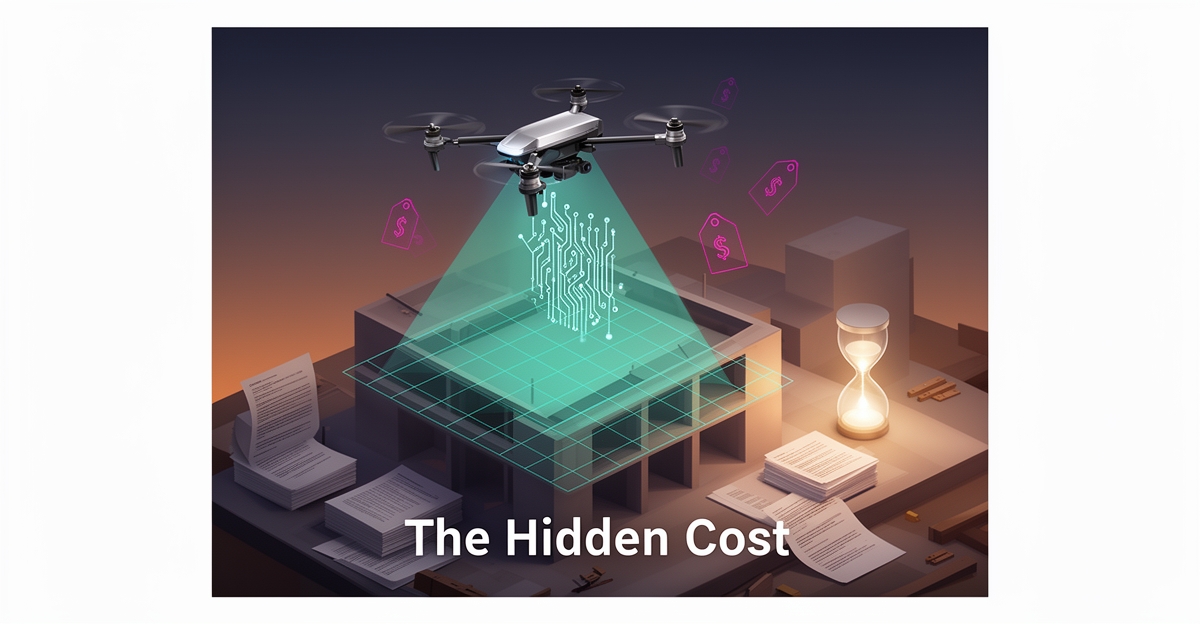
The Hidden Cost of Manual Drone Data Review in Construction Photography
Key Facts
- Drone inspections are widely reported to reduce operational costs by roughly 30% versus manual methods per industry analysis
- AI-assisted drone inspections are reported to achieve 97%+ accuracy in defect detection per comparative analysis
- Drone inspections can typically be completed in 15-30 minutes per property in adjuster cost analysis
- Manual inspections can take 3-5 days just to begin operations after major storms per cost analysis
- AI-powered quality assurance has been reported to cut reinspection costs by as much as 50% in field data
- Automated data collection and report generation can reduce administrative tasks by up to 70% per adjuster analysis
- Over 1,030 US construction worker fatalities since 2011 were attributed to falls in industry analysis
Hire a team member that works 24/7 — for less than a part-time wage.
AI receptionists, SDRs, dispatchers and 99+ roles. Trained on your business, fully managed.
Not sure where to start? Ask our AI planner
The True Cost of Manual Drone Data Review: Labor, Delays, and Bottlenecks
Manual drone data review creates significant hidden costs that directly impact construction project margins. Frame-by-frame analysis consumes skilled labor hours that could be redirected toward strategic decision-making or higher-value tasks. Industry data shows that manual inspections often require multiple personnel and extended durations, with post-storm assessments taking 3-5 days just to begin operations—time that could be spent on actual inspection and repair work.
These labor-intensive workflows create operational bottlenecks, especially during high-volume periods like large-scale site monitoring or disaster response. Skilled inspectors spend excessive time on repetitive, low-value activities rather than applying their expertise to complex analysis or project planning. The process becomes even more costly when considering that manual reviews frequently necessitate multiple site visits and extensive documentation, further draining valuable human resources.
Drone inspections are widely reported to reduce operational costs by roughly 30% and can typically be completed in 15-30 minutes per property, compared to days for manual methods. This efficiency gap means construction teams lose critical project timelines while personnel remain tied up in tedious footage review. Administrative tasks alone can consume a large share of inspection-related effort through manual data handling and report generation—time that AI-powered systems can reclaim through automated processing and standardized output.
- Skilled labor hours consumed by frame-by-frame analysis
- Project delays from extended inspection timelines
- Bottlenecks during high-volume inspection periods
- Rework costs from missed defects requiring follow-up visits
- Safety risks from personnel accessing hazardous locations
AI-powered quality assurance has been reported to cut reinspection costs by as much as 50%, highlighting how automated review prevents the costly cycle of missed issues and return site visits. For construction firms aiming to optimize operational margins, addressing these hidden labor and delay costs through AI represents a direct path to improved efficiency and reduced project overhead. AIQ Labs helps businesses model these specific savings to build compelling cases for AI implementation in drone data workflows.
Safety Risks and Liability: The Hidden Financial Impact of Manual Inspections
Manual inspections still put people where drones should go, and the price shows up long after the site visit.
Sending crews onto roofs, towers, bridges and confined spaces creates exposure that no checklist can fully remove. Industry analysis notes over 1,030 construction worker fatalities in the US were due to falls, slips, and trips since 2011, underscoring the persistent risk of physical access work. Manual reviews often require personnel to access hazardous locations, creating workers' compensation liabilities and potential injury costs that can reach thousands of dollars per incident.
The financial impact compounds beyond a single accident. Companies must fund extensive training, costly safety measures, ladder assist services, and liability insurance increases. Safety-focused analysis highlights that safety considerations significantly favor drone inspections over manual methods, creating cost-effectiveness advantages through reduced injury risk and liability exposure.
Drone inspections improve worker safety by allowing remote monitoring. Operators can assess asset condition without entering hazardous environments, eliminating the need for personnel to climb towers or access confined spaces. This shift removes costs tied to safety equipment, site access setup, and the downtime that follows an incident.
Manual drone data review also forces re-inspections when fatigue or missed observations lead to incomplete reports. Human observation is subject to fatigue, environmental conditions, and subjective judgment, leading to variability in results and potential oversight of critical issues. Missed defects trigger follow-up visits, additional labor hours, and project delays that erode margins.
Key liability drivers that persist with manual review include:
- Workers' compensation claims and injury costs from falls, electrical exposure, or structural collapse
- Increased liability insurance premiums and legal exposure after incidents
- Rework and reinspection expenses when defects are missed on first review
- Project delays from sequential, human-limited inspection capacity
Organizations seeking to model these hidden costs can use ROI modeling to quantify the impact of safety-related expenses. AIQ Labs helps businesses model AI implementation to reduce these costs and improve operational margins, particularly where manual review drives exposure.
Automation changes the risk profile. Drone inspections can typically be completed in 15-30 minutes per property and reduce operational costs by roughly 30% while improving consistency. By removing the need for physical presence, teams avoid the accident pathways that drive workers' compensation and liability spending, while freeing skilled inspectors for higher-value analysis.
Missed Inspections and Rework: The Price of Human Error in Data Analysis
Manual review of drone footage in construction photography often misses critical defects due to human fatigue and inconsistent judgment, leading to costly rework and follow-up site visits. Skilled personnel examining hours of footage frame-by-frame are prone to overlooking subtle structural changes or small defects that require later investigation, increasing project timelines and expenses. This inconsistency in data quality creates gaps in documentation that can result in undetected issues escalating into major problems.
According to industry analysis, AI-powered quality assurance has been reported to cut reinspection costs by as much as 50% by identifying defects during initial assessments that manual review would miss per field data on reinspection savings. Human observers are limited by endurance and subjective interpretation, whereas automated analysis applies consistent criteria across all data, minimizing variability in results. AI-assisted drone inspections are also reported to achieve 97%+ accuracy in defect detection, significantly outperforming manual methods prone to oversight per comparative accuracy analysis.
- Missed defects requiring follow-up investigations increase labor and travel costs
- Inconsistent data quality leads to gaps in compliance documentation
- Rework can consume a substantial share of project adjustment budgets due to overlooked issues
- Fatigue-related errors rise during high-volume inspection periods
- Subjective judgment causes variability in defect classification across inspectors
These shortcomings not only inflate immediate rework expenses but also delay project closeouts and increase liability exposure. Manual review processes create a false sense of completion while leaving critical issues undetected, ultimately consuming significant portions of project budgets through avoidable reinspections and corrective work. AIQ Labs helps construction firms model these hidden costs to quantify the ROI of automating drone data review with AI-powered analysis.
How AI-Powered Drone Data Review Cuts Costs and Boosts Accuracy
Manual review of drone footage quietly drains construction photography budgets through labor, delays, and missed defects.
AI-powered analysis replaces frame-by-frame human review with automated detection, standardized reporting, and continuous learning. The shift cuts the hidden costs that accumulate when skilled inspectors are tied to repetitive viewing tasks instead of strategic decisions.
Labor efficiency improves immediately. Industry research shows drone inspections reduce operational costs by roughly 30% by eliminating travel, setup time, and multiple site visits. Inspections that once required hours or days now typically finish in 15-30 minutes per property, freeing crews for higher-value work. Administrative tasks also shrink, with automated data collection and report generation reducing admin work by up to 70%.
Accuracy and consistency rise at the same time. Comparative analysis finds AI-assisted drone inspections achieve 97%+ accuracy in defect detection compared with variable human observation. AI models flag cracks, spalling, and thermal anomalies across entire datasets without fatigue, and AI-powered quality assurance has been reported to deliver a 50% reduction in reinspection costs by catching issues on the first pass.
Safety risk exposure also falls. Manual review often follows risky capture missions where personnel access roofs, towers, or confined spaces. Remote analysis removes the need for repeated physical exposure and supports safer, remote-first workflows that lower workers' compensation and liability exposure.
Platforms that consolidate capture, processing, and review illustrate the workflow change:
- DroneDeploy enables browser-based project review and automated mission planning for repeatable mapping cycles
- Pix4D delivers survey-oriented photogrammetry outputs with quality control tools for infrastructure teams
- PrecisionHawk standardizes inspection workflows across multiple sites with AI-assisted analysis and flight-to-report automation
For SMBs evaluating the move, the financial case extends beyond software. Hidden costs such as missed inspections, rework, and delayed decisions erode margins even when labor rates look reasonable. AIQ Labs helps businesses model AI implementation to quantify these reductions and improve operational margins through ROI modeling and business cases.
The result is faster turnaround, fewer site revisits, and inspection data that is consistent, auditable, and ready for downstream decisions.
Implementing AI for Drone Data Review: Steps to Reduce Costs and Improve Margins
Manual review of drone footage quietly drains construction margins through labor, rework, and missed issues that never appear on a timesheet.
Teams spend hours frame-by-frame hunting anomalies, generating reports, and revisiting sites when something was missed. That labor-intensive workflow creates bottlenecks during high-volume periods and pushes skilled inspectors into repetitive, low-value tasks.
Transitioning to AI-powered review starts with a clear cost baseline. Mapping current labor hours, reinspection rates, and safety incidents reveals the true hidden cost of manual drone data review. AIQ Labs helps businesses model AI implementation to reduce these costs and improve operational margins through ROI modeling and business cases.
A practical roadmap follows implementation steps that align with how AI enhances drone operations.
- Perception and sensor fusion to combine cameras, LiDAR, radar and infrared data for comprehensive scene understanding
- Computer vision and object detection using convolutional neural networks for real-time identification and classification
- Autonomous navigation and path planning with SLAM and reinforcement learning for consistent coverage
- Edge computing and real-time processing to enable instant analysis without constant server links
- Machine learning model training on images, video and flight data to improve defect detection over time
Integration considerations matter as much as the models. Standardized capture plans ensure automation delivers repeatable results, while API connections link AI outputs to existing project management, CRM and reporting systems. Governance for data security, audit trails and human-in-the-loop controls protects compliance in construction workflows.
The financial case is compelling. Industry research shows drone inspections reduce operational costs by roughly 30% while achieving 97%+ accuracy in defect detection. Inspection times drop from hours or days to 15-30 minutes per property, according to adjuster cost analysis.
AI also attacks rework. Field data indicates AI-powered quality assurance has been reported to cut reinspection costs by as much as 50%, and automated data collection and report generation can reduce administrative tasks by up to 70%.
Businesses that move from manual review to AI gain faster turnaround, safer operations and more predictable margins. The shift removes personnel from hazardous access points, eliminates duplicate reviews and frees inspectors for strategic analysis rather than repetitive viewing.
With the right partner, implementation becomes a staged transformation rather than a risky overhaul. Depending on your needs, that can mean deploying managed AI Employees to handle review and reporting workflows, a fixed-price AI Workflow Build targeting the one workflow that costs the most, or a phased AI Operating System you own outright—built in milestones and continuously improved to match site realities.
Still paying for 10+ subscriptions that don’t talk to each other?
We build custom AI systems you own outright. No vendor lock-in. Full control.
Not sure where to start? Ask our AI planner
Frequently Asked Questions
How much can drone inspections reduce operational costs compared to manual methods?
What accuracy rate do AI-powered drone inspections achieve in defect detection?
How much can AI reduce reinspection costs in construction drone workflows?
What administrative workload can be reduced through automated drone data processing?
How do drone inspections improve safety and reduce liability risks in construction?
What time savings do drone inspections provide after major storms compared to manual methods?
Turning Footage into Forward Motion
The hidden costs of manual drone data review—labor bottlenecks, safety liabilities, and expensive rework—quietly erode construction margins while skilled teams remain trapped in frame-by-frame analysis. Transitioning to AI-powered review changes this equation: inspections that once consumed days now finish in minutes, with drone inspections reducing operational costs by roughly 30% while achieving 97%+ accuracy. The result is faster project closeouts, safer remote workflows, and inspection data that drives decisions rather than delays them. For construction leaders ready to quantify these savings, the first step is understanding your specific cost baseline. AIQ Labs has deployed 200+ multi-agent systems and runs four live SaaS products daily, so the guidance is grounded in what actually ships. Start the two-minute Fit Check to identify your highest-value automation opportunities, or book a free 30-minute strategy call to map your implementation roadmap with an AI engineer.
Make AI your competitive advantage — not just another tool.
Strategy, implementation and ongoing optimization. One partner, end to end.
Not sure where to start? Ask our AI planner