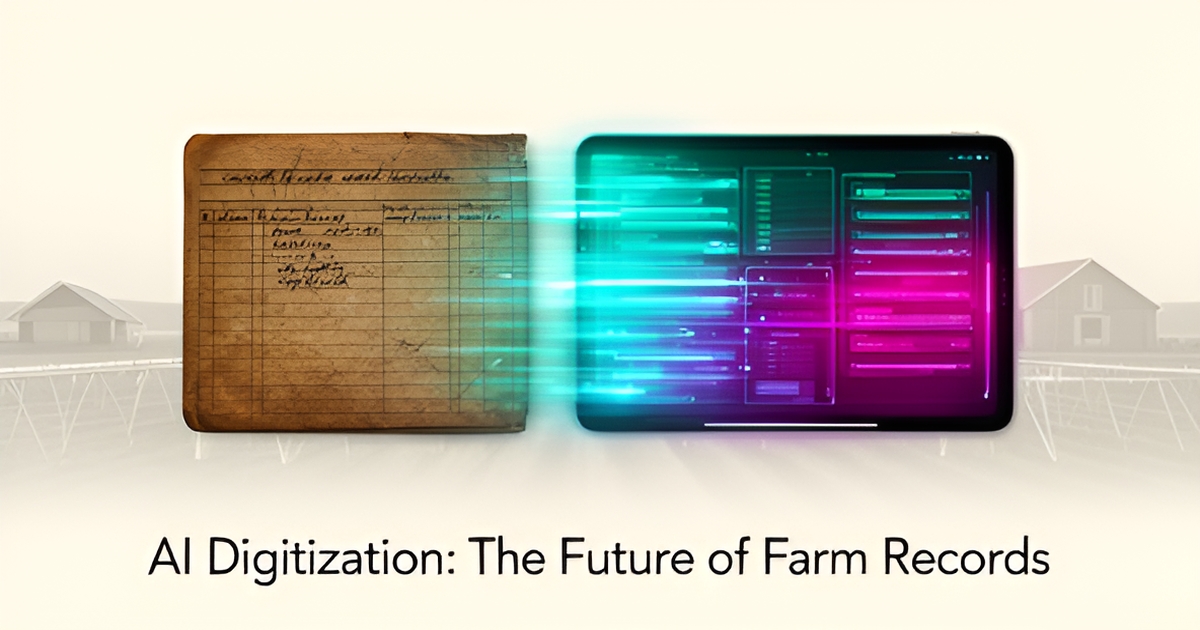
The Hidden Costs of Manual Farm Records — And How AI Fixes Them
Key Facts
- Farms commonly lose 10–20 hours weekly to manual data entry and record reconstruction — time AI automation can reclaim
- Poor data quality is one of the most common reasons AI projects stall, a direct risk when farms rely on inconsistent manual records
- AI systems can automate a large share of repetitive data tasks with more consistency than manual workflows
- Legacy system integration is a frequent source of cost overruns when old irrigation controllers and equipment logs don't talk to modern tools
- Data preparation typically consumes a meaningful share of any AI project budget — clean capture at the source prevents that drain
- Digitizing records at the point of activity sharply reduces transcription errors compared to paper-based tracking
Hire a team member that works 24/7 — for less than a part-time wage.
AI receptionists, SDRs, dispatchers and 99+ roles. Trained on your business, fully managed.
Not sure where to start? Ask our AI planner
The Real Price of Paper and Spreadsheets on the Farm
Every season, countless farms lose critical operational data to the same silent killer: the gap between what happens in the field and what makes it onto paper. When irrigation logs live on whiteboards and equipment maintenance exists only in a mechanic's memory, the resulting data chaos creates measurable financial drain.
Consider the labor burden alone. In our experience building automation for operations like these, farms typically lose 10 to 20 hours per week to manual data entry and record reconstruction. For a mid-sized operation, that approaches a full-time employee's worth of productivity spent chasing paper instead of optimizing yields. When farm managers scramble to reconstruct water usage logs for compliance audits or search for missing growth records before a crucial inspection, they pay an invisible tax in both wages and opportunity cost.
The integrity of the data itself presents an even steeper challenge. Poor data quality is consistently cited as a leading cause of failed AI projects — and it mirrors exactly what happens when farms rely on inconsistent manual entry. Without clean, structured data, operations face:
- Compliance gaps when water usage or chemical application records go missing
- Equipment downtime when maintenance histories are incomplete or lost
- Labor hours wasted reconciling conflicting spreadsheets and handwritten notes
- Audit failures that trigger fines or certification delays
These inefficiencies compound because manual systems lack the consistency required for modern agricultural compliance. Automated systems can handle a large share of repetitive data tasks with far greater consistency, yet many operations remain trapped in error-prone spreadsheet cycles. The result is a farm that works harder to document less, while regulatory risks accumulate in filing cabinets and forgotten USB drives.
The solution lies in digitizing these workflows at the source. AIQ Labs builds custom automation systems that capture water usage, growth logs, and equipment maintenance data directly at the point of activity — eliminating the transcription errors and lost records that plague manual processes. By creating a single source of truth that the farm owns outright, operations can finally close the gap between field work and record-keeping, turning compliance from a scramble into a seamless byproduct of daily operations.
Why Manual Record-Keeping Fails at Scale
The promise of modern farming lies in data — yet many operations still rely on paper ledgers and scattered spreadsheets to track water usage, growth logs, and equipment maintenance. This manual approach creates a false economy: while it avoids software subscriptions, it silently drains time, introduces errors, and exposes farms to compliance risk. The hidden costs aren't just inconvenient — they compound as the farm scales, turning record-keeping from a routine task into a bottleneck that stifles growth.
Consider the labor drain: farmers and staff commonly spend 10–20 hours per week on repetitive data entry and reconciliation, time that could be redirected toward crop planning, market outreach, or equipment care. These hours aren't just lost — they represent opportunity cost in a sector where timing directly impacts yield and profitability. Beyond time, human attention falters with repetition. Fatigue, distraction, and inconsistent training lead to data entry errors that cascade into flawed decisions about irrigation schedules, fertilizer application, or harvest timing. Even small inaccuracies in growth logs or maintenance records can trigger over- or under-watering, nutrient imbalances, or preventable equipment failures.
Compliance exposure adds another layer of risk. Agricultural regulations increasingly require verifiable records for water rights, pesticide use, and sustainability reporting. Lost or inconsistent manual records don't just create administrative headaches — they can result in fines, failed audits, or disqualification from incentive programs. The problem intensifies when farms attempt to digitize retroactively: reconstructing months or years of paper records into a usable digital format is often more costly and error-prone than starting clean.
This is where AI integration reveals its own hidden challenges. Building intelligent systems on fragmented, inaccurate manual records is one of the most common reasons automation projects stall before delivering value. Even when technology is implemented successfully, tools that aren't integrated into existing workflows frequently go unused. For farms, this means investing in automation only to see it sit idle because it doesn't align with how teams actually work in the field or office.
AIQ Labs addresses this gap by building systems that begin with clean, structured data capture — turning manual logs into reliable digital inputs from day one. By owning the technology outright, farms avoid vendor lock-in and ensure their AI tools evolve with their operations, not against them. The goal isn't just to replace paper with screens — it's to create a foundation where data works for the farm, not the other way around.
How AI Digitizes Farm Records Without Vendor Lock-In
Manual farm records create hidden costs that ripple through operations — lost water usage logs trigger compliance fines, incomplete growth logs skew yield forecasts, and scattered maintenance records shorten equipment life. These inefficiencies compound when data lives in paper logs or disconnected spreadsheets, making audits stressful and decision-making reactive. AI digitization transforms this chaos into a single source of truth, automating capture and validation for water usage, growth logs, and equipment maintenance with consistent accuracy.
AI systems automate data extraction from sensors, manual entries, and legacy formats, dramatically reducing the transcription errors common in paper-based tracking. This precision supports compliance with irrigation regulations and sustainability certifications while providing real-time insights for optimizing water application and predicting maintenance needs. By eliminating manual data entry, farms routinely reclaim 10–20 hours weekly previously spent reconciling disparate records — time redirected to strategic planning and field operations.
However, AI implementation carries hidden costs that can derail projects if overlooked. Data preparation typically consumes a significant share of total AI budgets, especially with farm-specific datasets like heterogeneous water meter readings or handwritten growth notes. Legacy system integration — such as connecting old irrigation controllers or equipment maintenance logs — is a frequent source of overruns due to incompatible protocols and missing documentation. Without proper planning, these hidden expenses can inflate project costs well beyond projections, undermining ROI.
AIQ Labs avoids these pitfalls by building farm-owned systems that eliminate vendor lock-in and fragmentation. The approach ensures full ownership of code, data, and AI agents, so farms retain control over customization and avoid costly switching fees when migrating from locked-in platforms. Owned, unified systems also reduce long-term IT overhead compared to fragmented toolchains. By owning their AI infrastructure, farms achieve sustainable compliance, accurate record-keeping, and operational resilience without recurring subscription dependencies or hidden vendor costs. Start the Fit Check — it leads to a free 30-minute strategy call at Book a Call to assess your record-keeping bottlenecks and map a high-ROI automation plan.
From Manual Logs to Owned AI Workflows
Paper logs don't just slow a farm down — they quietly create compliance risk and lost revenue every season. Moving to production-ready AI starts with treating record-keeping as an operational system, not a software purchase.
A solid data foundation is the first step. Manual water usage sheets, growth logs and equipment maintenance notes must be digitized, cleaned and structured before any model can be trusted. Data preparation typically consumes a meaningful share of any AI project budget, and that upfront discipline is what separates pilots from production.
Integration comes next. Farms already run a mix of sensors, spreadsheets and legacy management tools. Connecting these sources without creating fragmentation requires custom two-way API integration and a single source of truth. Legacy system integration is a well-known source of cost overruns, and ongoing cloud and API fees often exceed projections. Building owned workflows avoids vendor lock-in that can cost a substantial share of the original implementation budget to unwind later.
Continuous monitoring keeps accuracy and compliance intact. AI can automate a large share of repetitive data, analytics and decision workflows, but accuracy gains depend on data quality and monitoring, not model capability alone. Human-in-the-loop controls and audit trails are essential for water reporting and equipment records.
Practical implementation follows a clear path:
- Assess and consolidate existing logs into a clean data foundation with clear ownership.
- Design custom integrations to existing farm tools so records flow automatically, not manually.
- Deploy monitoring and validation layers for compliance, with continuous retraining as conditions change.
Farms that choose owned systems gain flexibility over subscription stacks. With AIQ Labs, there are three ways to start, matched to your risk appetite: Start Monthly — bring on managed AI staff like receptionists, SDRs, or dispatchers from 99+ roles at roughly 80% less than a human hire, with build, training and integrations included; Build in Milestones — rebuild the one workflow that costs you the most as a fixed-price, phased [Workflow Build](/workflow-builds); and Own It Outright — a phased [AI Operating System](/ai-operating-systems) with full code, agent and data ownership.
The payoff is measurable. Farms that automate record-keeping typically save 10–20 hours per week on repetitive tasks and reduce operational costs compared with hiring additional staff. Yet many AI projects never reach production — which is exactly why strategy, data foundation and disciplined integration matter more than technology alone. AIQ Labs has deployed 200+ multi-agent systems and runs four live SaaS products daily, so the systems we build are systems we use ourselves.
Still paying for 10+ subscriptions that don’t talk to each other?
We build custom AI systems you own outright. No vendor lock-in. Full control.
Not sure where to start? Ask our AI planner
Frequently Asked Questions
How much time can AI automation save on manual farm record-keeping each week?
Why do manual farm records create compliance risks?
Why does poor data quality undermine farm AI projects?
How much of an AI project's budget is typically spent on data preparation?
Can AI reduce long-term operating costs for farms despite higher upfront investment?
What happens if AI tools aren't properly integrated into farm workflows?
Turn Your Farm's Data Into a Working Asset
Manual record-keeping doesn't just waste time — it creates compliance risks, equipment failures, and lost revenue that compound as your operation grows. AI-driven automation transforms water usage logs, growth records, and maintenance data into a single, owned source of truth that works while you do. Poor data quality is a leading reason AI projects stall, which is why AIQ Labs builds custom systems that start with clean, structured data capture at the source — eliminating vendor lock-in and ensuring your farm owns its technology outright. Instead of scrambling to reconstruct records before audits or losing hours to manual entry, you gain real-time insights that prevent problems before they cost you. Ready to close the gap between field work and record-keeping? Start the 2-minute Fit Check and book a free 30-minute strategy call to map your farm's highest-impact automation opportunities. Questions first? Reach us at [email protected].
Make AI your competitive advantage — not just another tool.
Strategy, implementation and ongoing optimization. One partner, end to end.
Not sure where to start? Ask our AI planner