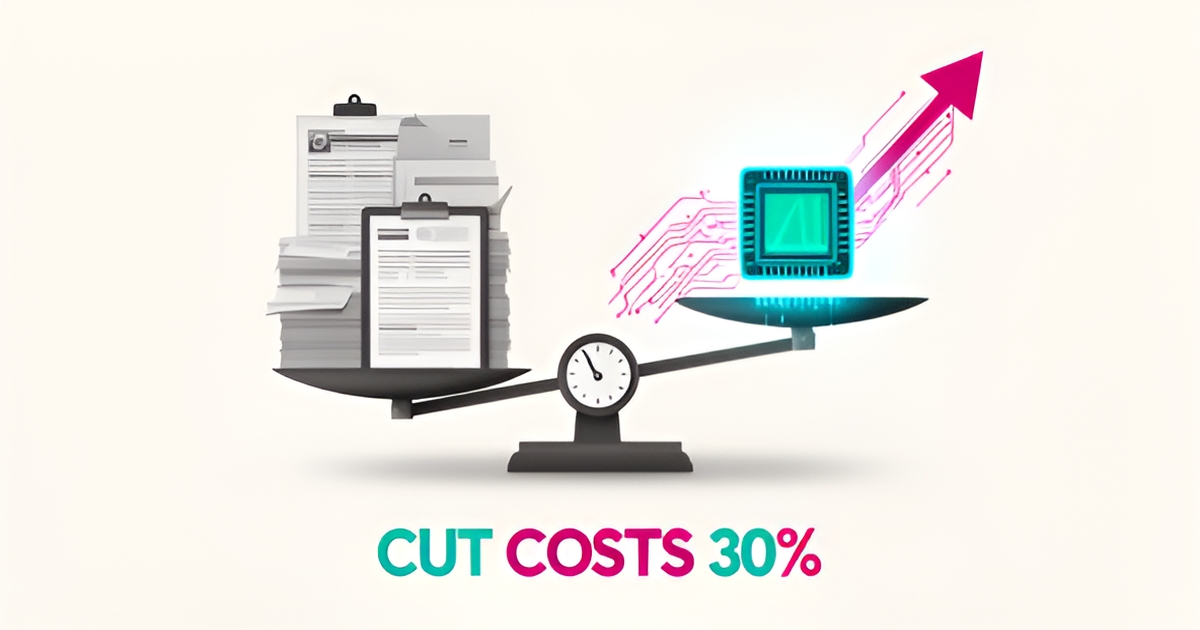
The Real Cost of Manual CDL Training Administration: How AI Can Cut Expenses by 30%
Key Facts
- Manual processes typically become overwhelmed as fleet size grows beyond roughly 25-30 vehicles, according to fleet management analyses.
- Industry research on digital transformation in driving schools suggests AI-powered CDL platforms can reduce administrative labor by up to 30%.
- Comparisons of AI fleet management versus manual dispatch report savings in the range of $54,000-$120,000 per year, though results vary by operation size.
- AI can automate scheduling, BTW log digitization, and FMCSA ELDT compliance workflows to reduce labor and increase efficiency.
- Digital transformation in driver training means replacing paperless, disconnected workflows with integrated software systems that meet operational and compliance needs.
- Telematics and fleet data can optimize routes, reduce fuel consumption, and improve driver behavior.
Hire a team member that works 24/7 — for less than a part-time wage.
AI receptionists, SDRs, dispatchers and 99+ roles. Trained on your business, fully managed.
Not sure where to start? Ask our AI planner
Why Manual CDL Admin Is Bleeding Money
For CDL training schools, manual administration isn't just tedious—it's a silent profit drain that intensifies with growth. As fleets expand beyond roughly 25-30 vehicles, disconnected workflows in instructor certification, student eligibility, and vehicle maintenance create compounding inefficiencies that erode margins. Fleet management analyses consistently find that manual processes break down at this scale, leading to avoidable errors and rising operational costs.
These hidden cost drivers multiply quickly: staff spend excessive time chasing paper-based certification renewals, manually verifying student backgrounds against FMCSA requirements, and logging vehicle inspections in spreadsheets prone to omission or delay. Each manual touchpoint increases the risk of compliance gaps, scheduling conflicts, and delayed graduations—all of which translate to lost revenue and administrative overtime. Without integrated systems, these inefficiencies scale non-linearly, turning manageable tasks into bottlenecks.
The result is a cycle of reactive fixes: hiring additional staff to manage paperwork, paying rush fees for expedited background checks, or absorbing costs from rescheduled training due to untracked vehicle maintenance. Comparisons of manual versus AI-driven operations suggest schools can waste tens of thousands of dollars annually—figures in the $54,000-$120,000 range appear in fleet management comparisons, though the exact number depends on your size and mix—funds that could instead support instructor retention or curriculum upgrades. For schools aiming to scale, this isn't just inefficiency; it's a structural barrier to profitability.
- Instructor certification tracking requiring manual renewal alerts and paper file retrieval
- Student eligibility checks involving disparate state and federal databases
- Vehicle condition logs maintained in static spreadsheets with no real-time alerts
- Paper-based scheduling causing double-bookings and underutilized assets
- Compliance reporting assembled last-minute from fragmented sources
AIQ Labs addresses these pain points through AI Workflow Builds that rebuild the one workflow costing you the most—unifying scheduling, logging, and compliance into a single source of truth, eliminating redundant data entry and freeing staff to focus on training quality rather than paperwork. The outcome isn't just cost savings; it's a foundation for sustainable growth where administrative burden doesn't rise with fleet size.
How AI Cuts Administrative Labor by Up to 30%
Manual CDL training administration is a complex, time-consuming process involving numerous variables: instructor certification, student eligibility, and vehicle condition. Industry research on digital transformation in driving schools finds that the lack of automation and integration in manual processes leads to compounding errors, wasted time, and increased costs.
AI-powered CDL training platforms can streamline operations and reduce administrative labor by up to 30%, according to industry estimates. That reduction in labor translates into substantial savings—comparisons of AI fleet management versus manual dispatch report savings in the range of $54,000-$120,000 per year, though actual results depend on fleet size and how much of the admin workload is automated.
One of the primary ways AI cuts administrative labor is through automated scheduling. Manual scheduling is time-consuming and error-prone, whereas AI-powered scheduling systems can optimize instructor-student-vehicle matching and reduce wasted range time. AI can also automate BTW log digitization, eliminating manual data entry and reducing the risk of errors.
Another key impact area is FMCSA ELDT compliance automation. AI can automate compliance tracking and reporting, reducing administrative labor and increasing audit readiness. This matters most as fleet size grows beyond 25-30 vehicles, where manual processes typically become overwhelmed.
The benefits of AI-powered CDL training platforms can be summarized as follows:
- Automated scheduling and resource optimization
- Automated BTW log digitization and reduced manual data entry
- FMCSA ELDT compliance automation and reduced administrative labor
- Increased efficiency and reduced costs
By implementing AI-powered CDL training platforms, schools can reduce administrative labor, increase efficiency, and cut expenses. AIQ Labs helps CDL training schools automate these workflows through AI Employees—managed AI staff that handle intake, scheduling, and compliance tasks around the clock at roughly 80% less cost than a human hire—and custom workflow builds tailored to driver training.
Building a Scalable DriveTech Stack for CDL Schools
Manual CDL administration breaks down as schools grow. The lack of automation and integration in manual processes leads to compounding errors, wasted time, and increased costs—and manual processes typically become overwhelmed as fleet size grows beyond 25-30 vehicles.
A scalable DriveTech stack replaces paper with integrated software systems that meet the operational and compliance needs of driver training. Digital transformation in CDL training means automating paperless and disconnected workflows and replacing them with integrated systems that serve both operations and compliance.
The core architecture centers on three layers working together. Paperless workflows eliminate duplicate entry and lost forms. Integrated systems create a single source of truth across admissions, instruction, and compliance. Mobile technology puts real-time tools in the hands of instructors and students on the range and in the classroom.
Essential features for a modern stack include:
- Automated scheduling that matches instructor certification, student eligibility, and vehicle condition without manual back-and-forth
- BTW log digitization with mobile capture for behind-the-wheel hours and skills tracking
- FMCSA ELDT compliance technology built in, not bolted on, to reduce audit risk
- Telematics and fleet data integration to optimize routes, reduce fuel consumption, and improve driver behavior
Mobile technology makes this practical: instructors log hours from a phone, students receive instant updates, and administrators see live capacity.
This is where a custom, owned system beats subscription chaos. AIQ Labs builds cost-optimized AI systems tailored to training school workflows—paperless workflows, integrated software, mobile tools for instructors and students, and compliance-ready architecture. A custom build approach lets schools own their stack outright and adapt it as regulations change, rather than renting features from a vendor that may sunset them.
AI applications in driver training are practical, not speculative. AI can automate scheduling, BTW log digitization, and FMCSA ELDT compliance, reducing administrative labor by up to 30% and directly lowering the real cost of manual administration.
With demand for trained drivers projected to keep rising through the decade, schools face pressure to scale without adding headcount. A scalable tech stack for CDL training should include automated scheduling, BTW log digitization, and FMCSA ELDT compliance technology as standard.
Building the stack as an owned asset—with managed AI employees for routine tasks like intake and scheduling—creates a sustainable competitive advantage rather than a recurring vendor dependency. For schools ready to connect everything into one operating layer, AIQ Labs' AI Operating Systems are built in phases and owned outright.
From Manual to AI-Powered: Implementation Roadmap
Manual CDL administration breaks down long before a school hits capacity. Paper-based scheduling, disconnected BTW logs, and manual FMCSA ELDT compliance create compounding errors that waste time and inflate costs as fleets grow.
A practical transition starts with mapping where work actually stalls. Identify the operational problem in your CDL training administration by auditing instructor certification tracking, student eligibility checks, and vehicle condition logs. Industry research shows the lack of automation and integration in manual processes leads to compounding errors, wasted time, and increased costs—and manual processes typically become overwhelmed as fleet size grows beyond 25-30 vehicles.
Once bottlenecks are clear, define the features that matter for your workflow. A scalable tech stack for CDL training should include automated scheduling, BTW log digitization, and FMCSA ELDT compliance technology. This feature set replaces disconnected workflows with integrated systems that meet operational and compliance needs.
Design the architecture before building. Map data flows between admissions, instructors, vehicles, and compliance records, and choose an approach that lets you own the system long term. AIQ Labs offers three ways to engage: Start Monthly for ongoing AI support, Build in Milestones to split a build into phases and pay per phase, or Own It Outright for a system you keep. No fake prices—every quote reflects the actual scope of your build.
Implementation focuses on high-impact automation first. Start with one department system, such as scheduling and compliance, then expand to full operations. Industry research on digital transformation finds AI can reduce administrative labor by up to 30%, while fleet management comparisons report savings of $54,000-$120,000 per year versus manual dispatch—figures worth validating against your own admin payroll before you commit.
Monitor and refine continuously.
- Track administrative hours per enrollment and error rates on compliance filings
- Measure scheduling utilization and instructor downtime
- Review BTW log completion time and audit readiness
- Adjust AI rules and integrations based on staff feedback
With clear metrics, schools can scale without adding headcount and keep administrative labor down by up to 30% while improving efficiency.
Still paying for 10+ subscriptions that don’t talk to each other?
We build custom AI systems you own outright. No vendor lock-in. Full control.
Not sure where to start? Ask our AI planner
Frequently Asked Questions
What specific administrative tasks in CDL training are most time-consuming for school staff?
How much can AI-powered automation actually reduce administrative labor in CDL training schools?
What kind of cost savings can CDL schools expect from switching to AI-driven administration?
Is it true that manual CDL admin only becomes a problem when schools get very large?
What core features should a scalable DriveTech stack include for CDL training schools?
How do AI Employees from AIQ Labs differ from traditional software subscriptions for CDL schools?
Stop Paying the Paperwork Tax: Your Next Move
The math is hard to ignore. Manual CDL administration quietly drains tens of thousands of dollars a year from schools relying on disconnected workflows, and the strain compounds as fleets grow past 25-30 vehicles. The fix is equally clear: AI that automates scheduling, digitizes BTW logs, and handles FMCSA ELDT compliance can cut administrative labor by up to 30%, per industry research on digital transformation in driving schools. The schools that win as driver demand keeps rising will be the ones that scale without scaling headcount. Your next step doesn't have to be a full overhaul—start by auditing where your hours actually go: certification tracking, eligibility checks, or vehicle logs. Then pick one bottleneck and automate it first. That's exactly how AIQ Labs approaches it: one workflow, fixed price, built in phases, owned outright. Take the two-minute Fit Check at aiqlabs.ai/apply, then book a free 30-minute strategy call—a real working session with an AI engineer to map your biggest bottleneck. If there isn't a clear win, we'll tell you that too.
Make AI your competitive advantage — not just another tool.
Strategy, implementation and ongoing optimization. One partner, end to end.
Not sure where to start? Ask our AI planner