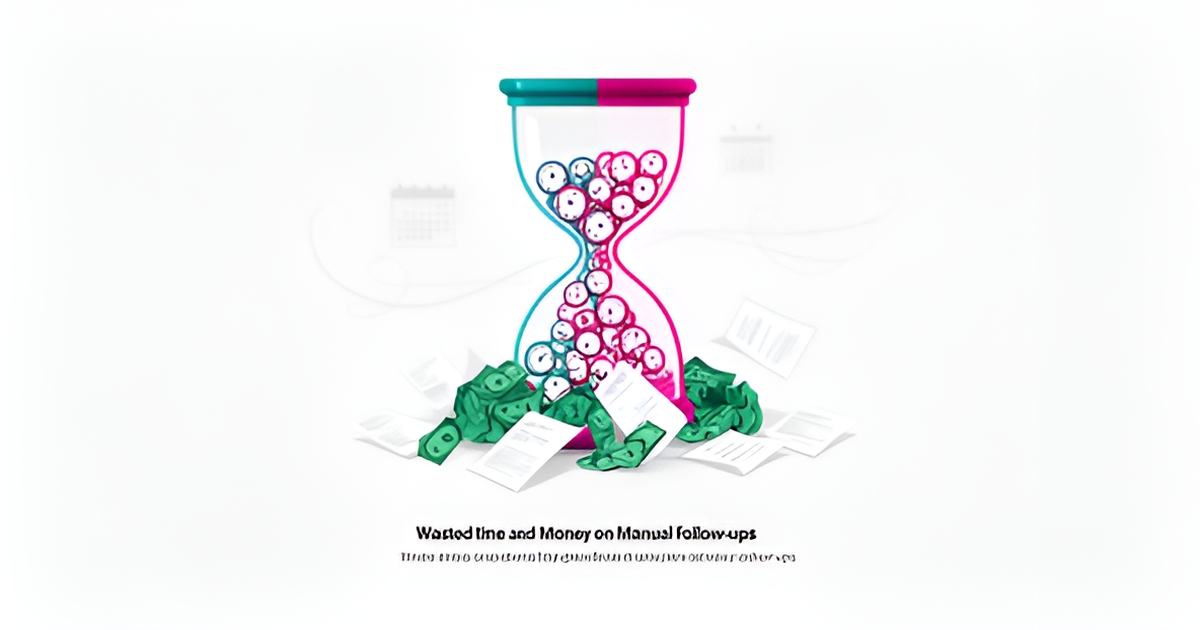
The Real Cost of Manual Customer Follow-Ups in Promotional Product Sales
Key Facts
- Promo product sales reps typically lose many hours each week to manual follow-ups like order confirmations and retention calls.
- Industry research suggests a large majority of customers—often cited around 76%—rank repeating themselves as a top support frustration according to industry research.
- Roughly 81% of customers prefer brands that personalize their experience per LinkedIn technology research.
- Around 54% of consumers prioritize fast responses when choosing a brand according to a 2026 B2B SaaS analysis.
- Approximately 55% of consumers will stop doing business with a company if wait times are too long per Dashly's 2026 support tools review.
- Standardizable inquiries like delivery status and returns typically make up 40–70% of e-commerce support volume per OMQ implementation guidance.
- AI automation is reported to reduce labor costs for follow-ups, confirmations, and retention by 40–60% according to Kustomer's 2026 best practices.
- AI tools can automate 40–80% of tier-1 chat queries, freeing agents for complex work per Dashly's AI support tools analysis.
- One Dashly client automated 40% of all chat inquiries, equivalent to 2 full-time support agents per Dashly's 2026 tool review.
- Well-deployed AI agents are reported to resolve 51–66% of routine inquiries without human intervention per AI Agents Kit implementation guide.
Hire a team member that works 24/7 — for less than a part-time wage.
AI receptionists, SDRs, dispatchers and 99+ roles. Trained on your business, fully managed.
Not sure where to start? Ask our AI planner
The Hidden Labor Drain: Quantifying Manual Follow-Up Costs in Sales Workflows
Manual follow-ups quietly drain sales teams in promotional product sales, turning high-value relationship work into repetitive admin.
Order confirmations, retention calls, and re-engagement outreach stack up across the day. Many reps spend the equivalent of a part-time job each week repeating the same status checks, chasing approvals, and logging notes instead of closing new business. That time compounds into missed opportunities and eroded margins.
Customer frustration amplifies the cost. Industry research suggests 76% of customers cite repeating themselves as their number one frustration in support interactions, while 81% of customers prefer brands that personalize their experience. When follow-ups are manual, continuity breaks and trust erodes.
Speed expectations make the gap worse. A 2026 analysis of B2B SaaS support found 54% of consumers prioritize fast responses when choosing a brand, and 55% will stop doing business with a company if wait times are too long. Manual outreach simply cannot keep pace with that demand in promotional product cycles.
The workload is measurable and repetitive. In e-commerce support, standardizable inquiries such as delivery status, returns, and order confirmations typically make up 40–70% of total support volume. Implementation guidance for AI in customer service notes that these repetitive tasks are prime candidates for automation because they follow predictable patterns.
AI automation shifts the economics of follow-up. Customer service best practices for 2026 report AI automation can reduce labor costs associated with follow-ups, order confirmations, and retention efforts by 40–60%. That reduction comes from intelligent routing and automated reminders that eliminate manual tracking.
The impact shows up in capacity, not just cost. Dashly's review of AI customer service tools notes AI can automate 40–80% of tier-1 chat queries, freeing agents for complex work. One Dashly client automated 40% of all chat inquiries, equivalent to 2 full-time support agents.
Promotional product sales teams face the same pattern:
- Order confirmations sent manually after each PO approval
- Retention calls scheduled by spreadsheet and calendar reminders
- Repetitive status updates to clients waiting on production timelines
- Follow-up notes re-entered across CRM, email, and order systems
These tasks create a hidden labor drain that shows up as lower close rates and slower replenishment. AIQ Labs' AI Workflow Builds exist to break this cycle: we rebuild the one workflow that costs you the most—often follow-up—at a fixed price, in phases, so you see results without betting the whole business on a big-bang project.
When follow-up becomes continuous and personalized, teams recover selling time and customers feel heard. That is the real cost of staying manual.
Why AI Automation Delivers 40–60% Cost Reduction in Customer Follow-Ups
Manual customer follow-ups in promotional product sales create hidden labor costs that drain resources and limit scalability. Teams spend hours on repetitive tasks like order confirmations, retention check-ins, and reminder calls—activities that could be redirected toward high-value sales strategy and relationship building. This inefficiency compounds as customer volumes grow, turning follow-up efforts into a bottleneck rather than a growth driver.
AI workflow automation directly addresses these pain points by intelligently routing follow-ups based on customer behavior, purchase history, and engagement patterns. Automated reminders trigger at optimal times without manual intervention, ensuring consistent communication while reducing the cognitive load on human teams. This shift allows staff to focus on complex negotiations, custom solution design, and retention strategies that require emotional intelligence and strategic thinking—areas where humans outperform AI.
Industry analysis reports that AI automation can reduce labor costs associated with customer service follow-ups, order confirmations, and retention efforts by 40–60% according to industry analysis. Similarly, AI tools can automate 40–80% of tier-1 customer queries, freeing human agents for higher-impact work. These savings come not from replacing empathy, but from enhancing it—AI handles the routine, while humans deliver the personalized, empathetic interactions that build long-term loyalty in promotional sales.
- Intelligent routing reduces redundant follow-ups by directing inquiries to the right agent or system
- Automated reminders ensure timely engagement without manual tracking
- 24/7 availability captures opportunities outside business hours, increasing conversion potential
- Human agents typically regain a meaningful block of hours each week to focus on upselling, custom quoting, and retention strategy
- Consistent, data-driven follow-ups improve customer satisfaction while lowering cost-to-serve
By embedding AI into follow-up workflows, promotional product sellers transform a cost center into a scalable engagement engine. AIQ Labs designs these systems to maintain brand voice and emotional nuance—ensuring every automated touchpoint feels personal, not robotic. For teams that want follow-up handled end-to-end without hiring, AI Employees can take on roles like SDRs and receptionists at roughly 80% less cost than a human hire. The result is a leaner, more responsive sales operation where technology handles the repeatable, and humans focus on what truly moves the needle: trust, customization, and long-term partnership.
From Manual to Automated: Implementing AI Follow-Up Systems for SMBs in Promotional Products
Moving from manual follow-ups to an automated system doesn't happen in a single leap. It requires a phased approach that respects the complexity of existing workflows while delivering measurable wins at each stage. AIQ Labs structures every engagement around a proven methodology: discovery, agent configuration, deep CRM integration, and deliberate change management. Work is delivered in milestones with fixed pricing, so you always know what you're paying for before the next phase begins. This ensures the system eliminates bottlenecks rather than automating broken processes.
The first phase focuses on mapping the actual work. Teams often underestimate how many touchpoints exist between an initial inquiry and a repeat order. A thorough process audit reveals where reps spend hours chasing approvals, re-entering data, or sending generic check-ins that go unanswered. Research suggests 76% of customers cite repeating themselves as their number one frustration, a signal that disconnected systems are eroding trust before automation even enters the picture. Industry research confirms that unified conversational memory is the foundation for empathetic, continuous support.
- Discovery workshops that map every follow-up trigger, handoff, and decision point
- Data readiness assessment to ensure CRM fields, order histories, and communication logs are AI-ready
- ROI modeling tied to specific labor hours recovered per role
Next, AI agents are configured for the specific rhythms of promotional product sales — quote follow-ups, art approval reminders, production status updates, and reorder prompts. These aren't generic chatbots. They are specialized agents, each handling a distinct workflow stage while sharing context through a unified memory layer. This architecture allows the system to reason across interactions rather than simply react to the latest message. Implementation guides note that well-deployed AI agents can resolve 51–66% of routine inquiries without human intervention, freeing reps for high-value conversations.
CRM integration is where theory meets reality. The AI must write back to the same records your team uses daily — logging calls, updating deal stages, triggering tasks — so the system of record stays single and trusted. When integration is shallow, adoption stalls. When it's deep, the AI becomes an invisible teammate. Best practices emphasize that AI should function as a co-pilot, amplifying human capability rather than creating parallel workflows that agents must reconcile manually.
Finally, change management determines whether the investment pays off. Resistance often stems from fear of replacement or distrust in automation quality. The solution is transparency: involve top performers in training the agents, run shadow periods where AI suggestions appear alongside human decisions, and measure success by outcomes like response speed and retention — not just activity volume. Organizations that frame AI as an empathy amplifier see faster adoption and stronger results. Leadership insights confirm that teams aligned around outcomes instead of activities reduce cost-to-serve while improving customer trust.
If follow-up is just the start, AI Operating Systems connect follow-up, quoting, production tracking, and reordering into one operating layer your business owns outright—built in phases, with no lock-in. Start with a 2-minute Fit Check to see which entry point fits, or book a free 30-minute strategy call at aiqlabs.ai/book.
Still paying for 10+ subscriptions that don’t talk to each other?
We build custom AI systems you own outright. No vendor lock-in. Full control.
Not sure where to start? Ask our AI planner
Frequently Asked Questions
How much time do sales reps actually lose to manual follow-ups in promotional product sales?
What's the real impact of making customers repeat themselves during follow-ups?
Can AI actually reduce labor costs for follow-ups by 40–60%?
Will automated follow-ups feel robotic and damage customer relationships?
What types of follow-up tasks are actually automatable in promotional product sales?
How does implementation work — do we have to replace our current CRM and tools?
Turn Follow-Up Friction into Competitive Advantage
Manual customer follow-ups in promotional product sales aren't just tedious—they're a silent profit drain, consuming rep hours every week on repetitive tasks like order confirmations and status checks. This hidden labor erodes margins, frustrates customers who hate repeating themselves, and slows response times in an era where 54% of buyers prioritize speed and 55% abandon brands over delays. AI automation flips this script: by intelligently routing follow-ups and automating reminders, teams recover selling time to focus on high-value work, while AI handles the routine with consistent, personalized touchpoints. Industry analysis reports this shift can reduce labor costs by 40–60% according to industry analysis, not by replacing empathy, but by freeing humans to deliver it where it matters most. The path forward starts with clarity—identify your biggest follow-up bottleneck and see where AI can unlock real capacity. Take the 2-minute Fit Check or book a free 30-minute strategy call at aiqlabs.ai/book to map your opportunity and turn follow-up from a cost center into your next growth lever.
Make AI your competitive advantage — not just another tool.
Strategy, implementation and ongoing optimization. One partner, end to end.
Not sure where to start? Ask our AI planner