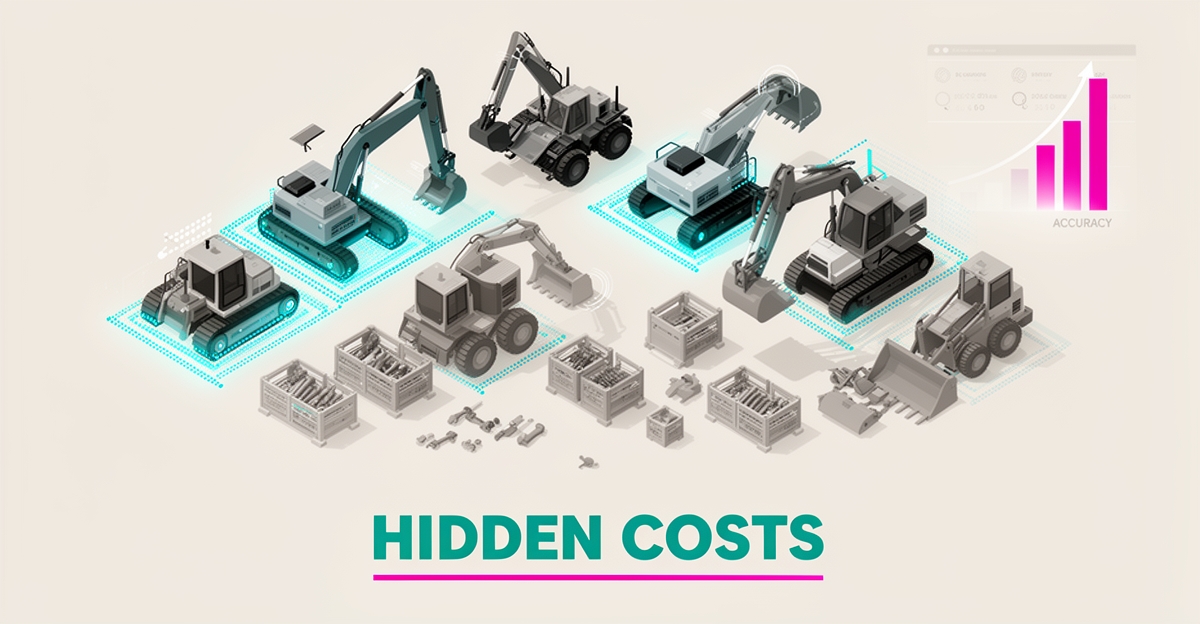
The Real Cost of Manual Equipment Tracking in Rental Operations
Key Facts
- A large share of organizations report significant discrepancies between recorded and actual inventory, according to industry research on equipment ROI.
- Automated data entry typically reaches accuracy rates above 99%, far outperforming manual logs and spreadsheets.
- Equipment tracking software can typically save operations up to 2,000 hours annually by cutting manual entry, searches, and reconciliation.
- Warehouse workers commonly spend a large portion of their shift—by some estimates up to 60%—walking between locations to verify or log equipment.
- Barcode inventory systems typically maintain around 99% inventory accuracy once properly implemented.
- Manual tracking creates ghost assets that inflate balance sheets while representing no real value.
Hire a team member that works 24/7 — for less than a part-time wage.
AI receptionists, SDRs, dispatchers and 99+ roles. Trained on your business, fully managed.
Not sure where to start? Ask our AI planner
The True Cost of Manual Tracking: Labor, Errors, and Lost Revenue
Manual equipment tracking in rental operations carries a hidden financial burden that many organizations underestimate. The reliance on spreadsheets, paper logs, and manual counts creates inefficiencies that compound over time, directly impacting profitability. This isn't just about inconvenience—it's about measurable losses in labor, accuracy, and revenue potential.
Industry research on equipment ROI consistently finds that a large share of organizations report significant discrepancies between their recorded inventory and actual physical assets, leading to widespread issues with ghost assets that inflate balance sheets while representing no real value. These inaccuracies force teams into reactive modes, spending excessive time searching for equipment that may not even be where the system says it is. In warehouse environments, workers commonly spend a substantial portion of their shift—by some estimates up to 60%—walking between locations simply to verify or log equipment status, turning what should be productive labor into costly motion waste.
This misallocation of effort has a direct ripple effect on revenue. When equipment is misplaced or incorrectly logged, it becomes unavailable for rental despite being physically present, resulting in lost booking opportunities and underutilized fleets. Conversely, assets that are lost or stolen remain on the books as active inventory, distorting utilization metrics and delaying necessary replacements. The combined effect is a drain on both operational efficiency and top-line performance—costs that accumulate silently but significantly over time.
For rental businesses seeking to break this cycle, the path forward lies in shifting from manual processes to intelligent, automated systems. AIQ Labs helps organizations transition away from error-prone tracking by building custom AI-driven solutions that capture equipment data in real time, eliminate redundant labor, and restore trust in inventory records. By anchoring operations in accurate, continuously updated data, companies can reclaim wasted labor, reduce discrepancies, and unlock the full revenue potential of their equipment fleet.
How Automated Tracking Eliminates Waste and Boosts Accuracy
Automated equipment tracking transforms rental operations by eliminating the inefficiencies of manual processes. Manual tracking often leads to significant discrepancies between reported and actual inventory, resulting in ghost assets, lost revenue, and wasted labor. Automated solutions address these pain points through real-time visibility and precise data capture, turning guesswork into actionable intelligence.
Barcode and GPS systems deliver exceptional accuracy, typically achieving inventory precision rates of 99% or higher once properly implemented. Automated data entry systems routinely reach accuracy levels well above what manual processes can sustain, while barcode inventory systems typically maintain around 99% inventory accuracy. This level of precision virtually eliminates counting errors, misplaced equipment, and incorrect availability reports—common pitfalls of manual logs and spreadsheets that erode trust and increase operational risk.
Beyond accuracy, automation drives substantial time savings. Equipment tracking software can typically save operations up to 2,000 hours annually by reducing time spent on manual data entry, physical searches, and reconciliation efforts. This efficiency gain allows teams to redirect labor toward higher-value tasks such as customer service, maintenance planning, and fleet optimization. Additionally, barcode systems reduce unnecessary movement—warehouse workers commonly spend a large share of their time walking between locations—by enabling quick, scan-based check-ins and check-outs that streamline workflows.
- Real-time location and status updates prevent equipment loss and improve dispatch accuracy
- Automated data capture eliminates transcription errors and ensures consistent record-keeping
- Instant access to utilization data supports better maintenance scheduling and reduces downtime
- Seamless integration with existing systems creates a single source of truth for all equipment data
- Reduced administrative burden frees staff to focus on customer-facing and strategic activities
By replacing error-prone manual methods with automated tracking, rental operations gain reliable, real-time insights that directly improve decision-making. AIQ Labs supports this shift through AI-powered data analytics and business intelligence solutions that transform raw tracking data into predictive insights—helping companies not only track equipment but anticipate needs, optimize utilization, and reduce total cost of ownership. The result is a more agile, accurate, and profitable operation built on data you can trust.
From Manual to AI-Powered: How AIQ Labs Delivers Measurable Savings in Rental Operations
Manual equipment tracking in rental operations creates hidden costs that drain resources and limit growth. Manual processes routinely produce large gaps between reported and actual inventory, leading to lost revenue and inefficient asset use. This gap between perception and reality can undermine operational decisions and erode profitability over time.
AIQ Labs addresses these challenges through AI-driven automation that replaces manual workflows with intelligent systems. By deploying managed AI Employees—including AI Inventory Managers that operate around the clock—rental businesses gain real-time visibility into equipment location, status, and utilization. These systems eliminate manual data entry, reduce human error, and provide actionable insights without requiring vendor lock-in.
The impact is measurable: automated tracking solutions typically achieve accuracy levels above 99% in data entry, drastically reducing discrepancies. Operations using such systems commonly save up to 2,000 hours annually—equivalent to a full-time employee's workload—by eliminating time spent on manual checks and reconciliations. Integrating barcode inventory systems further improves accuracy, minimizing errors in equipment movement and storage.
AIQ Labs delivers this transformation in the way that fits your operation. Start Monthly with managed AI staff, Build in Milestones to rebuild the one tracking workflow that costs you the most at a fixed price, or move to a full AI Operating System—one connected operating layer for your fleet, built in phases and owned outright. These systems sync with existing CRM, accounting, and operations platforms to create a unified view of equipment data. The result is reduced labor costs, fewer errors, and improved equipment utilization—all while maintaining full ownership of the AI system.
By shifting from manual tracking to AI-powered automation, rental operations unlock efficiency gains that directly impact the bottom line. The transition isn't just about technology—it's about redefining how equipment is managed, monitored, and maximized for long-term value.
Still paying for 10+ subscriptions that don’t talk to each other?
We build custom AI systems you own outright. No vendor lock-in. Full control.
Not sure where to start? Ask our AI planner
Frequently Asked Questions
How much is manual equipment tracking really costing my rental business?
What are ghost assets and why should I care about them?
How accurate are automated equipment tracking systems compared to manual methods?
Can automated tracking really save me time, or is it just another tool to manage?
What's the difference between GPS tracking, barcode systems, and equipment management software?
How do I get started with automated equipment tracking without a massive upfront investment?
Turn Tracking Waste into Operational Wins
Manual equipment tracking silently drains rental operations through inflated labor costs, inventory inaccuracies, and missed revenue opportunities—often showing up as significant gaps between recorded and actual assets. By shifting to automated tracking with real-time data capture, businesses can reclaim up to 2,000 hours annually, achieve near-perfect inventory accuracy, and redirect teams toward higher-value work like customer service and fleet optimization. AIQ Labs helps rental companies make this transition smoothly through custom AI-driven solutions that eliminate manual errors, integrate with existing systems, and deliver measurable savings without vendor lock-in. The path forward starts with understanding where your biggest bottlenecks lie. Start the Fit Check for a free, no-obligation strategy call to uncover your high-ROI automation opportunities.
Make AI your competitive advantage — not just another tool.
Strategy, implementation and ongoing optimization. One partner, end to end.
Not sure where to start? Ask our AI planner