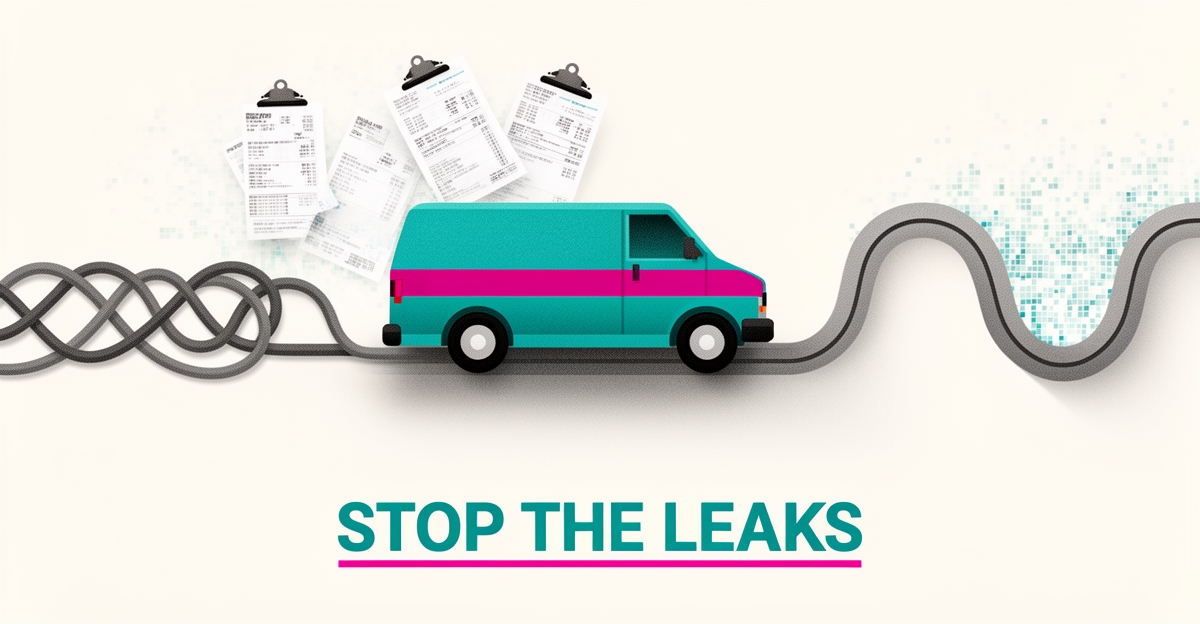
The Real Cost of Manual HVAC Job Logging, And How AI Can Save $15K+ Per Year
Key Facts
- Most HVAC companies lose thousands annually to inefficiencies from poor scheduling and dispatching practices, according to consistent field service industry analysis.
- Route optimization typically delivers meaningful reductions in travel-related expenses, often in the range of 10–15% annually for service fleets.
- Most homeowners now expect same-day service for emergency HVAC issues, which makes response speed a retention driver.
- Automated scheduling and invoicing systems typically pay for themselves within the first year of implementation.
- Integrating scheduling with accounting tools like QuickBooks is one of the fastest ways to cut invoice processing time and accelerate cash flow.
Hire a team member that works 24/7 — for less than a part-time wage.
AI receptionists, SDRs, dispatchers and 99+ roles. Trained on your business, fully managed.
Not sure where to start? Ask our AI planner
The Hidden Costs of Manual HVAC Job Logging
Manual job logging doesn't just slow HVAC teams down, it quietly drains profit from every service call. When scheduling, dispatching and reporting live on paper, texts and spreadsheets, the friction compounds across the entire lifecycle.
Dispatchers juggling disconnected tools create a cascade of operational drag. Field service industry analysis consistently finds that most HVAC companies lose thousands annually due to inefficiencies from poor scheduling and dispatching practices. That loss shows up as missed revenue, higher labor costs and frustrated customers.
Paper-based scheduling makes it hard to see who is actually available. Limited visibility into technician availability causes confusion during high-demand periods and makes it difficult to manage emergency requests without dynamic prioritization. The result is delayed service calls and billing cycles that stretch out unnecessarily.
Routing inefficiency is another silent cost center. When routes are technician-determined rather than optimized, companies waste fuel and billable hours on unnecessary travel. Service fleets that adopt route optimization typically see meaningful reductions in travel-related expenses, often in the range of 10–15% annually. That saving comes directly from smarter mileage and more jobs per day.
Administrative reconciliation adds a third layer of cost. Technicians return from the field with paper notes that must be re-entered, invoices are typed manually, and accounting systems are updated separately. Connecting scheduling directly to accounting tools like QuickBooks is one of the most reliable ways to cut invoice processing time and get paid faster.
Customer expectations make these gaps more expensive. Most homeowners now expect same-day service for emergency HVAC issues. Missed appointments and slow responses directly erode retention and referrals.
The hidden costs of manual job logging show up as:
- Missed appointments and delayed service calls that frustrate customers and delay billing
- Inefficient routing that wastes fuel and technician time through unnecessary travel
- Limited visibility into technician availability causing confusion during peak demand
- Difficulty managing emergency requests due to lack of dynamic job prioritization
These inefficiencies are exactly why AIQ Labs focuses on rebuilding the workflows that cost field service businesses the most. Real-time tracking and smart dispatch consistently improve emergency response times, often by 20% or more once dispatchers can see every truck and reprioritize on the fly.
Connected systems turn operational friction into measurable savings. When dispatch, inventory and invoicing stop living in separate silos, mid-sized contractors routinely report five-figure annual savings, the kind of number that shows up directly on the P&L.
How AI Automation Transforms HVAC Operations
Manual job logging bleeds money every day in ways HVAC owners rarely see on a P&L. Disconnected notes, texts, and spreadsheets create delays that show up as missed appointments, wasted drive time, and invoices that sit too long.
AI-powered management replaces that friction with a single, connected system that assigns, routes, and bills in real time. Smart scheduling and dispatching eliminate double-bookings by matching technician skills, availability, and proximity to the right job. Route optimization cuts unnecessary travel, and real-time visibility lets dispatchers reprioritize as conditions change.
For many shops, the fastest first step isn't new software for the whole team, it's an AI dispatcher or service coordinator that handles scheduling and job assignment end-to-end. AIQ Labs offers managed AI Employees for exactly this: receptionists, SDRs, dispatchers and 99+ other roles, at roughly 80% less cost than a human hire.
Real-time tracking also changes emergency performance. When dispatchers can see every truck and reprioritize instantly, emergency response times typically improve by 20% or more. With most homeowners expecting same-day service for emergency HVAC issues, speed becomes a retention driver.
Seamless QuickBooks integration closes the revenue loop. Automatic invoice generation upon job completion removes end-of-day data entry and accelerates cash flow, one of the most commonly cited wins when contractors connect scheduling to accounting.
The operational benefits show up across the team:
- Increased technician utilization through skill-based job assignment and dynamic re-routing
- Improved customer satisfaction from proactive updates and accurate arrival windows
- Reduced administrative burden with mobile job updates and automatic financial sync
- Enhanced financial accuracy with job-level costing tied directly to QuickBooks
These gains are measurable at scale. AIQ Labs has deployed 200+ multi-agent systems for SMB businesses, and runs four live SaaS products of its own daily, so the workflows it builds are proven in real operations, not slideware. For HVAC companies that want to go deeper than a single hire, AI Workflow Builds rebuild the one workflow that costs the most, at a fixed price, in phases.
When scheduling, routing, tracking, and billing operate as one system, AI automation transforms HVAC operations from reactive to predictive. Companies capture more revenue per technician, reduce fuel and overtime costs, and deliver the same-day service customers now expect.
From Manual to Measurable Savings: A Practical Implementation Path
Knowing the cost of manual logging is one thing, fixing it requires a structured path that most HVAC companies can complete in weeks, not months. The good news: the roadmap is well-established, and the results compound quickly once each step is in place.
Start with a workflow audit. Map every point where job data gets touched twice, paper notes, texts, spreadsheets, disconnected accounting tools. This is where most HVAC companies lose thousands annually to poor scheduling and dispatching practices. Quantify the hours your office staff spends reconciling systems each week.
Next, evaluate software built for HVAC operations, not general management tools. Look for integrated scheduling, dispatching, mobile access, and accounting integration in a single platform. Operations-first systems prioritize what's happening in the field right now, rather than just reporting on what already happened. Integration with tools like QuickBooks is non-negotiable, it eliminates duplicate data entry and improves billing accuracy.
Then deploy mobile access for your technicians. Field staff should update job status, pull customer history, and close tickets on-site. This single change eliminates end-of-day data entry and manual reconciliation, the biggest administrative drain in most shops.
Configure smart dispatch rules and real-time tracking. Automated assignment based on skills, availability, and proximity delivers measurable gains fast:
- Emergency response times typically improve by 20% or more once dispatchers have real-time tracking
- Route optimization commonly cuts travel-related expenses by 10–15% annually
- Connecting QuickBooks to scheduling is one of the fastest ways to cut invoice processing time
Finally, train your team and monitor four metrics: technician utilization, emergency response times, invoice processing speed, and customer satisfaction. These numbers tell you within the first quarter whether the system is paying for itself, and in practice, automated systems typically do within the first year.
This mirrors how AIQ Labs works with field service clients: discovery and architecture first, then build and integration, then deployment with role-specific training, then ongoing optimization. You can start monthly with a single AI dispatcher, build in milestones as wins compound, or, for companies ready to connect everything, an AI Operating System that unifies the whole operation and is owned outright. Payment models are straightforward: Start Monthly, Build in Milestones, or Own It Outright. No fake prices, no invented case-study numbers.
The savings compound. Contractors who systematically connect dispatch, inventory, and invoicing routinely report five-figure annual savings, proof that systematic implementation beats incremental fixes every time. If you want a clear-eyed assessment of where your operation leaks time and payroll, start with AIQ Labs' two-minute Fit Check at aiqlabs.ai/apply, followed by a free 30-minute strategy call to map your highest-ROI automation opportunities. If there isn't a clear win, they'll tell you that too.
Still paying for 10+ subscriptions that don’t talk to each other?
We build custom AI systems you own outright. No vendor lock-in. Full control.
Not sure where to start? Ask our AI planner
Frequently Asked Questions
How much does manual job logging actually cost my HVAC business?
Will AI scheduling really reduce my travel costs?
Can automation help with emergency calls and same-day service?
Does integrating QuickBooks with scheduling actually save time?
What are the biggest pain points of paper-based HVAC dispatch?
Is AI automation a quick fix or a long implementation?
Turn HVAC Friction into Measurable Gains
Manual job logging silently erodes HVAC profitability through missed appointments, wasted fuel, delayed billing, and frustrated customers, costs that rarely show up cleanly on a P&L but compound daily. AI-powered workflow automation transforms this friction into measurable savings by unifying scheduling, dispatching, routing, and invoicing in a single connected system. Contractors using these tools consistently report lower travel expenses, faster invoice processing, and quicker emergency response, directly improving technician utilization, cash flow, and customer retention. The path forward starts with clarity: identify where your team re-enters data, juggles disconnected tools, or struggles to prioritize urgent calls. AIQ Labs helps SMB HVAC businesses map these leaks and deploy AI systems they own outright, integrated with QuickBooks and field tools, whether that's a single AI dispatcher, a rebuilt workflow, or a full operating layer. To see where your operation loses time and payroll, start with the two-minute Fit Check at aiqlabs.ai/apply, followed by a free 30-minute strategy call to uncover your highest-ROI automation opportunities, no obligation, just a clear-eyed assessment.
Make AI your competitive advantage — not just another tool.
Strategy, implementation and ongoing optimization. One partner, end to end.
Not sure where to start? Ask our AI planner