The Real Cost of Manual Route Planning in Long Haul Trucking
Key Facts
- A single dispatcher can typically manage only about 10 or fewer technicians using manual planning processes.
- Companies relying on manual or semi-manual scheduling complete more than 25% of work orders late.
- Industry research on AI route optimization commonly reports fuel cost reductions of 20-30% in early deployment.
- Fleets adopting AI routing often see 15-25% more stops per driver without extending shift hours.
- Route optimization adoption delivered a mean mileage improvement of 12.5% across 35 studied fleets.
- AI-optimized logistics networks have reported reductions in average delivery times of roughly 47% per industry case data.
- Manual planning tends to break down once fleets exceed 5-10 vehicles, creating a hard scalability cliff.
Hire a team member that works 24/7 — for less than a part-time wage.
AI receptionists, SDRs, dispatchers and 99+ roles. Trained on your business, fully managed.
Not sure where to start? Ask our AI planner
The Hidden Financial Drain of Manual Route Planning
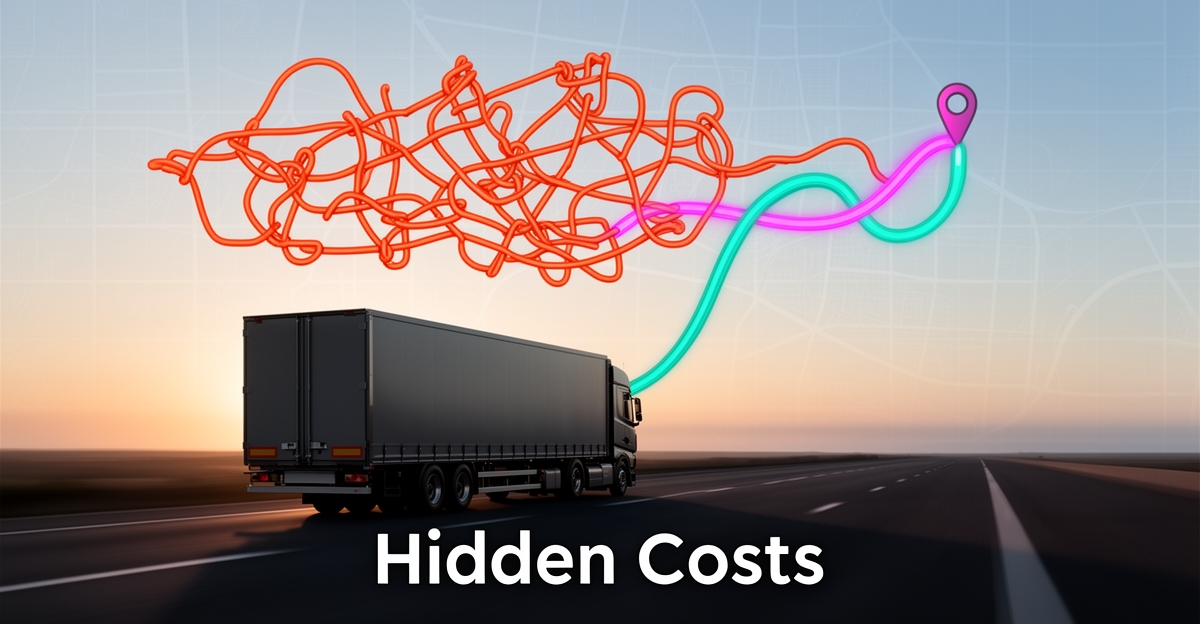
The hidden financial drain of manual route planning extends far beyond the obvious inefficiencies of time spent drawing lines on maps. For long-haul trucking operations, the true cost emerges in dispatcher capacity limits, fuel waste from suboptimal routes, missed delivery windows, and driver overtime—all of which compound as fleets scale. Research indicates a single dispatcher can typically manage only 10 or fewer technicians using manual processes, creating a hard ceiling on operational growth without proportional labor increases. Companies relying on manual or semi-manual scheduling complete more than 25% of work orders late, directly impacting customer retention and contractual compliance. These inefficiencies translate into tangible financial losses: inefficient routing burns excess fuel through unnecessary mileage, while poorly sequenced stops force drivers into overtime to meet delivery commitments. AIQ Labs addresses these pain points through AI Workflow Builds—rebuilding the one workflow that costs you the most, at a fixed price and in phases—so dispatchers can manage far more stops per shift, fuel costs drop through optimized sequencing, and on-time delivery rates improve. The result turns route planning from a cost center into a competitive advantage.
When Manual Planning Breaks: The Scalability Cliff
When fleet operations expand beyond a small, predictable scale, manual route planning hits a hard scalability cliff where human capacity simply cannot keep pace with growing complexity. Research suggests that a single dispatcher can typically manage only 10 or fewer technicians using manual processes, creating an immediate bottleneck once fleets exceed 5-10 vehicles. This threshold isn't arbitrary—it reflects the cognitive limit of simultaneously balancing delivery stops, driver schedules, vehicle capacities, and customer time windows without systematic support.
As order volumes become more variable, each day's unique requirements force complete replanning from scratch, turning what was once a manageable task into a daily time sink. Manual planning time grows linearly with order volume, directly tying labor costs to business growth in a way that optimized systems avoid by decoupling planning capacity from headcount. When delivery windows shift from flexible expectations to contractual commitments, the inherent imprecision of human judgment introduces significant business risk—more than 25% of work orders are completed late by companies using manual or semi-manual scheduling, directly impacting customer retention and revenue.
Multi-depot operations amplify these challenges exponentially, introducing coordination layers that human dispatchers cannot reliably manage without algorithmic assistance. Enterprise-grade platforms overcome these limits by handling 50+ configurable hard and soft constraints simultaneously—far beyond what any individual can track—while continuously learning from historical data to improve accuracy over time. For long-haul trucking operations approaching these inflection points, the hidden costs of manual planning—fuel waste, missed deliveries, driver overtime—begin to accumulate at an accelerating rate, signaling the need for a fundamental shift in routing approach. To explore how AI-driven route optimization can resolve these scalability limits for your specific fleet configuration, take the 2-minute Fit Check and then book a free strategy call to assess your current bottlenecks and identify high-ROI automation opportunities.
How AI Route Optimization Transforms Fleet Economics
The transition from manual route planning to AI-driven optimization represents a fundamental shift from reactive guesswork to predictive intelligence. Where human dispatchers hit cognitive limits, algorithms thrive on complexity—transforming route planning from a daily operational burden into a strategic advantage.
AI route optimization can deliver measurable financial impact within the first months of implementation. According to industry research, fleets commonly report fuel cost reductions in the 20-30% range while increasing stops per driver by 15-25% and improving on-time delivery rates by 15-23%. These aren't marginal gains—they can represent thousands of dollars in recovered margin per vehicle annually.
The technology's advantage lies in its capacity to process complexity that overwhelms human planners. While a dispatcher struggles to balance more than a handful of variables, enterprise-grade AI systems simultaneously evaluate 50+ configurable constraints, including:
- Vehicle weight and dimension limits
- Driver hours-of-service regulations
- Customer time windows and priority flags
- Hazmat compliance requirements
Beyond static optimization, these systems predict traffic patterns before congestion forms and continuously learn from historical delivery data. Each completed route feeds performance metrics back into the system, refining future planning accuracy without dispatcher intervention. This capability helps explain why AI-optimized logistics networks have reported reductions in average delivery times of roughly 47% alongside on-time performance gains.
For fleets ready to move beyond manual planning, AIQ Labs builds custom route optimization engines tailored to your operational constraints—whether as a single workflow build or as part of a broader AI Operating System that connects dispatch, routing, and customer communication in one layer you own outright. The transition from spreadsheet-based dispatching to intelligent automation typically starts paying for itself early in deployment.
From Manual to Intelligent: Your Route Optimization Roadmap
Knowing the cost of manual planning is one thing—knowing how to fix it is another. The transition from spreadsheets and dispatcher intuition to AI-driven optimization doesn't happen overnight, but a structured roadmap makes it achievable without disrupting daily operations.
Start with an honest assessment of your current operations. Map out how long planning takes each day, how many vehicles a single dispatcher manages, and where delays occur. If your fleet has grown beyond 5-10 vehicles or your order volumes swing significantly day to day, you're likely past the threshold where manual planning holds up. Companies using manual or semi-manual scheduling complete more than 25% of work orders late, so measure your own late-delivery rate as a baseline before anything changes.
Next, document every constraint your operation actually runs on. Vehicle weight limits, driver hours-of-service rules, customer time windows, truck-restricted roads, hazmat requirements—enterprise-grade platforms can handle 50+ hard and soft constraints simultaneously, but only if you capture them accurately upfront. Missing a single constraint during configuration is the most common cause of disappointing early results.
Technology selection comes third, and the key is matching capability to your scale. Google Maps caps out at 10 stops per route, and free planners generally top out around 20-25, while AI systems handle hundreds of stops with fleet-wide multi-vehicle optimization. Look for platforms that learn from historical data, avoid congestion predictively rather than reactively, and connect cleanly with your existing telematics, TMS, and dispatch systems.
Then move through integration and phased deployment:
- Connect the optimization engine to your existing systems via API so data flows automatically—no manual re-entry
- Configure business rules, priority flags, and service-time estimates to reflect how your fleet actually operates
- Pilot with a subset of routes to validate results before full rollout
- Train dispatchers and drivers, addressing resistance to algorithmic suggestions early
- Monitor fuel costs, on-time rates, and dispatcher productivity, then scale to additional vehicles and depots
The payoff timeline is measurable. Industry reports on urban delivery operations typically cite fuel cost drops of 20-30% within the first 90 days, on-time delivery improvements of 15-23%, and stops per driver increasing 15-25% without extending shifts. Field service modernization case studies have documented multi-million-dollar travel-time savings over multi-year horizons.
This is where the build-versus-buy decision matters. Off-the-shelf platforms force fleets to bend operations to generic constraints. A fleet-specific engine—built around your routes, your compliance requirements, and your customer commitments—captures optimization value that generic tools leave on the table. That's the approach AIQ Labs takes: building route optimization systems in milestones at a fixed price, with you owning the system outright rather than renting it back from a vendor month after month.
The roadmap is straightforward. The fleets that act first lock in the savings; the ones that wait keep paying for every inefficient mile.
Still paying for 10+ subscriptions that don’t talk to each other?
We build custom AI systems you own outright. No vendor lock-in. Full control.
Not sure where to start? Ask our AI planner
Frequently Asked Questions
How many technicians can a single dispatcher effectively manage using manual route planning processes?
What percentage of work orders do companies using manual or semi-manual scheduling complete late?
What fuel cost reduction can fleets expect from AI route optimization?
How much can on-time delivery rates improve after adopting AI route optimization?
What is the maximum number of stops per route that Google Maps can handle?
How many configurable hard and soft constraints can enterprise-grade AI route optimization platforms handle simultaneously?
Turn Route Planning from a Cost Center into Your Competitive Edge
Manual route planning doesn't just waste time—it creates a hard ceiling on growth, burns fuel through inefficiency, and risks late deliveries that erode customer trust. As fleets scale past 5-10 vehicles, the cognitive limits of dispatchers become a bottleneck, with research suggesting a single dispatcher can effectively manage only 10 or fewer technicians using manual processes. AI-driven route optimization breaks this cycle by handling 50+ constraints simultaneously, with industry reports commonly citing fuel cost reductions of 20-30%, more stops per driver, and stronger on-time delivery rates within the first 90 days. For long-haul trucking operations ready to move beyond spreadsheets and intuition, the path forward starts with clarity: assess your current planning time, late-delivery rate, and dispatcher workload. Then explore how a custom-built route optimization engine—built in milestones at a fixed price and owned outright—can transform routing from a daily burden into a scalable advantage. To see where your biggest bottlenecks lie, take the 2-minute Fit Check and book a free 30-minute strategy call—no obligation, just a real working session to map your next steps.
Make AI your competitive advantage — not just another tool.
Strategy, implementation and ongoing optimization. One partner, end to end.
Not sure where to start? Ask our AI planner