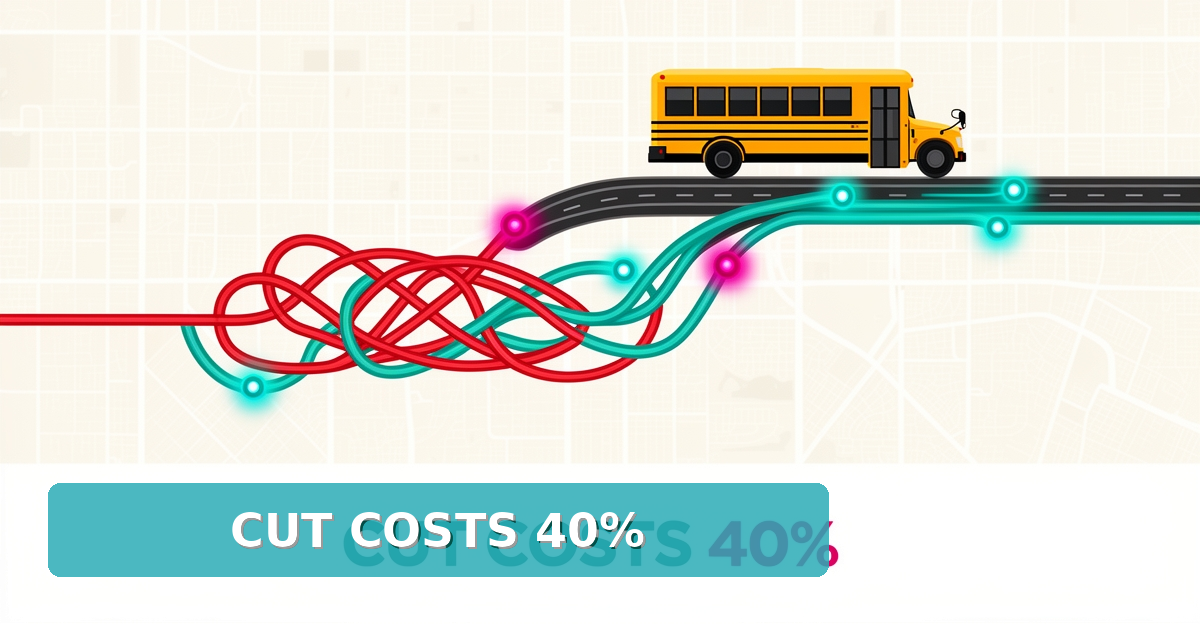
The Real Cost of Manual School Bus Scheduling: How AI Can Cut Expenses by 40%
Key Facts
- AI-powered scheduling is credited with reducing school transportation costs by up to 40% through optimized routing and minimized administrative overhead according to automated scheduling cost analysis
- Industry analyses estimate human errors in school bus scheduling can cost districts $5,000–$15,000 per incident in avoidable expenses per industry analysis
- AI-driven route optimization is associated with fuel-consumption reductions of roughly 20–25% through shorter miles, less idling, and eliminated backtracking per transportation technology research
- Automation reduces manual scheduling time by a significant margin, freeing administrative staff for higher-value work as noted in independent software reviews
- AI-powered systems improve on-time performance by dynamically adjusting routes for traffic, weather, and unexpected absences per independent software reviews
- Over 1,000 organizations currently use school bus management software solutions to optimize transportation operations per industry adoption data
- Top-ranked school bus management solutions average 8.0–9.5 out of 10 in user satisfaction ratings per ZipDo software reviews
Hire a team member that works 24/7 — for less than a part-time wage.
AI receptionists, SDRs, dispatchers and 99+ roles. Trained on your business, fully managed.
Not sure where to start? Ask our AI planner
The Hidden Price Tag of Manual School Bus Scheduling
Manual school bus scheduling quietly drains district budgets every year, and the damage is rarely visible until routes fail.
Spreadsheets, paper routes and phone-based planning create a fragile system that breaks under real-world pressure. Manual processes are prone to human error, time-consuming, and often result in suboptimal routes, leading to increased fuel consumption, longer travel times, and potential delays. The lack of real-time data integration makes it difficult to adapt to unforeseen circumstances like traffic congestion or unexpected student absences.
The financial drag shows up in overtime, fuel waste and missed service. Administrative staff spend hours rebuilding routes each week, while drivers cover inefficient miles that could have been avoided. Industry analyses estimate human errors in scheduling can result in $5,000–$15,000 per incident in costs, according to industry analysis of school and employee bus transportation. Those incidents compound quickly across a district.
Fuel is one of the largest visible leaks. AI-driven route optimization is associated with a 20–25% reduction in fuel consumption, per transportation technology research. Without optimization, buses travel longer distances, idle longer, and repeat stops, burning budget on every trip.
Operational friction also erodes reliability. Manual planning limits fleet utilization and makes on-time performance harder to sustain. Automation can reduce manual scheduling time by a significant margin, freeing up administrative staff, while AI-powered systems can improve on-time performance by optimizing routes and accounting for real-time conditions.
The hidden price tag of manual scheduling typically includes:
- Overtime for planners and drivers covering missed or duplicated runs
- Fuel waste from suboptimal, non-optimized routes and excess mileage
- Missed routes and late pickups that trigger parent complaints and compliance risk
- Error-driven costs from scheduling mistakes that industry analyses estimate at $5,000–$15,000 per incident
These costs are not one-off. They repeat daily, and they are difficult to model without data. AIQ Labs builds AI Workflow Builds that rebuild the one workflow costing a district the most — transportation planning included — at a fixed price and in phases, so the recurring drag of manual work becomes visible before you commit further.
Districts that rely on spreadsheets also lose agility. Real-time adjustments are manual, communication to parents is delayed, and resource allocation stays static even as enrollment shifts. The result is a system that feels busy but performs inefficiently.
Research suggests the upside is measurable. Implementing AI-driven systems can lead to cost reductions of up to 40% through optimized routing, reduced fuel consumption, and minimized administrative overhead, according to automated scheduling cost analysis for bus services. That reduction comes from fewer wasted miles, better fleet utilization, and less rework after errors.
Manual scheduling is not just an operational habit. It is a recurring expense that hides in overtime sheets, fuel invoices and incident reports.
How AI-Powered Scheduling Delivers Up to 40% Cost Reduction
Manual scheduling bleeds budgets through overtime, fuel waste, and missed routes that compound every semester. AI-powered scheduling replaces spreadsheet guesswork with algorithms that continuously optimize the entire transportation network.
AI route optimization delivers measurable cost reduction by redesigning how buses move. Automated scheduling cost analysis points to cost reductions of up to 40% through AI-powered scheduling. The savings come from tighter routes, fewer duplicate trips, and better fleet utilization rather than one-off fixes.
Fuel is the most visible line item that improves. Industry analysis of school and employee bus transportation documents a 20–25% reduction in fuel consumption from AI-driven route optimization. Shorter miles, less idling, and elimination of backtracking translate directly to lower diesel spend and emissions.
Real-time adjustments protect those gains when conditions change. AI systems dynamically reroute for traffic congestion, weather, or unexpected student absences, which improves on-time performance and reduces late arrivals. Independent software reviews note improved on-time performance from AI-powered systems that account for real-time conditions. Fewer delays mean fewer overtime hours for drivers and less disruption for families.
Administrative overhead shrinks as manual work disappears. Automation reduces manual scheduling time by a significant margin, freeing up administrative staff for higher-value work. The same reviews highlight reduced administrative errors from automation, leading to more accurate and reliable operations. Human errors in scheduling can cost $5,000–$15,000 per incident by industry estimates, a risk that AI minimizes through validation and data-driven planning.
Fleet utilization improves because AI matches supply to demand precisely. Optimized routing leads to better utilization of the bus fleet, with fewer empty seats and more efficient driver assignments. Districts can serve the same student population with fewer vehicles or redeploy capacity to growing routes.
Key cost drivers AI addresses include:
- Fuel waste from suboptimal routes and idle time
- Overtime and driver hours caused by delays and missed pickups
- Administrative labor spent on manual planning and corrections
- Cost of manual errors, which industry analyses estimate can reach $5,000–$15,000 per incident
These operational improvements map to financial planning. AIQ Labs' AI Operating Systems connect routing, dispatch, and reporting into one operating layer built in phases and owned outright — so districts can project fuel, labor, and fleet savings over multiple school years before committing to a full rollout. With 200+ multi-agent systems deployed, the modeling is grounded in real deployments, not projections.
The result is a transportation system that is cheaper to run, more reliable for students, and easier to manage for staff.
From Manual to AI: A Practical Implementation Roadmap for Districts
Manual scheduling bleeds budgets through overtime, fuel waste, and missed routes that districts feel every year. Moving to AI requires a deliberate roadmap, not a rushed software purchase.
Assess current needs first. Districts map existing scheduling processes, identify pain points, and define specific goals before any vendor conversation. This baseline reveals where human errors in scheduling can result in $5,000–$15,000 per incident in costs according to industry analysis. Clarity here prevents buying features that do not solve real operational drag.
Select a vendor with proven integration and support. Evaluation should cover features, cost, and integration capabilities with student information systems. Initial investment costs and data integration complexity are common adoption challenges, so districts prioritize solutions with user-friendly interfaces and robust data analytics. Pilot scope should match the district's maturity.
Data integration and configuration follow selection. The new software connects to existing student information systems and relevant data sources, then is configured to meet district requirements and customized settings. Automation can reduce manual scheduling time by a significant margin, freeing up administrative staff as noted in software reviews. Clean data and role-based access are essential for security and privacy.
Training and phased implementation reduce disruption. Staff learn the system with hands-on sessions focused on route planning, stop management, and real-time adjustments. Gradual rollout with monitoring ensures adoption and surfaces issues early. Continuous monitoring and optimization keep performance improving after go-live.
A practical implementation roadmap typically includes:
- Assess current needs and define measurable goals for cost and on-time performance
- Research and select a vendor with integration, support, and proven ROI
- Integrate data, configure workflows, and customize settings for district constraints
- Train staff and implement in phases with clear success metrics
- Monitor performance and optimize routes, assignments, and communications
Long-term savings modeling helps justify the transition. AI-driven route optimization is associated with a 20–25% reduction in fuel consumption according to transportation specialists, while financial analysis points to cost reductions of up to 40% through optimized routing and minimized administrative overhead.
AIQ Labs supports this transition with a phased approach: start with an AI Workflow Build targeting the single costliest scheduling workflow at a fixed price, then scale into a full AI Operating System the district owns outright. Districts use these phases to compare upfront costs against recurring savings from fuel, overtime, and error reduction, making the business case for adoption clearer and more sustainable.
Still paying for 10+ subscriptions that don’t talk to each other?
We build custom AI systems you own outright. No vendor lock-in. Full control.
Not sure where to start? Ask our AI planner
Frequently Asked Questions
How much money can a school district actually save by switching from manual to AI bus scheduling?
What are the hidden costs of manual school bus scheduling?
Does AI route optimization really reduce fuel consumption?
What are the biggest challenges when implementing AI scheduling software?
How long does it take to move from spreadsheets to AI-powered scheduling?
How can we justify the upfront cost of AI scheduling to our school board?
Turning Scheduling Savings into Strategic Advantage
Manual school bus scheduling quietly erodes district budgets through overtime, fuel waste, and preventable errors—costs that compound daily and often go unnoticed until they impact service. As outlined, AI-powered scheduling delivers measurable relief: up to 40% in total cost reduction through optimized routing, roughly 20–25% lower fuel consumption, and significant cuts in administrative overhead and human error, which industry analyses estimate at $5,000–$15,000 per incident. These aren't theoretical gains; they're operational improvements that free up staff time, enhance reliability for families, and strengthen fiscal stewardship. For districts ready to move beyond spreadsheets, the path forward begins with assessing current pain points and modeling long-term savings. AIQ Labs supports this transition with phased, fixed-price builds — from a single AI Workflow Build to a full AI Operating System the district owns outright. To explore how these savings apply to your specific operations, start with a free two-minute Fit Check at https://aiqlabs.ai/apply, followed by a no-obligation 30-minute strategy call to map your highest-ROI opportunities.
Make AI your competitive advantage — not just another tool.
Strategy, implementation and ongoing optimization. One partner, end to end.
Not sure where to start? Ask our AI planner