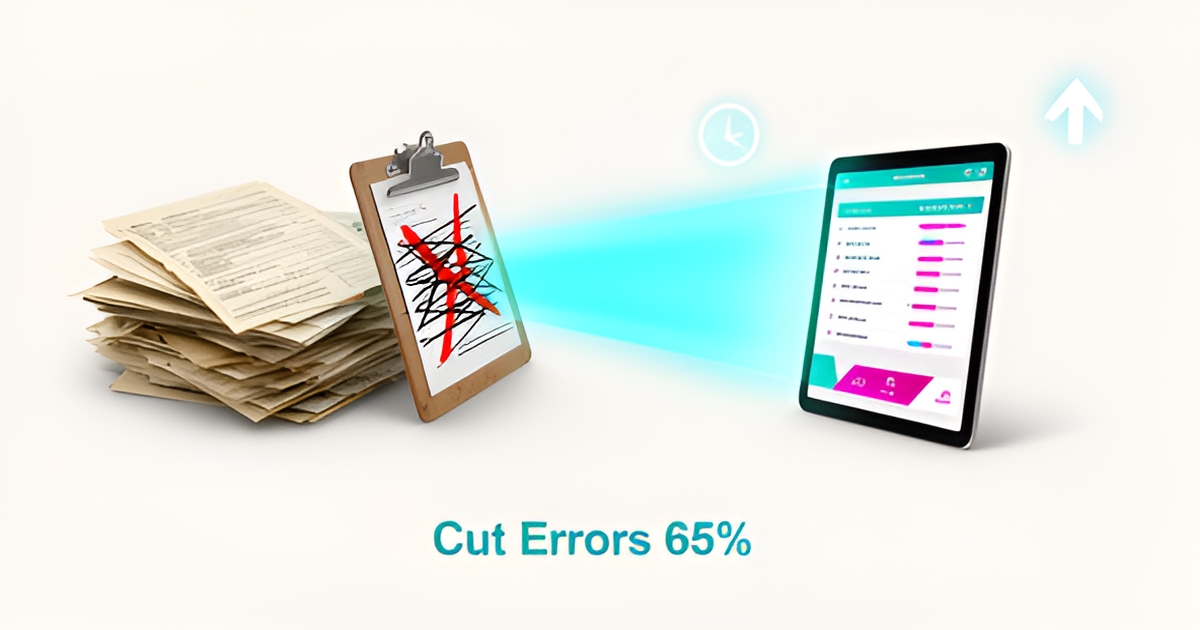
The Real Cost of Manual Service Records: How AI Reduces Errors and Saves Time
Key Facts
- AI consistently outperforms manual entry in accuracy for data entry, reconciliation, and validation tasks
- A large share of repetitive data and decision workflows in a shop can typically be automated with AI
- AI handles repetitive, rules-based tasks faster and more consistently than people
- Shops that automate record-keeping typically free up meaningful hours per technician each week
- AI-powered document processing extracts vehicle VIN, service date, and mileage from scanned receipts with consistent precision
- AI flags mismatched labor times or unauthorized parts substitutions before they enter customer history
- AI generates audit-ready service summaries for warranty or resale, supporting service history standards
Hire a team member that works 24/7 — for less than a part-time wage.
AI receptionists, SDRs, dispatchers and 99+ roles. Trained on your business, fully managed.
Not sure where to start? Ask our AI planner
The Hidden Costs of Manual Service Records in Auto Repair Shops
In the fast-paced world of auto repair, efficiency and accuracy are paramount. However, many shops still rely on manual service records—whether handwritten notes or basic digital logs—which can lead to significant hidden costs. These methods often result in data entry errors, missed repairs, and billing inaccuracies, ultimately impacting the bottom line and customer satisfaction.
Manual record-keeping is prone to human error, especially when technicians are juggling multiple tasks. Industry research on AI versus manual workflows consistently shows that AI substantially reduces errors in data entry, reconciliation, and validation tasks. When records are inaccurate, it can lead to missed repairs or incorrect billing, both of which can damage a shop's reputation and lead to financial losses.
Moreover, manual processes are time-consuming and inefficient. A large share of the repetitive data, analytics, and decision workflows in a typical shop can be automated with AI. This automation not only saves time but also allows technicians to focus on more critical tasks, such as diagnosing and repairing vehicles. By reducing the time spent on administrative tasks, shops can increase their throughput and serve more customers effectively.
The risks associated with manual service records extend beyond mere inefficiency. Compliance with service history standards is crucial for maintaining customer trust and avoiding legal issues. AI-powered document processing can ensure that all records are accurate and up-to-date, reducing the risk of compliance violations. This is particularly important in an industry where service history can impact warranty claims and resale values.
AIQ Labs builds AI systems that integrate with existing shop tools and customer records. By leveraging AI, auto repair shops can automate record-keeping, extract key data from receipts and notes, and ensure compliance with service history standards. This not only reduces errors but also enhances overall operational efficiency.
- Data entry errors leading to missed repairs
- Billing inaccuracies affecting revenue
- Compliance risks due to incomplete records
- Time-consuming manual processes
In summary, the hidden costs of manual service records in auto repair shops are substantial. From data entry errors to compliance risks, these methods can hinder a shop's success. By adopting AI-powered solutions, shops can reduce errors, save time, and ensure compliance, ultimately leading to improved customer satisfaction and increased profitability. AIQ Labs provides the tools and expertise needed to modernize service record management.
How AI-Powered Document Processing Eliminates Service Record Errors
Manual service records—whether scribbled on paper or typed into basic digital notes—often contain gaps, typos, or inconsistent formatting that lead to missed repairs and billing disputes. These errors compound over time, creating unreliable service histories that frustrate customers and complicate warranty claims. AI-powered document processing eliminates this risk by automatically extracting key data from receipts, invoices, and technician notes with consistent precision. Unlike manual entry, which varies with fatigue and distraction, AI applies the same rules every time, ensuring no detail is overlooked.
AI outperforms manual work in speed and consistency for repetitive, rules-based tasks like validating service codes, matching parts to repairs, and confirming labor hours against standard rates. Research on AI versus manual workflows shows AI substantially reduces errors in data entry, reconciliation, and validation tasks—directly addressing the most common pain points in service record management. This level of accuracy isn't just about fixing mistakes; it prevents them from happening in the first place by removing human variability from routine checks.
- Extracts vehicle VIN, service date, and mileage from scanned receipts
- Flags mismatched labor times or unauthorized parts substitutions
- Standardizes terminology across technician notes for compliance
- Flags incomplete records before they enter the customer history
- Generates audit-ready service summaries for warranty or resale
By automating these validation steps, AI ensures service histories meet industry standards without requiring staff to memorize complex formatting rules or cross-reference multiple sources. AIQ Labs builds these capabilities directly into shop management systems—whether as a targeted Workflow Build that rebuilds your record-keeping process or as part of a broader AI Operating System—so data flows seamlessly from receipt to record without manual re-entry. The result isn't just fewer errors—it's a service history you can trust, every time.
Implementing AI Service Record Automation: From Assessment to ROI
For auto repair shops drowning in handwritten service logs and scattered digital notes, the path to accurate, efficient record-keeping starts with a clear assessment. Begin by mapping out your current service record workflow—identify where technicians jot down repairs, how parts receipts are filed, and where billing discrepancies most often occur. Look for repetitive tasks like transcribing notes into customer files, validating service history against manufacturer guidelines, or cross-referencing warranty claims. These manual touchpoints are prime candidates for AI automation, since AI handles repetitive, rules-based work faster and more consistently than people.
Next, deploy an AI document processing system that integrates directly with your existing shop management tools. AIQ Labs can configure an AI Employee to automatically extract key data from service receipts, technician notes, and digital forms—capturing part numbers, labor hours, and repair descriptions with high accuracy, at a fraction of the cost of an additional hire. This eliminates the need for manual data entry while ensuring compliance with service history standards. The system works around the clock, learns your shop's specific terminology, and syncs extracted data into your CRM or invoicing platform in real time. Because a large share of repetitive data and decision workflows can be automated, your team is freed to focus on complex diagnostics and customer communication instead of paperwork.
Finally, measure the impact by tracking time saved per service record and reductions in billing errors or missed repairs. Compare labor hours spent on manual record-keeping before and after implementation—shops that automate this work typically free up several hours per technician each week. Pair this with a drop in invoice disputes or comebacks due to incomplete records. AIQ Labs helps quantify these gains through ongoing optimization, and with flexible payment models—start monthly, build in milestones, or own it outright—your system can scale with your shop's growth. By transforming service records from a liability into a streamlined, accurate asset, you not only reduce operational friction but also build stronger customer trust through transparent, error-free service history.
Still paying for 10+ subscriptions that don’t talk to each other?
We build custom AI systems you own outright. No vendor lock-in. Full control.
Not sure where to start? Ask our AI planner
Frequently Asked Questions
How much can AI reduce errors in service record data entry and validation tasks?
What specific data can AI-powered document processing extract from service receipts and technician notes?
How much time can auto repair shops save per technician by automating service records with AI?
Does implementing AI for service records require replacing our existing shop management system?
How does AI help ensure compliance with service history standards in auto repair shops?
What are the main risks of continuing with manual service records in an auto repair shop?
Turn Service Records from a Liability into Your Competitive Edge
Manual service records may seem harmless, but the hidden costs—data entry errors, missed repairs, billing inaccuracies, and compliance risks—add up fast, draining both time and trust. As highlighted throughout this article, AI-powered document processing directly tackles these pain points by automating data extraction, standardizing records, and substantially reducing errors in entry, reconciliation, and validation tasks. This isn't just about fixing mistakes; it's about building a service history you can rely on, every time, while freeing your team to focus on what they do best: repairing vehicles and serving customers. For auto repair shops ready to move beyond guesswork and inefficiency, the next step is clear: assess your current workflow, identify repetitive tasks ripe for automation, and explore how AI can integrate with your existing tools. AIQ Labs helps shops make this shift with managed AI Employees, fixed-price Workflow Builds, and AI Operating Systems you own outright. To see where your biggest opportunities lie, start with the free 2-minute Fit Check and a no-obligation strategy call—because smarter records shouldn't be a luxury, they should be standard.
Make AI your competitive advantage — not just another tool.
Strategy, implementation and ongoing optimization. One partner, end to end.
Not sure where to start? Ask our AI planner