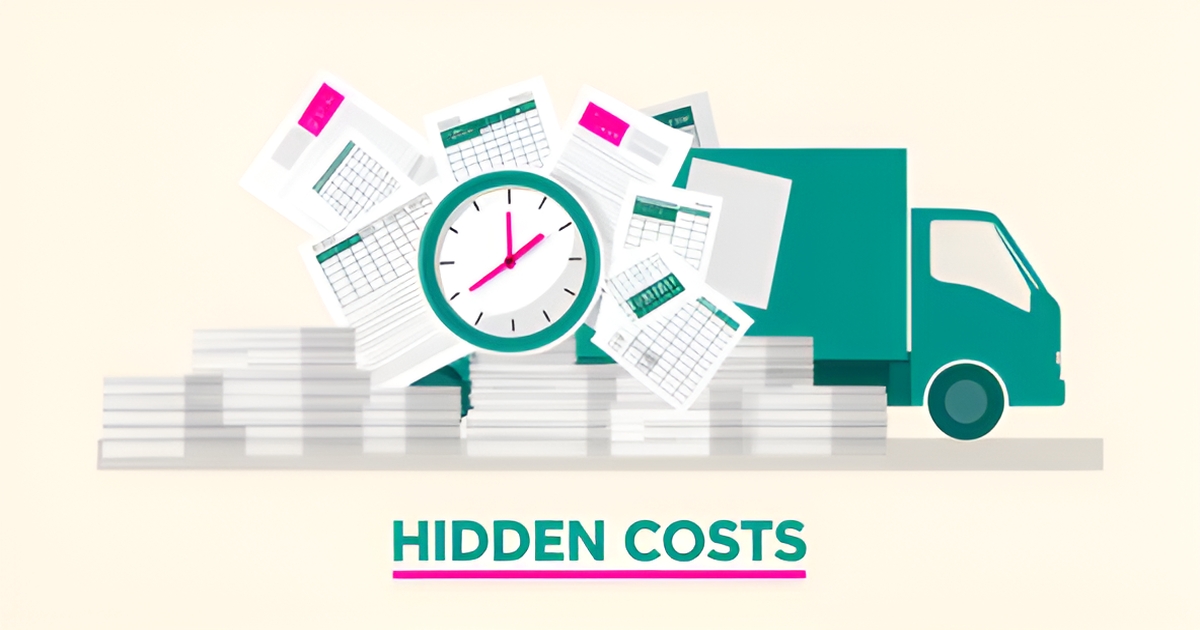
The Real Cost of Manual Telematics Data Entry for Fleet Managers
Key Facts
- Manual route planning typically consumes 60–120 minutes per dispatcher per day; AI-assisted systems reduce this to minutes
- Manual compliance reporting commonly consumes 3–5 hours per week per dispatcher when handled through spreadsheets or paper logs
- Hours-of-service violations can carry fines reaching into the thousands of dollars per incident under FMCSA penalties
- AI route optimization typically delivers meaningful fuel savings through better routing, idle reduction, and driver coaching
- Most commercial fleets collect telematics data, but only a fraction fully operationalize it with AI—leaving savings untapped
Hire a team member that works 24/7 — for less than a part-time wage.
AI receptionists, SDRs, dispatchers and 99+ roles. Trained on your business, fully managed.
Not sure where to start? Ask our AI planner
The Hidden Labor Drain of Manual Telematics Data Entry
Fleet managers often underestimate how much time manual telematics data entry consumes each day. Industry analysis consistently shows dispatchers spending 60–120 minutes daily on route planning alone when relying on manual processes, compared to minutes with AI-assisted systems. That adds up to hundreds of annual hours per dispatcher dedicated to tasks that could be largely automated—a significant drain on operational capacity.
Beyond route planning, manual telematics management creates compliance vulnerabilities that carry real financial risk. Manual hours-of-service tracking and paper log systems increase the likelihood of violations, and FMCSA penalties for serious infractions can reach into the thousands of dollars per incident. These risks are compounded by delayed data visibility, which forces dispatchers to rely on time-consuming phone check-ins rather than real-time insights.
- Manual dispatch methods typically cost fleets meaningfully more in total operating expenses than AI-optimized alternatives
- Fuel inefficiency, overtime, and administrative overhead compound quietly month after month
- AI-assisted dispatch lets one dispatcher cover a substantially larger vehicle count than manual workflows allow
The labor inefficiency extends to compliance reporting, which commonly consumes 3–5 hours weekly when handled manually through spreadsheets or paper systems. AI automation eliminates this burden by generating ELD logs, HOS tracking, and DVIR reports automatically, reducing both administrative overhead and violation risk. As fleet operations scale, these hidden labor costs compound, diverting skilled personnel from strategic initiatives like network optimization and predictive maintenance planning.
AIQ Labs addresses this operational drag through [AI Workflow Builds](/workflow-builds) that integrate telematics data directly into dispatch systems, removing manual entry points while preserving data accuracy. By transforming reactive data handling into proactive operational intelligence, fleet managers reclaim hundreds of hours annually for activities that directly impact profitability and service quality. The shift from manual to automated telematics processing isn't just about saving time—it's about reallocating human expertise where it generates the highest return.
How AI-Enhanced Telematics Eliminates Administrative Overhead
The math behind AI-enhanced telematics is difficult to ignore once you see it side by side with manual dispatch. The labor cost alone is substantial: dispatchers spending one to two hours per day on route planning represent a full salary's worth of time spent on work a system can do in seconds. For a growing fleet, staying manual means paying that cost every single day, on top of fuel inefficiency, overtime, and administrative overhead.
The time savings are dramatic. Manual dispatchers spend 60–120 minutes each day planning routes, while AI systems calculate optimal routes in seconds—a reduction of roughly 95% or more in route planning time. Mid-day rerouting time drops sharply as well, and compliance reporting that once consumed 3–5 hours per week of manual work becomes largely automatic, with ELD logs, HOS tracking, and DVIR reports generated without dispatcher involvement.
Scalability is where the labor economics truly shift. AI-assisted fleet management allows one dispatcher to cover a substantially larger vehicle count than the manual ratios most fleets operate at. That means a growing fleet can expand without proportionally expanding headcount, redirecting existing staff toward strategic planning rather than day-to-day firefighting.
The savings compound across several cost categories:
- Fuel costs typically drop meaningfully through AI route optimization, idle reduction, and driver coaching
- Predictive maintenance catches potential breakdowns weeks in advance, cutting emergency repair expenses
- Overtime and idle time fall as scheduling and routing tighten
- Separate compliance tools and manual reporting processes get consolidated into one automated workflow
The caveat, as industry analysis of telematics AI adoption points out, is that most commercial fleets use some form of telematics, yet only a fraction fully leverage AI capabilities. The gap between collecting data and operationalizing it is where most fleets leave money on the table—and where custom automation matters. This is the work AIQ Labs focuses on: building custom workflow systems that connect telematics data to dispatch, compliance, and reporting automatically, so staff time shifts from data entry to decisions. The fleets that close this gap in 2026 will build advantages that compound year over year.
Implementing AI Telematics: From Assessment to Operational Excellence
Transitioning from manual telematics data entry to AI-driven fleet management requires a structured approach to ensure successful adoption and measurable ROI. Begin with a comprehensive fleet assessment to understand current operational costs, identify pain points in manual processes, and establish baseline metrics for measuring implementation success. This foundational step ensures AI solutions are tailored to your fleet's specific needs, whether optimizing fuel consumption, improving compliance, or reducing administrative overhead.
Next, select appropriate AI fleet management tools based on fleet size, industry requirements, and operational needs—considering platforms that offer ELD compliance, real-time tracking, and seamless integration with existing systems. Plan hardware installation for GPS trackers and dashcams, which typically takes under an hour per vehicle, followed by software configuration and integration with dispatch, scheduling, and accounting tools. Proper setup minimizes disruption and enables immediate data collection for AI analysis.
Train drivers and dispatchers on the new system, recognizing that teams accustomed to manual workflows need hands-on coaching to build confidence and proficiency. Implement change management strategies to address resistance by positioning AI as a tool that enhances job performance—such as reducing route planning time from 60–120 minutes daily to minutes—rather than replacing expertise. Finally, monitor key performance indicators like fuel savings, route efficiency, and compliance improvements to validate ROI and guide ongoing optimization. AIQ Labs supports this journey through [AI Workflow Builds](/workflow-builds) and managed [AI Employees](/ai-employees) that integrate telematics data directly into financial and operational systems, eliminating manual entry while ensuring data accuracy and accessibility for strategic decision-making.
Still paying for 10+ subscriptions that don’t talk to each other?
We build custom AI systems you own outright. No vendor lock-in. Full control.
Not sure where to start? Ask our AI planner
Frequently Asked Questions
How much time does manual telematics data entry actually waste each day?
What's the real cost of staying manual for a small fleet?
Can AI really reduce compliance fines and paperwork?
How many vehicles can one dispatcher actually manage with AI?
What kind of ROI should we expect from AI telematics?
Is AI telematics only for large fleets?
Stop Paying the Hidden Tax on Your Fleet's Time
The pattern is clear: manual telematics data entry quietly drains hundreds of hours per dispatcher every year, inflates operating costs, and exposes your fleet to compliance fines that can reach thousands of dollars per incident. Meanwhile, fleets that automate route planning, compliance reporting, and dispatch workflows redirect that time and money toward growth. The gap is widening, too—most commercial fleets collect telematics data, but only a fraction fully operationalize it with AI, meaning most operators are sitting on savings they've already paid to collect. Closing that gap starts with an honest assessment of where manual entry points exist in your operation and what they're actually costing you. That's the work AIQ Labs specializes in: [AI Workflow Builds](/workflow-builds) that connect your telematics data directly to dispatch, compliance, and reporting systems—so your team spends time on decisions, not data entry. Start with the two-minute Fit Check at [/apply](/apply), then book a free 30-minute strategy call to map your highest-ROI automation opportunities. If there isn't a clear win for your fleet, we'll tell you that too.
Make AI your competitive advantage — not just another tool.
Strategy, implementation and ongoing optimization. One partner, end to end.
Not sure where to start? Ask our AI planner