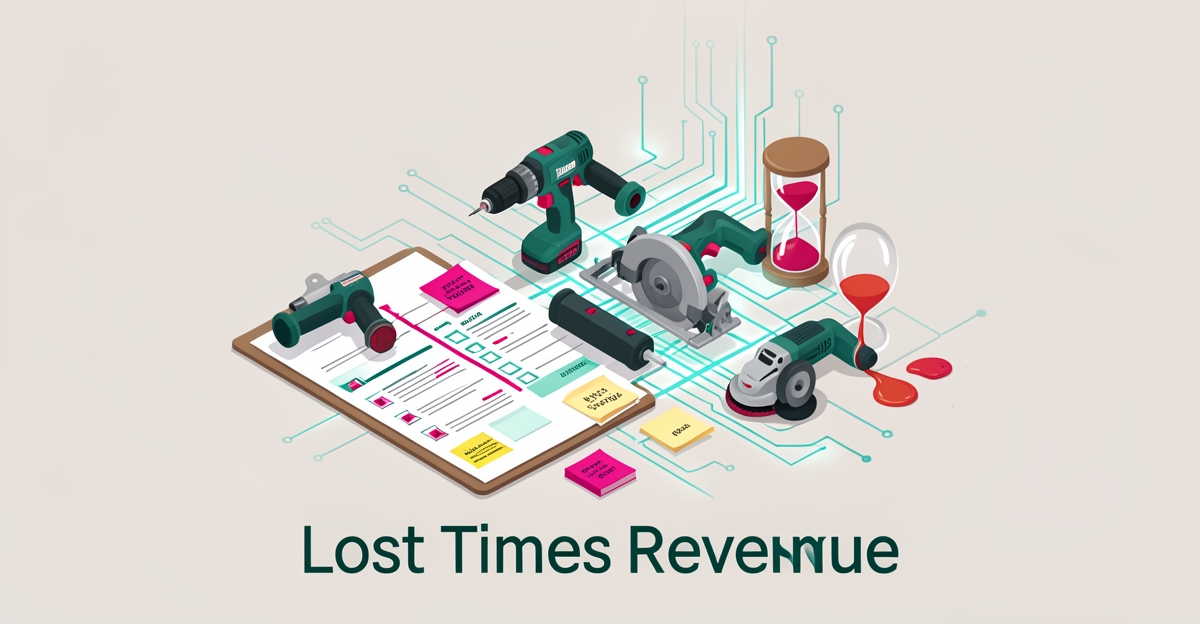
The Real Cost of Manual Tool Tracking in Power Tool Rentals
Key Facts
- Task automation studies commonly report savings in the range of 240-360 hours per worker per year for repetitive, rules-based work
- AI outperforms manual work in speed and consistency for repetitive, rules-based tasks, while humans remain essential for judgment-driven work
- Hybrid models — automated repetition with human oversight — often deliver better outcomes than full automation
- SME adoption of AI and automation has continued climbing through 2026, driven by measurable returns rather than hype
- AIQ Labs has deployed 200+ multi-agent systems and runs 4 live SaaS products daily
Hire a team member that works 24/7 — for less than a part-time wage.
AI receptionists, SDRs, dispatchers and 99+ roles. Trained on your business, fully managed.
Not sure where to start? Ask our AI planner
The Hidden Labor and Revenue Drain of Manual Tool Tracking
Manual tool tracking quietly drains power tool rental teams every single day. The check-in, check-out, and reconciliation work feels routine until the hours add up and revenue slips through the cracks.
Task automation research commonly reports savings of 240-360 hours annually per worker when repetitive, rules-based work is automated — the equivalent of six to nine full work weeks. That is exactly the kind of work at the heart of tool tracking: scanning, logging, status updates, and reconciliation. The gap shows up as delayed rentals, missed returns, and staff stretched thin.
The labor cost is only part of the picture. Manual tracking creates employee burnout and lost revenue from no-shows when records are incomplete or delayed. Teams spend shifts hunting tools, reconciling mismatched logs, and handling exceptions instead of serving customers. Productivity drops while frustration rises.
SMBs are responding. As of late 2026, SME adoption of AI and automation has continued to climb year over year, and the share of businesses with no plans to adopt keeps shrinking. The shift is driven by measurable returns, not hype.
The financial impact of automation for a typical small business shows up in three places:
- Hundreds of hours per worker reclaimed from repetitive tracking work each year
- Direct labor savings as manual reconciliation and follow-up cycles shrink
- Higher revenue per worker as staff shift from data entry to customer-facing work
Those gains come from removing repetitive rules-based work and freeing staff for judgment-driven activities where manual work remains essential. AIQ Labs helps businesses quantify these hidden costs and implement AI solutions that reduce them — starting with a single workflow through AI Workflow Builds or a full connected layer via AI Operating Systems.
The hidden drain also compounds. Shadow labour grows as staff build temporary fixes for reconciliation errors. Integration and licensing bloat adds multiple invoices and redundant connectors. Error propagation spreads wrong data instantly across connected systems. Hybrid models often deliver better outcomes than full automation, but only with disciplined governance.
Tool rental leaders who measure time spent on tracking, no-show revenue loss, and staff overtime start to see the true cost. When those numbers are tied to performance metrics, the case for change becomes operational, not theoretical.
Why Automation Outperforms Manual Tracking for Repetitive Tasks
Check-in and check-out shouldn't be where your team spends their best hours. In power tool rentals, repetitive rules-based tracking is exactly where speed and consistency matter most, and where manual effort quietly erodes margin.
AI outperforms manual work in speed and consistency for repetitive, rules-based tasks, while manual work remains essential for judgment-driven activities. Comparative analyses of AI versus manual work consistently find that automation excels at high-volume, rule-bound processes like scanning, logging, and status updates. That is the core of tool tracking.
For rental operations, this translates into measurable operating relief. Automation studies commonly cite savings in the range of 240-360 hours per worker per year, with SME cost reductions that scale with how much repetitive work is removed. Adoption among SMEs has kept accelerating through 2026 as these returns become widely reported.
The long-term economics favor automation, with important caveats. Research on AI versus manual work confirms AI reduces long-term operating costs but increases upfront investment and governance needs. Accuracy gains from AI depend on data quality and monitoring, not model capability alone, which is why oversight remains critical.
A disciplined hybrid approach protects both efficiency and judgment. Repetitive check-in/check-out, inventory reconciliation, and no-show follow-ups can be automated, while exceptions, damage assessments, and customer negotiations stay with people.
Automation delivers the most value when applied to:
- Scan-to-record check-in and check-out with instant inventory updates
- Automated availability, reservations, and no-show recovery workflows
- Rules-based alerts for overdue tools, maintenance windows, and reorder points
- Consistent audit trails for compliance and revenue recognition
Manual processes remain more adaptable in ambiguous or low-data environments, and hybrid models often deliver better outcomes than full automation. Human oversight is essential for judgment-driven scenarios where context changes quickly.
AIQ Labs works with rental and SMB operations to quantify the hidden costs of manual tracking — time spent, employee burnout, and lost revenue due to no-shows — and to implement AI solutions that reduce them. The goal is speed and consistency for repetitive tasks, with humans focused on the exceptions that require judgment.
When rules are clear and volume is high, automation outperforms manual effort. When ambiguity rises, human oversight ensures resilience.
Implementing AI Solutions: From Assessment to Owned Automation
Manual tool tracking eats margin in ways that don't show up on a daily timesheet. The repetitive check-in, check-out, reconciliation and follow-up cycles create drag that compounds into lost revenue, staff fatigue and slower growth.
A phased approach reduces risk while building permanent capability. Start by mapping where rules-based work repeats and where judgment is still required. AI-based work outperforms manual work in speed and consistency for repetitive, rules-based tasks, while manual work remains essential for judgment-driven activities. That distinction sets the scope for automation.
Assessment begins with quantifying the hidden cost base. Teams log time spent on inventory counts, no-show follow-ups, damage logging and manual reconciliation. AIQ Labs helps businesses quantify these costs through a fixed-price AI Workflow Build targeting the one workflow that costs the most, turning anecdotal pain into measurable targets.
From assessment, move to a contained pilot. Choose one high-volume workflow, such as rental reservation confirmations and automated reminders. Automation research commonly reports savings of 240-360 hours per worker per year for this class of work. A pilot proves the model before wider rollout.
The Build in Milestones payment model supports this progression. One workflow or department system is split into phases, with approval and payment per phase. Stop anytime and keep everything built so far. This mirrors the broader SME trend: adoption keeps climbing through 2026 as businesses see phase-by-phase returns.
Integration is the next control point. Connect the AI workflow to existing rental management, CRM and accounting systems to eliminate duplicate entry and shadow labour. The goal is a single source of truth with automated data synchronization and exception handling.
Own It Outright then locks in long-term value. A full AI Operating System delivers full ownership of code, agents and data when complete, avoiding subscription bloat and vendor lock-in. Accuracy gains from AI depend on data quality and monitoring, not model capability alone.
Practical rollout steps include:
- Identify repetitive, rules-based tasks that can be automated with clear inputs and outputs
- Deploy a custom AI workflow for one department system and measure time saved, error reduction and revenue recovery
- Integrate with existing systems via two-way APIs and establish monitoring, guardrails and human-in-the-loop escalation
- Scale to adjacent workflows using the owned system, maintaining governance as adoption grows
Hybrid models often deliver better outcomes than full automation, especially where judgment is needed for damage disputes or custom rentals. Build in Milestones lets operators validate ROI phase by phase, while Own It Outright ensures the automation asset remains a company-owned capability rather than a rented tool. See full payment-model details at aiqlabs.ai/pricing.
Still paying for 10+ subscriptions that don’t talk to each other?
We build custom AI systems you own outright. No vendor lock-in. Full control.
Not sure where to start? Ask our AI planner
Frequently Asked Questions
How much time can automation save per worker annually in tool rental businesses?
What financial savings can typical SMEs expect from automating tool tracking processes?
Does AI completely replace human workers in tool rental operations?
What are the risks of poor AI implementation in tool tracking systems?
How are SMEs adopting AI for tool tracking and similar operations as of 2026?
What's the best way to start implementing AI for tool tracking without disrupting current operations?
Measure the Drain, Then Automate the Repetition
Manual tool tracking quietly compounds into lost revenue, overtime, and burnout because the repetitive check-in, check-out and reconciliation work never stops adding up. Those hours translate into delayed rentals, missed returns and shadow labour, and AI outperforms manual work in speed and consistency for rules-based tasks while humans remain essential for judgment-driven exceptions. The financial case becomes clear when you quantify time spent, no-show loss and overtime, and tie it to performance metrics. A disciplined hybrid approach works best: automate scan-to-record updates, availability and no-show recovery, and keep damage assessments and negotiations with people. AIQ Labs helps rental teams quantify these hidden costs and implement owned AI solutions — from a single workflow build to a full AI operating system. Start the 2-minute Fit Check at aiqlabs.ai/apply to map your biggest bottleneck and book a free 30-minute strategy call.
Make AI your competitive advantage — not just another tool.
Strategy, implementation and ongoing optimization. One partner, end to end.
Not sure where to start? Ask our AI planner