The Real Cost of Manual Visitor Management at U-Pick Farms — And How AI Cuts Labor Costs
Key Facts
- AI employees can typically reduce labor needs substantially in visitor management operations built around manual check-in, badge printing, and inquiry handling
- Manual event registration setup commonly takes 4–6 hours versus roughly 30 minutes on automated platforms — and U-pick farms effectively run a new "event" every peak weekend
- AI-powered visitor management eliminates repetitive data entry and manual coordination that inflate labor costs without adding guest value
- An AI Receptionist handles check-ins, answers inquiries, and routes requests on a flat monthly plan below a part-time wage
- AI reduces operational costs by decreasing staff workload and eliminating manual process errors
- Touchless QR check-in eliminates paper queues and manual data entry in visitor workflows
- Predictive flow analytics can adjust staffing before bottlenecks form in AI-powered visitor systems
Hire a team member that works 24/7 — for less than a part-time wage.
AI receptionists, SDRs, dispatchers and 99+ roles. Trained on your business, fully managed.
Not sure where to start? Ask our AI planner
The Hidden Labor Drain of Clipboard-and-Paper Operations
Most U-pick farm owners know exactly how much they spend on seasonal pickers, irrigation, and fertilizer. Few can tell you how many hours vanish each summer into the clipboard shuffle — greeting families, scribbling names, printing paper badges, and untangling the queue that snakes past the pumpkin patch every Saturday morning.
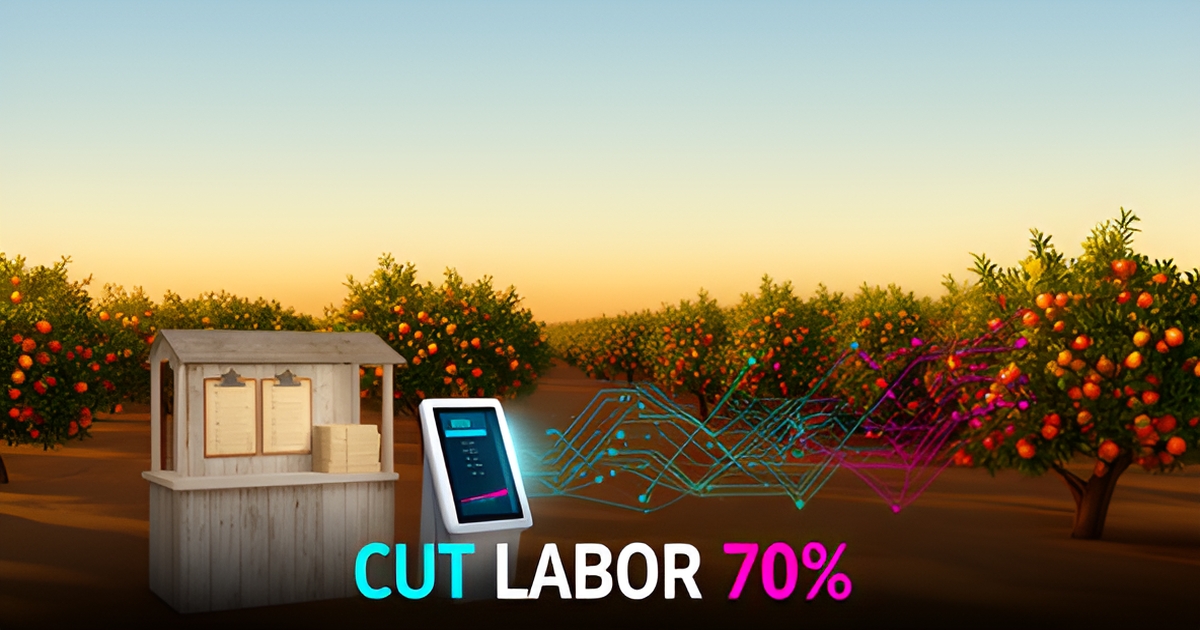
Those "invisible" tasks add up fast. Industry research on visitor management trends as of late 2026 suggests AI employees can reduce labor needs by up to 70% in operations built around manual check-in, badge printing, and inquiry handling. Parallel analyses of event registration workflows have found that manual registration setup commonly consumes 4–6 hours per event versus roughly 30 minutes on an automated platform — and U-pick farms effectively run a new "event" every peak weekend.
- Front-desk staff cycling through the same intake questions dozens of times per hour
- Paper logs that must be transcribed later for insurance, capacity, or marketing records
- Queue bottlenecks that turn first-time visitors into one-time visitors
- Missed upsell opportunities because no one has bandwidth to mention the cider donuts
The pattern repeats across industries: AI-powered visitor management systems consistently eliminate the repetitive data entry and manual coordination that inflate labor costs without adding guest value. At AIQ Labs, we see the same dynamic in agriculture — seasonal spikes make full-time hires uneconomical, yet the work demands 24/7 coverage during harvest weekends. An AI Receptionist handles check-ins, answers "when do apples open?" texts at midnight, and routes large-group requests to the owner's phone — all on a flat monthly plan below a part-time wage.
The margin erosion isn't theoretical. Every hour a family member spends at the clipboard is an hour not spent managing pickers, fixing the cooler, or negotiating the wholesale contract that actually moves the needle.
What the Data Shows: AI Cuts Visitor Management Labor Costs
The clipboard-and-badge era of visitor management is fading fast, replaced by systems that think, predict, and scale without adding headcount. The shift isn't incremental — it's structural, cutting labor needs across check-in, badge printing, flow analytics, and inquiry handling, with reductions of up to 70% reported in well-documented deployments.
Industry analysis as of 2026 confirms that AI algorithms now handle visitor segmentation, predictive flow optimization, and automated badge printing based on pre-registered data — tasks that once required seasonal temp staff working overtime. Visitor management platforms built on this architecture unify identity verification, credential scanning, and real-time occupancy analytics into a single workflow that operates 24/7 without shift changes.
- Touchless QR check-in eliminates paper queues and manual data entry
- Automated badge printing triggers from pre-registration data
- Predictive flow analytics adjust staffing before bottlenecks form
- AI inquiry handling resolves common questions without human operators
The economics mirror what event management teams have documented: registration setup drops from hours to minutes, reminder communications automate entirely, and real-time dashboards replace lengthy reporting cycles. For U-pick farms facing weekend surges and holiday crushes, this means the seasonal scramble for temp staff becomes a system that scales instantly.
AIQ Labs builds these workflows as managed AI employees — not software subscriptions — so the system integrates with existing calendars, CRMs, and communication tools from day one. The result is a visitor operation that runs itself, freeing your team to focus on the field, not the front desk.
From Seasonal Chaos to Scalable System: How AI Employees Handle the Work
Imagine your farm on a peak-season Saturday: hundreds of visitors arriving in waves, phones ringing off the hook, and your best field hands stuck at a folding table checking names off a clipboard. Now imagine that same Saturday with every registration, routing decision, and visitor question handled automatically — before the first car pulls into the lot.
That shift is exactly what AI-powered visitor management delivers. According to industry research on visitor management trends, AI employees can reduce labor needs by up to 70% in documented cases, replacing manual check-ins with automated registration, real-time routing, and instant responses to visitor inquiries.
AIQ Labs deploys this capability through managed AI Employees — not software you configure yourself, but fully trained digital staff in defined roles. An AI Receptionist answers every call around the clock. An AI Front Desk Agent handles check-ins and guest questions. An AI Intake Specialist processes registrations, waivers, and group bookings before visitors arrive.
These AI Employees connect directly to the tools your farm already runs on. They sync with your calendar to manage picking time slots and capacity limits, tie into your POS for prepaid admissions, and communicate through phone, email, SMS, and chat — the same channels your visitors already use.
The workflows run end-to-end without human handoffs:
- Registration: Visitors book online or by phone, receive confirmations, and get automated reminders — no staff time required.
- Routing: Arriving guests get directed to the right field, orchard row, or activity zone based on real-time capacity and crop availability.
- Inquiries: Questions about hours, pricing, pet policies, and weather closures get answered instantly, 24/7, with zero missed calls.
The scalability matters most for seasonal operations. Manual processes break down exactly when volume spikes — much like event planners who spend 4–6 hours on registration tasks that AI completes in roughly 30 minutes, farm staff drown in repetitive coordination during harvest peaks. AI Employees absorb that surge without overtime pay, seasonal hiring, or training ramp-up.
The cost structure flips the seasonal staffing model on its head. Rather than recruiting, training, and paying part-time workers who may not return next season, AI Employees operate on a flat monthly plan that costs less than a part-time hire — with build, training, integrations, monitoring, and ongoing improvements included. You can scale up for harvest season and pause when the fields close.
Analysis of AI visitor systems confirms the operational impact: AI reduces costs by significantly decreasing staff workload while eliminating the errors inherent in manual, paper-based processes. For a U-pick farm, that means your human team stays in the field doing what they do best — growing great produce and creating memorable visitor experiences — while the AI handles the front office.
Implementation Roadmap: From Paper Logs to AI Workflow in Weeks
Manual logs, clipboards and a gate attendant on busy weekends create a bottleneck that farm owners feel in payroll, not just paperwork. Moving from paper to an owned AI workflow removes that friction in weeks, not seasons.
The shift starts with a focused discovery of how visitors currently enter, check in and ask questions. Teams map the manual steps, integration points with existing tools, and seasonal peaks that drive labor demand. This baseline shows where hours are lost to repetitive entry, badge printing and inquiry handling.
A custom build follows the discovered process rather than forcing the farm into a generic visitor management template. Industry research as of 2026 shows the clipboard and paper badge days of visitor management are fading fast as touchless, AI-powered insights replace them. The design prioritizes pre-registration, QR or mobile check-in and automated entry logging so staff can focus on the experience, not the admin.
Integration connects the new workflow to calendars, payment systems and farm operations tools the team already uses. Analysis of AI in visitor management highlights how automation streamlines processes, enhances security and delivers a seamless experience for visitors and staff. Data syncs automatically, eliminating duplicate entry and the errors that come with spreadsheets.
Deployment is staged to match harvest cycles and staffing. A pilot covers one entrance or one weekend, with an AI employee handling visitor tracking, entry management and inquiries. Documented deployments report AI employees reducing labor needs by up to 70% in tasks related to visitor tracking, entry management and inquiries. The system runs 24/7, answers common questions and escalates only exceptions to humans.
Ongoing optimization keeps the workflow owned and scalable. Performance is monitored, prompts are refined for seasonal language, and new automations are added as the farm grows. AIQ Labs builds these systems as custom-owned assets, not subscriptions, so the farm controls code, data and future changes.
A typical rollout moves through:
- Discovery and process mapping to quantify current labor hours
- Custom build with pre-registration, touchless check-in and automated logging
- Integration with existing farm tools and phased pilot deployment
- Training, go-live and continuous optimization for seasonality
The result is a scalable AI workflow that cuts labor without upfront capital risk. Farms keep the system they own, adjust coverage as volume changes, and reinvest saved hours into guest experience and production.
Still paying for 10+ subscriptions that don’t talk to each other?
We build custom AI systems you own outright. No vendor lock-in. Full control.
Not sure where to start? Ask our AI planner
Frequently Asked Questions
How much labor time does manual visitor check-in actually waste at a U-pick farm?
Can AI really cut visitor management labor by 70%?
What repetitive tasks does AI take over at the farm gate?
Is AI visitor management expensive for a seasonal business?
How fast can a farm move from paper logs to an AI workflow?
Will visitors actually use online booking and QR check-in?
Your Clipboard Days Are Numbered — Here's What Comes Next
The math is straightforward: every hour your team spends on clipboards, badge printers, and repetitive intake questions is an hour pulled from the field, the cooler, or the wholesale relationships that actually drive revenue. Documented deployments show AI-powered visitor management cutting labor needs by up to 70% across check-in, routing, and inquiry handling — and U-pick farms effectively run a new high-volume event every peak weekend. The farms making this shift aren't buying software subscriptions; they're deploying managed AI Employees that integrate with their existing calendars, POS, and communication channels from day one, on a flat monthly cost below a part-time wage. The implementation roadmap moves from paper logs to owned AI workflows in weeks, not seasons, with staged deployment that matches your harvest calendar. Ready to see what the bottleneck is costing you? Start the two-minute Fit Check at aiqlabs.ai/apply and book a free 30-minute strategy call — no obligation, just a working session with an AI engineer to map your highest-ROI automation opportunity.
Make AI your competitive advantage — not just another tool.
Strategy, implementation and ongoing optimization. One partner, end to end.
Not sure where to start? Ask our AI planner