The Real Cost of Manual Visitor Management in Aquariums — And How AI Cuts It
Key Facts
- The visitor management market was valued at roughly USD 1.4 billion in 2022 according to market analysis, with double-digit growth forecast through the early 2030s.
- Automation can dramatically reduce queue length — one government case study reported reductions of up to 90%.
- AI-powered management reduces labor hours by automating check-in, scheduling, and inquiry handling says Clappia's guide.
- AI takes visitor management to the next level with algorithms that analyze data and automate tasks notes Vidhyut Arumugam.
- AIQ Labs has deployed 200+ multi-agent systems and runs 4 live SaaS products daily — automation here is proven practice, not theory.
Hire a team member that works 24/7 — for less than a part-time wage.
AI receptionists, SDRs, dispatchers and 99+ roles. Trained on your business, fully managed.
Not sure where to start? Ask our AI planner
The Hidden Drain: What Manual Check-In Really Costs Your Aquarium
Aquariums invest heavily in exhibits and conservation, yet often overlook the operational toll of manual visitor check-in—where every minute spent on paper logs or basic spreadsheets erodes both staff capacity and guest experience. What begins as a simple greeting quickly becomes a bottleneck that ripples through the entire visit, affecting satisfaction, security, and ultimately, return rates.
The true cost starts with labor: front desk staff typically spend several hours per shift managing check-ins, scheduling group tours, and answering repetitive inquiries about hours, feeding times, or accessibility—time that could be redirected toward education or animal care. When multiplied across shifts and seasons, this represents a significant drain on operational bandwidth, especially during peak hours when queues form and frustration builds.
Errors compound the problem: manual data entry leads to duplicate entries, missed waivers, or incorrect tour assignments, creating confusion that staff must then resolve—often while managing frustrated visitors. These inaccuracies aren't just inconvenient; they introduce security risks, such as unverified guests accessing restricted zones or failing to receive emergency evacuation instructions. As noted in a government case study, poor visitor tracking can directly undermine safety protocols in high-traffic public facilities.
Perhaps most damaging is the impact on visitor satisfaction. Long entry queues—especially during weekends or holidays—discourage repeat visits and generate negative reviews, with research showing that perceived wait times disproportionately affect overall experience scores. The same case study found that streamlining check-in can reduce external queue length by up to 90%, directly improving first impressions and dwell time within exhibits.
When labor inefficiencies, error correction, security gaps, and lost visitor loyalty are combined, the hidden cost of manual visitor management becomes clear: it's not just about hours spent—it's about the cumulative drag on throughput, trust, and long-term revenue. For aquariums aiming to balance education with engagement, this operational friction undermines their core mission. AIQ Labs helps transform this reality through AI Workflow Builds that rebuild the one workflow costing you the most—turning check-in from a cost center into a seamless, secure, and satisfying start to every visit.
Where Manual Systems Break: Queues, Errors, and Security Risks
Weekends and holidays expose the fragility of manual visitor systems in aquariums, where paper logbooks and front-desk staffing collapse under peak demand. During these surges, data entry errors spike as staff rush to record names, times, and group sizes by hand, leading to duplicated entries, illegible handwriting, and mismatched records that disrupt scheduling and reporting. These inaccuracies aren't just administrative—they cascade into operational blind spots, making it difficult to track actual attendance versus logged visitors, which undermines capacity planning and emergency preparedness.
Security vulnerabilities intensify under strain, as overwhelmed desk staff struggle to verify identities or monitor restricted zones manually. Paper logs offer no real-time alerts for unauthorized access attempts, and without digital tracking, suspicious behavior goes undetected until after an incident occurs. The government case study on smart visitor management highlights how manual systems create blind spots that automated solutions eliminate through continuous monitoring and instant anomaly detection—critical in high-traffic environments where safety cannot rely on human vigilance alone.
Scalability remains the most persistent failure point: manual systems cannot flex with demand. On busy days, queues form not just at entry but throughout the facility as visitors wait for timed exhibits or guided tours, all managed through disjointed, error-prone processes. As attendance grows year over year, these bottlenecks harden into chronic inefficiencies, increasing labor costs without improving throughput. AIQ Labs addresses this with AI Employees—managed AI staff like receptionists and dispatchers that cost roughly 80% less than a human hire—and workflow automation that scales predictably, so aquariums can handle peak loads without adding staff or compromising accuracy.
How AI Visitor Management Cuts Costs
Manual check-in lines at aquariums create bottlenecks, staffing strain, and missed visitor moments. Automating the front door with AI changes the cost equation by replacing repetitive human tasks with reliable, always-on workflows.
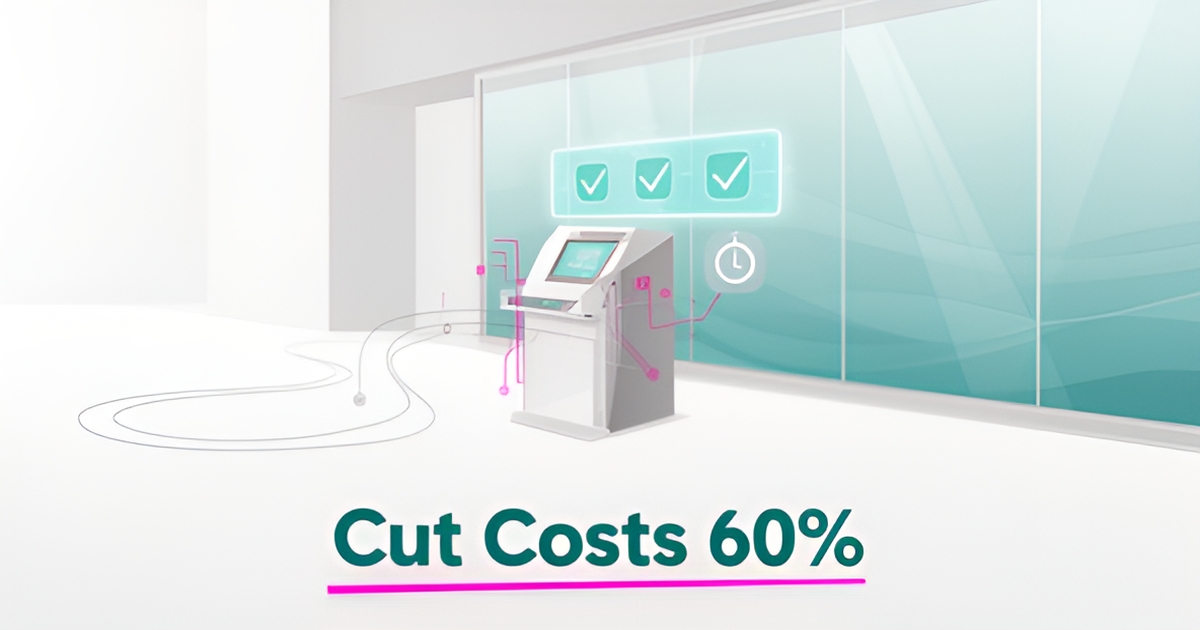
AI-powered check-in kiosks handle registration without a receptionist standing by. Visitors scan an ID, capture a photo, and receive a badge in seconds. AI-powered ID scanning improves accuracy and speeds throughput while freeing staff for guest engagement instead of paperwork.
Automated scheduling removes the back-and-forth that inflates labor hours. AI agents confirm time slots, send reminders, and reschedule instantly based on real-time capacity. This automation directly reduces labor hours by automating visitor check-in, scheduling, and inquiry handling.
AI inquiry handling answers routine questions 24/7. Common requests about hours, tickets, accessibility, and programs are resolved by conversational agents, cutting repetitive desk traffic. The result is lower labor hours and higher throughput during peak periods.
The visitor management market was valued at roughly USD 1.4 billion in 2022, with double-digit annual growth forecast through the early 2030s per industry analysis. That growth reflects demand for efficient and secure solutions—and the case study above shows how dramatically automation can shrink queues when it replaces manual processes.
Cost savings compound across three workflows:
- Check-in kiosks with AI ID scanning and identity verification
- Automated scheduling with real-time confirmations and reminders
- AI inquiry handling for FAQs, directions, and ticket information
Together these automations eliminate the repetitive tasks that drive staffing needs. AIQ Labs builds custom, production-ready systems for real-world operations—workflow and task automation that businesses own and control outright.
As industry experts note, AI takes visitor management to the next level with sophisticated algorithms that analyze data, make predictions, and automate tasks. In aquariums, that means shorter lines, fewer errors, and staff redeployed to conservation education and guest experience.
The shift from manual to AI-powered management is measurable. Labor-intensive check-in, scheduling, and inquiry handling are automated end-to-end—many facilities see labor cost reductions of half or more, alongside better security and visitor satisfaction.
The Payoff: Shorter Queues, Better Security, Higher Throughput
Automation turns visitor management from a bottleneck into a competitive advantage. When aquariums replace manual check-in with AI-powered systems, they unlock measurable improvements across queue times, security, and throughput.
A government case study on smart visitor management found that automation reduced queue length outside the office by up to 90%. For aquariums, that translates directly into faster entry, shorter lines at peak hours, and a better first impression for families and tour groups.
The gains go beyond speed. AI-powered check-in systems use ID scanning and data extraction to capture visitor information accurately, reducing the errors that come with manual entry. According to Clappia's guide to AI-powered visitor management, automating check-in, scheduling, and inquiry handling reduces labor hours while improving accuracy.
Security also tightens. AI can analyze images and video to detect suspicious behavior or unauthorized access, and identity verification confirms visitors in real time. This is especially valuable in high-traffic environments like aquariums, where staff must balance hospitality with safety.
Here is what automation delivers in practice:
- Shorter queues — case-study results show queue reductions of up to 90% at entry points
- Better data accuracy — AI extraction eliminates manual entry errors
- Improved security — real-time monitoring and identity verification
- Higher throughput — more visitors processed per hour without adding staff
The visitor experience improves when check-in is fast and seamless. Guests spend less time in line and more time engaging with exhibits, which increases satisfaction and the likelihood of repeat visits. As Vidhyut Arumugam notes in Clappia's analysis of AI in visitor management, "AI takes visitor management to the next level with sophisticated algorithms that analyze data, make predictions, and automate tasks."
AIQ Labs builds custom visitor management systems that integrate check-in, scheduling, and inquiry handling into a single automated workflow—production-ready systems designed for real-world aquarium operations, not generic off-the-shelf tools.
The result is a measurable payoff: shorter queues, stronger security, and higher throughput, all while substantially reducing labor costs.
From Manual to Automated: Your Implementation Roadmap
Manual visitor management bleeds staff time at the front desk and creates bottlenecks that visitors feel immediately. Moving to automation starts with understanding where the labor actually goes before replacing it with systems aquariums own outright.
Audit current workflows to map the real cost of check-in, scheduling, and inquiry handling. Track how many staff hours are spent signing in guests, answering repeat questions, and manually updating logs. This baseline makes the savings from AI-powered automation of check-in, scheduling, and inquiry handling measurable rather than theoretical.
Prioritize the highest-labor processes first. Front-desk check-in and phone/email inquiries typically consume the most repetitive time. Automating these first frees reception staff for guest experience and animal care support. The visitor management market—valued at roughly USD 1.4 billion in 2022 with double-digit growth forecast—reflects rising demand for efficient, secure solutions across public-facing facilities.
Deploy AI check-in and inquiry automation as a production-ready system, not a prototype. AI-powered kiosks automate registration and reduce wait times, while conversational agents handle FAQs, tour times, and accessibility requests 24/7. True ownership means the aquarium controls the code, agents, and data with no vendor lock-in.
Scale the system across departments once the core is stable. Integrate with ticketing, membership, and CRM tools so visitor data flows automatically and staff see a single source of truth. This phased approach mirrors how AIQ Labs builds AI Operating Systems—one connected operating layer, built in phases and owned outright.
A practical roadmap looks like this:
- Audit and time-stamp manual check-in, scheduling, and inquiry tasks to quantify labor hours.
- Pilot an AI check-in kiosk plus an AI inquiry agent for the highest-volume touchpoints.
- Integrate with existing ticketing and CRM systems for automated data sync and reporting.
- Expand to back-office workflows and scale with flexible payment models.
AIQ Labs delivers these implementations through three payment models—Start Monthly, Build in Milestones, or Own It Outright—so aquariums can start with one workflow and expand without re-platforming. The goal is sustainable automation that reduces labor hours, improves accuracy, and increases throughput.
Long queues are a visible signal of visitor dissatisfaction that automation directly addresses. With the right phased plan, automation becomes an operational asset the aquarium owns and evolves.
Turn Your Front Desk Into a Gateway, Not a Gate
Manual visitor management quietly taxes your aquarium every day: staff hours lost to paper logs and repetitive questions, entry queues that sour first impressions, data errors that ripple into security gaps, and peak-day chaos that no amount of hustle can fix. As this article has shown, automating check-in, scheduling, and inquiry handling with AI doesn't just patch these problems — it eliminates them, cutting labor costs substantially while shrinking queues, tightening identity verification, and freeing your team to focus on education and guest experience. The path forward is practical: audit where your staff hours actually go, automate the highest-volume touchpoints first, then integrate and scale. If you're ready to see what that looks like for your facility, AIQ Labs builds custom, production-ready visitor systems you own outright — and it starts with a two-minute Fit Check, followed by a free 30-minute strategy call. No pressure — just clarity on your biggest automation win.
Make AI your competitive advantage — not just another tool.
Strategy, implementation and ongoing optimization. One partner, end to end.
Not sure where to start? Ask our AI planner