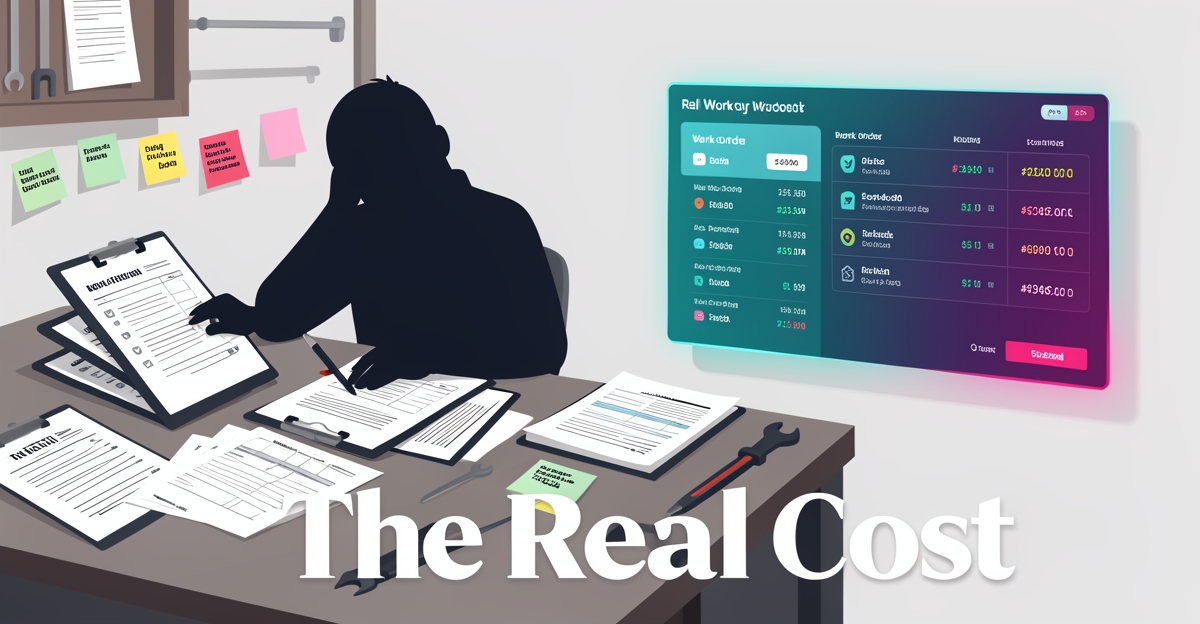
The Real Cost of Manual Work Order Tracking in Auto Repair Shops
Key Facts
- Paper and spreadsheet tracking forces duplicate entry between intake forms, repair orders and invoicing
- Status chasing by phone and walk-arounds pulls advisors off the floor and creates idle bay time
- Delayed parts approvals and missed promise times follow directly from stale work order data
- Automated data capture eliminates the re-entry loop from check-in through invoicing
- AI-powered tracking provides real-time status updates that replace manual phone calls
- Intelligent scheduling matches jobs to technician skill and bay availability in real time
Hire a team member that works 24/7 — for less than a part-time wage.
AI receptionists, SDRs, dispatchers and 99+ roles. Trained on your business, fully managed.
Not sure where to start? Ask our AI planner
The True Labor Drain of Paper and Spreadsheet Tracking
Paper work orders don't just slow the shop down — they quietly erode the hours technicians could spend on revenue work.
Manual tracking forces service advisors and managers to chase status across clipboards, spreadsheets and phone calls. When systems are fragmented, repair timelines stay opaque. Nobody at the counter can answer "where's my car?" without a walk-around or a call to the back of the shop.
The labor cost shows up in how time gets spent. In a repair shop, staff spend cycles reconciling duplicate entries, re-keying repair order data, and hunting for parts status instead of moving jobs forward. Every hour an advisor spends on paperwork is an hour not spent on the drive, upsells, or customer follow-up.
That overhead directly compresses technician productivity and profit margins. Delays in status updates create idle bay time, missed promise times, and rework from transcription errors. Lack of real-time visibility means managers approve parts late, customers call for updates that pull advisors off the floor, and close rates slip.
Shops also pay for the scramble itself. Manual work order systems create a waste loop: labor spent tracking work instead of doing it, then more labor correcting the tracking when it drifts out of date. Common administrative leaks from paper and spreadsheet tracking include:
- Duplicate data entry between intake forms, repair orders and invoicing
- Manual status chasing by phone or walk-arounds to confirm bay progress
- Delayed parts ordering and approval because work order updates are not real time
- Advisor time consumed by audit-style reconciliation at end of day
Shops that move toward automated, metrics-driven tracking reduce that drain. With the right system, service teams see where labor is lost, predict delays earlier, and keep technicians focused on billable work rather than paperwork. That's the core of what an AI Workflow Build targets: the one workflow that costs the most, rebuilt first.
How AI-Powered Tracking Eliminates Administrative Waste
Paper-based work orders create invisible drag on every repair bay. Technicians chase updates, service writers re-type information, and managers guess at completion times while labor hours quietly leak away.
AI-powered tracking removes the re-entry loop and gives real-time status without extra headcount. Systems automate data entry, status updates, and scheduling so the workflow updates itself as work progresses. Real-time visibility into repair timelines replaces end-of-day reconciliations and phone tag with customers.
When work order data flows automatically into dashboards, managers see bottlenecks, parts delays, and labor allocation as they happen — not at the month-end close. Automation delivers three practical reductions in administrative waste:
- Automated data capture from check-in, inspection, and completion eliminates duplicate entry
- Automatic status updates push accurate ETAs to customers and advisors without manual calls
- Intelligent scheduling matches jobs to technician skill and bay availability in real time
- Predictive alerts flag likely delays before they impact promised completion times
This applies directly to auto repair. AIQ Labs has deployed 200+ multi-agent systems and runs four live SaaS products daily, so the tracking systems we build are systems we use ourselves. Shops gain the visibility that manual processes can't provide, and administrative effort shrinks because labor is focused on repairs, not paperwork.
For shops that want a managed option rather than a build, an AI Employee can handle the status-update calls, appointment confirmations, and follow-ups that otherwise consume advisor hours — at a fraction of the cost of another hire.
From Manual to AI: A Practical Implementation Path for Shops
Paper and spreadsheets hide the real cost of work orders until the month-end close exposes it. Shops lose hours to re-entry, chasing parts, and manual status updates while customers ask for timelines that no one can confirm.
A practical path starts with clarity, not a rip-and-replace. Shops map the single workflow that bleeds the most time, then design a small pilot with clear goals and measurements. Start small, learn from feedback, and scale what works.
From there, implementation follows a shop-friendly sequence:
- Identify the most time-consuming or error-prone processes that could benefit from automation
- Build a strong foundation with solid infrastructure, clear governance, and ongoing learning
- Integrate AI-powered tools with existing systems to gain real-time visibility into repair timelines
- Train and upskill employees to work effectively with AI-powered tools and processes
Integration is where visibility returns. AI-enabled work order tracking connects CRM, scheduling, and parts systems so status updates flow automatically and delays surface before customers call. This reduces administrative effort and creates real-time visibility into repair timelines that protects margins.
SMBs need a partner that respects constraints. AIQ Labs builds in phases — starting with the workflow that costs the most, then expanding toward a connected AI Operating System the shop owns outright. No subscription sprawl, no tools that don't talk to each other.
Payment flexibility matters for service businesses. Options like Start Monthly, Build in Milestones, or Own It Outright let shops start with one workflow or department system, pause or adjust anytime, and keep everything built so far. True ownership means the system belongs to the shop, not a vendor.
The result is fewer duplicate entries, faster cycle times, and a team focused on repairs instead of paperwork. With the right pilot, governance, and integration, manual work order tracking shifts from a cost center to a competitive advantage.
Still paying for 10+ subscriptions that don’t talk to each other?
We build custom AI systems you own outright. No vendor lock-in. Full control.
Not sure where to start? Ask our AI planner
Frequently Asked Questions
How much time does manual work order tracking actually waste in a shop?
Why is visibility such a big problem with paper and spreadsheet work orders?
What's the real cost of not having real-time work order visibility?
Can AI really eliminate duplicate data entry and phone tag?
What's a practical way to start moving from manual to AI without a full rip-and-replace?
Will automating work orders mean my team loses control or ownership?
Stop Paying for the Clipboard: Your Next Move
The math is hard to ignore. Paper and spreadsheet work orders quietly drain hours through duplicate entry, status chasing, and end-of-day reconciliation — and every wasted hour is margin you don't get back. The path forward is practical: pick the one workflow bleeding the most time, run a small pilot with clear measurements, integrate AI-powered tracking with your existing systems, and train your team to work alongside it. That's exactly how AIQ Labs approaches it — real-time visibility into repair timelines, predictive delay alerts, and staffing optimization, with flexible payment models like Start Monthly, Build in Milestones, or Own It Outright so you keep what's built. Start with the two-minute Fit Check at aiqlabs.ai/apply, then book a free 30-minute strategy call. If there's a clear win, we'll map it. If there isn't, we'll tell you that too.
Make AI your competitive advantage — not just another tool.
Strategy, implementation and ongoing optimization. One partner, end to end.
Not sure where to start? Ask our AI planner