The Real Cost of Missed Service Appointments in Oil Change Shops
Key Facts
- Industry estimates suggest missed calls and missed appointments can cost service businesses hundreds to a few thousand dollars each in potential lost revenue.
- Small businesses commonly miss a majority of incoming calls during business hours, according to widely cited industry data.
- Most unanswered callers never try again—often permanently ending the customer relationship.
- A widely reported NHS AI pilot cut missed appointments by roughly 30% in six months, preventing hundreds of no-shows.
- Automated reminders typically increase appointment attendance by around 11% compared to no reminders at all.
- Businesses commonly report returns of several dollars for every dollar invested in AI customer service solutions.
- Automated scheduling typically saves staff 3-6 hours per week versus manual phone-based booking systems.
Hire a team member that works 24/7 — for less than a part-time wage.
AI receptionists, SDRs, dispatchers and 99+ roles. Trained on your business, fully managed.
Not sure where to start? Ask our AI planner
The Hidden Financial Drain of No-Shows
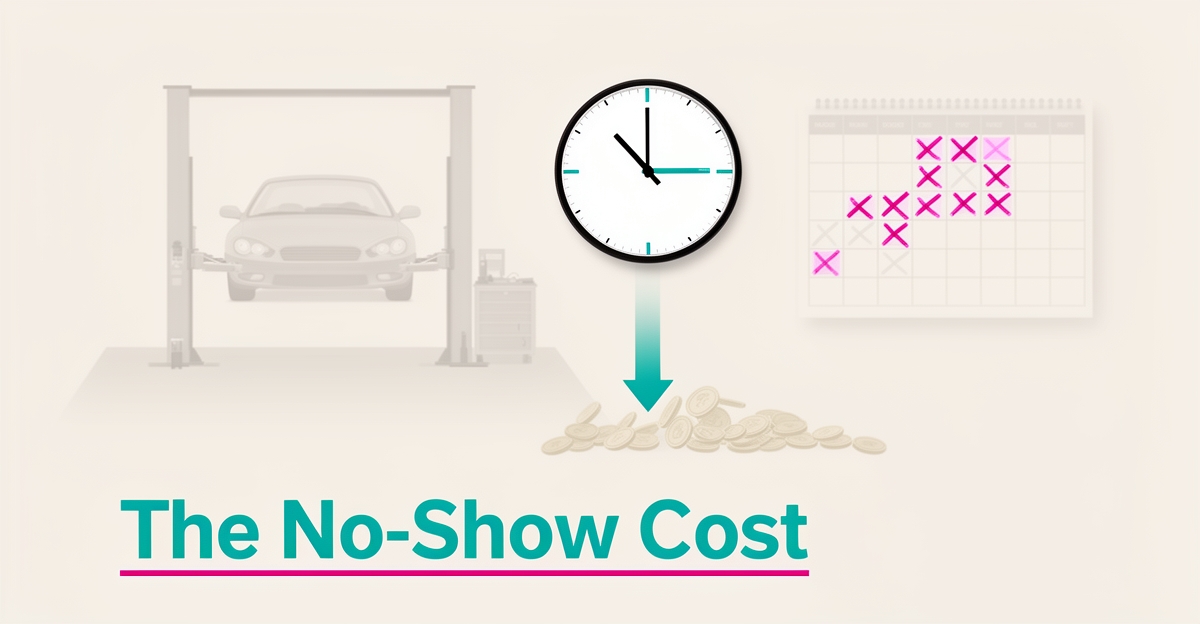
The true cost of a missed service appointment extends far beyond the immediate loss of a single transaction. For oil change shops, each no-show represents not just lost revenue but also wasted technician capacity and a gradual erosion of customer trust that compounds over time. Industry analyses of service businesses suggest each missed connection can represent hundreds to a few thousand dollars in potential lost revenue—a range that applies directly to automotive maintenance. This figure captures not only the service fee but also the opportunity cost of turning away other customers who could have filled that slot.
Beyond direct revenue loss, missed appointments create operational inefficiencies that silently drain profitability. Technicians scheduled for specific service windows often experience idle time when customers fail to arrive, disrupting workflow and reducing overall shop productivity. Widely cited industry data indicates small businesses miss a large share of incoming calls during business hours, with after-hours call loss rates climbing even higher. When these missed connections translate into no-shows, shops face both underutilized labor and the administrative burden of rescheduling—efforts that typically consume 20-30 minutes per booking in manual systems. This time could otherwise be spent on value-added services or customer engagement.
Perhaps most damaging is the long-term impact on customer relationships. Industry data consistently shows that most unanswered callers never try again. In the context of oil change services, this means a single missed appointment can permanently sever a customer relationship, eliminating not just immediate revenue but all future lifetime value from that client. When combined with the potential for negative word-of-mouth, the true cost of no-shows becomes a persistent financial drain that undermines both short-term profitability and sustainable growth. AIQ Labs helps shops deploy [AI Employees](/ai-employees) that send proactive reminders, manage cancellations, and reduce missed appointments by up to 40%, directly addressing these hidden costs.
How AI Reduces Missed Appointments
The traditional approach to scheduling—relying on staff to manually confirm appointments and reactively handle cancellations—creates a vulnerability that costs service businesses thousands in lost revenue annually. By shifting to AI-driven automation, shops can intercept potential no-shows before they happen. A widely reported NHS AI pilot, for example, cut missed appointments by roughly 30% within six months.
AI systems address this challenge through three interconnected mechanisms that work continuously without human oversight. Rather than waiting for customers to cancel or simply not show up, these platforms analyze patterns, predict risks, and maintain constant communication.
- Proactive multi-channel reminders that send automated confirmations via SMS, email, or voice at optimal intervals, typically increasing attendance by around 11% compared to no reminders
- Predictive risk scoring that analyzes historical data, weather patterns, and customer behavior to identify high-risk appointments before they become no-shows
- Automated rescheduling that instantly offers alternative slots when cancellations occur, backfilling empty bays from waitlists to prevent revenue leakage
The predictive component represents the most significant advancement over basic reminder systems. By analyzing factors such as past cancellation history, appointment type, and even external variables like local traffic conditions, AI can flag customers with a high probability of missing their slot. Targeted interventions for these high-risk individuals—such as additional confirmation requirements or personalized outreach—can reduce no-shows by an additional 7-11% beyond standard reminder improvements.
When cancellations do occur, the system's automated rescheduling capabilities immediately activate. Instead of leaving a bay empty while staff manually call through a waitlist, AI agents can instantly contact standby customers, offer the newly available slot, and confirm the booking within minutes. This ensures that a 2 PM cancellation doesn't result in a 2 PM empty lift.
The financial justification for this technology is compelling. Industry analyses commonly report businesses earning several dollars back for every dollar invested in AI customer service, with top performers achieving multiples of that. For oil change shops operating on thin margins, the math is straightforward: preventing just a few missed appointments per week covers the cost of automation while simultaneously freeing staff from phone tag to focus on in-bay service delivery.
Unlike static scheduling software, modern AI employees integrate directly with shop management systems to handle the entire workflow—from the initial booking through the final reminder—creating a seamless experience that customers increasingly expect. The result is a self-correcting schedule that maximizes bay utilization without adding administrative headcount.
Implementing AI Scheduling Without Disrupting Your Shop
Shops can modernize scheduling without a disruptive overhaul by layering automation in phases that protect daily operations while capturing lost revenue.
Start with automated reminders. This is the lowest-friction entry point and delivers immediate attendance gains. Automated reminders typically increase attendance by around 11% compared to no reminders, and targeted reminders for high-risk customers can cut no-shows by an additional 7-11%. The system plugs into existing calendars and sends SMS or email sequences without changing how staff currently book.
Once reminders are stable, add an AI receptionist for after-hours booking. Manual scheduling stops when staff go home, yet small businesses miss a substantial share of after-hours calls—and most unanswered callers never try again. An AI receptionist answers 24/7, checks real-time availability, collects intake fields, and confirms bookings in natural conversation, routing only complex cases to humans. This captures the booking decisions that would otherwise be lost to competitors.
Integration comes last to preserve tool familiarity. The goal is minimize disruption while maximizing capture, not rip-and-replace. A practical rollout looks like this:
- Run online booking in parallel with phone for 30 days to measure self-booking adoption
- Deploy automated reminder sequences, prioritizing customers with a history of cancellations
- Enable an AI receptionist for inbound calls with configured business rules, buffer times, and intake questions
- Connect the scheduler to existing CRM, calendar, and point-of-sale tools for a single source of truth
The staff time impact is measurable. Manual phone-based scheduling typically loses 20-30 minutes per booking to back-and-forth and hold times, and paper-based reconciliation can consume 4-6 hours weekly. Switching to automated scheduling saves an average of 3-6 hours per week, freeing front-desk teams for in-bay service and customer care.
AIQ Labs helps shops deploy these systems through [AI Workflow Builds](/workflow-builds)—rebuilding the one workflow that costs you the most, at a fixed price and in phases—so reminders, 24/7 AI reception, and integration land without retraining staff on a new platform overnight. Larger operations can go further with an [AI Operating System](/ai-operating-systems) that connects booking, reminders, and follow-up into one layer the shop owns outright. By phasing reminders, then 24/7 AI reception, then integration, shops gain 24/7 booking opportunities with payment models that fit: start monthly, build in milestones, or own it outright.
Still paying for 10+ subscriptions that don’t talk to each other?
We build custom AI systems you own outright. No vendor lock-in. Full control.
Not sure where to start? Ask our AI planner
Frequently Asked Questions
How much money does my oil change shop actually lose when a customer misses an appointment?
We already send text reminders—how much more can AI really reduce our no-shows?
Will an AI receptionist sound robotic and frustrate my regular customers?
What happens when the AI books an appointment but the customer needs something complex, like a transmission check instead of just an oil change?
How long does it take to set this up, and do I have to switch my current scheduling software?
Is the ROI actually there for a small shop? What does it cost versus what we save?
Turning Missed Opportunities into Steady Growth
Missed service appointments cost oil change shops far more than a single lost transaction—they drain technician capacity, waste staff time on rescheduling, and erode customer trust over the long haul. Each no-show can represent hundreds to a few thousand dollars in lost revenue, and with most calls missed going unanswered and most unanswered callers never trying again, the financial impact compounds quickly. AI-driven automation offers a practical path forward: proactive reminders boost attendance by around 11%, predictive scoring identifies high-risk no-shows, and automated rescheduling fills cancellations in real time—together reducing missed appointments by up to 40%. For shops looking to stabilize revenue and free staff for higher-value work, the next step is clear. Take the [2-minute Fit Check](/apply) to see where AI can deliver the fastest return, or book a free 30-minute strategy call—no obligation, just clarity on your opportunity.
Make AI your competitive advantage — not just another tool.
Strategy, implementation and ongoing optimization. One partner, end to end.
Not sure where to start? Ask our AI planner