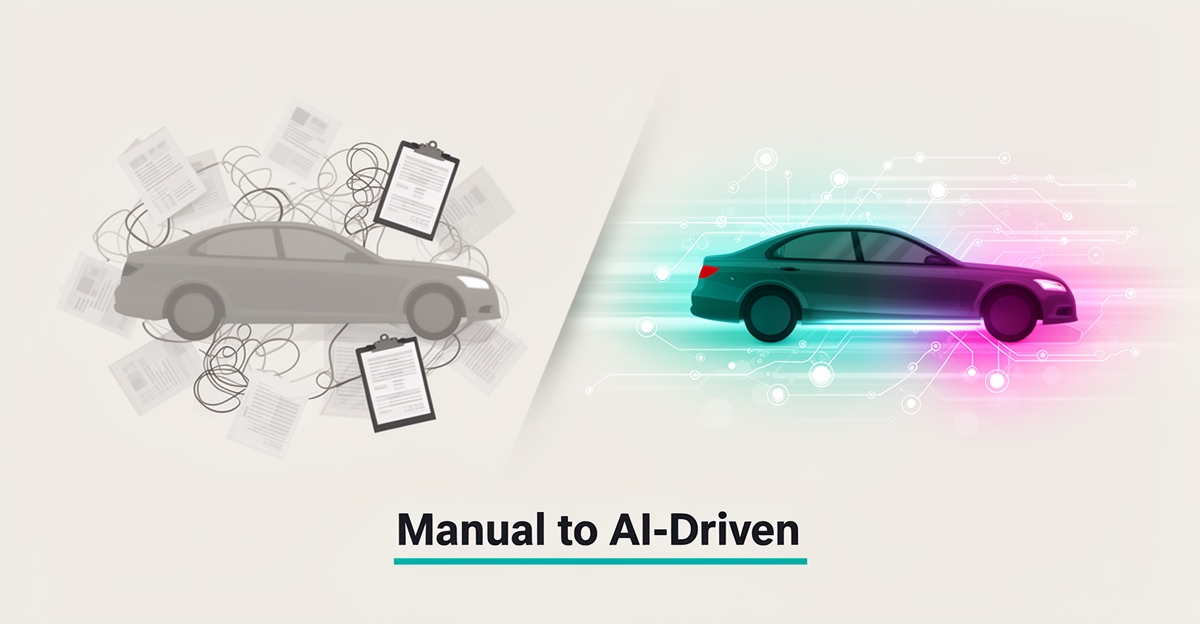
Transforming Car Broker Operations: From Manual to AI-Driven
Key Facts
- Industry data suggests roughly two-thirds of shoppers abandon dealers online due to sluggish engagement according to industry reports
- Nearly half of salespeople fail to follow up on leads as reported in industry studies
- AI-powered tools have been reported to deliver around 70% faster response times to customer inquiries based on industry research
- Dealerships using AI report roughly 27% higher showroom appointment rates per industry findings
- AI implementation has been associated with a 26% increase in lead-to-sale conversions according to dealership reports
- AI-driven inventory management has been reported to reduce holding costs by 15-20% per industry analysis
- Surveys report that dealerships implementing AI saw revenue increases over the past year based on dealership surveys
Hire a team member that works 24/7 — for less than a part-time wage.
AI receptionists, SDRs, dispatchers and 99+ roles. Trained on your business, fully managed.
Not sure where to start? Ask our AI planner
Why Manual Car Broker Operations Are Breaking
The traditional car broker model is facing an existential squeeze. Between rising operational costs and shrinking profit margins, the manual, paper-based processes that once defined the industry are no longer just inefficient—they are becoming a direct threat to survival.
The financial pressure on brokers is immense. Recent industry analysis suggests that traditional dealership operating expenses averaged around 111% of total gross profit in early 2025, with gross profit per new vehicle retailed falling sharply year-over-year in several segments. This creates a punishing economic reality where brokers are working harder than ever just to stand still, absorbing costs that eat away at their already thinning margins.
While internal costs rise, external customer expectations are shifting dramatically. Today's buyers demand speed, and they have zero patience for friction. According to industry data, roughly 67% of shoppers abandon dealers online due to sluggish engagement. When a potential client reaches out, a delayed response isn't just a minor inconvenience; it is a lost deal. Compounding this issue, nearly 48% of salespeople fail to follow up on leads, leaving massive revenue opportunities on the table simply because manual tracking systems cannot keep pace.
Meanwhile, the competitive landscape is rapidly advancing. Competitors who have embraced automation are seeing results, pulling further ahead of those stuck in manual workflows:
- 27% higher reported showroom appointment rates
- 26% increase in reported lead-to-sale conversions
- 70% faster reported response times to customer inquiries
- Up to 40% increase in AI-powered lead-to-sale conversions in some reports
These numbers highlight a growing divide. Brokers relying on intuition-based marketing and manual follow-ups are losing market share to tech-enabled competitors who can respond instantly, 24/7. As Forbes Technology Council notes, dealers who want to remain ahead of the curve must consider how to adopt AI, precisely because their competitors are already doing so.
This is why digital transformation has shifted from a luxury to an absolute necessity. At AIQ Labs, we see this pattern across the automotive sector: businesses do not need to replace their teams, but they must upgrade their processes to survive. Transitioning to AI-driven operations is no longer about chasing a trend—it is the fundamental requirement for maintaining profitability and relevance in a market that punishes delay.
What AI Changes in Lead, Sales and Inventory
AI is reshaping how car brokers handle leads, sales, and inventory—turning slow, manual processes into fast, intelligent systems that drive measurable results. By automating lead engagement and follow-up, brokers using AI report roughly 27% higher showroom appointment rates and a 26% increase in lead-to-sale conversions, according to industry research. AI-powered tools respond to inquiries around 70% faster and help ensure no lead falls through the cracks, even re-engaging dormant prospects with timely, personalized outreach.
These gains come from AI's ability to analyze behavior, score leads in real time, and trigger the right message at the right moment—freeing brokers to focus on relationship-building instead of repetitive tasks. As one study notes, nearly 48% of salespeople fail to follow up on leads, a gap AI closes through automated, multi-channel nurturing that feels human but never sleeps. The result isn't just more appointments—it's a sales process that's consistently responsive, data-driven, and aligned with how modern car buyers research and decide.
In inventory management, AI replaces guesswork with predictive analytics, helping brokers optimize stock levels based on demand trends, seasonality, and real-time market signals. Industry analysis suggests this shift can reduce holding costs by 15-20% while minimizing overstock and stockouts—directly improving cash flow and turnover speed. Combined with AI-driven dynamic pricing, brokers can adjust offers intelligently to move inventory faster without sacrificing margin. These operational improvements have been associated with sales cycles shortening by roughly a third, letting brokers close more deals in less time with the same or fewer resources.
Critically, AI enhances—not replaces—the broker's role. By handling routine tasks like lead qualification, appointment scheduling, and inventory tracking, AI gives human brokers more time to do what they do best: understand customer needs, build trust, and close deals. A majority of dealers already view AI as a job enhancer, recognizing that automation lifts performance rather than eliminates positions. For brokers ready to evolve, this isn't about losing control—it's about gaining precision, speed, and a scalable edge in a competitive market. Start the Fit Check to see how AIQ Labs can help you map your biggest bottlenecks and design a step-by-step AI transformation plan built for real broker workflows.
A Step-by-Step Transformation Plan for Brokers
Many car brokers still rely on manual spreadsheets, paper logs, and inconsistent follow-up, creating bottlenecks that slow sales and frustrate customers. The shift to AI-driven operations isn't about replacing people—it's about removing friction so teams can focus on closing deals and building relationships. Industry data suggests dealerships using AI shorten sales cycles by about a third and reduce staffing costs meaningfully, showing automation can deliver measurable efficiency gains.
The transformation follows a practical three-phase roadmap designed for real-world adoption. First, brokers must audit their current workflows to pinpoint where time is lost—whether it's lead qualification, inventory tracking, or post-sale follow-up. Mapping each step reveals duplication, delays, and error-prone handoffs that AI can resolve. This foundation ensures any AI solution targets actual pain points, not hypothetical improvements. Experts note that understanding the existing process is critical before introducing technology, as it prevents misalignment and wasted effort.
In phase two, brokers pilot AI in high-impact areas like lead qualification and follow-up. An AI Employee can engage leads 24/7, pre-qualify prospects based on budget and preferences, and schedule appointments—directly addressing the fact that nearly 48% of salespeople fail to follow up on leads. Simultaneously, AI-powered inventory forecasting analyzes historical sales and market trends to optimize stock levels, with industry sources reporting holding-cost reductions of 15-20%. These pilots run in parallel with existing systems, allowing teams to validate results before full commitment.
Finally, successful pilots scale through integration with CRM and DMS platforms, creating a unified system where AI updates customer records, triggers service reminders, and adjusts pricing in real time. AIQ Labs supports this rollout with tailored training and change management, ensuring brokers adopt the new workflow confidently. As adoption grows, the focus shifts to measuring ROI—tracking improvements in lead conversion, appointment rates, and inventory turnover—to demonstrate tangible business impact and inform further expansion. This structured approach turns AI from a pilot experiment into a sustainable competitive advantage.
Building the AI Operating System You Own
Manual processes are costing car brokers market share as buyers expect instant, personalized engagement. With a large majority of dealerships reported to be increasing AI budgets, the shift from paper-based workflows to owned AI systems is becoming a competitive necessity.
Building an AI operating system you own starts with replacing subscription stacks with custom-built assets. AIQ Labs architects production-ready systems that integrate CRM, DMS, and communications, so lead capture, qualification, and follow-up run as one unified workflow rather than disconnected tools. With 200+ multi-agent systems deployed and four live SaaS products we run daily, this is work we do every day, not a promise.
Three entry points mirror how brokers actually transform. AI Employees provide managed AI staff—receptionists, SDRs, dispatchers and more—at roughly 80% less cost than a human hire, handling 24/7 reception and lead qualification that books appointments without missed calls. AI Workflow Builds rebuild the one workflow that costs you the most, at a fixed price and in phases. AI Operating Systems connect everything into one operating layer, built in phases and owned outright.
Payment flexibility removes the traditional upfront barrier. Brokers can start with a single AI Employee, rebuild one workflow, or build a full operating system.
- Start Monthly — begin with managed AI staff on a flat monthly plan, with setup, training, integrations, monitoring, and improvements included
- Build in Milestones — one workflow or department system split into phases; approve and pay per phase, stop anytime and keep what's built
- Own It Outright — a full AI operating system with full ownership of code, agents, and data when complete
This ownership model aligns with reported outcomes. Surveys indicate dealerships using AI saw revenue increases over the past year after implementation, and AI-driven engagement has been associated with 27% higher showroom appointment rates and a 26% increase in lead-to-sale conversions.
Speed matters because roughly 67% of shoppers abandon dealers online due to sluggish engagement. An owned AI operating system closes that gap with instant 24/7 responses, automated multi-channel follow-up, and real-time lead prioritization built around your specific processes.
The result is a system that scales with the business, preserves institutional knowledge, and keeps the broker in control of its digital future.
Still paying for 10+ subscriptions that don’t talk to each other?
We build custom AI systems you own outright. No vendor lock-in. Full control.
Not sure where to start? Ask our AI planner
Frequently Asked Questions
Will AI replace human car brokers or just change their role?
How much faster can AI respond to customer inquiries compared to manual processes?
What specific improvements in lead conversion can car brokers expect from AI implementation?
Is AI implementation only for large dealerships, or can small brokers benefit too?
What are the biggest risks of not adopting AI in car brokerage operations?
How does AI help with inventory management and holding costs?
The Gap Between Manual and AI-Driven Brokers Is Widening — Pick Your Side
The math is unforgiving. With industry reports suggesting operating expenses consuming more than 100% of gross profit for traditional dealers, and roughly two-thirds of shoppers abandoning slow responders, the manual broker model isn't just inefficient—it's bleeding market share to competitors who respond instantly, follow up on every lead, and price inventory with predictive precision. The brokers winning right now aren't replacing their teams; they're upgrading their processes with AI that delivers faster responses, more appointments, and lower inventory holding costs. The transformation doesn't require a leap of faith—it follows a proven path: audit your workflows, pilot AI where the pain is greatest, then scale into a unified system you own outright. That last part matters. At AIQ Labs, we build AI operating systems brokers actually own—no vendor lock-in, no subscription sprawl—with payment models that start monthly, build in milestones, or hand you full ownership. The divide between manual and AI-driven operations will only grow. Start the Fit Check to map your biggest bottleneck, then book a free 30-minute strategy call—no pitch, just a clear picture of where automation pays off fastest in your brokerage.
Make AI your competitive advantage — not just another tool.
Strategy, implementation and ongoing optimization. One partner, end to end.
Not sure where to start? Ask our AI planner