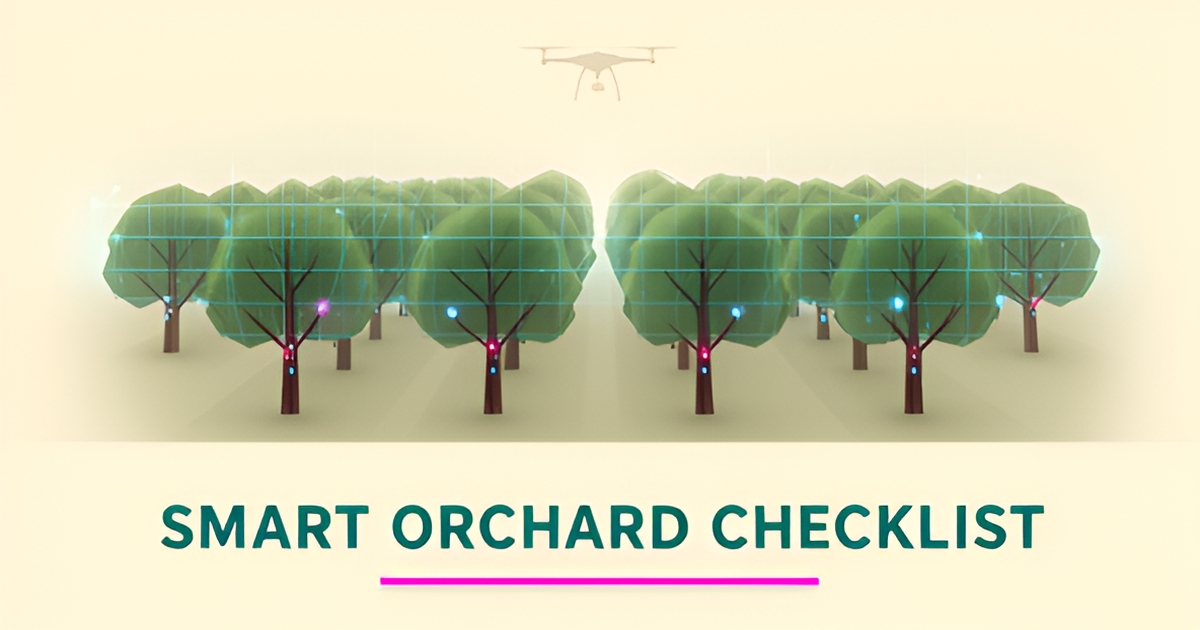
What to Look for in an AI Farming Partner: A Checklist for Orchard Owners
Key Facts
- Around 80% of agribusinesses recognize AI benefits but only about 20% have fully adopted these technologies according to industry research
- Roughly 36% of farms under 2,000 acres are using or planning to use AI, compared to about 81% of large enterprises per agribusiness research
- AI-powered irrigation can cut water usage substantially in some deployments based on agricultural app analysis
- AI models can identify diseases from plant images with very high accuracy in research settings per AI agriculture app analysis
- Orchard owners using AI have reported yield increases and input cost reductions in industry surveys per agribusiness insights
- Smaller operations can see strong ROI from well-designed AI systems per industry research
- A majority of smart farming case studies now integrate AI and IoT for real-time crop and water management per sustainable agriculture case study
Hire a team member that works 24/7 — for less than a part-time wage.
AI receptionists, SDRs, dispatchers and 99+ roles. Trained on your business, fully managed.
Not sure where to start? Ask our AI planner
The Orchard Owner’s Dilemma: Why Generic AI Tools Fail in Agriculture
Many orchard owners find themselves caught between the promise of AI-driven efficiency and the reality of tools that fail to understand the complexities of perennial agriculture. Industry research indicates that roughly 80% of agribusinesses recognize the potential benefits of AI, yet only about 20% have fully adopted these technologies—a gap that widens significantly for smaller operations, where around 36% of farms under 2,000 acres are using or planning to use AI compared to roughly 81% of large enterprises.
The root of this disconnect lies in the mismatch between generic software and the nuanced realities of orchard management. Off-the-shelf AI tools often treat agriculture as a monolith, offering standardized solutions designed for annual row crops rather than the decades-long lifecycle of tree fruit production. These platforms typically provide fragmented capabilities—one app for irrigation scheduling, another for pest detection, a third for yield forecasting—creating data silos that force managers to manually correlate information across disconnected systems. This fragmentation mirrors the inefficiencies of manual processes, where scheduled visual inspections and handwritten logs lead to variability in accuracy and response time, yet persists under the guise of digital transformation.
Perennial crops present unique challenges that generic algorithms struggle to address. Unlike annuals, orchards require multi-year predictive modeling for pruning strategies, bloom density management, and long-term soil health—variables that shift dramatically across microclimates and cultivars. When AI tools lack industry-specific knowledge, they cannot account for these factors, leaving owners with recommendations that feel academically sound but practically useless. The result is a dangerous overreliance on manual overrides, where operators spend more time correcting algorithmic errors than they would have spent on traditional scouting.
This implementation gap explains why many promising pilots stall before delivering value. Without customization for specific crop types and management practices, even sophisticated AI becomes another subscription to manage rather than a solution to operational bottlenecks. True transformation requires systems built for orchard-specific workflows, not retrofitted agricultural templates.
When evaluating potential solutions, orchard owners should watch for these critical limitations in generic tools:
- Lack of perennial crop modeling that accounts for multi-year growth cycles and legacy tree data
- Inability to integrate with existing orchard infrastructure and legacy record-keeping systems
- High initial implementation costs without clear pathways to ROI for smaller acreages
- Static algorithms that fail to adapt to localized pest pressures or microclimate variations
The market trajectory suggests these challenges will intensify before they improve. With the global AI agriculture market projected to grow from $4.7 billion in 2024 to $46.6 billion by 2034, vendors are racing to capture market share with one-size-fits-all platforms. Yet the same research indicates that the future belongs to personalized farming solutions—AI algorithms tailored to specific crop types, farm conditions, and management practices.
For orchard owners, this evolution creates a critical decision point. Rather than forcing operations to conform to the limitations of generic software, forward-thinking growers are seeking partners who approach AI as a custom engineering challenge. This shift requires moving beyond vendor relationships toward strategic collaborations—firms like AIQ Labs that architect bespoke systems—ensuring that technology adapts to the orchard, not the other way around.
What to Look for in an AI Farming Partner: The 5-Point Evaluation Checklist
Choosing the right AI farming partner requires more than evaluating generic technology—it demands a focus on orchard-specific outcomes. A strong partner should demonstrate deep customization for orchard workflows, proven success in similar operations, seamless integration with existing farm systems, measurable improvements in yield and resource efficiency, and ongoing support that adapts to seasonal challenges. These criteria ensure AI delivers real value, not just theoretical promise.
Customization is critical because orchard management involves unique variables like tree spacing, canopy density, and pest cycles that differ significantly from row crops. An effective AI partner tailors solutions to these specifics, using multi-agent systems to monitor individual tree health and optimize irrigation based on real-time soil and weather data. This level of precision enables targeted interventions that reduce waste and improve fruit quality, directly addressing the limitations of one-size-fits-all platforms.
Industry experience matters equally—vendors with a track record in perennial crops understand the long-term nature of orchard investments and the importance of sustaining productivity over decades. They recognize that AI isn’t just about automation but about preserving tree health, predicting bloom timing, and managing alternate bearing cycles. Partners lacking this depth may overlook critical nuances, leading to recommendations that work in theory but fail in practice.
Integration with existing systems ensures the AI enhances rather than disrupts current operations. The best platforms connect with tools like farm management software, irrigation controllers, and equipment telemetry—pulling data from sources such as satellite imagery and soil sensors to automate decisions without requiring a complete overhaul. This interoperability reduces training time and increases adoption, especially for teams already managing complex seasonal workflows.
Measurable ROI should be demonstrated through concrete outcomes like water savings, reduced chemical use, and yield stability. AI-powered irrigation has shown substantial water savings in some deployments, while AI-driven disease detection enables early intervention that prevents crop loss. Orchard owners using AI have reported yield increases and input cost reductions in industry surveys, and smaller operations have seen strong returns from well-designed systems—proof that the right systems pay for themselves. Ask any partner for the specific numbers behind their claims, and be skeptical of vendors who can’t back them up.
Finally, ongoing support transforms a one-time implementation into a lasting advantage. Orchards face evolving pressures from climate shifts, labor shortages, and market demands, so a partner must provide continuous model retraining, seasonal adjustments, and responsive troubleshooting. This commitment ensures the AI system grows smarter over time, adapting to new challenges without requiring constant reinvestment in new technology. Together, these five points form a practical framework for selecting an AI partner that delivers sustained, orchard-specific value.
How AIQ Labs Delivers on the Checklist: Real Orchard-Ready AI Systems
Orchard owners evaluating AI partners need proof the system will survive mud, weather, and real harvest pressure, not just a demo environment. The right partner aligns customization, ownership, and lifecycle support with the operational realities of an orchard.
AIQ Labs maps its three entry points directly to those evaluation criteria. AI Workflow Builds rebuild the one workflow that costs your operation the most—fixed price, delivered in phases—so you see value before committing to anything larger. For orchards, that often means irrigation scheduling, spray records, or harvest logistics first. When you’re ready to connect everything, AI Operating Systems build one connected operating layer across your whole operation, in phases, that you own outright. That ownership model matters because industry research shows most agribusinesses recognize AI benefits yet few have fully adopted, often due to vendor lock-in and poor fit.
The engineering approach emphasizes deep two-way integrations over no-code limitations. Systems are architected for API connections to existing farm management, irrigation, and equipment telemetry so decisions are automated from real-time data rather than manual logs.
AI Employees extend the checklist into daily execution. Managed AI staff—receptionists, dispatchers, SDRs, and 99+ other roles—handle defined work around the clock at roughly 80% less cost than a human hire. This is not a chatbot widget; it is a functional team member that books, qualifies, and follows up end-to-end, closing the labor gaps that stall so many operations.
Payment models are built to remove risk at every stage: Start Monthly to prove value, Build in Milestones as the system grows, or Own It Outright when you want the asset on your balance sheet. No fake prices, no invented case-study numbers—just a clear path from pilot to owned system.
Proof points from production work reinforce the model. AIQ Labs has deployed 200+ multi-agent systems and runs 4 live SaaS products daily on the same infrastructure used for clients. Capabilities demonstrated include:
- Multi-agent orchestration and real-time research for continuous monitoring
- Conversational and voice AI deployed in regulated, sensitive contexts
- Personalization at scale and automated workflow execution
Agriculture-specific outcomes align with orchard priorities. Sustainable agriculture case studies report water use reductions of up to 25% with continuous soil moisture monitoring, and up to 30% in greenhouse environments through precise resource management. AI agriculture apps analysis notes farmers report crop yield increases of up to 25% and AI models can identify diseases from plant images with very high accuracy.
With the global AI in agriculture market projected to grow from $4.7 billion in 2024 to $46.6 billion by 2034, orchard owners need a partner that delivers true ownership and orchard-ready systems, not experiments.
Still paying for 10+ subscriptions that don’t talk to each other?
We build custom AI systems you own outright. No vendor lock-in. Full control.
Not sure where to start? Ask our AI planner
Frequently Asked Questions
Why do generic AI tools struggle with orchards compared to row crops?
Are small orchards actually adopting AI, or is it just big farms?
What adoption gap should orchard owners be aware of?
What kind of ROI can orchards realistically expect from AI?
Can AI really cut water and chemical use in orchards?
How fast is the AI agriculture market growing for orchard partners?
Grow With AI That Grows With Your Orchard
Choosing an AI farming partner is less about features and more about fit. Generic tools fail orchard owners because they ignore multi-year growth cycles, microclimate variation, and legacy tree data, creating silos that force manual overrides instead of real gains. The right partner delivers orchard-specific customization, proven perennial crop experience, seamless integration with irrigation and farm management systems, measurable ROI in water use, yield stability and input costs, and ongoing support that adapts through seasons and climate shifts. That combination turns AI from a subscription to manage into an operational advantage that compounds over decades. If you’re evaluating options, audit vendors against those five outcomes and demand proof in real orchard conditions, not demos. AIQ Labs helps orchard owners move from pilots to owned systems built for their workflows—whether that starts with a single workflow rebuild, managed AI staff, or a full operating layer. Take the 2-minute Fit Check at aiqlabs.ai/apply, then book a free 30-minute strategy call to map your biggest bottleneck and identify high-ROI automation opportunities. With the global AI in agriculture market projected to reach USD 46.6 billion by 2034 according to market analysis, building orchard-ready capability now is a decision that pays for years.
Make AI your competitive advantage — not just another tool.
Strategy, implementation and ongoing optimization. One partner, end to end.
Not sure where to start? Ask our AI planner