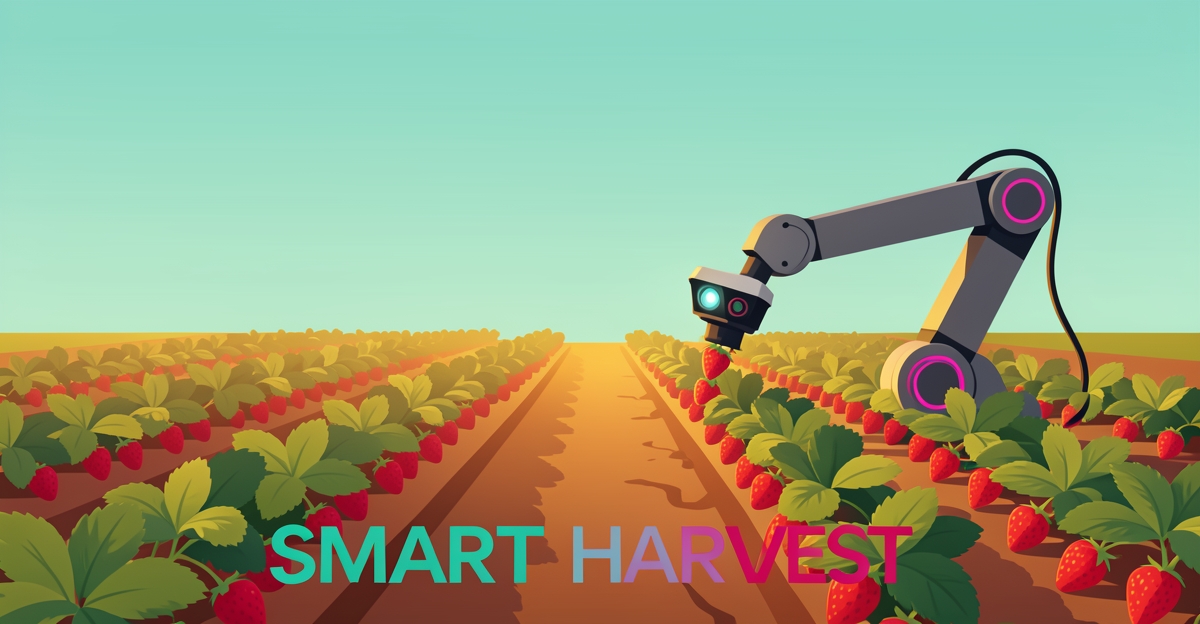
What to Look for in an AI Harvesting Solution for Small Farms
Key Facts
- Industry analyses suggest only a small share of the multi-billion-dollar hand-harvesting labor market is automated, leaving substantial room for practical AI solutions according to RobotToday analysis
- The harvesting robot market has been projected to grow at a double-digit CAGR through 2030, though estimates vary by source per industry market tracking
- Strawberries lead commercial robotic harvesting readiness, with labor typically running 400–500 hours per acre based on harvesting robot analysis
- North America and Europe lead harvesting automation adoption, driven largely by high labor costs according to regional adoption data
- Roughly half of large-scale farming operations now use some form of AI, raising interoperability expectations across the industry per smart farming guide research
- AIQ Labs builds AI systems designed to fit small-scale operations, balancing sophistication with simplicity noted in agricultural AI tools coverage
- Manual processes still outperform poorly fitted technology on small farms where local knowledge drives decisions according to AI vs manual processes comparison
Hire a team member that works 24/7 — for less than a part-time wage.
AI receptionists, SDRs, dispatchers and 99+ roles. Trained on your business, fully managed.
Not sure where to start? Ask our AI planner
Why Small Farms Struggle to Automate Harvesting
Hand harvesting remains one of the largest labor categories in agriculture, yet only a small fraction of it is automated as of late 2026. That gap isn't for lack of trying — it's physics, biology, and economics colliding in ways that hit small farms hardest.
Harvesting remains the last great unsolved problem in agricultural robotics. Computer vision identifies ripe produce reliably, but reaching, grasping, and removing without bruising remains mechanically hard. Fruit hangs at variable angles. Leaves occlude targets. Detachment force must be precise — too much damages the crop, too little leaves it on the plant. Each variable compounds the next.
Strawberries and soft fruits lead commercial readiness because their geometry is consistent and labor demands run high — typically 400–500 hours per acre. Tree fruits lag: apples face canopy occlusion, citrus battles rough terrain and fruit weight. Deployed robotics still cover only a slice of unautomated labor costs — a penetration gap that defines the opportunity.
Small farms face three structural barriers:
- Capital intensity: Enterprise-grade robotics often demand six-figure upfront investment
- Integration complexity: Most systems require dedicated operators and IT infrastructure
- Crop diversity: Mixed plantings break single-crop automation logic
This is where AIQ Labs focuses: practical AI systems built to fit small-scale operations, balancing sophistication with simplicity. The evaluation checklist starts with practical questions: Does it integrate with existing equipment? Is mobile access native? Can it incorporate local knowledge — the farmer's intuition about microclimates and variety quirks? For operations where the bottleneck is coordination rather than picking itself, managed AI Employees can handle scheduling, tracking, and communication from day one.
Matching AI Solutions to Your Crop Reality
Choosing the right AI harvest tool starts with matching the technology to the crop you actually grow, not the crop the vendor demos.
Labor intensity is the clearest signal of readiness. Harvesting robot analysis shows strawberries lead commercial deployment because of consistent geometry and extreme labor demand, typically 400–500 hours per acre. That pressure has pushed soft fruits into real-world use while other crops remain in trials.
Apples and citrus sit further along the maturity curve. Apples are at early commercial stage, constrained by canopy occlusion and multi-pass scheduling. Citrus remains largely in R&D, with rough terrain and heavy fruit weight limiting reliable grasping.
The market context matters for small farms. Industry tracking has projected the harvesting robot market to grow at a double-digit CAGR through 2030, according to industry market tracking. Yet only a small share of hand-harvesting labor is automated, leaving a large gap for crop-specific solutions.
If your primary crop is strawberries, raspberries, or blueberries, viable AI options exist today, especially for high-density plantings where robotic access is simpler. For tree fruits like apples and citrus, expect pilot-stage systems that require more field customization and tolerance for lower throughput.
A practical checklist for evaluating AI tools for small-scale harvesting should focus on fit to your operation:
- Ease of integration with existing equipment and farm software
- Mobile access for field monitoring and adjustments
- Local knowledge integration so the system learns your rows, varieties, and harvest windows
AIQ Labs builds systems around these evaluation criteria rather than around generic automation promises. Crop reality dictates viability, not marketing claims about general automation.
Computer vision can reliably identify ripe targets, but reaching, grasping, and removing without bruising remains mechanically hard, especially in variable canopies. That is why small farms benefit from solutions built for their scale rather than retrofitted enterprise platforms.
The Practical Checklist: Integration, Mobile Access, Local Knowledge
When evaluating AI harvesting solutions, integration with existing farm equipment is non-negotiable for small operations. Systems must connect with tractors, conveyors, or sorting lines without requiring costly retrofits or downtime. Roughly half of large-scale operations now use some form of AI, according to research on AI in agriculture, highlighting the growing expectation for interoperability—even on smaller farms where legacy equipment is common. A solution that demands a complete overhaul of your workflow will struggle to deliver ROI, no matter how advanced its algorithms.
Mobile access transforms how farmers make decisions in the field, turning smartphones into command centers for real-time harvesting adjustments. The ability to view ripeness maps, adjust picking routes, or receive alerts about microclimate shifts directly in the orchard or vineyard reduces latency between insight and action. This is especially critical given that harvesting remains the last great unsolved problem in agricultural robotics due to variable fruit angles and occlusion by leaves—challenges that demand immediate, on-site responses rather than delayed office analysis.
Perhaps most critically, effective AI must incorporate hyperlocal knowledge that generic models overlook. Small farms thrive on nuanced understanding of varietal ripening patterns, soil moisture gradients, and wind-protected microclimates that change from row to row. As noted in agricultural technology guides, the difference between traditional farming and smart farming lies in precision—where AI doesn't replace local expertise but augments it with data-driven consistency. Solutions that ignore these farm-specific variables will miss optimal harvest windows and increase bruising risks, undermining both yield and quality.
- Prioritize tools with API compatibility for common farm management software
- Demand offline-capable mobile apps for areas with spotty rural connectivity
- Verify the system allows input of historical yield and defect data per block
Balancing Sophistication with Simplicity: The Small-Farm Sweet Spot
Small farms face a unique squeeze: harvesting labor is expensive and scarce, while off-the-shelf automation is built for scale and complexity. Industry research projects strong growth in harvesting robotics through 2030, according to industry research, yet only a small fraction of hand-harvesting labor is currently automated.
That gap exists because harvesting remains the last great unsolved problem in agricultural robotics. Computer vision identifies ripe targets reliably, but reaching, grasping, and removing without bruising remains mechanically hard, and most systems assume acres of uniform crop and IT staff on site.
Small farms need sophistication without complexity. The right solution preserves enterprise-grade capability while matching daily reality: mobile access in the field, easy integration with existing tools, and respect for local knowledge.
A practical checklist for evaluating AI tools in agriculture includes:
- Ease of integration with current farm software and hardware
- Mobile access for crews working off-network
- Local knowledge integration so models learn from the farm, not just the lab
These criteria matter because adoption is uneven by region and crop. North America and Europe lead harvesting automation, driven by high labor costs in specialty crop regions. For strawberries, the most commercially advanced crop, labor typically runs 400–500 hours per acre.
AIQ Labs approaches this with three entry points, as noted in recent coverage of agricultural AI tools: managed AI Employees for defined harvesting support roles, a focused Workflow Build to rebuild the one workflow that costs you the most, or a full AI Operating System that connects your operation in phases.
Ownership matters here. With AIQ Labs' Own It Outright model, you keep full control of code, agents, and data—no vendor lock-in derailing adoption. Managed AI employees handle defined harvesting support tasks end-to-end, working around the clock alongside human teams. Phased builds ensure the system fits existing processes rather than forcing process change for technology.
The result is enterprise-grade capability delivered at small-farm scale: predictive support and workflow automation without subscription chaos or complex IT overhead, and full ownership for future growth.
Next Steps: From Evaluation to Deployment
You have reviewed the criteria, compared the options, and identified what matters for your operation. Now comes the part where most small farms stall: moving from research to revenue without betting the season on an unproven system.
The stakes are real. With only a small fraction of hand-harvesting labor currently automated, early adopters face both opportunity and uncertainty. The solution is a staged approach that validates ROI before scaling.
Start with a bottleneck audit, not a purchase order. Before evaluating any AI harvesting solution, map exactly where your operation loses money during peak season. Is it the daily coordination of pickers across blocks? The communication gaps between field notes and packing schedules? Or the administrative overhead that pulls you away from quality control? AIQ Labs begins every engagement with a free strategy call specifically to identify these friction points, ensuring you solve the right problem rather than the most obvious one.
Once you know your bottleneck, pilot a single AI Employee in a defined role. Rather than automating the entire harvest at once, deploy a harvest coordination agent that handles crew scheduling, yield tracking, or real-time field-to-market communication. This mirrors the broader agricultural trend toward incremental smart farming adoption, where targeted AI applications prove value before expansion.
Structure your pilot around these measurable outcomes:
- Reduction in hours spent on daily harvest logistics
- Accuracy of yield predictions versus actual counts
- Speed of response to weather or market changes
- Adoption rate among your existing field crew
Scale only when the data justifies it. If your pilot cuts coordination time substantially while improving record accuracy, you have a business case for expansion. If it creates friction or fails to integrate with your mobile workflows, you have learned cheaply. This matters because manual processes still outperform poorly fitted technology on small farms where local knowledge drives decisions.
The payment structure should reflect this low-risk philosophy. Look for flat monthly arrangements that cost less than a part-time hire, with the ability to pause or adjust as seasons change. Avoid large upfront capital expenditures that lock you into rigid systems before the first harvest proves their worth. AIQ Labs offers Start Monthly, Build in Milestones, and Own It Outright — see pricing for how each works.
Finally, remember that harvesting remains the last great unsolved problem in agricultural robotics because it demands both technical sophistication and operational simplicity. Your evaluation process should honor both requirements. Start small, measure ruthlessly, and expand only when the AI demonstrates it understands your land as well as you do.
Still paying for 10+ subscriptions that don’t talk to each other?
We build custom AI systems you own outright. No vendor lock-in. Full control.
Not sure where to start? Ask our AI planner
Frequently Asked Questions
Is AI harvesting actually ready for small farms, or is it only for big ag?
How much labor cost is AI harvesting really trying to replace?
What features matter most when picking an AI harvest tool for a small operation?
Will an AI harvesting system work with the equipment I already have?
Isn't AI harvesting too expensive and complex for a small farm?
How can I test AI harvesting without betting the whole season on it?
Your Harvest, Smarter: From Insight to Action
Small farms face a clear reality: harvesting remains labor-intensive, expensive, and difficult to automate—but not impossible. The path forward isn't about chasing enterprise-scale robotics; it's about choosing AI tools that fit your actual operation—integrating with your existing gear, working through mobile access in the field, and learning from your own knowledge of microclimates and variety quirks. Start by auditing where your team loses time during peak season, then pilot a focused solution like a harvest coordination agent to measure real impact before scaling. AIQ Labs helps small farms take this step with a free strategy call to identify bottlenecks and guided pilots that prove value without risk. If you're ready to see where AI can ease your harvest burden without overhauling your farm, start the Fit Check to map your opportunity and explore what's possible.
Make AI your competitive advantage — not just another tool.
Strategy, implementation and ongoing optimization. One partner, end to end.
Not sure where to start? Ask our AI planner