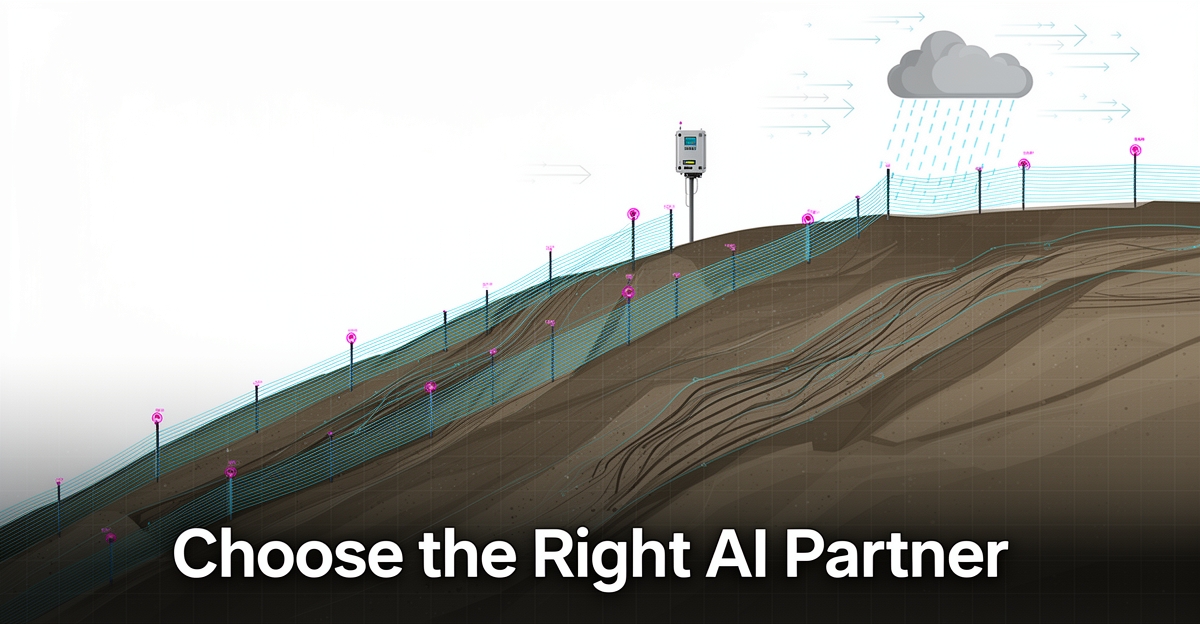
What to Look for in an AI Partner for Erosion Control Operations
Key Facts
- Construction AI market projected to grow from $2.7B in 2025 to $23.8B by 2034 at 27.3% CAGR according to industry research
- 79% of construction organizations have implemented no AI or are stuck in limited pilot programs per RICS 2025 data
- Construction has highest workplace fatalities of any industry — over 1,000 deaths annually in the U.S. per OSHA reports
- A single OSHA violation costs $15,000–$160,000 per incident in construction based on safety data
- Only 19% of contractors have adapted workflows to incorporate AI despite 87% predicting meaningful impact per Dodge Construction Network
- Industry needs 499,000 new workers in 2026 while 41% of existing workforce approaches retirement per Bridgit 2026 projections
- Early AI adopters report saving 500–1,000 hours and $50,000+ annually per Bluebeam AEC Technology Outlook 2025
Hire a team member that works 24/7 — for less than a part-time wage.
AI receptionists, SDRs, dispatchers and 99+ roles. Trained on your business, fully managed.
Not sure where to start? Ask our AI planner
Why Erosion Control Can't Use Generic AI
The construction sector is caught in a paradox: while industry analysis shows the AI in construction market is set to explode from $2.7 billion in 2025 to $23.8 billion by 2034, the same research reveals that 79% of organizations have either implemented no AI or are stuck in limited pilot programs. For erosion control contractors, this gap isn't just a statistic—it represents the difference between solving critical operational challenges and falling further behind.
Generic AI solutions fail in this environment because they can't handle the specific constraints of outdoor field work. Off-the-shelf tools assume stable internet connectivity, predictable conditions, and controlled environments. Erosion control operations face the opposite reality: remote sites with spotty connectivity, rapidly shifting weather that can render a sediment control plan obsolete in hours, and strict regulatory requirements under OSHA 29 CFR 1926.
The stakes are quantifiable and severe. According to industry data, construction accounts for the highest number of workplace fatalities of any industry—over 1,000 deaths annually in the United States—with a single OSHA violation costing between $15,000 and $160,000 per incident. Meanwhile, workforce projections indicate the industry needs 499,000 new workers in 2026 while 41% of existing workers approach retirement age.
These pressures demand AI capabilities that generic platforms simply don't offer:
- Edge computing architecture that processes data locally on ruggedized hardware, functioning reliably in dust, rain, and extreme temperatures without constant cloud connectivity
- Real-time weather integration that adjusts erosion control recommendations based on live precipitation forecasts and soil saturation data
- Regulatory compliance monitoring with built-in knowledge of OSHA standards, local building codes, and environmental regulations specific to sediment and stormwater management
- Computer vision systems trained specifically for outdoor construction environments, not repurposed indoor security algorithms
This is where specialized expertise becomes non-negotiable. AIQ Labs approaches these challenges through hands-on consulting that prioritizes weather-adaptive AI architectures and field data accuracy over generic automation. Rather than forcing erosion control workflows into pre-built software templates, the focus shifts to building solutions that account for the industry's unique variables—from unpredictable site conditions to the absolute necessity of human oversight in safety-critical decisions.
Core Evaluation Criteria for Field-Ready AI
Choosing an AI partner for erosion control means vetting for field reality, not lab demos. The construction sector is waking up to AI, with the AI in construction market reaching $2.7 billion in 2025 and projected to grow to $23.8 billion by 2034, reflecting a 27.3% compound annual growth rate according to industry research. Yet 79% of construction organizations have either implemented no AI at all or are only testing in limited pilot programs, leaving a gap between promise and production.
Field-ready AI starts with hardware and vision that survive the job site. Erosion control work demands computer vision and edge computing for rugged outdoor use, because cloud-only systems fail in remote locations with dust, rain and extreme temperatures. Edge computing capabilities let systems operate on ruggedized hardware built for outdoor conditions while computer vision enables continuous safety and progress monitoring without manual inspections.
Weather integration is non-negotiable. Effective solutions must ingest real-time weather data and adapt erosion control decisions to changing conditions. Regulatory compliance must be built in, not bolted on. Partners should demonstrate clear alignment with OSHA 29 CFR 1926 construction safety standards and local codes. Construction accounts for the highest number of workplace fatalities of any industry — over 1,000 deaths per year in the United States alone, and a single OSHA violation costs $15,000–$160,000 per incident per safety data.
Field data accuracy separates usable AI from expensive pilots. Vetting criteria should include:
- Proven computer vision performance in outdoor, variable-light conditions
- Edge deployment experience with dust, rain and temperature extremes
- Weather-aware models that adjust erosion risk scoring in real time
- Audit trails and human-in-the-loop controls for safety-critical outputs
Security governance completes the picture. Enterprise AI security requires a six-layer stack covering identity access, data protection, prompt security, governance, output validation and continuous monitoring. The research warns that AI security is a stack, not a tool, and missing one layer cannot be compensated by the others.
Traditional approaches rely on manual inspections, reactive responses and manual plan review taking weeks. AI-enhanced approaches deliver continuous monitoring, proactive hazard detection and 70% faster civil-plan approval end to end. While 87% of contractors predict AI will meaningfully impact construction, only 19% have adapted their workflows to incorporate it, highlighting the need for partners who can move beyond pilots to production.
A practical guide to evaluating AI vendors based on industry-specific needs like weather integration, regulatory compliance, and field data accuracy is essential for erosion control businesses choosing a reliable, customizable, and owned AI solution. AIQ Labs offers hands-on consulting to help teams vet partners against these field realities and build systems they own rather than rent.
How to Vet and Choose an Owned, Customizable Partner
Selecting an AI partner isn't like buying software — you're choosing a long-term operational ally. The wrong choice locks you into rigid systems that crumble under field conditions; the right one becomes infrastructure you own and control.
Start by verifying technical depth. Ask specifically about edge computing capabilities for remote sites and computer vision experience in outdoor environments. Genuine expertise shows in certifications like NVIDIA Certified AI Architect — a credential held by fewer than 3,000 professionals globally — rather than generic marketing claims about "AI-powered solutions."
Next, scrutinize the deployment model. Subscription tools create vendor lock-in that leaves you stranded when pricing changes or features sunset. Instead, prioritize partners offering true ownership of code, agents, and data. AIQ Labs structures engagements through three distinct approaches — Start Monthly for immediate deployment, Build in Milestones for phased validation, or Own It Outright for complete system transfer — ensuring you retain control regardless of payment structure.
Security architecture demands equal rigor. As cybersecurity experts warn, AI security operates as a six-layer stack covering identity access, data protection, prompt security, governance, output validation, and continuous monitoring. Missing one layer compromises the entire system. Verify that your partner implements human-in-the-loop controls for critical decisions, particularly important given that OSHA violations cost between $15,000 and $160,000 per incident.
When evaluating ROI, look beyond promises to documented outcomes. According to Deloitte analysis, AI and analytics unlock 10–15% cost savings and cut schedule overruns by 10–20%. Early adopters report saving 500–1,000 hours annually. Demand specific projections based on your operational baseline, not industry averages.
Use this evaluation framework when vetting potential partners:
- Verify ownership terms — confirm you retain full IP and code rights upon completion
- Test weather integration capabilities with historical data from your specific region
- Audit their compliance knowledge regarding OSHA 29 CFR 1926 and local erosion control regulations
- Review their six-layer security architecture with specific emphasis on field data encryption
- Validate their track record with outdoor industrial deployments, not just office automation
The right partner transforms AI from an expense into a competitive asset you control. Take time to assess technical depth, ownership structures, and security frameworks before committing — your operational resilience depends on it.
Implementation Risks and How to Avoid Them
Many erosion control businesses face significant hurdles when moving beyond initial AI pilots into full-scale deployment, with 79% of construction organizations either not implementing AI or only testing in limited pilot programs according to industry research. This pilot stall often stems from underestimating integration complexity, skills gaps, or inadequate planning for safety-critical workflows where errors can have serious consequences. Addressing these barriers like workforce readiness and system compatibility early to prevent costly delays and ensure AI enhances rather than disrupts field operations.
Common implementation risks include skills shortages in AI management, difficulties integrating new tools with legacy field equipment and reporting systems, and heightened security vulnerabilities unique to AI systems. Erosion control operations face additional challenges from remote locations with limited connectivity and variable weather conditions that can affect sensor data quality and model performance. Proactively assess your team’s technical capacity and your existing infrastructure’s adaptability before committing to a rollout plan.
To mitigate these risks, adopt a phased rollout approach starting with low-stakes workflows, enforce strict human-in-the-loop controls for all safety and compliance decisions, and implement a comprehensive six-layer AI security framework covering identity access, data protection, prompt security, governance, output validation, and continuous monitoring as emphasized by cybersecurity leaders. This layered defense is essential because AI security is a stack, not a tool—missing one layer leaves critical attack surfaces exposed. Partner with providers who understand these nuances and can tailor solutions to your operational reality rather than offering generic AI tools that ignore field-specific constraints.
Still paying for 10+ subscriptions that don’t talk to each other?
We build custom AI systems you own outright. No vendor lock-in. Full control.
Not sure where to start? Ask our AI planner
Frequently Asked Questions
Why can't I use generic AI solutions for my erosion control business?
What specific technical capabilities should I look for in an AI partner for erosion control?
How do I avoid vendor lock-in when choosing an AI partner for erosion control operations?
What security framework should an AI partner implement for erosion control AI systems?
How can AI actually improve safety and reduce costs in erosion control work?
What implementation risks should I prepare for when deploying AI in erosion control?
Key Takeaways
{ "title": "Your AI Partner Is a Business Decision, Not a Software Purchase", "content": "The gap between AI's promise in construction and its reality on erosion control sites comes down to one thing: whether your partner understands the difference between a lab demo and a muddy slope in a downp
Make AI your competitive advantage — not just another tool.
Strategy, implementation and ongoing optimization. One partner, end to end.
Not sure where to start? Ask our AI planner