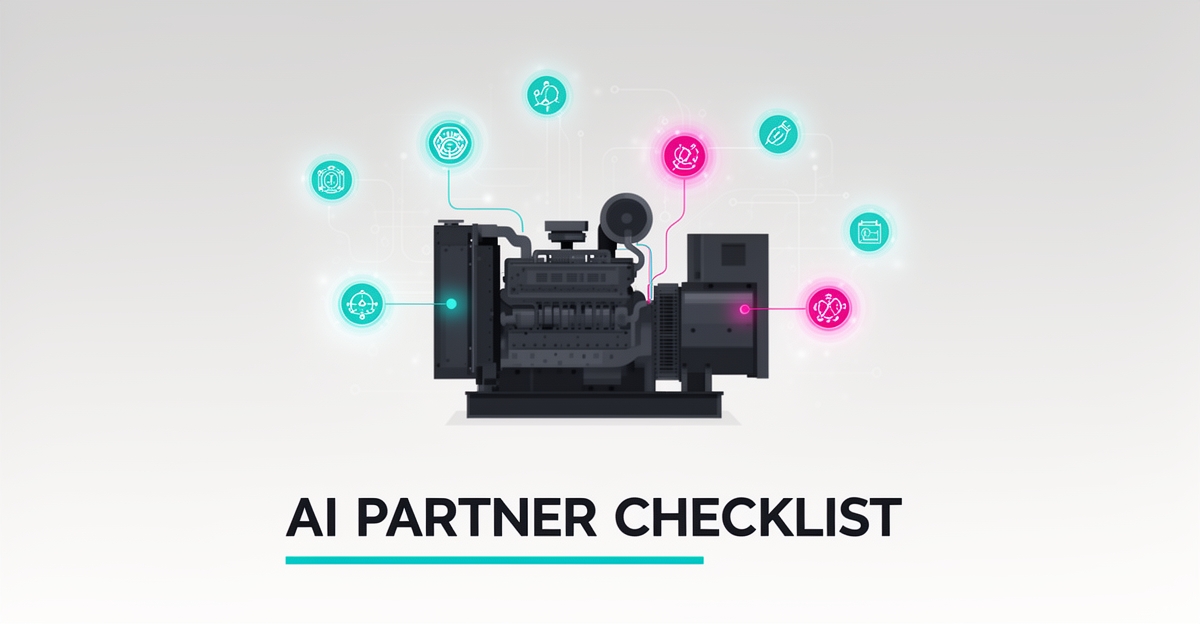
What to Look for in an AI Partner for Generator Rental Operations
Key Facts
- Industry analyses suggest predictive maintenance can meaningfully reduce equipment downtime for rental fleets—often cited in the range of 30% or more
- Dynamic pricing powered by AI is widely reported to lift rental revenue by roughly 10-15% through real-time rate adjustments
- AI-enabled geofencing is credited with substantially reducing equipment theft in high-risk zones
- AI-powered intake tools can handle a large share of routine rental availability inquiries instantly, freeing staff for complex calls
- Automated damage billing increases repeat rentals through transparency, per customer retention analyses
- AI-driven demand forecasting is reported to improve fleet utilization rates by around 12%
- Readiness research shows most business leaders expect AI to reshape roles, while only a minority say staff can use it effectively
Hire a team member that works 24/7 — for less than a part-time wage.
AI receptionists, SDRs, dispatchers and 99+ roles. Trained on your business, fully managed.
Not sure where to start? Ask our AI planner
Why Generator Rental Needs a Domain-Specific AI Partner
Generic AI tools often fall short in generator rental operations because they lack the domain expertise needed to handle equipment-specific challenges like predictive maintenance for diesel generators or dynamic pricing for fluctuating demand. Industry research has pointed to strong and growing adoption of predictive maintenance AI across the rental sector, with downtime reductions often cited in the 30-35% range. Without deep understanding of rental workflows, off-the-shelf AI fails to deliver these outcomes, leaving critical gaps in fleet reliability and revenue optimization.
Successful AI adoption in this sector requires more than algorithms—it demands contextual intelligence around equipment lifecycles, regional demand patterns, and safety compliance. Dynamic pricing powered by AI is widely reported to increase rental revenue by 10-15% by adjusting rates in real time based on usage trends and seasonal spikes, while AI-driven geofencing is credited with substantially reducing equipment theft in high-risk zones. Generic solutions typically overlook these nuances, resulting in suboptimal performance and missed opportunities for operational efficiency.
AIQ Labs addresses this by starting with a clear picture of a rental business's existing systems, data maturity, and team capabilities before recommending any solution. This ensures the AI partner understands not just the technology, but how it fits within complex rental operations involving multiple locations, diverse equipment types, and strict service-level expectations.
- Predictive maintenance reduces unplanned breakdowns by forecasting component wear
- Dynamic pricing maximizes utilization during peak demand periods
- Fleet logistics AI optimizes routing and load planning to cut fuel waste
- Customer service AI handles routine availability inquiries instantly, day and night
- Automated damage billing increases repeat rentals through transparency
Choosing a domain-specific AI partner means gaining a collaborator who speaks the language of generator rental—understanding everything from fuel consumption patterns in diesel generators to the urgency of emergency power deployments. This expertise transforms AI from a generic tool into a strategic asset that directly supports uptime, profitability, and customer trust.
The 5 Critical Criteria for Evaluating AI Vendors
Choosing an AI partner for generator rental operations is less about model size and more about operational fit. The right vendor translates rental-specific workflows into measurable uptime, utilization and safety gains rather than generic automation.
Industry expertise and customization separate viable partners from point-solution vendors. Rental operations span generators, heavy machinery and event equipment with distinct parameters for fuel, load-sharing and compliance. Industry analyses point to automated load-sharing AI reducing fuel consumption in diesel generators, and AI-enabled geofencing cutting theft in high-risk zones. A partner must demonstrate domain-specific use cases, not generic chatbots.
Seamless integration with booking and ERP systems is non-negotiable. AI value depends on unifying data across locations and systems to deliver real-time insights into asset utilization and demand forecasting. Analyses of equipment rental software consistently emphasize seamless API integrations, customization options and transparency of AI-driven recommendations as core evaluation factors. Without native connectivity to booking, inventory and accounting platforms, AI creates data silos instead of eliminating them.
Compliance and governance must be built in from the start. Generator rental involves safety regulations, environmental compliance and equipment certification requirements. Coverage of regulated AI adoption warns that agentic AI adoption often outpaces governance, and sustainable deployment requires stakeholders with operational and regulatory authority at the same table. Look for audit trails, machine-readable policy controls and explicit escalation paths.
Organizational readiness determines whether pilots scale. Readiness research shows most business leaders expect AI to reshape career paths and role responsibilities, yet only a minority say staff can use AI effectively. A readiness gap like this stalls deployments.
Verifiable trust and scalability complete the evaluation. Trust becomes the scarce resource as AI moves into live operations. Partners should provide independent verification, human-in-the-loop controls and clear accountability for model performance.
Five critical criteria to assess:
- Industry expertise and customization for generator-specific workflows like predictive maintenance and fuel optimization
- Seamless integration with existing booking, ERP and inventory systems with unified data across locations
- Compliance and governance frameworks with audit trails, escalation paths and regulatory alignment
- Organizational readiness and change management support to close the expectation-vs-capability gap
- Verifiable trust and scalability with intervention mechanisms, kill-switches and named accountability
AIQ Labs approaches vendor evaluation by mapping the business's unique rental model, equipment types and service areas to feasible AI use cases—ensuring the solution fits operations rather than forcing operations to fit the solution. Start with the two-minute Fit Check to see where your operation stands.
How AIQ Labs Aligns with Generator Rental Operations
The gap between AI ambition and operational reality is where most generator rental operations stall — most leaders expect AI to reshape roles, yet only a minority say their teams can use it effectively. Industry analysis shows adoption fails not from tool limitations but from fragmented ownership and misaligned incentives. AIQ Labs closes this gap with three entry points built for the rental industry's specific demands — managed AI Employees that handle dispatch and intake workflows at a fraction of the cost of a human hire, AI Workflow Builds that rebuild the one workflow costing you the most at a fixed price, and AI Operating Systems that unify your operation in one connected layer you own outright.
- AI Employees deploy as Dispatchers, Service Coordinators, and Booking Agents that work 24/7 across phone, SMS, and chat with full tool integration — typically around 80% less than the cost of a human hire
- AI Workflow Builds rebuild your single costliest workflow at a fixed price, in phases, with measurable before-and-after results
- AI Operating Systems unify CRM, accounting, and fleet management into one connected operational layer — built in phases and owned outright, replacing subscription chaos
- Governance & Compliance embeds audit trails, escalation paths, and human-in-the-loop controls for safety-critical generator operations
- Adoption & Change Management aligns your teams, clarifies incentives, and establishes measurable success metrics for sustained scaling
This approach mirrors what equipment rental data shows works: predictive maintenance AI is now a mainstream priority across the rental sector, and AI-driven demand forecasting is reported to improve fleet utilization by around 12%. The difference is doing it on infrastructure you own, with governance that scales, and a partner who stays accountable past go-live. With 200+ multi-agent systems deployed and four live SaaS products AIQ Labs runs daily, the proof is in operations, not slideware.
A Practical Vendor Evaluation Playbook
Evaluating an AI partner for generator rental operations starts with a clear assessment of organizational readiness. Research consistently shows most business leaders expect AI to reshape career paths and role responsibilities, yet only a minority of staff can use AI effectively, highlighting a critical gap between ambition and capability. This disconnect often stems from fragmented ownership and misaligned incentives, where operational stability is rewarded over experimentation. Before engaging vendors, rental companies must audit their data infrastructure, team skills, and decision-making structures to ensure they can support meaningful AI integration rather than just deploy technology.
Defining decision boundaries early prevents overreach and builds trust in automated systems. For generator rental operations, this means specifying which functions—like demand forecasting for peak seasons or maintenance scheduling based on usage patterns—can be handled by AI, and which require human oversight, such as safety-critical equipment approvals or emergency response protocols. Clear escalation paths, approval thresholds, and kill-switch mechanisms should be embedded from the outset, treating supervisory control as a core design feature rather than an afterthought. This approach aligns with findings that successful AI governance requires machine-readable, testable, and enforceable policies backed by stakeholders with authority to act.
Starting narrow with bounded use cases allows teams to validate AI performance in controlled environments before scaling. Demand forecasting and maintenance scheduling are ideal starting points due to their measurable outputs, clean data inputs, and natural human-in-the-loop checkpoints. AI-driven demand forecasting is reported to improve fleet utilization rates by around 12%, while predictive maintenance is often credited with downtime reductions in the 30-35% range. These use cases provide tangible ROI metrics and opportunities to refine audit trails, intervention protocols, and accountability structures. Only after demonstrating reliability and governance in these initial applications should rental operations consider expanding AI into more complex workflows like dynamic pricing or fleet logistics optimization.
Still paying for 10+ subscriptions that don’t talk to each other?
We build custom AI systems you own outright. No vendor lock-in. Full control.
Not sure where to start? Ask our AI planner
Frequently Asked Questions
Why do generic AI tools often fail in generator rental operations?
How can AI improve fleet utilization in generator rental businesses?
What is the biggest barrier to successful AI adoption in rental operations according to research?
How does AI help reduce equipment theft in high-risk zones for generator rentals?
How does AIQ Labs ensure AI solutions fit generator rental operations instead of forcing operations to fit the AI?
What does it cost to work with AIQ Labs?
Your Generator Rental Operations Deserve AI That Speaks Your Language
Choosing the right AI partner for generator rental isn't about chasing the latest model—it's about finding a collaborator who understands the nuances of your business: from predictive maintenance that cuts downtime, to dynamic pricing that lifts revenue, to the critical need for seamless integration with your booking and ERP systems. Success hinges on organizational readiness, clear governance, and a partner who stays accountable past go-live. AIQ Labs bridges this gap with managed AI Employees for 24/7 dispatch and intake, fixed-price Workflow Builds that target your costliest workflow, and AI Operating Systems you own outright. If you're ready to move beyond generic tools, start with the two-minute Fit Check, then book a free 30-minute strategy call to map your biggest bottleneck—no obligation, just clarity on your path forward. Prefer email? Reach the team at [email protected].
Make AI your competitive advantage — not just another tool.
Strategy, implementation and ongoing optimization. One partner, end to end.
Not sure where to start? Ask our AI planner