What to Look for in an AI Partner for Junk Car Removal Services
Key Facts
- AI adoption in waste and field service management has grown steadily through 2026, with unified platforms outperforming point tools
- AI typically delivers its biggest productivity gains to small businesses when systems share data instead of operating in silos
- AIQ Labs has deployed 200+ multi-agent systems and runs 4 live SaaS products daily
- AI Employees across 99+ roles typically cost around 80% less than a comparable human hire and work 24/7/365
- Owned AI systems eliminate recurring per-seat subscription costs and vendor lock-in
Hire a team member that works 24/7 — for less than a part-time wage.
AI receptionists, SDRs, dispatchers and 99+ roles. Trained on your business, fully managed.
Not sure where to start? Ask our AI planner
The Hidden Costs of Fragmented AI Tools in Junk Car Removal
Junk car removal operators feel AI's promise immediately, then watch the returns stall. Standalone estimators, chatbots, and routing widgets can each look impressive in a demo, yet they rarely move the business as a whole.
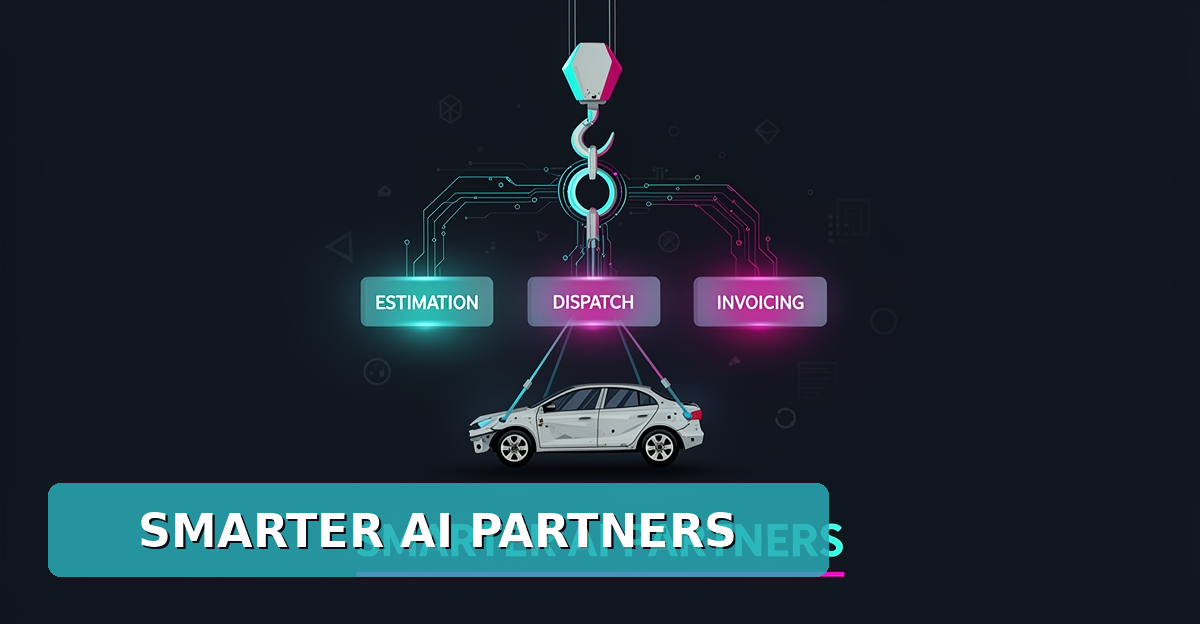
Fragmented tools create data silos that force manual handoffs between quoting, dispatch, invoicing, and follow-up. A photo-based estimate lives in one app, the call log in another, and the invoice in a third. Staff re-enter the same job details multiple times, errors compound, and the operational drag offsets the efficiency each tool promises on its own.
The market signals how costly that drag is. As of late 2026, AI adoption across waste management and field services keeps accelerating, and the businesses capturing real returns are the ones connecting their systems end to end. Analysts have long noted that AI can deliver a meaningful productivity boost to small businesses—but that upside is typically only captured when systems work together, not when each tool operates in isolation.
In junk removal, piecemeal adoption shows up as:
- Estimates generated by AI that never auto-populate dispatch or CRM records
- Chatbots that capture leads but cannot schedule trucks or trigger invoices
- Route optimization that lacks real-time job status from the field
- Review requests sent manually because customer data is not unified
Each gap adds manual work and delays the "I'll send you a quote tonight" moment that field service reporting consistently links to close-rate improvement when eliminated. The result is higher labor cost, missed capacity, and frustrated customers.
Integration complexity is a core challenge. Junk removal workflows span phones, trucks, payments, and back office. When AI tools cannot connect to existing CRM, accounting, and dispatch systems, teams work around them instead of with them. Data quality suffers, adoption stalls, and ROI never materializes.
A full-service approach changes the equation. Vendor selection for AI strategy and transformation should emphasize ownership, integration, and industry-specific knowledge. AIQ Labs builds custom systems businesses own, with deep two-way API integrations that unify estimation, dispatch, invoicing, and follow-up under one operational flow. For a single high-cost workflow, an AI Workflow Build rebuilds the process that drains the most hours; for businesses ready to connect everything, AI Operating Systems deliver one connected layer built in phases.
The hidden cost is not the subscription price. It is the manual rework, lost jobs, and stalled productivity that fragmented AI creates while the broader market accelerates.
Why Full-Service AI Partners Deliver Sustainable Value in Service Industries
Junk car removal businesses face growing pressure to modernize operations while maintaining profitability in a competitive market. Choosing an AI partner with deep service industry expertise ensures technology investments deliver lasting value rather than becoming costly distractions.
AIQ Labs' model—combining custom AI development, managed AI Employees, and phased operating system builds—provides end-to-end ownership that prevents vendor lock-in and scales with business needs. Unlike point-solution vendors, this approach integrates AI directly into core workflows like dispatch, customer communication, and inventory management while preserving full control over custom systems and data.
Real-world implementations across home services, trades, and automotive sectors demonstrate how full-service partners drive sustainable outcomes. AI-powered dispatch automation in field service businesses typically reduces scheduling conflicts and increases daily job capacity through optimized routing. Similarly, AI-enhanced customer communication tools in automotive service shops commonly cut response times and improve lead conversion by qualifying inquiries 24/7—outcomes that come from integrating AI into core workflows rather than bolting on point solutions.
- Custom AI development creates owned systems that eliminate recurring subscription costs and vendor dependencies
- Managed AI Employees handle role-specific tasks like dispatching and lead qualification while integrating with existing CRM and scheduling tools—at roughly 80% less cost than a comparable human hire
- Phased operating system builds ensure AI aligns with business goals, adapts to growth, and delivers measurable ROI over time
This holistic approach turns AI from a tactical tool into a strategic asset—enabling junk car removal businesses to automate volume estimation, optimize routes, and enhance customer experience without sacrificing control or facing integration complexity. By partnering with a provider that understands service industry nuances, companies avoid the pitfalls of fragmented solutions and build AI capabilities that compound in value as the business evolves.
How to Evaluate AI Partners: Ownership, Integration, and Industry Fit
Choosing the right AI partner for junk car removal services requires looking beyond surface-level features to evaluate true ownership, integration depth, and industry-specific experience. Many vendors offer leased tools that create dependency, while others lack the proven track record needed for workflows like dispatch, payment processing, and auction platform coordination. A rigorous evaluation framework focuses on three non-negotiable criteria: whether you'll own the system outright, how deeply it connects to your existing tools, and if the partner has demonstrated success in service-based industries.
True ownership means receiving full intellectual property rights to custom-built AI systems—code, agents, and data—without vendor lock-in or platform dependencies. This contrasts sharply with leased SaaS tools where ongoing fees and limited customization erode long-term value. AIQ Labs' payment models—Start Monthly, Build in Milestones, and Own It Outright—are designed around this principle, ensuring clients retain complete control over their AI assets regardless of payment structure. For junk car removal businesses, this eliminates the risk of being stranded by price hikes or feature removals common with point solutions.
Integration depth determines whether AI becomes a seamless force multiplier or another siloed tool creating manual workarounds. Effective partners build deep two-way API connections with industry-specific software like tow dispatch systems, auction platforms (e.g., Copart, IAA), and payment processors (Stripe, Square), enabling automated workflows from lead capture to final payout. AIQ Labs' track record—200+ multi-agent systems deployed and 4 live SaaS products the company runs daily—demonstrates the ability to engineer systems that handle complex, real-time data synchronization across critical business functions. This isn't theoretical; it's proven in live, revenue-generating platforms with compliance-first architecture.
Industry fit separates vendors who understand service/trades workflows from those offering generic AI junk removal tools. Partners with experience in HVAC, plumbing, electrical, and similar field services grasp the nuances of job scheduling, routing, and customer communication unique to junk car removal. AIQ Labs' client work in field services and the electrical trades—where they delivered end-to-end dispatch automation and lead capture—shows direct applicability. Their AI Employee catalog further validates this, with 99+ roles including AI Dispatcher and AI Service Scheduler built specifically for trades workflows. When evaluating partners, prioritize those who speak your language: not just AI capabilities, but how those capabilities solve dispatch delays, reduce missed calls, and streamline payment follow-up in a high-volume, time-sensitive environment. This focus ensures AI adoption drives measurable outcomes rather than becoming another underutilized subscription. To see how these criteria apply to your operations, start with the 2-minute Fit Check, then book a free 30-minute strategy call to map your biggest bottlenecks and identify high-ROI automation opportunities.
Still paying for 10+ subscriptions that don’t talk to each other?
We build custom AI systems you own outright. No vendor lock-in. Full control.
Not sure where to start? Ask our AI planner
Frequently Asked Questions
Why do standalone AI tools end up costing more than they save for junk car removal?
What does real ownership look like with an AI partner?
How important is integration for junk car removal workflows?
Can a full-service AI partner actually improve dispatch and customer response?
Will faster quotes help me close more junk car jobs?
How do I know an AI partner understands service industry nuances?
Build Your AI Advantage, Don't Rent It
Choosing the right AI partner for your junk car removal business comes down to three non-negotiables: true ownership of your systems, deep integration with your existing dispatch and payment tools, and proven experience in service industries. Fragmented point solutions create data silos that force manual handoffs and erode the efficiency gains AI promises, while full-service partners deliver unified workflows that compound in value over time. The right partner builds custom systems you own outright, connects seamlessly with the tools you already use, and understands the operational nuances of high-volume, time-sensitive field services. If you're ready to move beyond piecemeal tools and build AI capabilities that grow with your business, start by identifying where manual handoffs are costing you the most. Take the 2-minute Fit Check at aiqlabs.ai/apply, then book a free 30-minute strategy call to map your biggest bottlenecks and pinpoint high-ROI automation opportunities—no obligation, just clarity on what's possible when AI actually works the way your business does.
Make AI your competitive advantage — not just another tool.
Strategy, implementation and ongoing optimization. One partner, end to end.
Not sure where to start? Ask our AI planner