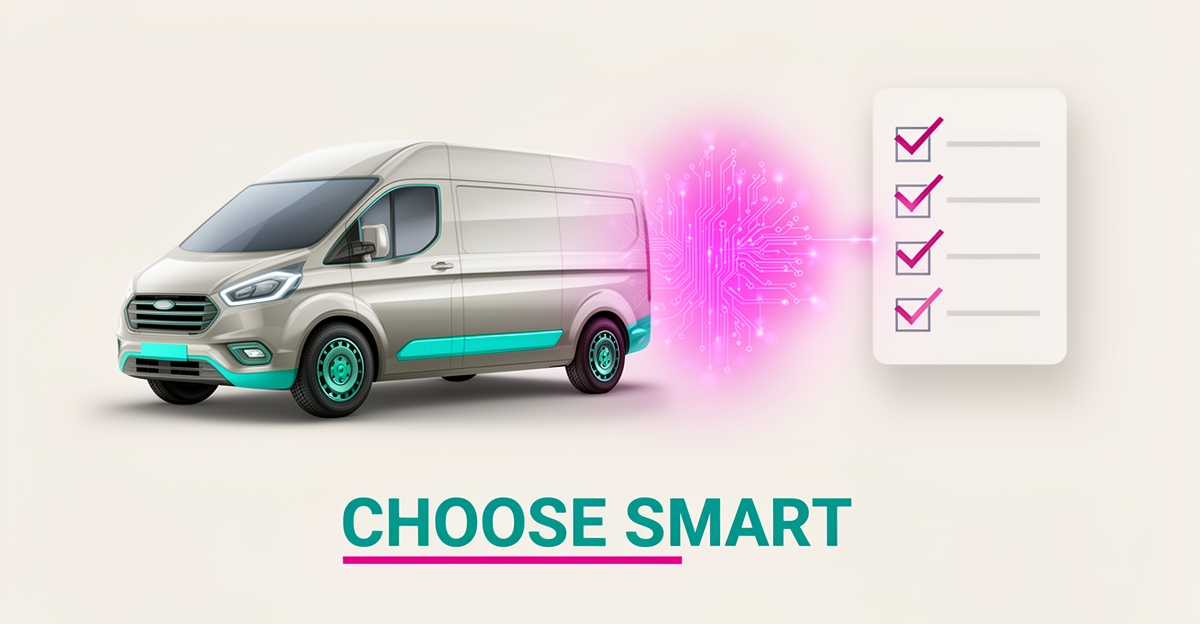
What to Look for in an AI Partner for Mobile Auto Detailing: A Checklist for Owners
Key Facts
- 30 to 45 percent of U.S. consumers already use generative AI for product research and comparison according to recent analysis
- Agentic commerce could make up $190 billion to $385 billion in U.S. ecommerce spending by 2030 according to industry projections
- Detailing demand can spike by up to 45 percent during peak seasons like spring and summer based on consumer behavior trends
- AI Employees cost ~80% less than human employees in equivalent roles while working 24/7/365 based on 2026 cost comparison data
- Integrated systems improve operational flow when providers understand industry infrastructure as supported by industry research
- 200+ multi-agent systems deployed across AIQ Labs' live SaaS platforms demonstrating proven multi-agent orchestration at scale
- AI-powered invoice automation reduces processing time by 80% and accelerates month-end close by 3-5 days based on implementation results
Hire a team member that works 24/7 — for less than a part-time wage.
AI receptionists, SDRs, dispatchers and 99+ roles. Trained on your business, fully managed.
Not sure where to start? Ask our AI planner
The Mobile Detailing AI Gap: Why Generic Partners Fail
Mobile auto detailing runs on tight margins, moving crews, and repeat customers. Generic AI tools built for e-commerce or SaaS teams miss the nuances of route-based service, weather delays, and same-day rebooking.
Off-the-shelf assistants struggle with the operational reality of detailing owners. Scheduling and dispatch require real-time location awareness, technician skill matching, and vehicle-specific service histories. Customer follow-up depends on photos, condition notes, and retention timing that generic chatbots cannot interpret. Industry research shows AI tools must be optimized for the specific job context to deliver value.
Consumer behavior is shifting fast. Recent analysis finds 30 to 45 percent of U.S. consumers already use generative AI for product research and comparison. Agentic commerce could make up $190 billion to $385 billion in U.S. ecommerce spending by 2030. Detailers who cannot converse with AI-driven customers risk losing visibility and trust.
The gap shows up in three daily pain points:
- Dispatch and routing that ignores travel time, equipment load, and technician certifications
- Scheduling that cannot handle last-minute cancellations, mobile location changes, and upsell windows
- Retention that relies on generic follow-up instead of service-specific reminders and referral prompts
Generic partners also create ownership risk. Business guidance emphasizes evaluating who owns the data and intellectual property, because ownership impacts scalability and flexibility. Without clear ownership, detailers remain locked into subscriptions and cannot integrate with their existing booking or accounting systems.
Integration capabilities determine whether AI helps or hinders. Provider assessments stress the ability to integrate with existing systems and infrastructure to ensure smooth operation and minimize disruption. Mobile detailers typically run a mix of scheduling apps, payment processors, and CRM tools. An AI partner must connect to those systems, not replace them.
Deep industry knowledge separates usable AI from novelty. Providers should have a deep understanding of the industry they serve, including its challenges and opportunities. That knowledge is essential for developing effective AI solutions that meet specific business needs. Without it, automations break on edge cases like ceramic coating cure times or fleet account billing.
This is why an industry-aware approach matters. AIQ Labs works with SMBs through AI Readiness Assessment to map real workflows before building, focusing on industry knowledge, system ownership, and integration capabilities. The goal is an AI system that fits detailing operations, not the other way around.
Generic AI fails where mobile detailing lives. Success requires partners who understand route logistics, customer lifecycle, and tool integration, and who deliver solutions businesses own and control.
Industry Knowledge: Can They Speak Detailing?
Industry Knowledge: Can They Speak Detailing?
A mobile auto detailing business operates on rhythms and nuances that generic AI solutions often miss. From seasonal demand swings to the specific expectations of car owners who trust their vehicles to a detailer, industry-specific knowledge is what separates a functional tool from a true operational partner. AI providers without this depth risk building systems that misunderstand workflow nuances, leading to poor adoption and wasted investment.
Deep industry knowledge enables AI to align with how detailing businesses actually run. This includes understanding peak seasons—like spring and summer when detailing demand can spike by up to 45 percent according to consumer behavior trends—and slower periods when preventive maintenance packages keep revenue stable. An AI partner familiar with these cycles can optimize scheduling, staffing, and marketing efforts accordingly, ensuring resources match real-world demand patterns rather than relying on generic assumptions.
Beyond seasonality, effective AI must grasp the detailing workflow from initial inquiry to final inspection. This means recognizing how service packages (wash, wax, interior deep clean, ceramic coating) vary in time, labor, and customer expectations. It also involves understanding route optimization for mobile teams—factoring in travel time between jobs, service duration, and technician availability to minimize deadhead miles. When AI incorporates these field-specific variables, it reduces inefficiencies that eat into profitability, a insight supported by research showing that integrated systems improve operational flow when providers understand industry infrastructure.
Customer expectations in detailing are highly sensory and trust-based. Clients judge results by shine, scent, and tactile feel—not just completion time. An AI system that lacks this context might prioritize speed over quality, triggering dissatisfaction. Conversely, AI trained on detailing-specific communication patterns can manage expectations accurately, send personalized follow-ups based on service type, and even suggest add-ons like headlight restoration or odor treatment based on vehicle age and usage—turning routine interactions into revenue opportunities.
When evaluating an AI partner, ask for proof of industry fluency. Have they worked with detailing or similar field service businesses? Do they understand common pain points like no-shows, last-minute cancellations, or inventory tracking for consumables? Look for evidence in their portfolio or case studies that they’ve solved problems unique to mobile, on-site services. As research indicates, providers with deep industry knowledge are better positioned to develop AI solutions that meet specific business needs without forcing adaptation to ill-fitting technology.
AIQ Labs brings this expertise to every engagement, having supported field service businesses—including automotive detailing—with AI systems designed around real workflows, not theoretical models. Their approach ensures that AI doesn’t just automate tasks, but enhances the detailer’s ability to deliver consistent, high-quality results while scaling sustainably. This industry-grounded foundation is critical when assessing whether an AI partner can truly speak your language—and help you grow.
System Ownership and Integration: Control Your Data and Tools
When evaluating an AI partner for mobile auto detailing, system ownership and integration capabilities are critical factors that determine long-term flexibility and operational efficiency. Businesses must assess who owns the data, intellectual property, and underlying code, as these elements directly influence scalability and the ability to adapt the solution over time. According to industry research, system ownership can significantly impact the scalability and flexibility of an AI solution, making it essential to clarify these terms upfront. Providers that offer true ownership—where clients retain full control of their data and IP—eliminate vendor lock-in and empower businesses to evolve their systems independently.
Integration capabilities are equally vital, as seamless connectivity with existing tools minimizes disruption and maximizes utility. An AI partner should demonstrate the ability to integrate with CRMs, scheduling platforms, payment processors, and dispatch systems commonly used in mobile detailing operations. Research highlights that integration with existing infrastructure is essential for ensuring smooth operation and reducing business disruptions. For instance, AIQ Labs’ AI Operating Systems ensure clients receive full ownership of custom-built systems, including code, agents, and data, while their deep two-way API integrations create unified workflows across tools like HubSpot, Salesforce, Stripe, and industry-specific software.
To maintain control and future-proof your investment, prioritize partners who support modular development, transparent data governance, and open architecture. This approach allows detailers to scale AI adoption incrementally—starting with a single workflow like appointment dispatch—and expand without re-platforming. By owning the system outright, businesses avoid recurring subscription costs and retain the freedom to customize features as their needs evolve. Ultimately, a partner that combines true ownership with robust integration enables mobile auto detailing companies to harness AI as a sustainable competitive advantage rather than a temporary tool. For businesses ready to assess their readiness, AIQ Labs offers a free 2-minute Fit Check to evaluate current systems and map high-ROI automation opportunities.
From Checklist to Implementation: Assess, Pilot, Scale
From Checklist to Implementation: Assess, Pilot, Scale
Moving from evaluation to action requires a structured approach that aligns AI initiatives with business goals. Start by defining clear, measurable objectives—whether it’s reducing manual scheduling time by 30% or increasing appointment conversion rates through 24/7 lead qualification—so success can be tracked from the outset. Research shows that businesses with well-defined AI goals are significantly more likely to achieve measurable outcomes and avoid scope creep during implementation.
Next, assess your technical readiness by reviewing existing tools, data quality, and team capacity to support AI integration. Many mobile detailing operations rely on fragmented systems for scheduling, invoicing, and customer communication, which can create bottlenecks if not addressed early. Industry experts emphasize that integration capabilities are critical for minimizing disruptions and ensuring AI solutions work seamlessly with current workflows—especially when connecting to payment processors or CRM platforms already in use.
Evaluate potential AI partners based on their industry knowledge, ownership models, and ability to scale with your business. Providers with deep experience in service-based industries like auto detailing are better equipped to anticipate pain points such as seasonal demand fluctuations or mobile workforce coordination. Studies indicate that AI projects fail when vendors lack contextual understanding of the industries they serve, leading to mismatched solutions and low adoption.
- Define specific, time-bound objectives tied to operational KPIs
- Audit current systems for integration readiness and data accessibility
- Prioritize partners who offer true system ownership and transparent IP terms
- Select a pilot use case with clear success metrics and low implementation risk
- Plan for scale by building governance and training into the rollout from day one
AIQ Labs supports this journey through its AI Readiness Assessment, which evaluates your current state and recommends the most suitable path forward—whether starting with a single AI Employee via the Start Monthly model, building a department-specific workflow in milestones, or deploying a full AI operating system through Own It Outright. This structured progression ensures each phase delivers value before moving to the next, reducing risk while building internal confidence and capability. By grounding implementation in assessment, pilot testing, and intentional scaling, mobile detailing owners can transform AI from a speculative investment into a measurable competitive advantage.
Still paying for 10+ subscriptions that don’t talk to each other?
We build custom AI systems you own outright. No vendor lock-in. Full control.
Not sure where to start? Ask our AI planner
Frequently Asked Questions
What makes generic AI tools ineffective for mobile auto detailing businesses?
How can AI help with customer retention in mobile auto detailing?
Why does system ownership matter when choosing an AI partner for my detailing business?
What percentage of U.S. consumers are already using generative AI for product research, and how does this affect detailers?
Can AI integrate with the tools I already use for scheduling, payments, and customer management?
How do I know if an AI provider truly understands the mobile detailing industry?
Key Takeaways
The checklist is clear: an AI partner for mobile detailing must speak the language of route logistics, ceramic cure times, and fleet billing cycles — not generic SaaS workflows. It must integrate with the scheduling, payment, and CRM tools you already use. And it must give you full ownership of the systems you build. For detailers ready to move beyond generic AI, the path starts with a free 2-minute Fit Check at aiqlabs.ai/apply.
Make AI your competitive advantage — not just another tool.
Strategy, implementation and ongoing optimization. One partner, end to end.
Not sure where to start? Ask our AI planner