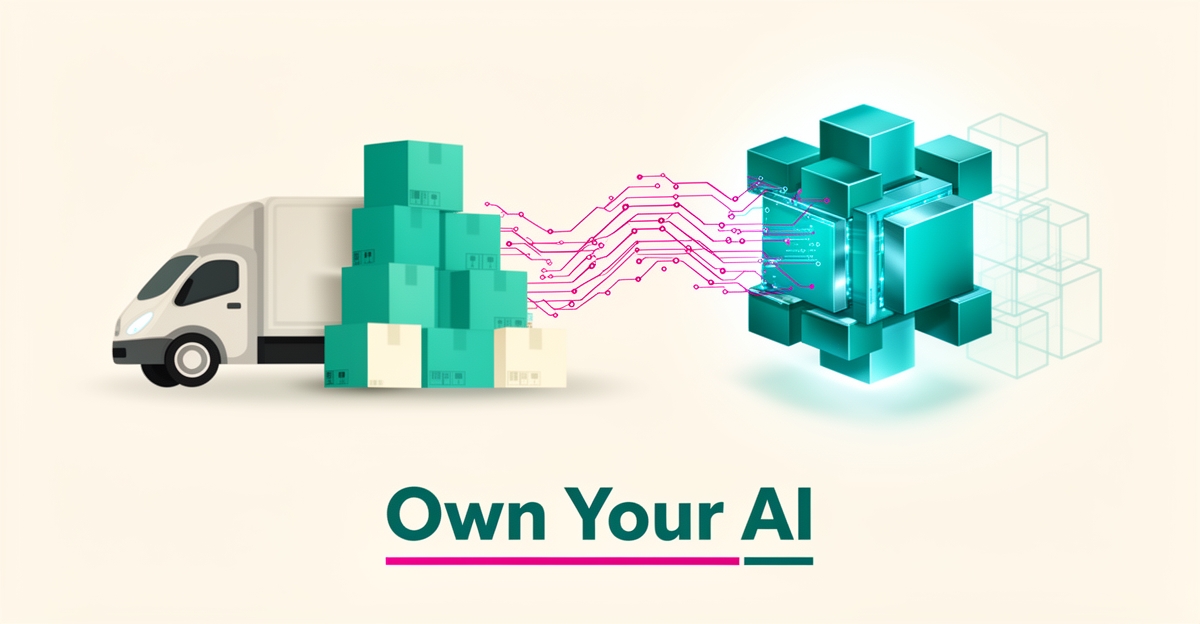
What to Look for in an AI Partner for Moving Companies
Key Facts
- Industry analyses commonly place AI transformation failure rates in the 60–80% range, with most failures attributed to organizational issues according to available research
- Boutique advisory firms typically deliver AI projects 40–60% faster from strategy to first pilot than large consultancies
- A large share of AI projects never make it past the development stage based on industry data
- AI Employees typically cost around 80% less than a human hire while working 24/7/365 per AIQ Labs' cost comparison model
- True ownership transforms AI from a recurring expense into a lasting asset eliminating vendor lock-in risks
- Most AI transformation failures stem from organizational factors like misaligned leadership per Gartner research
Hire a team member that works 24/7 — for less than a part-time wage.
AI receptionists, SDRs, dispatchers and 99+ roles. Trained on your business, fully managed.
Not sure where to start? Ask our AI planner
Why 60-80% of AI Projects Fail (And Why It's Not the Tech)
The numbers are brutal: industry analyses commonly place AI transformation failure rates in the 60–80% range, and many projects never make it past the development stage. Research suggests that most of those failures stem from organizational issues—misaligned leadership, poor change management, and unclear data strategy—rather than technical limitations.
For a moving company, the stakes are immediate. A failed dispatch automation project doesn't just waste budget; it leaves trucks idle and crews waiting. A broken customer service AI means missed calls during peak season and lost revenue that never comes back. The technology works, but the organization around it must be ready to absorb it.
- Leadership alignment on *why* AI is being adopted, not just *what* tool is bought
- Data infrastructure clean enough to feed models without garbage-in-garbage-out
- Change management that prepares dispatchers and sales teams to trust new workflows
- Governance frameworks that define who owns the AI's decisions and the data it generates
This is where vendor selection becomes a strategic defense. A partner who only sells software leaves you to solve the organizational puzzle alone. A true transformation partner—like AIQ Labs—architects the system and the adoption plan, ensuring the moving company owns the capability, not just the subscription. The right partner doesn't just deliver code; they help you build the internal muscle to keep the system running long after the launch.
The Four Partnership Models: From Big Consultants to DIY
Choosing the right AI partner is critical—this guide outlines key criteria like industry experience, system ownership, and integration capability. The path to AI transformation varies widely, and understanding the trade-offs between approaches is essential for moving companies navigating operational complexity. Each model offers distinct advantages in strategic depth, speed, cost, and long-term capability building, directly impacting outcomes in logistics-heavy environments.
Management consultancy-led engagements provide high strategic depth and access to industry benchmarks, drawing from extensive resources and cross-sector experience. However, they often lack deep implementation expertise within specific ecosystems like moving and logistics, and their services come at a premium cost. The global management consulting market is a multi-hundred-billion-dollar industry, reflecting their scale but also highlighting potential misalignment with the practical, workflow-focused needs of mid-sized moving firms seeking tangible automation.
Technology vendor-led partners excel in technical implementation within their platforms, offering strong execution support for AI tools they develop. Yet this approach frequently results in vendor lock-in, where recommendations are shaped by the vendor's product roadmap rather than the client's unique operational needs. For moving companies reliant on integrated systems like dispatch, CRM, and scheduling tools, this can create long-term dependencies that hinder flexibility and innovation, especially when scaling across departments.
Boutique advisory-led firms stand out for vendor independence, senior practitioner involvement, and integrated change management focus—key factors in overcoming the organizational issues behind most AI transformation failures. They typically deliver 40–60% faster time from strategy to first pilot compared to large consultancy-led engagements, enabling quicker wins in areas like route optimization or customer communication. Their holistic approach balances strategy with execution, making them well-suited for moving companies seeking tailored solutions without sacrificing agility.
Internal or DIY builds offer maximum control and knowledge retention, allowing moving companies to develop AI capabilities that evolve with their specific processes. However, this path demands significant investment in specialized talent and resources, and often lacks the breadth of experience needed to avoid common pitfalls. While it ensures ownership, the variable implementation expertise and limited scale can slow progress, particularly when tackling complex logistics workflows requiring real-time coordination across teams and systems.
The Vendor Independence Test: Own Your Systems or Rent Them?
Choosing an AI partner isn't just about technology—it's about who controls the outcome. Industry data consistently points to high failure rates for AI transformation projects, with organizational misalignment and vendor lock-in being primary culprits. For moving companies, this means investing in tools that don't adapt to unique workflows like dispatch coordination, inventory tracking, or customer communication—leading to wasted spend and stalled progress.
Boutique advisory partners consistently outperform large consultancies in speed and relevance, typically delivering solutions 40–60% faster from strategy to first pilot. This agility comes from avoiding rigid methodologies and focusing on practical, workflow-specific automation rather than enterprise-scale overhauls. Unlike technology vendors tied to proprietary platforms, independent advisors prioritize what works for your business—not their product roadmap.
Renting a SaaS AI tool means adapting your processes to fit someone else's system, creating dependency and limiting customization. Owning a custom AI operating system, however, means building tools that mirror your exact moving workflows—from lead intake to final delivery confirmation—with full control over data, updates, and integration. This independence eliminates the risk of being stranded when a vendor changes pricing, sunsets features, or shifts strategic focus.
True ownership transforms AI from a recurring expense into a lasting asset, enabling moving companies to scale automation without renegotiating licenses or re-engineering workflows every few years. Boutique partners excel here by combining strategic depth with hands-on implementation—ensuring solutions are not only unbiased but also built to last. The result? Higher ROI, faster adoption, and a competitive edge that grows with your business.
Your AI Partner Evaluation Checklist for Moving Companies
Most AI transformation projects fail, and the difference between success and failure often comes down to one decision made before any technology is chosen: who you partner with. For moving companies, a structured evaluation checklist keeps that decision grounded in evidence rather than sales pitches.
Start with industry-specific experience. Moving is a logistics-heavy, field-service business—your AI partner should understand dispatch coordination, crew scheduling, route constraints, and seasonal demand swings. A partner who has built dispatch automation and scheduling systems for trades and field services will ask better questions on day one than a generalist who has never touched an operations workflow. Ask for examples of comparable implementations, not just generic case studies.
Next, evaluate change management capability. Research consistently shows that most AI transformation failures stem from organizational issues—not technical ones. Your dispatchers, estimators, and office staff will determine whether the system succeeds. A strong partner builds role-specific training, stakeholder communication, and adoption metrics into the engagement itself rather than treating them as an afterthought.
Then scrutinize the ownership model. This is where many moving companies get locked in. Ask directly:
- Do you own the code, the agents, and the data when the build is complete—or are you renting access to someone else's platform?
- Can the system integrate two-way with your CRM, accounting, and dispatch tools, or does everything have to live inside the vendor's ecosystem?
- What happens to your workflows if you end the relationship tomorrow?
Technology vendor-led approaches carry the highest risk of vendor lock-in, while independent partners can offer unbiased recommendations tailored to your operation. It's also worth knowing that boutique firms typically report 40–60% faster time from strategy to first pilot than large consultancy-led engagements—a meaningful advantage when you want results within a season, not a fiscal year.
Finally, weigh the partnership model against the failure data. With so many AI projects never making it past the development stage, you want a partner accountable for implementation and outcomes—not just a recommendation document. This is why AIQ Labs pairs strategy with actual system builds across its three entry points—AI Employees for managed AI staff, Workflow Builds to rebuild your costliest workflow at a fixed price, and AI Operating Systems for a connected operating layer you own outright—so clients walk away owning what was built rather than subscribing to it indefinitely.
Run every candidate through this checklist before signing anything. The partner who passes it will build you an asset; the one who fails it will build you a dependency.
Still paying for 10+ subscriptions that don’t talk to each other?
We build custom AI systems you own outright. No vendor lock-in. Full control.
Not sure where to start? Ask our AI planner
Frequently Asked Questions
Why do so many AI projects for moving companies fail?
What's the difference between renting a SaaS AI tool and owning a custom AI system?
Which type of AI partner is best for a mid-sized moving company?
How do I know if an AI vendor will lock me in?
What should I look for in an AI partner's moving industry experience?
How important is change management when rolling out AI to my dispatchers and office staff?
Build an Asset, Not a Dependency
The decision in front of you isn't really about AI—it's about ownership. With industry analyses commonly placing AI transformation failure rates in the 60–80% range, and most failures rooted in organizational and partnership missteps rather than technology, the partner you choose matters more than the tool you buy. A partner who passes your evaluation checklist—industry experience in dispatch and field operations, real change management capability, and a true ownership model—will leave you with systems that mirror your workflows and grow in value over time. One who fails it will leave you renting your own operations back, month after month. That's the difference between AI as a recurring expense and AI as a lasting asset. If you're ready to pressure-test your options, start with the two-minute Fit Check at aiqlabs.ai/apply, then book a free 30-minute strategy call with an AI engineer—a real working session to map your biggest bottleneck and identify high-ROI automation opportunities. And if there isn't a clear win, we'll tell you that too. No obligation, just clarity.
Make AI your competitive advantage — not just another tool.
Strategy, implementation and ongoing optimization. One partner, end to end.
Not sure where to start? Ask our AI planner