What to Look for in an AI Partner for Your Small Engine Shop
Key Facts
- As of late 2026, surveys consistently show the large majority of small businesses use AI in day-to-day operations in some form
- Most small-business owners expect AI tools to help them reach their growth goals, though execution lags adoption
- Integration—not capability—remains the top reported barrier to getting real value from AI tools
- Shops that layer disconnected subscriptions often end up with more tools and less time
- AIQ Labs AI Employees typically cost around 80% less than an equivalent human hire—and work around the clock
- AIQ Labs has deployed 200+ multi-agent systems and runs 4 live SaaS products daily
Hire a team member that works 24/7 — for less than a part-time wage.
AI receptionists, SDRs, dispatchers and 99+ roles. Trained on your business, fully managed.
Not sure where to start? Ask our AI planner
The Hidden Costs of DIY AI: Why Subscription Chaos Fails Small Engine Shops
Small engine shops are drowning in AI subscriptions just as AI becomes unavoidable. As of late 2026, the large majority of small businesses use AI in day-to-day operations in some form. The pressure to adopt is real, but the execution is messy.
The rush creates subscription chaos. Shops add a chatbot here, a scheduling tool there, and a content generator for social media, expecting efficiency. Instead they inherit multiple logins, disconnected data, and workflows that still require manual copying between systems. The result is more tools, not more time.
Integration is the hidden cost. Year after year, surveys point to integration—not raw capability—as the top barrier to getting value from AI. For a service business running service calls, parts ordering, and customer follow-ups, that friction shows up as missed appointments, duplicate entries, and staff reverting to spreadsheets.
Patchwork AI also locks value into vendors. Each subscription renews monthly, data stays siloed, and customization is limited to a settings panel. When a shop outgrows a tool, migration is painful and history is lost. This is the opposite of sustainable growth.
The symptoms of DIY AI are predictable and expensive:
- Tool sprawl with overlapping features and rising monthly bills
- Manual handoffs between AI apps and core systems like CRM and accounting
- Staff training time spent on multiple interfaces instead of one clear workflow
- No ownership of models or data, creating vendor lock-in
Shops feel the impact even when AI works in isolation. Individual tools can deliver real time savings in a single step, but those gains erode when tools do not talk to each other. Time saved in one step is lost in another.
A strategic partner approach changes the equation. Rather than collecting subscriptions, businesses can evaluate AI through the lens of industry expertise, data privacy, ownership model, and integration flexibility. AIQ Labs builds custom systems businesses own outright, replacing subscription chaos with unified digital assets that integrate directly with existing shop tools. You can explore the entry points at AI Employees, Workflow Builds, and AI Operating Systems.
Ownership matters for long-term control. With a true ownership model, the shop controls customization and future development, avoids vendor lock-in, and keeps data in-house. That foundation makes scaling clean instead of costly, and lets AI support the workflows that already make sense rather than accelerating broken ones.
The Ownership Question: Vendor Lock-In vs. True Asset Ownership
The allure of subscription-based AI tools is strong—especially for small engine shops watching their SaaS stack grow. But beneath the surface of convenience lies a hidden cost: businesses can waste thousands annually on disconnected tools that don't talk to each other, creating operational silos instead of streamlined workflows. Integration difficulties remain a widely reported struggle, often from layering platforms like Zapier, HubSpot, and Shopify without a unified strategy. This fragmentation doesn't just drain budgets—it erodes control over critical data and decision-making.
True ownership flips this dynamic. When you build custom AI systems, you're not renting functionality—you're acquiring an asset. AIQ Labs' Own It Outright model ensures clients own the code, agents, and data outright, eliminating platform dependencies and subscription chaos. Unlike vendors who retain control over updates, pricing, and access, ownership means your AI evolves with your business, not the vendor's roadmap. You gain the freedom to modify, scale, or integrate new tools without penalty or permission—turning AI from a recurring expense into a strategic asset that compounds in value over time. And if you're not ready to own outright, the Start Monthly and Build in Milestones options let you begin small and graduate to full ownership when it makes sense.
Industry Expertise That Actually Matters: Beyond Generic Chatbots
Generic chatbots can't tell a seized carburetor from a scheduling conflict, and that gap costs small engine shops time and trust every day. Field service work runs on nuance — parts, technicians, travel windows, and customer expectations that change on the phone.
With most small businesses already using AI in some form as of late 2026, the question is no longer if to adopt, but how to adopt with purpose. Owners broadly expect AI to help them reach growth goals, yet generic automation often accelerates broken workflows instead of fixing them.
That's why industry expertise matters more than feature lists. A partner who understands trades and field services builds AI for dispatch, service coordination, and work order management — not just chat replies. When AI is properly implemented for specific operational workflows like dispatch and scheduling, the savings show up as fewer missed calls, faster job confirmations, and technicians in the field instead of on the phone.
Small engine shops need AI that speaks their language. Relevant capabilities include:
- AI Dispatcher and AI Service Coordinator roles that triage calls, match skill sets to jobs, and optimize routes in real time
- Dispatcher-style logic adapted for engines, with parts availability checks and service history awareness
- 24/7 intake that books, reschedules, and follows up without creating manual re-entry
Generic tools struggle with integration and daily usability, which remains a core adoption challenge for small businesses. An industry-aware partner designs systems that start simple and scale cleanly, embedding AI within core tools rather than bolting on a separate app.
AIQ Labs approaches this through its 99+ AI Employee roles, including trades-focused agents like AI Dispatcher and AI Service Coordinator, built to work alongside human teams at roughly 80% less cost than an equivalent human hire. The focus is on true ownership of custom-built systems rather than subscription chaos, with deployment that connects to existing scheduling, CRM, and accounting tools.
The result is practical capability, not AI hype. Shops get operational efficiency that reduces manual bottlenecks, supports growth without adding headcount, and preserves the hands-on expertise customers expect.
Integration Depth: Connecting Your Shop's Tech Stack Without the Headaches
Many small engine shops struggle to connect new AI tools with their existing tech stack, creating friction instead of efficiency. Integration difficulties remain among the most commonly reported barriers to AI adoption. This integration gap often stems from shallow API capabilities, one-way data flows, or incompatibility with industry-specific systems like dispatch software and parts inventory platforms. For AI to deliver real value, it must work bidirectionally—pulling in shop data and pushing back insights without manual intervention.
When evaluating an AI partner, prioritize solutions with deep, two-way API integrations that synchronize data in real time across your core systems. Look for native connections to common small engine shop tools such as Shop-Ware, Mitchell1, or QuickBooks, as well as CRM platforms like HubSpot or Salesforce. The ability to map custom fields and trigger workflows based on shop activity—like automatically updating repair status when a part arrives—is essential. AIQ Labs builds this level of connectivity into every engagement, allowing AI agents to act within your existing tools rather than operating in isolation.
Well-architected systems ensure these integrations remain stable as your shop scales, handling increased data volume and complexity without requiring constant rework. Unlike point solutions that break when you add a new tool, a properly architected AI system adapts to your evolving tech stack. This foundation supports long-term AI adoption, turning integration from a one-time hurdle into a seamless, ongoing capability. With the right partner, your AI doesn't just plug in—it becomes a natural extension of how your shop operates every day.
Your AI Partner Evaluation Checklist: From Pilot to Production
Starting with the problem—not the technology—is the most effective way to evaluate an AI partner for your small engine shop. Most small businesses already use AI in daily operations, yet many struggle with integration because they focus on tools before defining clear operational pain points like scheduling inefficiencies or inventory inaccuracies. A strong AI partner begins by diagnosing these specific challenges, ensuring the solution addresses real workflow bottlenecks rather than adding complexity. This problem-first approach increases the likelihood of successful adoption and measurable ROI, especially in hands-on trades where precision and uptime are critical.
Data security and ownership terms are non-negotiable when selecting an AI provider. Your partner must demonstrate robust security practices, including encryption, access controls, and compliance with relevant regulations. Equally important is verifying intellectual property rights—AIQ Labs' ownership model ensures clients retain full control of custom-built systems, eliminating vendor lock-in and enabling long-term flexibility. This aligns with the Build in Milestones payment model, where you approve and pay for each phase as it ships, keeping all work completed to date if you pause or adjust. If you want to test the waters first, Start Monthly gets you live without a large commitment; Own It Outright is there when you want the asset in your name.
Scalability beyond the pilot phase is where many AI initiatives fail. Initial success demands architecture designed for growth, seamless integration with existing tools like scheduling or accounting software, and ongoing optimization. AIQ Labs supports this trajectory with phased builds—starting with discovery and architecture, moving through development and deployment, then entering continuous optimization and scale. Each phase includes validation, security checks, and performance monitoring to ensure the system evolves with your business. By tying evaluation criteria to this structured approach—starting with the problem, verifying security and ownership, assessing scalability, and using milestone-based progress—you transform AI evaluation from a tech purchase into a strategic, risk-managed investment. To begin this process with a partner who builds owned, production-ready AI systems, start with the two-minute Fit Check at https://aiqlabs.ai/apply, then schedule a free 30-minute strategy call at https://aiqlabs.ai/book to map your highest-impact automation opportunity.
Still paying for 10+ subscriptions that don’t talk to each other?
We build custom AI systems you own outright. No vendor lock-in. Full control.
Not sure where to start? Ask our AI planner
Frequently Asked Questions
Why do small engine shops end up spending more time and money with multiple AI subscriptions instead of saving time?
What does 'true ownership' of an AI system mean for a small engine shop, and why does it matter?
How can AI actually help with dispatch and scheduling in a small engine shop without creating more work?
Is it really possible to connect AI to my shop's existing tools like QuickBooks or Shop-Ware without constant manual work?
What should I look for in an AI partner to make sure they understand the unique needs of a small engine shop?
How do I know if investing in a custom AI system is worth it for my small engine shop?
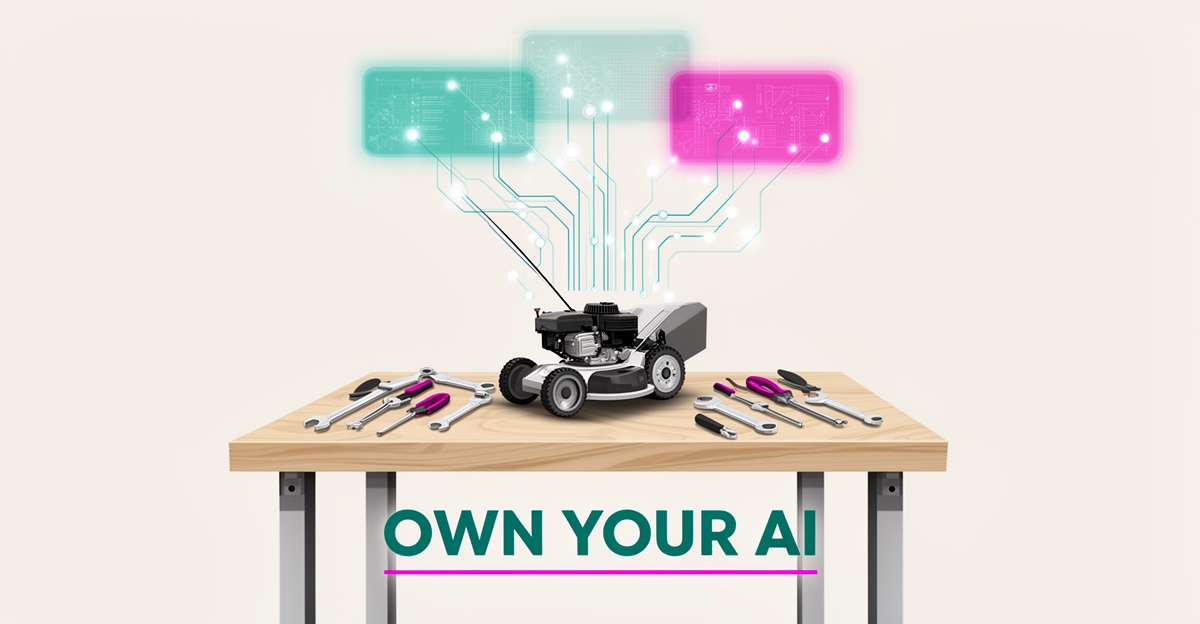
Own Your AI, Own Your Growth
The right AI partner for a small engine shop isn't about collecting the most tools — it's about eliminating subscription chaos, vendor lock-in, and manual handoffs between systems. Shops that start with real operational pain points, demand industry-specific expertise for dispatch and service coordination, and insist on deep two-way integration will see AI accelerate workflows that already work instead of amplifying broken ones. Ownership is the difference between renting features month-to-month and building a digital asset that compounds in value, scales cleanly, and keeps your data in-house. With most small businesses already using AI in some form as of late 2026, the question is how you adopt with purpose. Map your highest-impact bottleneck first, verify security and ownership terms, and evaluate partners on integration depth and trades experience. Start the two-minute Fit Check at https://aiqlabs.ai/apply, then book a free 30-minute strategy call at https://aiqlabs.ai/book to map a clear, owned AI path for your shop.
Make AI your competitive advantage — not just another tool.
Strategy, implementation and ongoing optimization. One partner, end to end.
Not sure where to start? Ask our AI planner