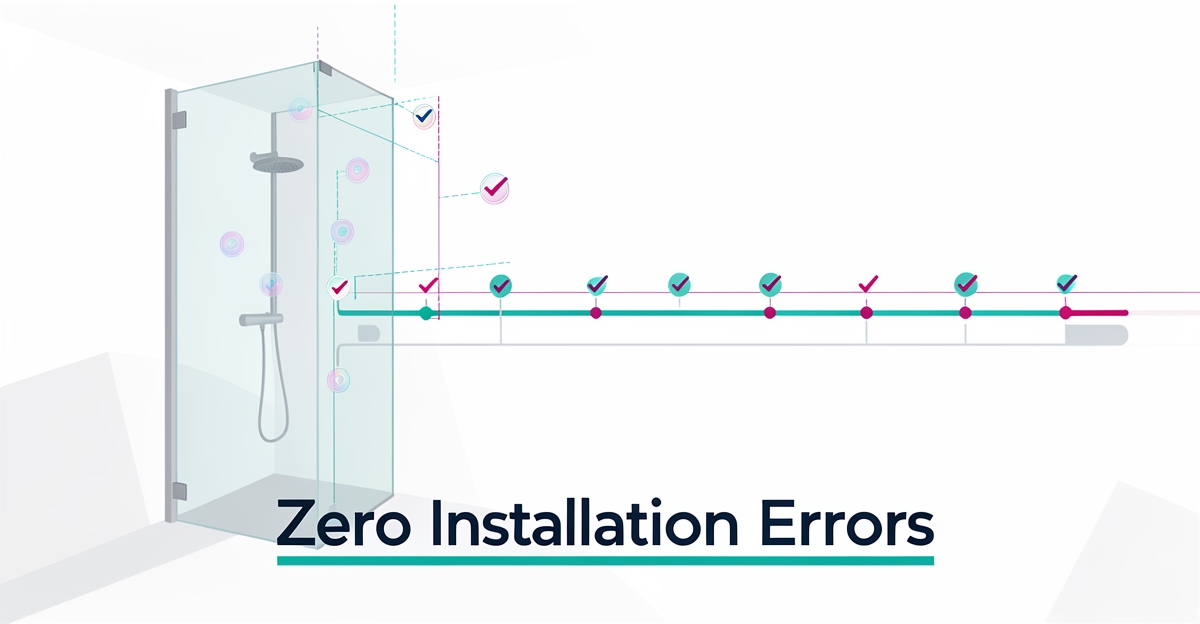
Why AI-Driven Job Tracking Reduces Errors in Shower Door Installation
Key Facts
- Manual job tracking fails through transcription: duplicate bookings, missed measurement specs, and undocumented change orders are the predictable results of paper files and spreadsheets.
- AI-driven tracking enforces one digital record per job, cross-checking technician availability, travel time, and existing commitments in real time.
- Automated capture validates measurements, hardware selections, and approvals before they are saved, so errors never reach procurement or billing.
- AIQ Labs has deployed 200+ multi-agent systems and runs 4 live SaaS products daily, proof in production, not promises.
- Every error carries a real cost: wasted truck rolls, remeasurement visits, replacement glass, and labor hours to redo work that should have been right the first time.
Hire a team member that works 24/7 — for less than a part-time wage.
AI receptionists, SDRs, dispatchers and 99+ roles. Trained on your business, fully managed.
Not sure where to start? Ask our AI planner
The High Cost of Manual Job Tracking in Installation Services
A shower door installer's day can unravel from a single misplaced note. A measurement scribbled on a work order, a booking entered twice, a change order that never made it from the sales rep to the field crew, each one is a small crack that widens into a failed install, a return trip, or an unhappy customer posting a review.
Manual job tracking creates friction at every stage of an installation. Paper files and spreadsheets depend on someone transcribing information correctly, every time, and on everyone checking the same source. When they don't, the predictable failures follow:
- Duplicate bookings that send two crews to one address while another customer waits.
- Missed measurement specs, forcing installers to work from outdated or incomplete dimensions.
- Undocumented change orders, leaving crews unaware of revised glass types, hardware finishes, or timelines.
- No audit trail, so disputes over what was promised become a matter of memory rather than record.
These aren't just annoyances, they're a competitive liability. Businesses that have digitized their scheduling, dispatch, and documentation typically run faster and with fewer errors than a shop still running on paper, and the gap compounds every season. During busy periods when booking volume spikes, manual processes are exactly where they break down most: transcription backlogs, missed handoffs, and scheduling conflicts multiply with every extra job.
For a shower door installer, every error carries a real cost: a wasted truck roll, remeasurement visits, replacement glass, and the labor hours to redo work that should have been right the first time. Multiply that across dozens of jobs a month, and the "cheap" spreadsheet system becomes one of the most expensive tools in the business.
This is the problem AI-driven job tracking is built to solve. AIQ Labs builds systems that capture job details digitally, organize them into a single source of truth, and automatically alert teams to risks like scheduling conflicts or missing specifications, ensuring every step is documented and nothing falls through the cracks. The shift from manual tracking to AI-assisted process management is quickly becoming the dividing line between installation businesses that scale smoothly and those that stall on their own administrative errors.
How AI-Driven Tracking Eliminates Errors and Captures Job Intelligence
Shower door installation lives or dies on precise, complete job records. A missed measurement, a duplicated booking, or a lost hardware note creates costly rework and erodes trust. AI-driven tracking replaces fragmented notes with automated capture that validates every step in real time.
Automated documentation creates a single source of truth from the first site visit to final sign-off. AI systems ingest measurements, photos, product selections, and customer approvals as they happen, then validate entries against job rules before they are saved. This reduces manual transcription and prevents the errors that compound across crews and dispatchers.
Intelligent conflict detection stops duplicate bookings before they reach the schedule. The system cross-checks technician availability, travel time, and existing commitments, flagging overlaps instantly. By enforcing one record per job, teams avoid double-booking the same slot and the revenue loss that follows.
For installation businesses, the payoff shows up as fewer missed steps, faster quoting, and cleaner handoffs between sales and field teams. AIQ Labs has deployed 200+ multi-agent systems for operational workflows like this, and runs 4 live SaaS products of its own daily, so these are patterns proven in production, not theory.
Job intelligence accumulates automatically when every step is captured consistently. AIQ Labs' Workflow Builds rebuild the one workflow that costs you the most, fixed price, delivered in phases, capturing, organizing, and alerting on job-specific risks or delays, and turning raw field data into actionable visibility.
Real-time validation protects accuracy across the workflow:
- Measurement capture is checked for completeness and range before acceptance
- Hardware and glass selections are matched to the approved quote
- Install dates are validated against technician capacity and prior commitments
- Customer approvals and change requests are logged with timestamped audit trails
With automated data capture, crews document work as they move, not after hours. The system normalizes inputs, flags anomalies, and prompts correction immediately, so errors do not propagate to procurement or billing.
The result is fewer callbacks, cleaner inventory pulls, and reliable scheduling. Teams spend less time reconciling notes and more time installing. Over time, the accumulated job history improves estimating accuracy and supports continuous improvement without adding headcount.
Digital job tracking with AI shifts operations from reactive fixes to proactive control. When every installation step is recorded accurately and validated in real time, errors drop and the business gains a durable record of how work is actually performed.
Augmenting Skilled Installers with Intelligent Automation
The fear that automation will displace skilled trades misses what is actually happening in AI-exposed industries. Rather than eliminating expertise, AI is elevating it, freeing installers to spend more of their day on the judgment-intensive work that defines the trade. For shower door installers, this shift means trading clipboards for craftsmanship.
When AI handles the administrative layer of job tracking, logging measurements, verifying site conditions, and documenting completion photos, installers reclaim hours previously lost to paperwork. A technician no longer rushing to fill out forms between jobs can instead focus on the precision alignment of heavy glass panels or troubleshoot unexpected plumbing irregularities that require experienced problem-solving.
The pattern is consistent across field service operations: gains come not from replacing workers, but from augmenting them with intelligent systems that handle routine documentation. The installer supervises the workflow; the system does the data entry.
AIQ Labs builds these tailored systems for field service operations, creating digital workflows that:
- Capture job-site data automatically through mobile interfaces
- Flag measurement discrepancies before materials are cut
- Generate compliance documentation without manual entry
- Alert crews to scheduling conflicts or missing parts in real time
This division of labor allows installers to concentrate on the complex, judgment-intensive work that defines quality shower door installation, ensuring perfect reveals, managing temperamental tile surfaces, and delivering the finished aesthetic that clients expect. The technology handles the repeatable; the human handles the exceptional.
Tradespeople who embrace these tools position themselves as high-value craftspeople rather than commodities. The future belongs to installers who leverage AI not as a replacement for their expertise, but as the administrative partner that protects their time for the work that truly requires a human touch.
Implementing AI Job Tracking: A Practical Roadmap for Installation Businesses
Transitioning from manual to AI-driven job tracking requires a structured approach that begins with understanding your current baseline. Start by measuring your existing error rates in shower door installation, missed measurements, incorrect hardware orders, or scheduling conflicts, to quantify the impact of inaccuracies on rework and customer satisfaction. This assessment provides a clear starting point for improvement and helps prioritize which workflows will benefit most from automation, such as job intake, material tracking, or field crew dispatch.
Focus initial automation efforts on high-frequency, error-prone tasks where AI can immediately reduce human oversight gaps. For example, implementing AI to validate job details against site photos or cross-check material lists with manufacturer specifications can catch discrepancies before they reach the installation phase. Pair this with integration into existing scheduling tools, like Google Calendar or job management platforms, so the system enhances rather than disrupts current operations. AIQ Labs' Workflow Builds follow exactly this methodology: one workflow, fixed price, delivered in phases, capturing job-specific risks such as custom glass dimensions or site access constraints without requiring teams to learn entirely new interfaces.
Equally important is preparing your workforce for this shift. Training should focus on interpreting AI alerts, validating automated outputs, and managing exceptions, turning technicians into supervisors of intelligent workflows rather than replacements of them. Businesses that invest in this upskilling early tend to retain their best people, because the tools make the work less frustrating, not more.
By combining targeted workflow automation, seamless tool integration, and role-specific training, installation businesses can build confidence in AI-driven tracking while minimizing operational friction. The goal isn't to overhaul everything at once but to create measurable, sustainable improvements that scale with your business, starting with fewer errors, faster job completion, and teams equipped to thrive in an evolving technical landscape.
Future-Proofing Your Installation Business with Intelligent Operations
Installation businesses face mounting pressure to deliver flawless results while managing complex schedules, material logistics, and client expectations. As shower door projects grow more customized and timelines tighter, even minor oversights can cascade into costly rework, safety risks, or damaged reputations. Forward-thinking contractors are recognizing that traditional tracking methods, spreadsheets, paper logs, or siloed software, can't keep pace with the precision modern installations demand.
AI-driven job tracking transforms this vulnerability into a strategic advantage by creating a single, intelligent source of truth for every project detail. Unlike manual systems prone to human error or delayed updates, AI continuously monitors job progress, flags scheduling conflicts, and ensures all installation steps, from initial measurements to final sealant application, are documented in real time. This eliminates duplicate bookings, prevents missed steps, and provides auditable records that reduce liability if questions arise later about workmanship or materials used.
The competitive edge extends beyond error reduction. AI systems learn from each installation, identifying patterns that predict delays, like recurring issues with specific wall types or hardware shortages, and proactively alert teams before problems occur. This predictive capability allows businesses to allocate resources smarter, reduce emergency callbacks, and maintain consistent quality across multiple job sites. For installation businesses, adopting AI job tracking isn't just about fixing today's mistakes, it's about building the operational foundation needed to scale confidently in a market where accuracy and documentation are table stakes.
Taking the first step toward intelligent operations doesn't require a full system overhaul. AIQ Labs' 2-minute Fit Check is a low-risk way to assess where AI-driven tracking can eliminate your most costly installation errors, followed by a free 30-minute strategy call to map your workflow bottlenecks and identify high-impact automation opportunities. From there, businesses can pilot targeted solutions like automated job logging or real-time delay alerts before expanding toward a full AI Operating System, one connected layer, built in phases, owned outright. Payment models are straightforward: Start Monthly, Build in Milestones, or Own It Outright, with no fake prices and no invented case-study numbers. To begin, start the Fit Check at https://aiqlabs.ai/apply, then schedule your free 30-minute strategy call at https://aiqlabs.ai/book.
Still paying for 10+ subscriptions that don’t talk to each other?
We build custom AI systems you own outright. No vendor lock-in. Full control.
Not sure where to start? Ask our AI planner
Frequently Asked Questions
What are the most common errors in manual job tracking for shower door installation?
How does AI prevent duplicate bookings and scheduling conflicts?
Will AI replace my skilled shower door installers?
What gains can I expect from switching to AI job tracking?
How do I implement AI job tracking without disrupting my current operations?
Why is digital job tracking becoming essential for installation businesses now?
From Paper Trails to Predictable Profits
Manual job tracking turns small slips into expensive callbacks, duplicate crews, and lost trust. AI-driven tracking replaces fragmented notes with a single source of truth that validates measurements, matches hardware to quotes, and flags scheduling conflicts before they reach the field. The result is fewer rework visits, cleaner inventory pulls, and installers freed to focus on craftsmanship instead of paperwork. If you want to see where errors are costing you most, start with a baseline audit of missed specs, double bookings, and change-order delays, then pilot automation on the highest-frequency pain points. AIQ Labs has deployed 200+ multi-agent systems and runs 4 live SaaS products daily, and you can test the fit with no obligation. Start the 2-minute Fit Check at https://aiqlabs.ai/apply, then book your free 30-minute strategy call at https://aiqlabs.ai/book to map your bottlenecks and identify high-impact automation opportunities.
Make AI your competitive advantage — not just another tool.
Strategy, implementation and ongoing optimization. One partner, end to end.
Not sure where to start? Ask our AI planner