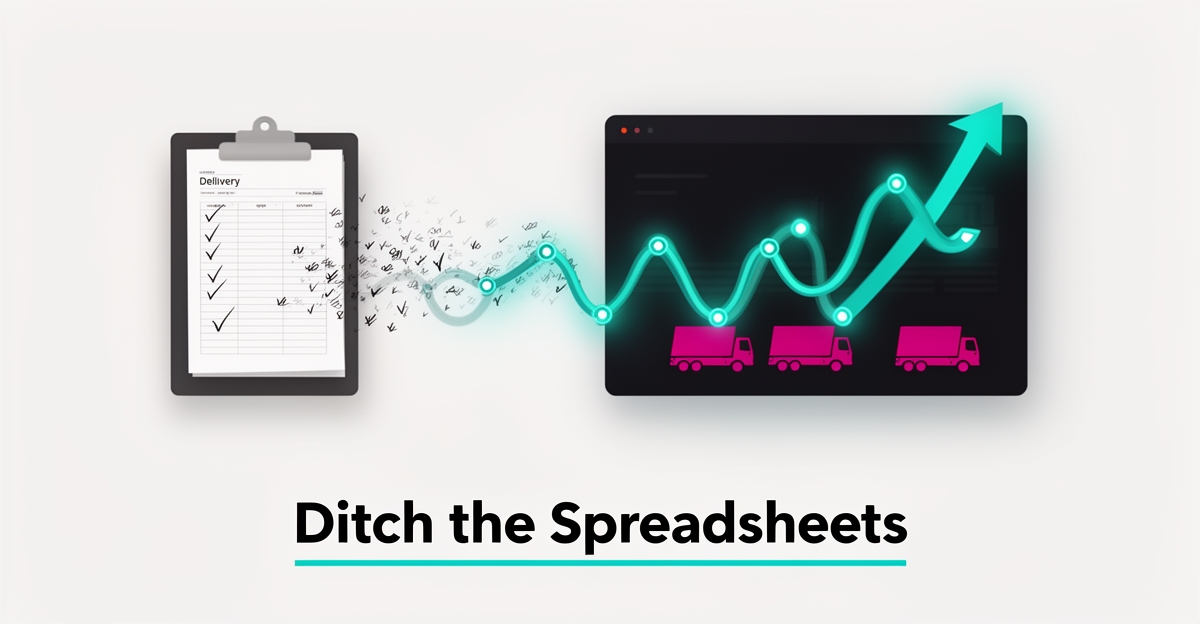
Why Most Aggregate Suppliers Still Use Manual Delivery Tracking (And How to Fix It)
Key Facts
- Industry research suggests frontline teams can spend 15-20 hours weekly on manual delivery tracking tasks
- Administrative overload is a recurring driver of burnout among frontline employees in delivery operations
- Most field service workers report lacking time to finish job tasks due to manual processes
- AI-powered analysis has been credited with materially faster supplier onboarding in supply chain operations
- AI implementation is widely associated with fewer compliance errors in supply chain management
- Organizations using AI in procurement commonly report stronger, data-driven contract terms
- Many engineering organizations run AI agents but still lack the governance to deploy them confidently in production
Hire a team member that works 24/7 — for less than a part-time wage.
AI receptionists, SDRs, dispatchers and 99+ roles. Trained on your business, fully managed.
Not sure where to start? Ask our AI planner
The Hidden Cost of Manual Delivery Logs in Aggregate Supply
The hidden cost of manual delivery logs in aggregate supply isn't just administrative—it's operational drag that bleeds time, morale, and profitability. Industry research suggests frontline teams can spend 15-20 hours per week on manual tasks like updating spreadsheets and chasing paper tickets. That's nearly half a full-time employee's week lost to repetitive, low-value work that could be automated.
This inefficiency directly fuels burnout. Surveys of frontline workers consistently show that administrative overload leaves staff without enough time to finish their actual jobs. When dispatchers and drivers are buried in logistical paperwork, they can't focus on safety, customer communication, or route optimization—critical functions in aggregate delivery where timing and load integrity matter.
- Manual data entry errors lead to delayed invoices and disputed deliveries
- Paper logs create blind spots in real-time fleet visibility
- Reactive troubleshooting replaces proactive planning
- Administrative overload masks opportunities for predictive scheduling
- Compliance tracking becomes fragmented and audit-unfriendly
These aren't just inconveniences—they're systemic drags that scale with every delivery. AIQ Labs sees this pattern repeatedly: manual tracking creates information silos where delays go unnoticed until customers complain, and optimization opportunities vanish in the noise of administrative overhead. The result isn't just wasted hours—it's eroded trust, missed SLAs, and a workforce operating far below its potential. Fixing this requires more than better spreadsheets; it demands a shift from reactive logging to intelligent, automated workflows that surface insights before problems escalate.
What AI and Process Mining Reveal About Delivery Bottlenecks
Aggregate suppliers relying on manual delivery tracking often miss critical patterns hidden in their historical data—patterns that AI can uncover to prevent delays before they happen. By analyzing past delivery times, weather disruptions, traffic congestion, and loading dock availability, AI systems identify recurring bottlenecks that spreadsheets simply can't reveal. Industry analyses of AI in procurement and supply chain consistently credit it with faster supplier onboarding, fewer compliance errors, and stronger contract terms—and those benefits extend directly to delivery operations when historical data is leveraged intelligently.
Process mining takes this further by visualizing the actual flow of delivery tasks, exposing inefficiencies like repeated handoffs between teams, unnecessary waiting periods at transfer points, or inconsistent documentation that triggers delays. Unlike manual logs that only show what happened, process mining reveals why it happened—highlighting deviations from standard workflows that correlate with late deliveries. For example, it might show that deliveries scheduled after 3 PM consistently face delays due to shift changes at receiving facilities, or that certain routes repeatedly encounter congestion during specific weather conditions. These insights allow suppliers to redesign workflows proactively rather than reacting to each delay as an isolated incident.
When combined, AI prediction and process mining create a closed-loop system: historical data trains models to forecast risks, while real-time process data validates those predictions and refines future accuracy. This approach transforms delivery tracking from a reactive chore into a strategic advantage—reducing idle time, improving on-time performance, and freeing up dispatchers to focus on exceptions rather than chasing paperwork. For aggregate suppliers still using spreadsheets, the shift isn't just about technology; it's about unlocking the value already buried in their delivery history.
From Manual Tracking to Automated, Governed Delivery Workflows
Traditional manual delivery tracking relies on spreadsheets and paper logs, consuming 15-20 hours per week of valuable time that could be spent on strategic activities, according to industry research. This reactive approach leads to inefficient routing, missed delivery windows, and poor resource utilization as dispatchers assign jobs based solely on availability rather than optimizing for proximity and expertise.
AI-optimized scheduling transforms this process by analyzing historical delivery data to predict delays and automatically matching jobs to the most suitable drivers based on location, skills, and real-time availability. This shift from availability-based assignment to proximity and expertise matching significantly improves efficiency and customer satisfaction while reducing wasted travel time and fuel costs.
However, deploying AI agents in production requires robust governance controls to ensure safety and reliability. Organizations should implement isolation by default, creating ephemeral workspaces that erase data after task completion with zero outbound access unless explicitly allowed. Scoped permissions ensure API keys carry only the minimum privileges needed for specific delivery tracking tasks, while real-time monitoring alerts teams to abnormal API calls or unauthorized domain access.
Critical governance also demands human-in-the-loop approval for agent-generated outputs before they reach production systems, preventing autonomous decisions that could disrupt delivery operations. Identity-aware model routing authenticates users through existing SSO and routes requests through centrally managed keys, with full audit trails mapping every interaction to authenticated identities for compliance. These controls transform AI from a risky experiment into a trusted component of delivery workflow automation.
A Practical Roadmap to Fix Delivery Tracking Without Disruption
Many aggregate suppliers remain stuck in manual delivery tracking because the perceived disruption of automation outweighs the daily inefficiencies they already endure. Teams can waste 15-20 hours per week on manual data entry and spreadsheet reconciliation—time that could be spent resolving delivery exceptions or optimizing routes. This operational drag accumulates silently, eroding profitability while creating a false sense of stability around familiar, broken processes.
The path forward begins with automating routine tracking tasks using AI-powered tools that handle data capture from GPS feeds, scale tickets, and dispatch logs without human intervention. By eliminating manual entry, suppliers reduce errors and free staff to focus on exception management—such as rerouting delayed shipments or communicating proactively with customers. This foundational step creates clean, real-time data streams essential for advanced analytics.
Next, deploy pattern recognition to analyze historical delivery data and identify recurring delay triggers—like weather impacts on specific routes or seasonal bottlenecks at quarries. AI models surface these insights continuously, enabling predictive adjustments before disruptions occur. Simultaneously, implement risk scoring for supplier reliability by monitoring factors such as on-time performance, load consistency, and communication responsiveness across multiple data sources. This scoring system flags at-risk partners early, allowing suppliers to adjust schedules or activate backups before commitments are missed.
Finally, use mobile-enabled intelligent scheduling that adapts in real time to changing conditions—traffic, plant availability, or driver assignments—while ensuring drivers receive turn-by-turn guidance and inventory updates via simple apps. AIQ Labs supports this transformation at three entry points: AI Employees for managed dispatch and reception roles at a fraction of the cost of a human hire, Workflow Builds to rebuild the one delivery workflow that costs you the most at a fixed price, and AI Operating Systems for a single connected operating layer you own outright. Every engagement runs on the Start Monthly, Build in Milestones, or Own It Outright payment models, ensuring ownership and minimal disruption during implementation. The result is a delivery operation that anticipates problems, optimizes resources, and scales without adding headcount.
Still paying for 10+ subscriptions that don’t talk to each other?
We build custom AI systems you own outright. No vendor lock-in. Full control.
Not sure where to start? Ask our AI planner
Frequently Asked Questions
How much time does manual delivery tracking actually cost our team each week?
Our dispatchers are burned out — is this connected to manual tracking?
What specific problems do paper logs and spreadsheets create that we might not see?
How does AI actually find bottlenecks that our spreadsheets miss?
What measurable results have companies seen from using AI in procurement and delivery operations?
We're worried about disruption — can we automate delivery tracking without stopping operations?
Turning Delivery Tracking into Your Competitive Advantage
Most aggregate suppliers remain trapped in manual delivery tracking not because they lack awareness of the problem, but because the path forward feels disruptive and uncertain. The reality is clear: those 15-20 hours per week lost to spreadsheets and paper logs aren't just administrative noise—they're eroding profitability, fueling burnout, and masking opportunities for predictive optimization. By shifting from reactive logging to intelligent, automated workflows powered by AI and process mining, suppliers can uncover hidden bottlenecks, cut compliance errors, and free their teams to focus on what truly matters—safety, customer communication, and route optimization. The transformation doesn't require rip-and-replace; it starts with automating routine data capture, layering in pattern recognition for predictive insights, and enabling real-time, adaptive scheduling. AIQ Labs helps aggregate suppliers make this shift through AI Employees, Workflow Builds, and AI Operating Systems—solutions you own outright and that scale with your business. If you're ready to stop chasing paperwork and start predicting delays before they happen, begin with the free two-minute Fit Check to identify your highest-ROI automation opportunity.
Make AI your competitive advantage — not just another tool.
Strategy, implementation and ongoing optimization. One partner, end to end.
Not sure where to start? Ask our AI planner