Why Most Agricultural Consulting Firms Fail at AI Adoption
Key Facts
- Most AI failures in agriculture trace back to incomplete, inconsistent, or irrelevant data—not model selection
- Image-based inputs typically dominate agricultural AI data, followed by sensor streams and farmer logs
- Multi-season, multi-location datasets are typically the most valuable, followed by field-level paired imagery and sensor data
- Simple AI tools for weather alerts and pest detection have driven measurable crop-loss reductions within a single season in field settings
- Farmer resistance to AI stems from preference for traditional methods and fear of job displacement in farming-dependent communities
- Lack of technical expertise among farmers is among the most prominent reasons for slow AI adoption, with training often inaccessible
- AI datasets require constant retraining and human-in-the-loop validation; 'collect once and forget' approaches degrade model reliability
Hire a team member that works 24/7 — for less than a part-time wage.
AI receptionists, SDRs, dispatchers and 99+ roles. Trained on your business, fully managed.
Not sure where to start? Ask our AI planner
The Data Trap: Why Poor Collection Kills AI Before It Starts
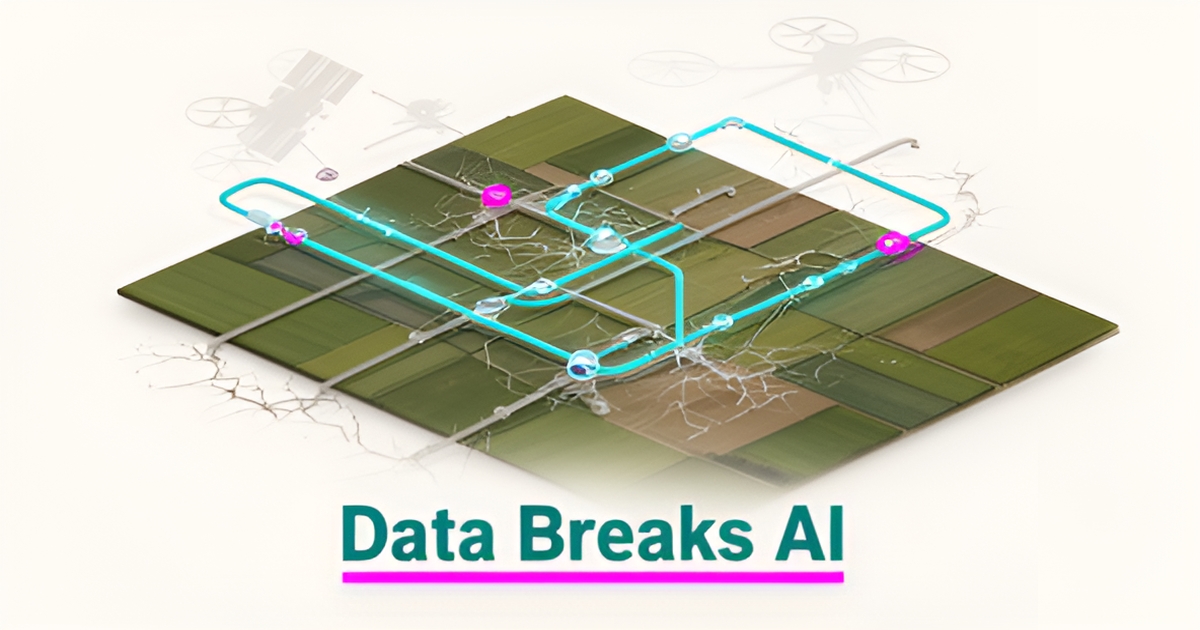
Most agricultural consulting firms chase better algorithms when they should be fixing broken data pipelines. Across the industry, the majority of AI failures trace back to incomplete, inconsistent, or irrelevant data—not model selection. If you repair the collection pipeline, you solve most of the problem before a single line of model code runs.
Industry analysis reveals a clear hierarchy of dataset value. Multi-season, multi-location datasets sit at the top, followed by field-level paired imagery and sensor data. Single-season imagery ranks third, while crowdsourced or random web images deliver negligible signal. Yet many firms still prioritize volume over structure, feeding models noise instead of agronomic truth.
- Image-based inputs typically dominate agricultural AI data
- Sensor streams contribute a meaningful secondary share
- Farmer logs and notes make up the remainder
Connectivity gaps and fragmented land holdings make consistent collection difficult, but they do not excuse "collect once and forget" approaches. Datasets require constant retraining and human-in-the-loop validation. Without that discipline, even sophisticated models produce unreliable yield predictions or miss disease pressure entirely.
AIQ Labs helps firms embed this rigor into daily operations—aligning field protocols, sensor networks, and staff workflows so the data flowing into models is trustworthy from day one. The goal is not more data; it is data that actually represents the field.
Beyond the Tech: How Change Management Determines AI Success or Failure
Pilots stall not because the model is wrong, but because the people who must use it never buy in. In agriculture, technology success hinges on human readiness more than algorithmic accuracy, and consulting firms that skip change management watch working demos fail in the field.
Farmer resistance remains a core barrier. Industry analysis of AI limitations notes many farming communities prefer traditional, intuition-based methods passed down through generations and are reluctant to change their methods. Fear of job displacement compounds the problem where farming is the primary source of employment.
Training access is the bottleneck that turns good tools into shelfware. Research consistently finds that the lack of technical expertise among farmers is one of the most prominent reasons for slow adoption, and that training is crucial but often inaccessible. Without structured enablement, even simple alerts are ignored.
Data collection failures reinforce distrust. When AI produces inconsistent or irrelevant outputs, operators lose faith in the system—and once trust is gone, adoption collapses. Fixing the data collection pipeline prevents most of these failures before they start.
Simple, usable tools drive adoption faster than advanced features. Field studies report that in rural communities, simple AI tools for weather alerts and pest detection led to crop losses dropping within a single season. Not because farmers became tech experts, but because technology finally became useful to them.
Consulting firms that skip change management typically make the same mistakes:
- Deploying models without agronomy-informed data collection and consistent labeling
- Assuming connectivity and digital literacy that rural operations do not have
- Delivering recommendations without training, feedback loops, and community trust building
- Treating AI as a replacement for farmer expertise instead of an augmentation
When change management is treated as an afterthought, pilots stall even when the technology works. Human factors are critical for success, requiring good agronomy knowledge in data collectors, training local farmers, and building community trust through shared experiences.
AIQ Labs builds change management and training into every engagement from the start, ensuring staff are trained, workflows are aligned, and AI enhances rather than replaces human expertise.
From Pilot to Practice: How AIQ Labs Avoids the Pitfalls with Full-Stack Transformation
The gap between a promising pilot and a scaled operation is where most agricultural consulting firms lose momentum. AI in agriculture fails not because algorithms are weak, but because data is incomplete, inconsistent, or irrelevant—and fixing the collection pipeline resolves most of the problem. Compounding this, rural connectivity gaps and a workforce lacking digital training stall deployments before they reach the field.
AIQ Labs closes this gap with a full-stack transformation model that treats data, integration, and adoption as a single engineering challenge rather than three separate vendor contracts. The approach combines custom workflow builds that ingest messy, multi-source agricultural inputs—where image-based data typically dominates—with AI employees that slot into existing workflows like crop scouting, irrigation scheduling, or compliance reporting. For firms ready to connect every function, an AI operating system ties data, agents, and reporting into one connected layer, built in phases and owned outright. Training and governance wrap the technical build, delivering the role-based enablement that farming communities often cannot access on their own.
- Unified data architecture that standardizes multi-season, multi-location datasets for model reliability
- AI employees deployed as functional team members—dispatchers, scouts, intake agents—not chat widgets
- Change management programs built for low-connectivity, high-resistance environments
- Governance and audit trails aligned with regulated agribusiness requirements
The result is a system that augments agronomic judgment instead of replacing it. The pattern is consistent: operations that put AI to work outgrow those that do not, but only when the technology becomes useful enough to earn daily trust.
Still paying for 10+ subscriptions that don’t talk to each other?
We build custom AI systems you own outright. No vendor lock-in. Full control.
Not sure where to start? Ask our AI planner
Frequently Asked Questions
Why do most AI projects in agriculture fail even when the technology works?
What type of agricultural data actually delivers value for AI models?
How can consulting firms overcome farmer resistance to new AI tools?
What are the biggest infrastructure barriers to AI adoption in rural farming?
Why do AI pilots often stall when moving from demo to daily farm operations?
Will AI replace agronomists and farm workers, or augment their expertise?
From Failed Pilots to Field-Ready AI
Most agricultural consulting firms don’t fail at AI because the models are weak; they fail because the data pipeline is broken and the people who need to use the system were never brought along. Fixing collection first—multi-season, multi-location data with consistent labeling and human-in-the-loop validation—solves the majority of AI problems before model work even starts. That discipline only sticks when it’s paired with change management: practical training, workflow alignment, and tools simple enough to be useful in low-connectivity environments. AIQ Labs approaches this as a full-stack transformation, not a point solution, embedding data architecture, managed AI employees, and role-based training so AI augments agronomic judgment instead of replacing it. If your pilots stall at scale, audit your data inputs and adoption readiness before adding more tech. Start the 2-minute Fit Check at aiqlabs.ai/apply for a free 30-minute strategy call to map your bottleneck and identify high-ROI automation opportunities—if there isn’t a clear win, we’ll tell you.
Make AI your competitive advantage — not just another tool.
Strategy, implementation and ongoing optimization. One partner, end to end.
Not sure where to start? Ask our AI planner