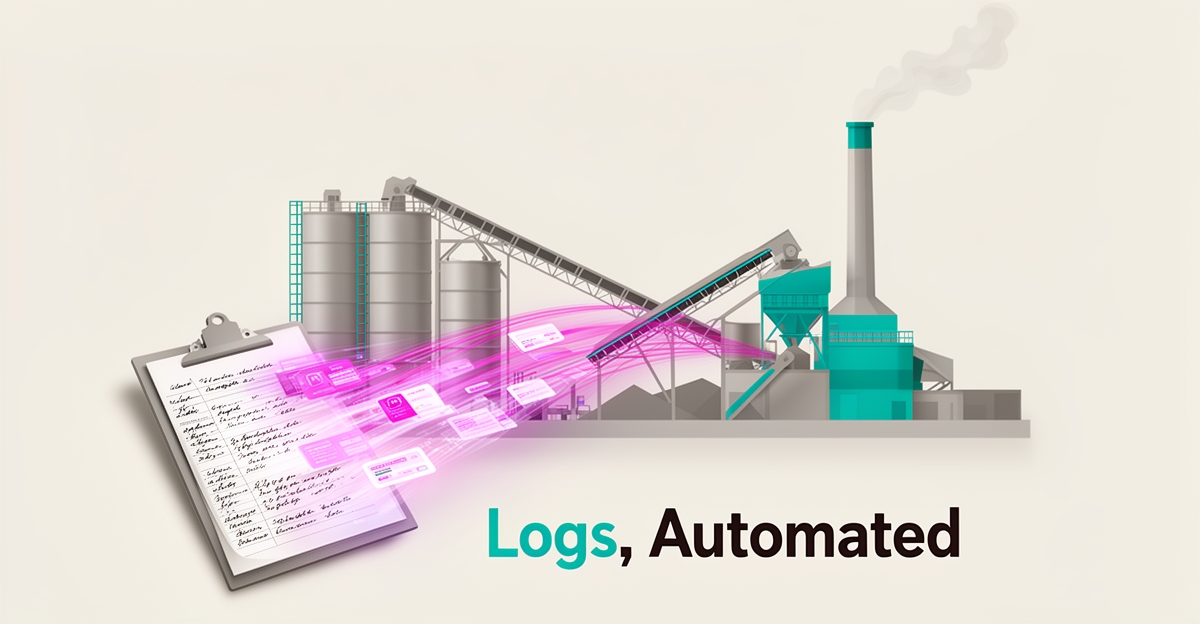
Why Most Asphalt Plants Still Use Manual Equipment Logs (And How AI Fixes It)
Key Facts
- The global asphalt market is a large and growing sector, with industry analyses projecting continued expansion through 2032 according to market research
- Asphalt and broader construction activity face increasing emissions scrutiny, putting record-keeping under regulatory pressure per industry analysis
- AI can reduce long-term operating costs but increases upfront investment and governance needs as noted by Samta.ai
- AI accuracy improves over time while manual accuracy varies by person based on AI versus manual work analysis
- AI-powered document processing enables automatic extraction from machine logs and spreadsheets with minimal manual touch per AI work analysis
- Real-time validation in AI systems checks for missing fields, out-of-range values, and mismatched units before storage according to AI work research
- AI-driven operations can optimize production and improve efficiency in asphalt plants per construction technology reporting
Hire a team member that works 24/7 — for less than a part-time wage.
AI receptionists, SDRs, dispatchers and 99+ roles. Trained on your business, fully managed.
Not sure where to start? Ask our AI planner
The Hidden Cost of Manual Equipment Logs in Asphalt Production
Walk into most asphalt plants today and you'll find the same scene: a clipboard on the control room wall, a grease-stained notebook by the burner, and a spreadsheet someone updates at the end of a long shift. Equipment performance, fuel consumption, and material mix data all flow through human hands—and human hands introduce friction at every step.
The scale of the industry makes this inefficiency expensive. Market analyses of the asphalt and bitumen sector project steady growth through 2032, yet the operational backbone of that growth still rests on manual record-keeping in thousands of plants.
Manual logging carries three distinct costs. The first is labor: every hour a plant operator spends transcribing burner readings or mix temperatures is an hour not spent managing production. Industry comparisons consistently flag high labor costs and limited scalability as the defining weaknesses of manual approaches to production management.
The second cost is accuracy. Manual accuracy varies by person—one shift's notes may be meticulous, another's rushed or illegible. When fuel use or aggregate ratios are recorded inconsistently, the errors compound silently. A mislogged fuel figure distorts cost-per-ton calculations. A transposed mix ratio can push a batch out of spec before anyone notices, forcing rework or rejected loads.
The third cost is compliance. Asphalt plants operate under environmental scrutiny—construction and road-building activity is a significant contributor to global emissions, industry analyses note, which puts emissions-related record-keeping under increasing regulatory pressure. Handwritten logs and scattered spreadsheets make audits slow, and gaps in the record create real exposure.
Consider what plants are trying to track manually:
- Equipment performance metrics from dryers, drum mixers, and conveyors
- Fuel consumption per ton of mix produced
- Material mix ratios for each batch and blend
- Temperature readings across the production cycle
- Maintenance events and downtime incidents
None of this data is inherently hard to capture—modern machines generate it constantly. The problem is the manual layer between the machine and the record. This is where document and data processing automation changes the equation: AI systems can extract readings directly from machine outputs and existing spreadsheets, validate them against expected ranges, and store them in a structured, auditable format. Accuracy no longer depends on who happened to be on shift, and AI accuracy improves over time rather than degrading with fatigue.
The trade-off is well understood: AI adoption requires upfront investment in technology infrastructure and governance, but it reduces long-term operating costs. For plants still running on paper and pieced-together spreadsheets, the hidden cost of manual logs is already being paid—just in installments nobody put on the books.
How AI-Powered Document Processing Eliminates Logging Errors
Manual logs at asphalt plants create a hidden tax on every shift. Handwritten equipment performance, fuel use, and material mix entries drift between crews, and those errors compound into costly rework and compliance gaps.
AI-powered document processing removes the human variability from logging. Custom systems automatically extract, validate, and store operational logs from machines and spreadsheets, turning scattered records into a single source of truth. Accuracy improves over time with AI, while manual accuracy varies by person, according to analysis of AI versus manual work.
In an industry with sustained infrastructure investment driving steady growth, efficiency gains matter. Market research on the asphalt and bitumen business impact of AI and automation points to continued expansion, and industry commentary on AI in construction notes AI can improve efficiency, reduce costs, and enhance safety.
The shift from paper to automated capture changes how plants operate day to day. Instead of end-of-shift transcription, data flows directly from sensors, control panels, and exported spreadsheets into validated records. AIQ Labs builds this kind of automation through AI Workflow Builds—a fixed-price engagement that rebuilds the one workflow costing you the most, delivered in phases so you see value before committing further.
Real-time validation is where errors disappear. The system checks for missing fields, out-of-range values, and mismatched units before storage, flagging anomalies for review instead of letting them propagate.
This approach delivers:
- Automatic extraction from machine logs and spreadsheets with minimal manual touch
- Validation rules that catch transcription errors and inconsistent entries at ingest
- Centralized, timestamped storage that supports real-time dashboards and audits
- Continuous learning that improves extraction accuracy as document formats evolve
Plants also gain sustainability visibility. Because construction and road-building activity is a significant emissions source, industry analysis of AI in construction highlights how digitalization supports more sustainable practices. Accurate fuel use and material mix logs make it possible to track emissions drivers and optimize blends.
Long-term value follows from consistent data. Research on AI versus manual work finds AI can reduce long-term operating costs but increases upfront investment and governance needs. When logs are reliable, teams can trust production analytics, reduce waste, and respond to deviations before they become batch failures.
The result is an operation where logging no longer slows the plant. Decisions about mix adjustments, maintenance windows, and compliance reporting are based on verified data captured automatically, not on who wrote the shift notes.
From Manual Logs to AI-Driven Operations: Implementation Steps for Asphalt Plants
Manual equipment logs are still the default in most asphalt plants because they feel simple and cheap. The reality is they create delays, data gaps, and compliance risk that scale with production.
Transitioning to AI-driven operations starts with understanding where manual logging hurts the most. Plants typically track equipment performance, fuel use, and material mix data on paper or spreadsheets. That approach limits scalability, raises labor costs, and invites human error, while AI-driven asphalt production can optimize production and improve efficiency.
A practical implementation follows a clear sequence that mirrors how AIQ Labs approaches document and data processing for operational environments.
- Assess current workflows and data sources to map where logs are created, stored, and used for decisions
- Integrate AI document processing to automatically extract, validate, and store operational logs from machines and spreadsheets
- Train teams on new dashboards and exception handling so AI outputs drive faster decision-making and compliance tracking
- Monitor accuracy and ROI over time, with AI accuracy improving over time while manual accuracy varies by person
Assessment sets the foundation. Teams document which logs are critical for quality, safety, and reporting, and where data quality breaks down. This step identifies high-value automation targets and defines success metrics tied to cost, speed, and compliance.
Integration connects the plant’s existing data without a rip-and-replace. AI systems ingest sensor feeds, machine outputs, weather forecasts, and handwritten logs, then normalize them into a single source of truth. Market research on the asphalt sector points to continued growth through 2032, creating pressure to improve efficiency.
Training ensures adoption. Operators learn to trust automated extraction and validation instead of re-keying data, and managers learn to use real-time dashboards for production adjustments. Change management reduces resistance and protects institutional knowledge.
The business case is clear. AI can reduce long-term operating costs but increases upfront investment and governance needs. Plants that move early gain faster decision cycles and stronger audit trails. And because construction activity is a significant emissions source, accurate fuel and mix logging also supports sustainability reporting.
With the right partner, plants can move from manual logs to owned AI systems that continuously improve. AIQ Labs builds document and data processing systems in phases—start monthly, build in milestones, or own the system outright—so you keep the asset and the data, with no vendor lock-in.
Still paying for 10+ subscriptions that don’t talk to each other?
We build custom AI systems you own outright. No vendor lock-in. Full control.
Not sure where to start? Ask our AI planner
Frequently Asked Questions
Why do most asphalt plants still rely on manual equipment logs despite the availability of technology?
How does AI-powered document processing improve accuracy in asphalt plant operations compared to manual logging?
What are the three main costs of using manual equipment logs in asphalt production?
Can AI help asphalt plants reduce their environmental impact and support sustainability reporting?
What is the outlook for the global asphalt market, and why does efficiency matter in this context?
What steps should an asphalt plant take to transition from manual logs to AI-driven operations?
Turn Your Logs Into Your Competitive Edge
Manual logging is a quiet drain on your asphalt plant's productivity, accuracy, and compliance readiness. Between labor costs, inconsistent data entry, and regulatory exposure, the true price of paper and spreadsheets far exceeds what shows up in your budget. AI-powered document processing eliminates these hidden costs by automatically extracting, validating, and storing equipment performance, fuel consumption, and material mix data with accuracy that improves over time rather than degrading with shift changes. The transition doesn't require ripping out existing systems. Start by identifying which logs create the biggest bottlenecks or compliance risks, then explore how custom automation can integrate with your current workflows. AIQ Labs builds document and data processing systems that plants own outright, turning scattered records into a single source of truth for faster decisions and cleaner audits. If you're ready to see where automation could deliver the highest ROI in your operation, start the two-minute fit check and schedule a free strategy call. No sales pitch, just a working session with an engineer who'll map your biggest opportunity.
Make AI your competitive advantage — not just another tool.
Strategy, implementation and ongoing optimization. One partner, end to end.
Not sure where to start? Ask our AI planner